Silas
A prominent leader and prophet in the early Jerusalem church who accompanied the Apostle Paul on his second missionary journey and served as a crucial bridge between Jewish and Gentile believers.
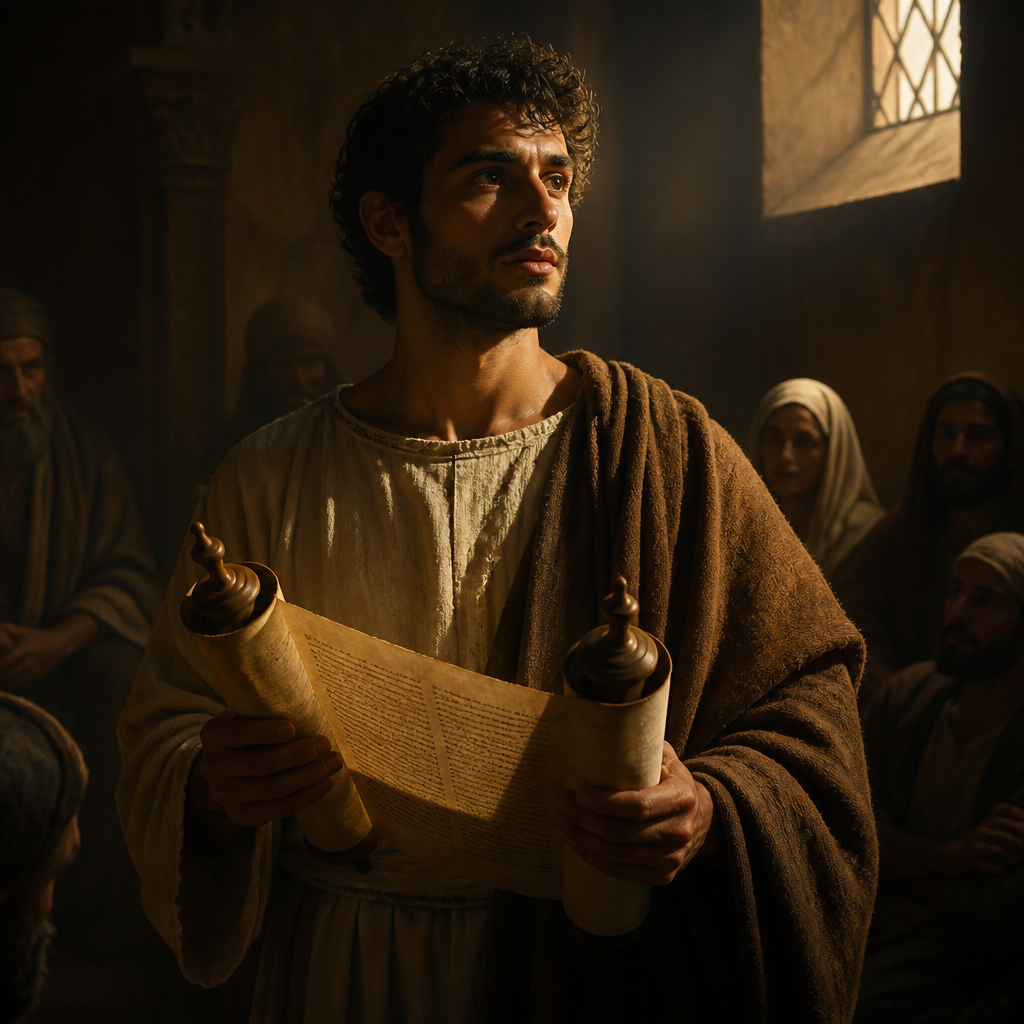
Silas was a leading figure in the first-century Christian church, identified specifically in the Book of Acts as a 'prophet' and a 'leading man among the brothers.' A Roman citizen of Jewish descent, he served as a vital emissary for the Jerusalem Council, tasked with communicating the church's decision regarding the requirements for Gentile converts. His authority was rooted not only in his administrative position but in his spiritual gift of prophecy, which he utilized to encourage and strengthen the nascent congregations across the Roman Empire.
He is most famously remembered as the companion of the Apostle Paul during the second missionary journey. His presence was instrumental in the establishment of churches in Philippi, Thessalonica, and Beroea. Known in the epistles by the more formal Latin name Silvanus, he functioned as a co-author and amanuensis for several New Testament letters, underscoring his intellectual and theological caliber in the apostolic era.
Background and Family
While the biblical record does not provide specific details regarding Silas’s genealogy or family lineage, his dual identity as a Jewish leader and a Roman citizen (Acts 16:37) suggests a background of significant social standing. As a member of the Jerusalem church, he was held in high enough esteem to be chosen alongside Judas Barsabbas to represent the apostles and elders. His name, Silas, is likely a Greek shortening of the Semitic name 'Saul,' while his formal Roman name, Silvanus, indicates his integration into the Greco-Roman world.
As a prophet, Silas occupied a distinct office in the early church. Unlike the Old Testament prophets who often forecast national judgment, the New Testament prophetic office—as exemplified by Silas—focused on the edification, exhortation, and comfort of the body of Christ (1 Corinthians 14:3). His status as a 'chief man' (Acts 15:22) implies he was an elder or a person of considerable influence within the jurisdictional heart of Christianity in Jerusalem.
Major Life Events
The Jerusalem Council and the Decree
The public ministry of Silas begins in Acts 15 following the Jerusalem Council (c. 50 AD). The council had convened to settle the 'circumcision controversy'—whether Gentile converts needed to follow the Mosaic Law. After the decision was reached, the church leaders recognized that sending a letter alone might be insufficient or misinterpreted. They chose Silas and Judas Barsabbas to accompany Paul and Barnabas to Antioch to provide an oral testimony that would validate the written decree. Acts 15:32 records that Silas and Judas, 'being prophets themselves, encouraged and strengthened the believers with a great deal of preaching.'
The Second Missionary Journey
Following a sharp disagreement between Paul and Barnabas over John Mark, Paul chose Silas as his new traveling companion. This partnership was strategic; Silas represented the Jerusalem leadership, providing Paul’s mission with a direct link to the mother church. Their travels took them through Syria and Cilicia, and eventually into Europe. In Philippi, the pair was arrested, beaten, and imprisoned after Paul cast a demon out of a slave girl.
The Prison at Philippi
The account of the Philippian jail (Acts 16) highlights Silas’s character. Despite being severely flogged and placed in stocks, Silas joined Paul in 'praying and singing hymns to God' at midnight. This act of vocal worship led to a miraculous earthquake, the opening of prison doors, and the subsequent conversion of the jailer and his entire household. When the magistrates attempted to release them secretly the next day, Silas stood with Paul in demanding a public apology, leveraging their joint Roman citizenship to protect the legal standing of the young Philippian church.
Relationship to Other Biblical Figures
Silas was a bridge-builder between the two most influential circles of the early church: the Jerusalem circle (led by Peter and James) and the missionary circle (led by Paul). As an associate of Paul, he was more than a subordinate; he was a 'fellow worker' (2 Corinthians 1:19). Paul consistently included Silas (Silvanus) in the salutations of his letters to the Thessalonians, indicating a shared apostolic authority.
Beyond Paul, Silas maintained a significant relationship with the Apostle Peter. In 1 Peter 5:12, Peter identifies Silvanus as a 'faithful brother' through whom he wrote his first epistle. This suggests that Silas may have served as Peter’s secretary or courier, further demonstrating his role as a unifying figure who worked harmoniously with the primary pillars of the Christian faith.
Spiritual Significance
Theologically, Silas represents the 'prophetic voice' in the context of church order and missions. His ability to 'strengthen the brothers' through Spirit-inspired speech underscores the transition of prophecy from a foretelling medium to a communal, fortifying gift. Furthermore, Silas embodies the ideal of the 'faithful witness' who remains joyous under persecution.
His inclusion in the writing of the Epistles suggests he was a theologian in his own right, capable of articulating the complexities of the Gospel to both Jewish and Gentile audiences. His life serves as a testament to the importance of collaborative ministry; though he often stood in the shadow of Paul or Peter, his role as a mediator and a prophet was indispensable for the stability and expansion of the 1st-century church.
Spiritual Significance
Silas is biblically significant as the primary link between the Jerusalem-based legal authority of the church and the outward-reaching Gentile mission. As a prophet, he fulfilled the role of confirming divine truth through the spoken word, ensuring that the transition from Jewish-centric worship to a global faith was grounded in both administrative unity and spiritual inspiration. His Roman citizenship and Jewish leadership status allowed him to navigate multiple cultural spheres, protecting the legal rights of early Christians while maintaining theological integrity. Historically, he is vital for his role in the transmission of New Testament scripture, having assisted in the composition or carriage of the Petrine and Pauline epistles.
Frequently Asked Questions
Was Silas a Roman citizen?
Yes. Acts 16:37-38 confirms that Silas, like Paul, was a Roman citizen, which gave him specific legal rights and protections under Roman law.
What is the difference between Silas and Silvanus?
They are the same person. 'Silas' is the Greek form used primarily in the Book of Acts, while 'Silvanus' is the formal Latin version used in the New Testament epistles.
Was Silas a prophet?
Yes, Acts 15:32 explicitly identifies Silas as a prophet who used his gift to encourage and strengthen the church.
Did Silas write any books of the Bible?
Silas is not credited as the primary author of any book, but he is mentioned as the one who helped Peter write 1 Peter (1 Peter 5:12) and is a co-sender of 1 and 2 Thessalonians.
When did Silas first appear in the Bible?
Silas first appears in Acts 15:22, when he is chosen by the Jerusalem church to deliver the council's decree to Antioch.
Connected Figures
Paul the Apostle
Missionary partner and co-worker
Saint Peter
Scribe and fellow leader
Timothy
Missionary companion
Judas Barsabbas
Fellow prophet and messenger