Medo-Persian Period
People of the Persian empire, the return from exile, and the rebuilt city (c. 539-332 BC)
733 profiles tagged Medo-Persian Period.
Aaron
First High Priest of Israel who served as the spokesman for Moses during the Exodus
The first High Priest of Israel, elder brother of Moses, and primary spokesman for the Israelites during the Exodus from Egypt.

Abagtha
Eunuch of King Ahasuerus who was commanded to bring Queen Vashti before the king
One of the seven eunuchs who served in the court of the Persian King Ahasuerus during the post-exilic period.

Abdi, Exile of the Line of Elam
Descendant of Elam listed among those who married foreign wives in the time of Ezra
A descendant of Elam who lived during the Post-Exilic Period and was identified among those who had taken foreign wives following the return to Jerusalem.

Abihail, Father of Esther
father of Queen Esther who died leaving her in Mordecai's care
Abihail was a Benjamite of the Persian exile and the biological father of Hadassah, who became Queen Esther.
Abijah, Priest of the Restoration
Priest who signed the solemn covenant under Nehemiah following the return from Babylon
A prominent priest who returned from the Babylonian exile and signed the solemn covenant to observe God's law under Nehemiah.
Abishua, Son of Phinehas
Levite priest in the line of Aaron and ancestor of Ezra the Scribe
Abishua was a high-ranking Levite priest and the son of Phinehas, serving as a critical link in the high priestly line during the post-Exodus era.

Abraham
Patriarch who is the father of the nation of Israel and an exemplar of faith
The first of the three biblical patriarchs and the father of the nation of Israel, known for his unwavering faith and his covenant relationship with God.
Adaiah, Contemporary of Nathan and Shelemiah
Jewish returnee from Babylon listed among those who married foreign wives in the time of Ezra
A returnee from the Babylonian exile during the time of Ezra who was among those documented as having married a foreign woman.
Adaiah, Descendant of Bani
descendant of Bani who married a foreign woman during the time of Ezra
Adaiah, a descendant of Bani, was a returnee from the Babylonian exile who is listed in the Book of Ezra as one who had married a foreign woman.
Adaiah, Priest of the Post-Exilic Return
Priest who oversaw the work of the temple after the return from the Babylonian Exile
A prominent Levite and priest who returned to Jerusalem from the Babylonian exile to oversee temple operations.
Adaiah, son of Joiarib
Judean leader of the Shelanite clan who settled in Jerusalem after the Babylonian exile
A Judean descendant of Shelah who lived in Jerusalem following the Babylonian exile during the rebuilding era of Nehemiah.

Adalia
Son of Haman who was killed and hanged during the Jewish defense in Shushan
Adalia was one of the ten sons of Haman the Agagite, executed by the Jews during the events of Purim in Shushan.
Adiel, Priest of the Post-Exilic Period
Priest of the Immer family whose descendants served in the post-exilic Jerusalem temple
A priest of the tribe of Levi and descendant of Immer whose family served in Jerusalem following the return from Babylonian exile.
Adin, Covenant Signatory of the Post-Exilic Period
Leader who sealed the covenant of faithfulness under Nehemiah
Adin was a Jewish leader or household head who signed the formal covenant of faithfulness to God following the return from Babylonian captivity.
Adin, Progenitor of an Exilic Clan
Patriarch whose descendants returned to Jerusalem from the Babylonian Exile
An ancestral figure whose numerous descendants returned from the Babylonian Captivity to Jerusalem under Zerubbabel and Ezra.

Admatha
Prince of Persia who was one of the seven high-ranking advisors to King Ahasuerus
One of the seven elite princes and advisors to King Ahasuerus of Persia during the exile and return period.
Adna, Priest of the Post-Exilic Period
Priest who served as the head of the house of Harim during the time of Joiakim
Adna was a priest of the house of Harim who served during the generation of the high priest Joiakim following the return from Babylon.
Adna, Son of Pahath-moab
Israelite descendant of Pahath-moab who put away his foreign wife in Ezra's reforms
Adna was a returnee from the Babylonian Exile who is recorded in the Book of Ezra as having married a foreign woman and later agreeing to put her away.
Adonijah, Chief of the People
Leader of the people who signed Nehemiah’s covenant of reform
A Jewish leader who signed the sacred covenant with Nehemiah to observe the Law of Moses following the return from Babylonian exile.
Adonikam
Patriarch whose descendants returned to Jerusalem from the Babylonian Exile
The patriarch of a prominent family that returned from the Babylonian Exile to Jerusalem under the leadership of Zerubbabel and later Ezra.
Agag, King of the Amalekites
King of the Amalekites whose life was spared by Saul but ended by the prophet Samuel
The Amalekite king captured by Saul and executed by Samuel, whose lineage is later linked to Haman in the Book of Esther.
Ahasuerus
King of Persia who married Esther and authorized the defense of the Jews against Haman's plot
The powerful Persian king of the post-exilic period who deposed Queen Vashti and eventually chose Esther to be his queen, unknowingly saving the Jewish people from genocide.
Ahiah
Leader who signed the covenant under Nehemiah
A Jewish leader who signed the covenant of Nehemiah during the post-exilic restoration in Jerusalem.
Ahitub, Levite of the Divided Monarchy
Levite descendant of Amariah and father of Zadok in the high-priestly line
Ahitub was a descendant of Aaron within the high-priestly line of Eleazar, serving as a vital link in the genealogical record of Israel during the Divided Monarchy.
Akkub, Head of a Family of Temple Servants
Patriarch of a family of Temple servants who returned from Babylon
Akkub was the head of a family of Nethinim (Temple servants) who returned to Jerusalem from the Babylonian exile with Zerubbabel.
Akkub, Levite Gatekeeper of the Return
Levite gatekeeper who guarded the temple storerooms after the return from Babylon
A prominent Levite gatekeeper who served at the temple and managed its storerooms following the return of the Jewish exiles from Babylon.
Akkub, Levite Instructor of the Law
Levite who helped Ezra explain the Law to the people of Jerusalem
A Levite who assisted Ezra the Scribe by explaining the Law of Moses to the residents of Jerusalem during the Post-Exilic restoration.
Amariah, Ancestor of Athaiah
ancestor of the Judean leaders who resettled Jerusalem after the Babylonian exile
Amariah was a descendant of Perez and Judah whose lineage produced key leaders who resettled Jerusalem following the Babylonian exile.
Amariah, Levite of the Divided Monarchy
Levite priest in the lineage of the high-priesthood during the Divided Monarchy
A Levite priest of the high-priestly line during the Divided Monarchy, identified as the son of Azariah and father of Ahitub.
Amariah, Priest of the Post-Exilic Return
Priest who signed Nehemiah's covenant and returned from the Babylonian exile
A prominent priest who returned from the Babylonian exile and signed the solemn covenant with Nehemiah in Jerusalem.
Amariah, Returnee in Ezra 10
Judean returnee who repented for marrying a foreign wife during Ezra's reforms
Amariah was a Jewish returnee from the Babylonian exile during the time of Ezra who was identified as one of the men who had married a foreign woman.
Ami
Patriarch of a family of Solomon's servants who returned from the Babylonian exile
Ami was the head of a family of 'Solomon’s servants' whose descendants returned to Jerusalem from the Babylonian exile with Zerubbabel.
Amok
Priestly leader who returned from the Babylonian exile with Zerubbabel
A prominent priest who returned from the Babylonian exile to Jerusalem under the leadership of Zerubbabel and Jeshua.

Amorite
Son of Canaan and ancestral head of the powerful Amorite nation
A son of Canaan and a grandson of Ham, the patriarch whose descendants became a powerful mountain-dwelling nation in the Levant during the Patriarchal Period.
Amram, Descendant of Bani
Jewish returnee listed among those who married foreign women in Ezra's time
A Jewish returnee from the Babylonian Exile who was identified by Ezra for having married a foreign woman during the post-exilic restoration.
Amzi, Levite of the Exile and Return
Levite ancestor whose descendants performed the work of the temple in Jerusalem during the time of Nehemiah
A member of the tribe of Levi whose descendants returned from the Babylonian exile to serve in the Second Temple in Jerusalem.
Anaiah, Attendant of Ezra
leader who stood at Ezra's right hand during the reading of the Law
Anaiah was a prominent man of the Post-Exilic period who stood beside Ezra the scribe during the public reading of the Law of Moses in Jerusalem.
Anaiah, Sealer of the Covenant
Leader who sealed the covenant of Nehemiah
Anaiah was a Jewish leader during the Post-Exilic period who signed the solemn covenant of Nehemiah to uphold the Law of Moses.
Anan
Jewish leader who signed the covenant of Nehemiah
A Jewish leader or family head who signed the formal covenant during the Post-Exilic reconstruction of Jerusalem under Nehemiah.
Ananiah
Patriarch whose grandson repaired the wall of Jerusalem
Ananiah was a resident of Jerusalem during the post-exilic period whose descendants assisted Nehemiah in rebuilding the city walls.
Anathoth, Sealer of the Covenant
Jewish leader who signed Nehemiah's covenant to keep the Law of Moses
A Jewish leader who signed the post-exilic covenant with Nehemiah, pledging the community's renewed faithfulness to God's law.
Arah, Father of Shecaniah
Patriarch whose descendants married into the family of Tobiah the Ammonite
Arah was a Judean patriarch whose grandson, Shecaniah, became a prominent ally and father-in-law to Tobiah the Ammonite during the reconstruction of Jerusalem's walls.
Arah, Head of a Post-Exilic Clan
Patriarch of a large family that returned to Jerusalem from the Babylonian exile
Arah was the progenitor of a significant family line that returned from the Babylonian exile to Jerusalem under the leadership of Zerubbabel.

Aridai
Son of Haman who was killed during the Jewish defense in Susa
One of the ten sons of Haman the Agagite, executed by the Jews in Susa during the events of Purim.

Aridatha
Son of Haman who was killed and hanged during the events of Purim
Aridatha was one of the ten sons of Haman the Agagite, executed during the Jewish defense in Shushan as recorded in the Book of Esther.
Ariel, Leader of the Post-Exilic Return
Leader among the Jewish exiles who helped Ezra recruit Levites for the temple service
A Jewish leader summoned by the priest Ezra at the Casiphia River to secure Levites and temple servants for the return to Jerusalem.

Arisai
Son of Haman who was executed and hanged during the Jewish defense in Susa
Arisai was one of the ten sons of Haman the Agagite, executed by the Jews in Susa during the events recorded in the Book of Esther.

Artaxerxes
King of Persia who issued the decree for Ezra’s return and authorized Nehemiah to rebuild Jerusalem’s walls
The King of Persia who authorized Ezra's return to Jerusalem and appointed Nehemiah as governor to rebuild the city's walls.
Asahel, Father of Jonathan
father of Jonathan, one of the few men who opposed Ezra's plan for addressing foreign marriages
A man of the Post-Exilic Period whose son, Jonathan, was one of the few individuals to oppose the mass divorce proceedings initiated under Ezra.
Asaph, Ancestor of Mattaniah
Levite ancestor of the Temple musicians and prayer leaders during the post-exilic restoration
A Levite of the tribe of Levi whose descendants served as liturgical leaders in Jerusalem following the return from the Babylonian Exile.

Asaph, Keeper of the King’s Forest
Persian official who provided timber for Nehemiah's reconstruction of Jerusalem
An official of the Persian Empire who oversaw the royal forests and was ordered to provide timber for the rebuilding of Jerusalem.
Asaph, Levite Musician and Seer
Levite musician and composer of twelve Psalms who served as King David's chief singer
A prominent Levite musician and seer appointed by King David to lead worship and prophesy through music in the Tabernacle and later the Temple.
Asnah
Patriarch whose descendants returned to Jerusalem as temple servants
The progenitor of a family of temple servants (Nethinim) who returned to Jerusalem from the Babylonian exile with Zerubbabel.

Aspatha
Son of Haman who was executed and hanged on the gallows in Shushan
Aspatha was one of the ten sons of Haman the Agagite, executed during the Jewish defense in Shushan as recorded in the Book of Esther.

Ater, Ancestor of Gatekeepers
patriarch of a family of Levitical gatekeepers who returned from Babylon
The ancestral head of a family of Levitical gatekeepers who returned to Jerusalem from the Babylonian exile with Zerubbabel.
Ater, Patriarch of the House of Hezekiah
Patriarch whose 98 descendants returned from the Babylonian Exile with Zerubbabel
Ater was the founding patriarch of a significant family line that returned from the Babylonian exile to Jerusalem under the leadership of Zerubbabel.
Ater, Signer of the Sealed Covenant
Jewish leader who signed Nehemiah's covenant of reform
A Jewish leader or family head who set his seal to the formal covenant of renewal under Nehemiah following the return from Babylon.
Athaiah
Judahite leader who settled in Jerusalem after the Babylonian exile
A descendant of Judah through the line of Perez who was among the first volunteers to resettle the city of Jerusalem during the post-exilic period.
Athaliah, Father of Jeshaiah
Patriarch of a family that returned from the Babylonian Exile under the leadership of Ezra
A man of the family of Elam whose son Jeshaiah returned from the Babylonian Exile with the priest Ezra.
Athlai
Descendant of Bebai who divorced his foreign wife during Ezra's reforms
A descendant of Bebai who was among those who had taken foreign wives during the Babylonian exile and agreed to divorce them under Ezra's reforms.
Azaniah
Levite father of Jeshua who signed Nehemiah's covenant
A Levite whose son, Jeshua, was a prominent signatory of the covenant renewal under Nehemiah following the Babylonian exile.
Azarel, Musician of the Post-Exilic Period
Levite musician who performed during the dedication of Jerusalem's wall
A Levite musician who participated in the joyous dedication of the rebuilt walls of Jerusalem under the leadership of Ezra and Nehemiah.

Azarel, Returnee under Ezra
Jewish man listed among those who repented of marrying foreign women during Ezra's reforms
Azarel was a Jewish man who returned to Jerusalem from the Babylonian exile and was listed among those who had married foreign women.
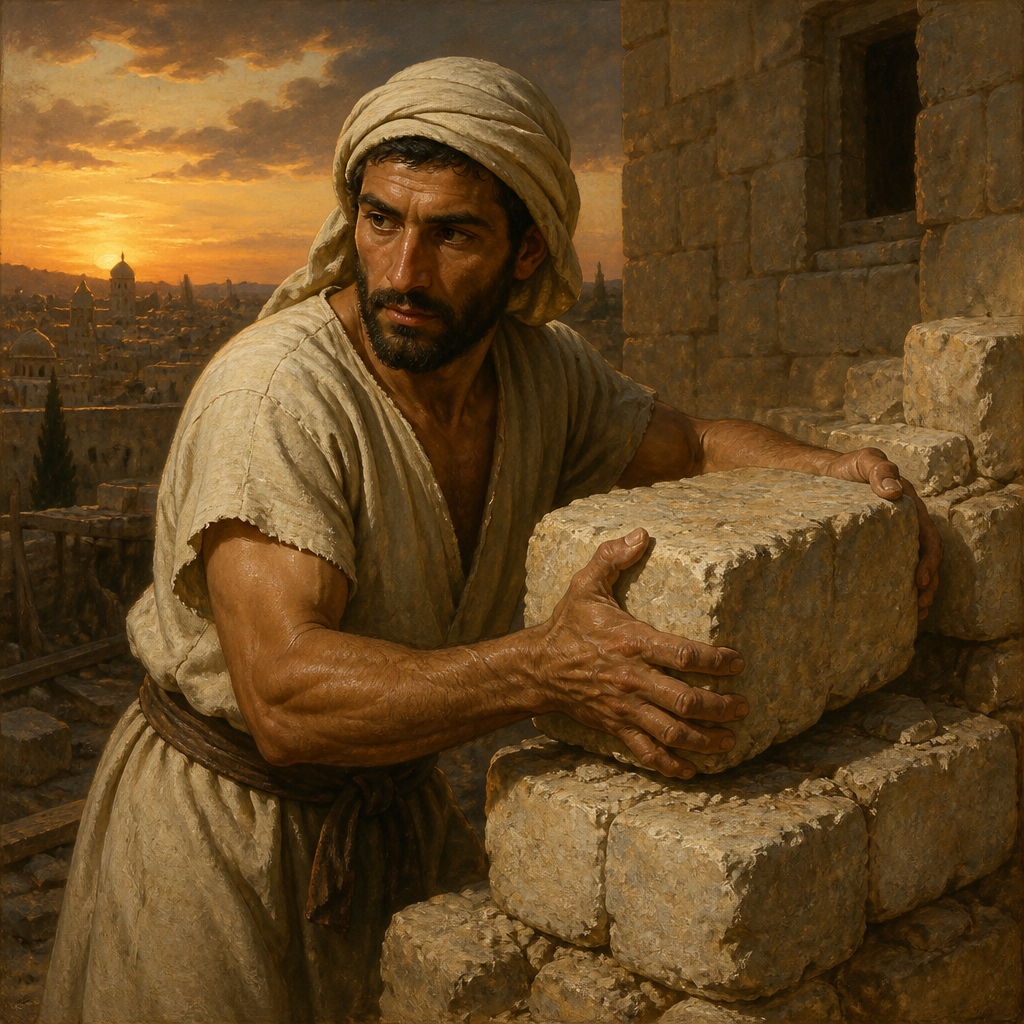
Azariah, Builder of Jerusalem's Wall
Jerusalem resident who repaired the city wall next to his own house during the time of Nehemiah
Azariah was a resident of Jerusalem who participated in the reconstruction of the city walls alongside Nehemiah, repairing the section adjacent to his own home.
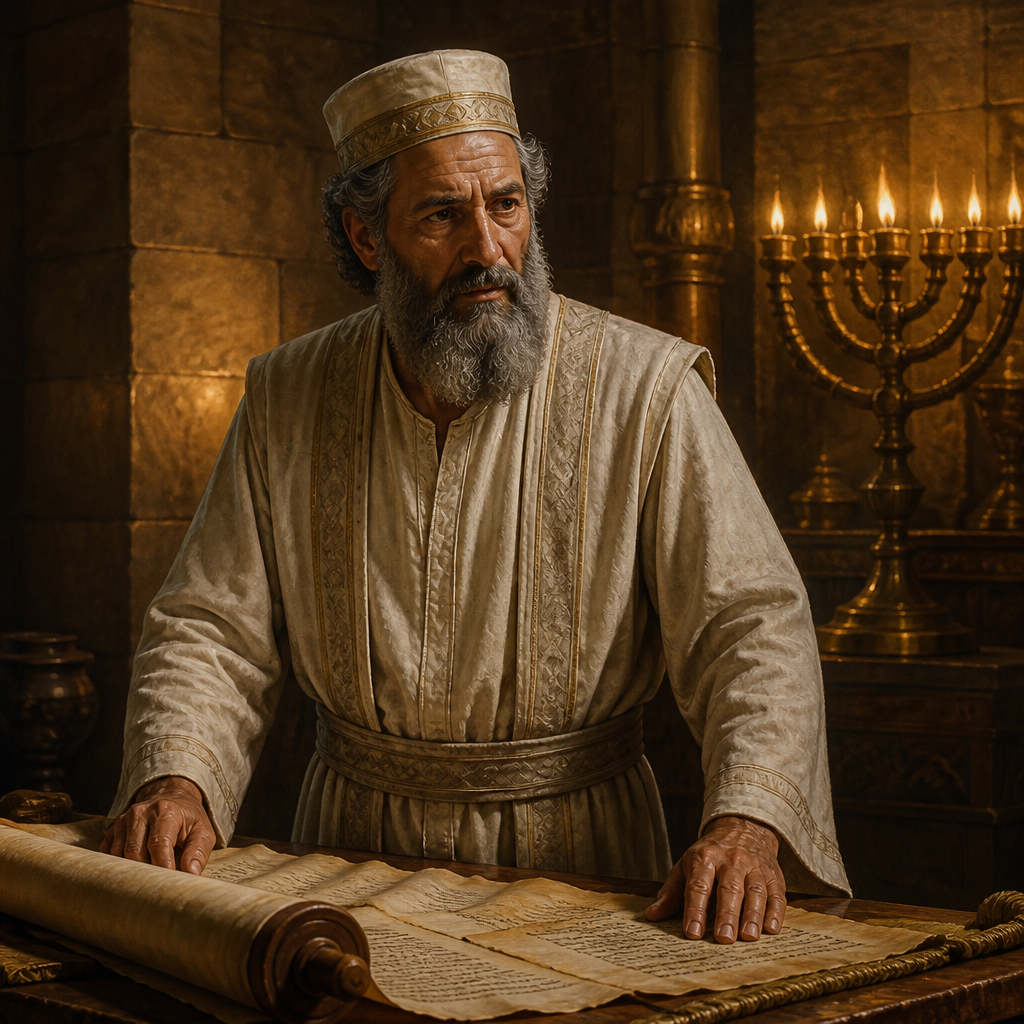
Azariah, High Priest of the Divided Monarchy
Chief official of God's temple and father of the Chief Priest Seraiah
Azariah was a high official in the Temple of Jerusalem and a key link in the Aaronic priesthood during the late Divided Monarchy, serving as the father of the Chief Priest Seraiah.
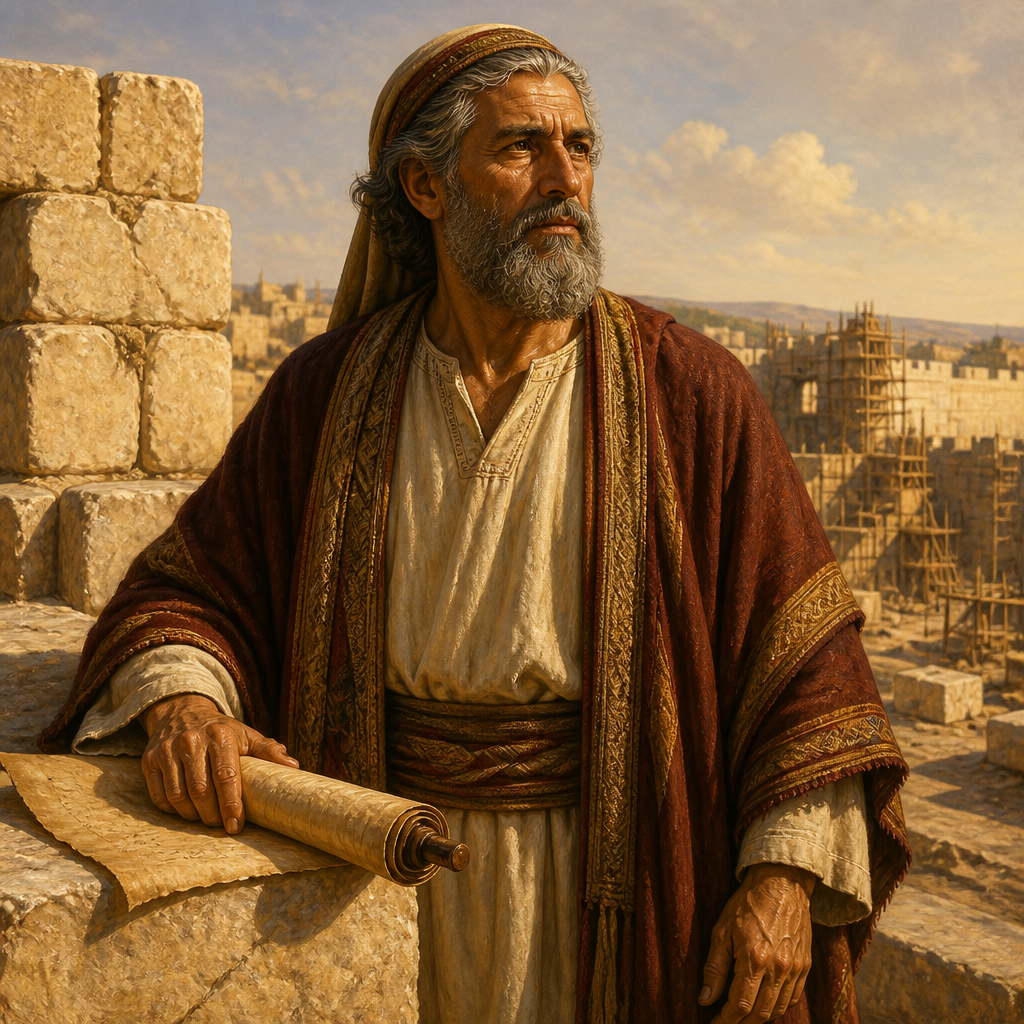
Azariah, Leader of the Return
Leader of the Jewish exiles who returned from Babylon and signed the covenant of Nehemiah
A prominent Jewish leader and priest who returned from the Babylonian exile and signed the covenant of faithfulness under Nehemiah.
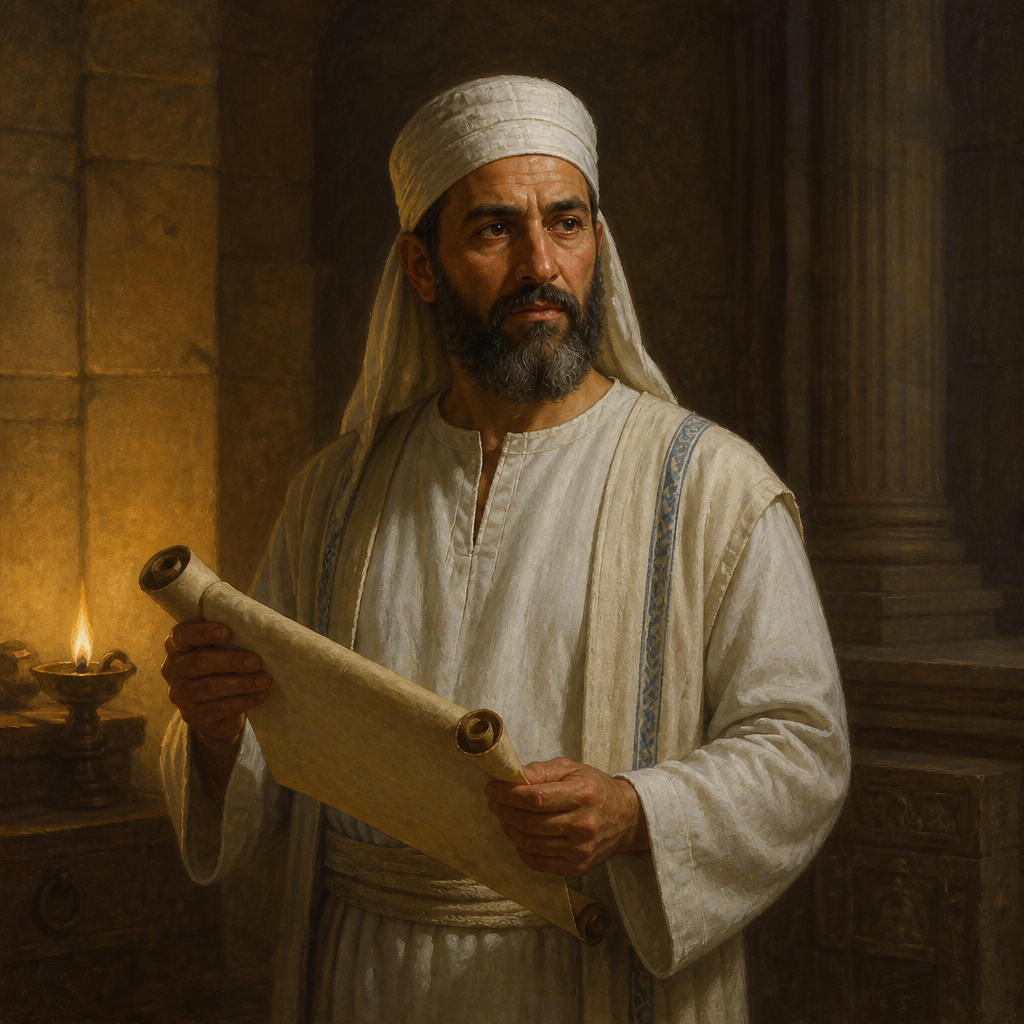
Azariah, Son of Johanan
Levite priest in the line of Zadok and ancestor of Ezra the Scribe
A Levite priest during the Divided Monarchy who served in the high priestly line and was the father of Amariah.
Azariah, Teacher of the Law
Levite who helped explain the Law to the people during Ezra's public reading
A Levite who assisted Ezra in explaining the Law to the people of Jerusalem during the Post-Exilic restoration.
Azbuk
father of Nehemiah, the ruler of half the district of Beth-zur
Azbuk was the father of Nehemiah (a local ruler, not the governor) during the post-exilic reconstruction of Jerusalem's walls.
Azgad, Ancestor of Returning Exiles
ancestor of over two thousand exiles returning from Babylon
An ancestral figure whose numerous descendants were among the Jewish exiles returning from Babylon to Jerusalem under Zerubbabel and Ezra.
Azgad, Signer of the Nehemiah Covenant
Jewish leader who signed the solemn covenant under Nehemiah
A leader or head of a family among the Jewish exiles who signed the solemn covenant to keep the Law of God under Nehemiah.

Aziza
Descendant of Zattu who divorced his foreign wife during Ezra's reforms
A descendant of Zattu who was among the returning exiles identified by Ezra for having married foreign women.
Azrikam, Levite of the Post-Exilic Period
Levite ancestor whose descendants helped resettle Jerusalem after the Babylonian exile
A Levite of the Merarite clan whose lineage was vital for re-establishing temple worship in Jerusalem after the Babylonian exile.
Azzur, Post-Exilic Signatory
leader who signed Nehemiah’s covenant to keep the Law of Moses
Azzur was a Jewish leader who joined Nehemiah in signing the firm covenant to remain faithful to God's laws after the return from the Babylonian exile.
Baana, Father of Zadok
Father of Zadok who helped rebuild the walls of Jerusalem
A Jewish man whose son, Zadok, was a prominent participant in the rebuilding of the Jerusalem wall during the Post-Exilic Period.
Baanah, Leader of the Return
Leader who accompanied Zerubbabel in the return from the Babylonian Exile
A prominent Jewish leader who accompanied Zerubbabel and Nehemiah in the first wave of exiles returning from Babylon to Jerusalem around 538 BC.
Baanah, Signatory to the Covenant
Jewish leader who signed Nehemiah’s covenant to obey the Law of Moses
A Jewish leader who joined Nehemiah in signing the solemn covenant to observe God's law during the post-exilic return to Jerusalem.
Bakbuk
Ancestor of a family of temple servants who returned from the Babylonian Exile
The progenitor of a family of Nethinim (temple servants) who returned from the Babylonian Exile with Zerubbabel.
Bakbukiah
Levite who served as a leader of prayer and a temple gatekeeper after the exile
A Levite leader and gatekeeper who served in Jerusalem during the post-exilic return under Zerubbabel and Nehemiah.
Balaam
Diviner who was hired to curse Israel but blessed them instead
A non-Israelite diviner and son of Beor who, despite hearing the voice of God, attempted to curse Israel for profit and later led them into apostasy.
Bani, Ancestor of a Post-Exilic Clan
Patriarch whose hundreds of descendants returned from the Babylonian Exile
A patriarch whose descendants returned to Jerusalem from the Babylonian exile during the restoration under Zerubbabel and Ezra.
Bani, Ancestor of Men with Foreign Wives
Ancestor of a family whose members married foreign women and later repented under Ezra
Bani was a post-exilic Israelite patriarch whose descendants were among those who had married foreign women and were later required to separate from them during the reforms of Ezra.
Bani, Descendant of Binnui
descendant of Binnui listed in the post-exilic records of Ezra
A post-exilic Israelite descendant of Binnui who was identified among those returning to Jerusalem during the era of the restoration.
Bani, Leader of the People
Leader of the people who signed Nehemiah's covenant
A prominent Jewish leader who signed the solemn covenant to observe the Law of Moses following the return from the Babylonian exile.
Bani, Levite and Ancestor of Uzzi
Levite of the post-exilic period whose son Uzzi was the overseer of the Levites in Jerusalem
A Levite during the era of Exile and Return, known as the father of Uzzi, the overseer of the Levites in post-exilic Jerusalem.
Bani, Levite and Father of Rehum
Levite whose son Rehum rebuilt the wall of Jerusalem
A Levite during the post-exilic era whose son, Rehum, participated in the rebuilding of the Jerusalem wall under Nehemiah.
Bani, Levite of the Platform
Levite who led the public confession on the raised platform and signed Nehemiah's covenant
A Levite during the post-exilic return who led the assembly in public confession and was a signatory to the formal covenant under Nehemiah.
Bani, Levite of the Return
Levite leader who instructed the people in the Law and led the public confession under Ezra
A prominent Levite during the post-exilic return to Jerusalem who assisted Ezra in teaching the Law and led the congregation in public confession and worship.
Barkos
Patriarch whose descendants returned from the Babylonian Exile as temple servants
The progenitor of a family of Nethinim (temple servants) who returned from the Babylonian Exile to Jerusalem with Zerubbabel.
Baruch, Ancestor of Maaseiah
father of Maaseiah and descendant of Shelah mentioned in the Nehemiah census
A descendant of Judah through Shelah, whose lineage helped repopulate Jerusalem following the Babylonian exile.
Baruch, Priest under Nehemiah
Priest who sealed the covenant of Nehemiah
A Jewish priest during the post-exilic period who participated in the solemn covenant renewal under the leadership of Nehemiah and Ezra.
Baruch, Son of Zabbai
Laborer who diligently repaired the section of Jerusalem's wall near the high priest's house
A diligent Jewish worker who participated in the restoration of the walls of Jerusalem under Nehemiah following the return from Babylonian exile.

Barzillai the Gileadite
Wealthy Gileadite who provided for King David during Absalom's rebellion
A wealthy Gileadite landowner who provided critical sustenance to King David during Absalom's rebellion and declined a royal invitation to Jerusalem due to his advanced age.
Barzillai, Priest of the Exile and Return
Priestly ancestor whose descendants lost their standing due to unverified genealogy during the return from Babylon
A priestly ancestor whose descendants were unable to prove their lineage upon returning from the Babylonian Exile.
Bavvai
Levite ruler who helped rebuild the wall of Jerusalem under Nehemiah
A Levite and district ruler who participated in the reconstruction of Jerusalem's walls under Nehemiah following the Babylonian exile.
Bazluth
Patriarch of a family of Nethinim who returned from the Babylonian Exile
Bazluth was the head of a family of Nethinim (temple servants) who returned to Jerusalem from the Babylonian exile during the first wave of restoration.
Bebai, Parent of Zechariah
father of Zechariah who returned from the Babylonian exile
Bebai was a member of the Jewish community in the Exilic Period and the father of Zechariah, a man who returned to Jerusalem under Ezra.
Bebai, Patriarch of an Exilic Clan
Patriarch whose descendants returned to Jerusalem from the Babylonian exile
The ancestral head of a large family of Jewish exiles who returned to Jerusalem from Babylon under Zerubbabel and Ezra.

Bebai, Signer of the Covenant
leader who sealed the written covenant under Nehemiah
A Jewish leader who acted as a representative for his people by signing the formal covenant to follow God's law during the reforms of Nehemiah.
Bedeiah
Man listed among those who married foreign wives and repented under Ezra
A Jewish man of the Post-Exilic Period who was listed among those who married foreign women and agreed to divorce them according to the reform of Ezra.
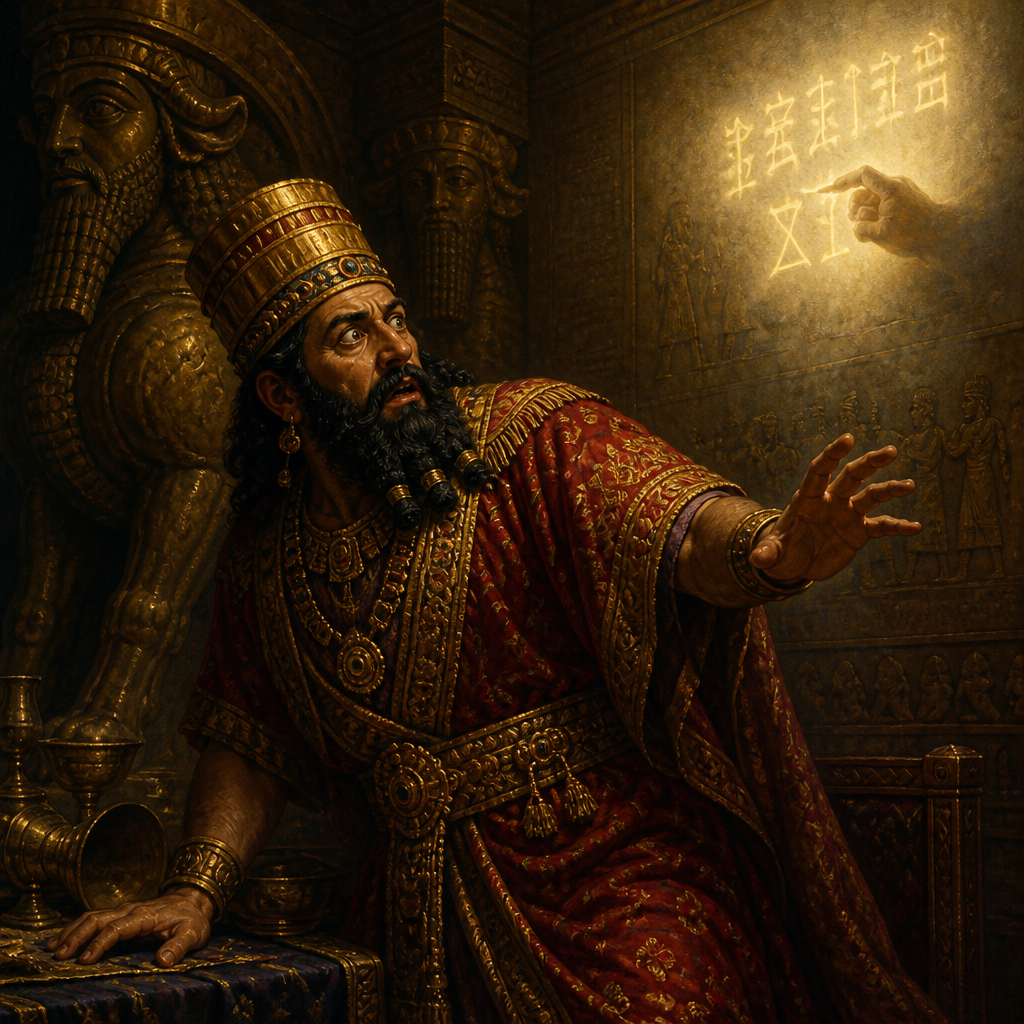
Belshazzar
King of Babylon who saw the supernatural writing on the wall during a sacrilegious feast
The final ruler of the Babylonian Empire mentioned in the book of Daniel, known for the 'writing on the wall' incident during a sacrilegious feast.

Belshazzar's Queen
Queen who advised King Belshazzar to summon Daniel to interpret the writing on the wall
The queen of Babylon who entered Belshazzar's feast to advise the king to consult Daniel regarding the writing on the wall.
Benaiah, Descendant of Bani
Israelite among the sons of Bani who divorced his foreign wife under Ezra's reforms
An Israelite during the post-exilic period who complied with Ezra’s decree to dissolve marriages to foreign wives to preserve the holiness of the returning community.
Benaiah, Descendant of Nebo
Israelite descendant of Nebo who divorced his foreign wife during Ezra’s reforms
An Israelite who returned from the Babylonian exile and complied with Ezra's decree to put away his foreign wife.
Benaiah, Descendant of Pahath-moab
Descendant of Pahath-moab who divorced his foreign wife during Ezra's reforms
An Israelite during the post-exilic period who was among those instructed by Ezra to dissolve marriages with foreign women to maintain the spiritual purity of the returning community.
Benaiah, Descendant of Parosh
Israelite from the family of Parosh who repented of intermarriage during Ezra's reforms
An Israelite from the family of Parosh who was among those required to separate from foreign wives during Ezra's post-exilic reforms.
Beninu
Levite who signed the covenant under Nehemiah
A Levite or communal leader who joined Nehemiah in signing the formal covenant to remain faithful to God's law during the post-exilic period.
Benjamin, Participant in the Wall Dedication
Leader who participated in the dedication of the Jerusalem walls under Nehemiah
A leader in post-exilic Jerusalem who participated in the ceremonial dedication of the rebuilt city walls under Nehemiah.
Benjamin, Rebuilder of the Jerusalem Wall
Rebuilder of the Jerusalem wall who repaired the section in front of his own house
A resident of Jerusalem during the Post-Exilic Period who collaborated with Hasshub to repair the section of the city wall directly in front of his own home.
Benjamin, Son of Harim
Man who married a foreign woman and repented under Ezra's reforms
An Israelite during the Post-Exilic Period who was listed among those required to dissolve foreign marriages after the return from Babylon.

Benjamin, Son of Jacob
Youngest son of Jacob and the full brother of Joseph whose presence in Egypt led to his family's reconciliation
The youngest son of Jacob and Rachel, Benjamin was the beloved patriarch of one of the twelve tribes of Israel and a central figure in the narrative of Joseph's rise in Egypt.
Berechiah, Father of Meshullam
father of Meshullam who helped Nehemiah rebuild Jerusalem's walls
A prominent Jewish man in Jerusalem during the Post-Exilic Period whose son, Meshullam, assisted Nehemiah in rebuilding the city walls.
Berechiah, Father of Zechariah the Prophet
Father of the prophet Zechariah and son of Iddo
Berechiah was the son of Iddo and the father of the prophet Zechariah, serving as a vital link in a priestly and prophetic lineage during the return from the Babylonian Exile.
Besai
Patriarch whose descendants returned from the Babylonian exile to serve in the Temple
The patriarch of a family of Nethinim (temple servants) who returned to Jerusalem from the Babylonian exile with Zerubbabel.
Besodeiah
father of Meshullam who helped repair the Old Gate of Jerusalem
A Jewish man whose son, Meshullam, assisted Nehemiah in the restoration of Jerusalem's Old Gate during the Post-Exilic Period.
Bezai, Ancestor of Returnees
Patriarch whose descendants returned to Judah after the Babylonian captivity
An ancestral figure whose hundreds of descendants returned from the Babylonian exile to Jerusalem and Judah under the leadership of Zerubbabel.
Bezai, Signer of the Covenant
Leader who sealed the written covenant under Nehemiah
Bezai was a post-exilic leader and one of the Jewish officials who signed the written covenant of Nehemiah to reform the community and follow the Law of Moses.
Bezalel, Descendant of Pahath-moab
Israelite man who was listed among those required to divorce their foreign wives by Ezra
An Israelite during the post-exilic period who was among those required to dissolve marriages with foreign wives according to the decree of Ezra.
Bigtha
Eunuch of King Ahasuerus who was ordered to bring Queen Vashti to the royal banquet
Bigtha was one of the seven eunuchs who served in the personal court of King Ahasuerus during the Persian exile.

Bigthan
Palace guard who conspired to assassinate King Xerxes
A Persian eunuch and chamberlain who conspired to assassinate King Xerxes, an act thwarted by the intervention of Mordecai.