Adaiah, son of Joiarib
Who was Adaiah, son of Joiarib, in the Bible?
A Judean descendant of Shelah who lived in Jerusalem following the Babylonian exile during the rebuilding era of Nehemiah.
This is one of 7 people named Adaiah in the Bible. See all 7 →
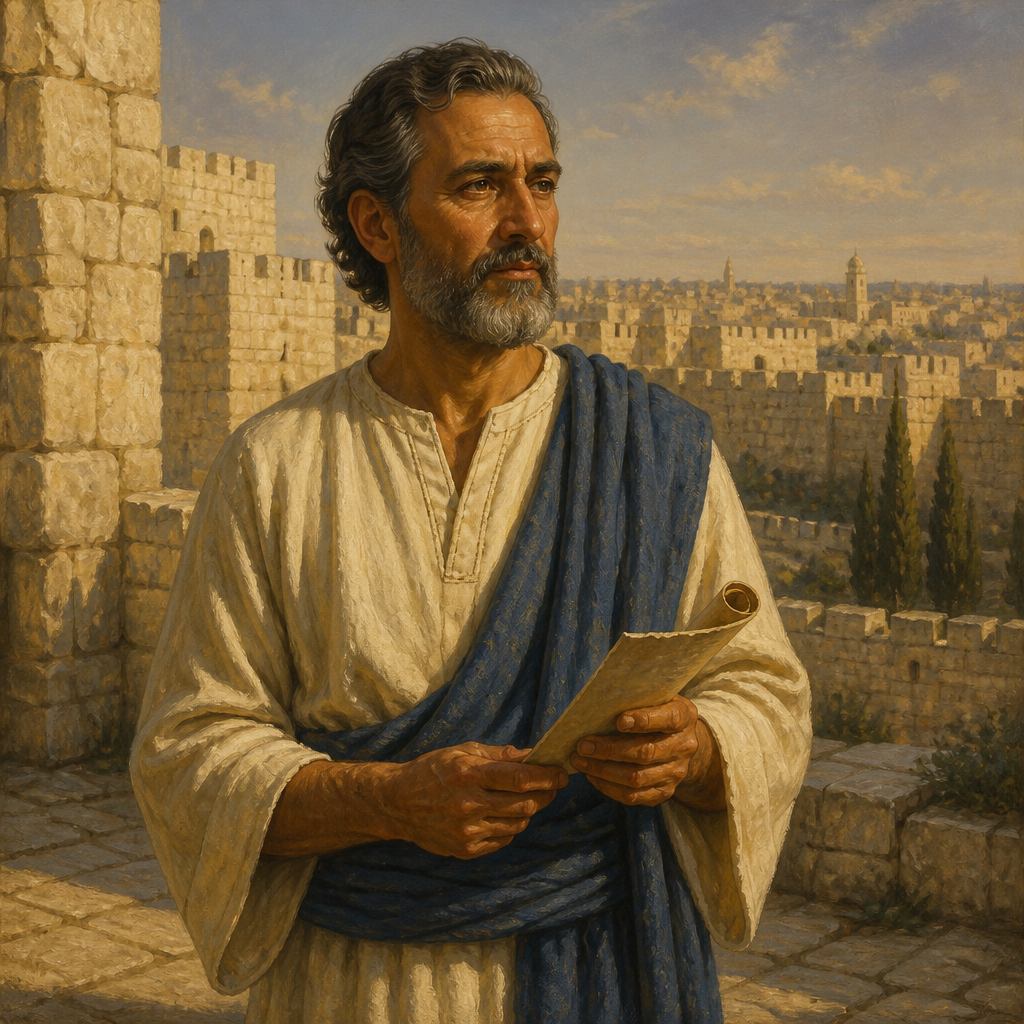
Adaiah, son of Joiarib, was a prominent member of the tribe of Judah who resided in Jerusalem during the Post-Exilic Period. His presence in the city is recorded in the administrative lists of Nehemiah 11, which document the leaders and families who volunteered or were chosen by lot to inhabit the holy city at a time when its population was sparse following the return from Babylon.
Belonging to the lineage of Shelah, the son of Judah, Adaiah represented a significant ancestral line within the southern kingdom. His genealogical record serves as a testament to the preservation of tribal identities despite the displacement of the exile. He is specifically noted as the father of Hazaiah and the son of Joiarib, anchoring his family within the social and religious structure of the restoration community.
Background and Family
Adaiah is identified within the biblical record as a member of the tribe of Judah, specifically descending from the line of Shelah. Shelah was the third son of the patriarch Judah and his Canaanite wife, the daughter of Shua (Genesis 38:5). While the primary royal line of Judah descended from Perez, the Shelanite clan maintained a distinct and recognized presence within the tribal inheritance.
The genealogy provided in Nehemiah 11:5 situates Adaiah within a multi-generational framework: he was the son of Joiarib and the father of Hazaiah. This lineage continues through Maaseiah, a figure who played a role in the repopulation of Jerusalem under the leadership of Nehemiah. The mention of Joiarib suggests a family of some status, as the name Joiarib is frequently associated with priestly and leadership circles in the post-exilic community, though Adaiah is specifically linked here to the secular/tribal lineage of Judah rather than the priesthood.
Major Life Events
The life of Adaiah is contextualized by the "Exile and Return" era, specifically the period following the decree of Cyrus the Great in 538 BC. After the walls of Jerusalem were reconstructed under Nehemiah's supervision, the city remained dangerously underpopulated compared to the surrounding countryside. Nehemiah 11 describes a systematic effort to bring stability to the capital by having one out of every ten people move into the city.
While the text does not detail Adaiah’s personal actions, his inclusion in the list of Jerusalem’s inhabitants (Nehemiah 11:5) indicates that he was among the "heads of the province" who settled in the city. Whether he was a volunteer or selected by lot, his residence in Jerusalem was an act of civic and religious commitment to the restoration of the Davidic capital and the security of the Temple.
Relationship to Other Biblical Figures
Adaiah’s primary biblical relationship is his placement within a specific Judean genealogy. He is the son of Joiarib and the grandson of Zechariah. His son, Hazaiah, is noted as the father of Col-hozeh, who was the father of Baruch, who was the father of Maaseiah.
This six-generation pedigree serves a vital purpose in the Book of Nehemiah: it authenticates the Judean heritage of the residents of Jerusalem. By tracing Adaiah back to Shelah, the chronicler links the post-exilic community directly to the patriarchal period, asserting that the men rebuilding the nation were the legitimate heirs of the land and the promises given to Judah.
Spiritual Significance
Though Adaiah appears in only one verse, his significance lies in the concept of the "Remnant." The preservation of his name in the sacred record highlights the biblical theme that God maintains a lineage for His people even through judgment and exile. Adaiah represents the ordinary but essential individuals who formed the backbone of the restored Jerusalem.
In the context of Nehemiah's reforms, Adaiah's residence in Jerusalem symbolizes a devotion to the "Holy City." By choosing to live within the walls of a city that had been a ruin only decades prior, men like Adaiah demonstrated faith in God’s future for Israel. His life reflects the transition from a displaced people back to a settled nation focused on the worship of the LORD.
Adaiah's significance is primarily genealogical and representative. He serves as a link in the chain of the tribe of Judah, specifically the Shelanite branch, ensuring that the identity of the people of God remained intact after seventy years of Babylonian captivity. His inclusion in the list of those living in Jerusalem underscores the themes of restoration, tribal continuity, and the repopulation of the holy city as a fulfillment of prophetic hope.
Theologically, Adaiah represents the 'living stones' of the restoration. His existence validates that the community Nehemiah led was not a new entity, but the historical continuation of the tribe of Judah. His presence in the city records emphasizes that every individual, regardless of their lack of narrated deeds, played a part in the divine plan to re-establish the testimony of Israel in the land of promise.
Frequently Asked Questions
Which tribe did Adaiah belong to?
Adaiah belonged to the tribe of Judah, specifically descending from the line of Shelah, the son of the patriarch Judah.
When did Adaiah live?
Adaiah lived during the Post-Exilic Period (Exile and Return), specifically during the time when Nehemiah was governor of Judah, around the mid-5th century BC.
Who was Adaiah's father?
According to Nehemiah 11:5, Adaiah was the son of Joiarib.
Where did Adaiah reside?
Adaiah was among the Judean leaders documented as living in the city of Jerusalem after its walls were rebuilt by Nehemiah.
What is the meaning of the name Adaiah?
The Hebrew name Adaiah (Adayah) generally translates to 'Yahweh has adorned' or 'Witness of Yahweh.'
Family & Relationships
Parents
 Joiarib, Ancestor of AdaiahFatherNehemiah 11:5Stated
 Adaiah, son of JoiaribThis page
Children
 HazaiahSonNehemiah 11:5Stated
Connected Figures
Family
Father · Nehemiah 11:5
A member of the tribe of Judah and an ancestor of Adaiah, one of the post-exilic residents of Jerusalem mentioned in the genealogical records of Nehemiah.
Exile and ReturnFirst: Nehemiah 11:51 versesAncestor in the genealogical recordJudah
Son · Nehemiah 11:5
A descendant of Judah through Shelah who returned to Jerusalem during the post-exilic restoration period.
Categories
Mentions by Book
- Nehemiah1
Scripture References
All 1 indexed verse, in canonical order, from the Berean Standard Bible.
Nehemiah · 1
- Nehemiah 11:5
and Maaseiah son of Baruch, the son of Col-hozeh, the son of Hazaiah, the son of Adaiah, the son of Joiarib, the son of Zechariah, a descendant of Shelah.
Others Named Adaiah
Compare all 7 bearers →Adaiah, Son of Shimei1 Chronicles 8:21
A Benjamite descendant of Shimei listed among the heads of households and valiant men in the genealogical records of the Divided Monarchy.
Adaiah, Descendant of BaniEzra 10:29
Adaiah, a descendant of Bani, was a returnee from the Babylonian exile who is listed in the Book of Ezra as one who had married a foreign woman.
Adaiah, Father of Maaseiah2 Chronicles 23:1
Adaiah was a Judean man during the Divided Monarchy whose son, Maaseiah, served as a military commander during the successful revolt against Queen Athaliah.
Adaiah, Grandfather of Josiah2 Kings 22:1
A man from Bozkath whose daughter, Jedidah, became the queen mother of Judah during the reign of King Josiah.
Adaiah, Priest of the Post-Exilic Return1 Chronicles 9:12
A prominent Levite and priest who returned to Jerusalem from the Babylonian exile to oversee temple operations.
Adaiah, Contemporary of Nathan and ShelemiahEzra 10:39
A returnee from the Babylonian exile during the time of Ezra who was among those documented as having married a foreign woman.