Adaiah, Son of Shimei
Who was Adaiah, Son of Shimei, in the Bible?
A Benjamite descendant of Shimei listed among the heads of households and valiant men in the genealogical records of the Divided Monarchy.
This is one of 7 people named Adaiah in the Bible. See all 7 →
Adaiah was a member of the Tribe of Benjamin during the era of the Divided Monarchy. He is documented specifically within the genealogical registers of 1 Chronicles, which serve to preserve the lineage of the southern kingdom and the specific households that maintained the heritage of Israel. As a son of Shimei, Adaiah represented a branch of the Benjamite tribe that settled in Jerusalem and surrounding areas.
The biblical record concerning this specific Adaiah is concise, appearing exclusively within the ninth generation of Benjamin’s lineage as recorded by the Chronicler. While his personal deeds are not detailed in the narrative, his inclusion in the sacred text signifies his status as a recognized head of a household and a man of standing within his tribal community.
Background and Family
Adaiah was a member of the Tribe of Benjamin, the youngest son of the patriarch Jacob. According to the genealogical record in 1 Chronicles 8, he was one of the many sons of Shimei (also referred to as Shema in verse 13). The text lists Adaiah alongside his eight brothers: Jakim, Zichri, Zabdi, Elienai, Zillethai, Eliel, Beraiah, and Shimrath.
This family unit belonged to a line of Benjamites who were noted for being "heads of the fathers' houses" (1 Chronicles 8:28). The records indicate that these specific families originally lived in Aijalon, where they were credited with driving out the inhabitants of Gath, though the lineage eventually settled in Jerusalem. Adaiah’s position within this list suggests he was a contemporary of the later Divided Monarchy, contributing to the population and defense of the Judean territory.
Major Life Events
There are no specific narrative events or recorded dialogues attributed to Adaiah in the Masoretic Text. His life is defined by his placement within the tribal registry. In the context of 1 Chronicles, such registries were vital for establishing legal claims to land, confirming eligibility for military service, and maintaining the purity of the community following the division of the kingdom. As a "son of Shimei," Adaiah functioned as a pillar of his clan, ensuring the continuity of the Benjamite presence in the volatile border regions between Israel and Judah.
Relationship to Other Biblical Figures
Adaiah’s primary biblical relationships are strictly familial. He is identified as one of nine brothers. The text emphasizes his shared heritage with Beraiah and Shimrath, who are grouped with him in the specific verse:
"Adaiah, Beraiah, and Shimrath were the sons of Shimei." (1 Chronicles 8:21, BSB)
His father, Shimei, was a significant figure within the tribe, described in the broader context of the chapter as a leader who helped establish the Benjamite foothold in their allotted territory. Adaiah’s brothers—specifically Jakim, Zichri, and Zabdi—are also listed as influential members of the same household.
Spiritual Significance
The name Adaiah (or Adayah) translates roughly to "Yahweh has adorned" or "The Lord has decked himself." In the Hebrew tradition, the naming of a child was often a testimony to the parents' faith or a reflection of the family's status. Although the biblical record offers only a single mention of his name, Adaiah represents the thousands of unnamed faithful who comprised the "remnant" of the southern kingdom. His inclusion in the Chronicles serves a specific theological purpose: to demonstrate that every individual and family was known and recorded by God, contributing to the survival of the messianic line through the tribe of Benjamin and its union with Judah.
Theologically, Adaiah’s inclusion in the genealogy of 1 Chronicles 8 highlights the meticulous care taken to preserve the identity of the Tribe of Benjamin. Following the division of the United Kingdom under Rehoboam, Benjamin remained loyal to the house of David alongside Judah. Adaiah represents the generational continuity of this loyalty.
His presence in the text also underscores the importance of the 'household' unit in Israelite society. By naming Adaiah and his brothers, the Chronicler emphasizes that the strength of the nation was built upon the strength of individual families who maintained their tribal heritage and geographic responsibilities during the Divided Monarchy.
Frequently Asked Questions
Which tribe did Adaiah belong to?
Adaiah belonged to the Tribe of Benjamin.
Who was Adaiah's father?
His father was Shimei (sometimes identified as Shema), a leader in the tribe of Benjamin.
Where is Adaiah mentioned in the Bible?
He is mentioned only once, in 1 Chronicles 8:21.
What does the name Adaiah mean?
The name means 'Yahweh has adorned' or 'The Lord has decked himself.'
Who were Adaiah's siblings?
His recorded brothers include Jakim, Zichri, Zabdi, Elienai, Zillethai, Eliel, Beraiah, and Shimrath.
Family & Relationships
Parents
 Shimei, Benjamite of the Divided MonarchyFather1 Chronicles 8:21Stated
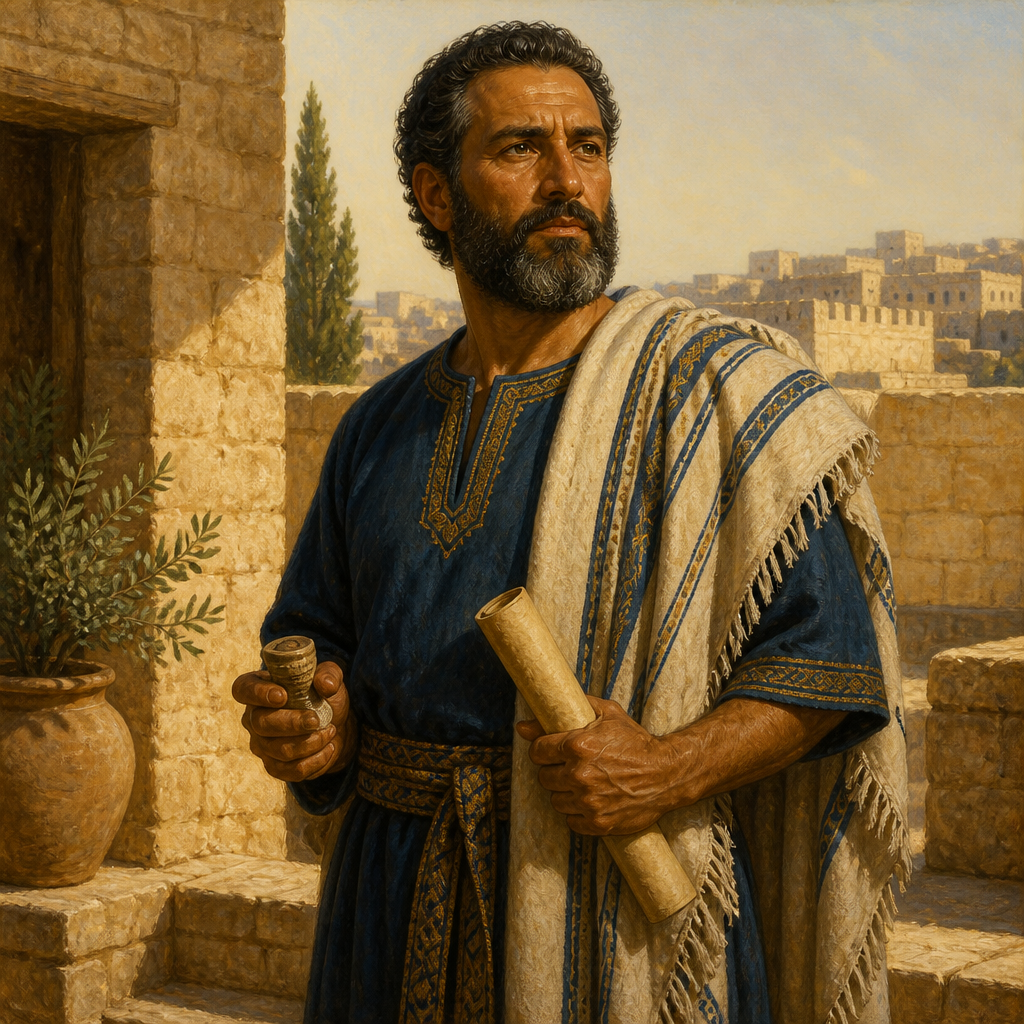 Adaiah, Son of ShimeiThis page
 BeraiahBrother1 Chronicles 8:21Stated
 Eliel, Son of ShimeiBrother1 Chronicles 8:20–21Stated
 ElienaiBrother1 Chronicles 8:20–21Stated
 Jakim, Son of ShimeiBrother1 Chronicles 8:19–21Stated
 ShimrathBrother1 Chronicles 8:21Stated
 Zabdi, Son of ShimeiBrother1 Chronicles 8:19–21Stated
 Zichri, Son of ShimeiBrother1 Chronicles 8:19–21Stated
 Zillethai, Son of ShimeiBrother1 Chronicles 8:20–21Stated
Connected Figures
Family
Father · 1 Chronicles 8:21
A prominent member of the tribe of Benjamin during the Divided Monarchy era, recognized as the father of nine sons including Adaiah and Beraiah.
Brother · 1 Chronicles 8:21
A Benjamite leader and son of Shimei, identified as a head of a father's house during the period of the Divided Monarchy.
Brother · 1 Chronicles 8:20–21
A Benjamite leader and son of Shimei, listed among the heads of families residing in Jerusalem during the period of the Divided Monarchy.
Brother · 1 Chronicles 8:20–21
Elienai was a Benjamite leader and one of the nine sons of Shimei, listed among the heads of their ancestral houses in the genealogical records of 1 Chronicles.
Brother · 1 Chronicles 8:19–21
Jakim was a Benjamite leader during the Divided Monarchy, identified as one of the nine sons of Shimei residing in Jerusalem.
Brother · 1 Chronicles 8:21
A Benjamite man mentioned in the genealogical records of 1 Chronicles during the era of the Divided Monarchy.
Divided MonarchyFirst: 1 Chronicles 8:213 versesHead of a tribal householdBenjamin
Brother · 1 Chronicles 8:19–21
Zabdi, the son of Shimei, was a member of the tribe of Benjamin listed in the genealogical records of the Divided Monarchy period.
Brother · 1 Chronicles 8:19–21
A Benjamite leader during the Divided Monarchy period, known as one of the nine sons of Shimei listed in the genealogical records of Jerusalem.
Brother · 1 Chronicles 8:20–21
A Benjamite listed in the genealogies of 1 Chronicles, identified as one of the nine sons of Shimei.
Categories
Mentions by Book
- 1 Chronicles3
Scripture References
All 3 indexed verses, in canonical order, from the Berean Standard Bible.
1 Chronicles · 3
- 1 Chronicles 8:19Partial
Jakim, Zichri, Zabdi,
Cited as evidence on a family card; added so References, Key Verses and Mentions by Book share one index.
- 1 Chronicles 8:20Partial
Elienai, Zillethai, Eliel,
Cited as evidence on a family card; added so References, Key Verses and Mentions by Book share one index.
- 1 Chronicles 8:21
Adaiah, Beraiah, and Shimrath were the sons of Shimei.
Others Named Adaiah
Compare all 7 bearers →Adaiah, son of JoiaribNehemiah 11:5
A Judean descendant of Shelah who lived in Jerusalem following the Babylonian exile during the rebuilding era of Nehemiah.
Adaiah, Descendant of BaniEzra 10:29
Adaiah, a descendant of Bani, was a returnee from the Babylonian exile who is listed in the Book of Ezra as one who had married a foreign woman.
Adaiah, Father of Maaseiah2 Chronicles 23:1
Adaiah was a Judean man during the Divided Monarchy whose son, Maaseiah, served as a military commander during the successful revolt against Queen Athaliah.
Adaiah, Grandfather of Josiah2 Kings 22:1
A man from Bozkath whose daughter, Jedidah, became the queen mother of Judah during the reign of King Josiah.
Adaiah, Priest of the Post-Exilic Return1 Chronicles 9:12
A prominent Levite and priest who returned to Jerusalem from the Babylonian exile to oversee temple operations.
Adaiah, Contemporary of Nathan and ShelemiahEzra 10:39
A returnee from the Babylonian exile during the time of Ezra who was among those documented as having married a foreign woman.