Beraiah
Who was Beraiah in the Bible?
A Benjamite leader and son of Shimei, identified as a head of a father's house during the period of the Divided Monarchy.
Beraiah is a figure appearing in the genealogical records of the tribe of Benjamin. According to the biblical record, he was one of the sons of Shimei (also identified as Shema). His inclusion in the chronicler’s detailed list signifies his status as a chief man and a head of a familial household residing in Jerusalem.
Historically, Beraiah lived during the era of the Divided Monarchy. While the specific details of his personal life and actions are not recorded in the narrative portions of the Hebrew Bible, his placement within the genealogy of 1 Chronicles 8 serves to establish the lineage and ancestral heritage of the Benjamites who remained prominent in the post-exilic memory of Israel.
Background and Family
Beraiah is introduced in the eighth chapter of 1 Chronicles, a section dedicated to the extensive genealogy of the tribe of Benjamin. He is explicitly identified as the son of Shimei (1 Chronicles 8:21). Within this lineage, Beraiah is listed alongside his brothers: Adaiah, Shimrath, Jakim, Zichri, Zabdi, Elienai, Zillethai, and Eliel.
The text notes that these individuals were "heads of the fathers’ houses" (1 Chronicles 8:28). This designation implies that Beraiah was not merely a private citizen but a recognized leader or patriarch of a specific sub-clan within the Benjamite territory. The family is associated with the region of Aijalon and eventually Jerusalem, reflecting the strategic movement and settlement patterns of the tribe during the Divided Monarchy.
Major Life Events
The biblical record does not provide a narrative account of Beraiah’s life, deeds, or death. His historical footprint is strictly limited to his presence in the genealogical registers of 1 Chronicles. This lack of narrative detail is typical for many figures listed in the Chronicler’s work, where the primary objective was to document the continuity of the covenant people and the preservation of tribal identities through the tumultuous years of the monarchy and the eventual exile.
Relationship to Other Biblical Figures
Beraiah’s primary relationships are defined by his siblings and his father, Shimei. As one of nine brothers mentioned in verse 21, Beraiah was part of a large and presumably influential family unit. His father, Shimei, is credited in the preceding verses with being a leader who helped drive out the inhabitants of Gath (1 Chronicles 8:13), suggesting that Beraiah was raised in a family of military or civic distinction within Benjamin.
Spiritual Significance
In a theological context, Beraiah represents the endurance of the tribe of Benjamin. Despite the tribe’s near-extinction in earlier biblical history (Judges 20) and the later divisions of the kingdom, the naming of Beraiah confirms that God preserved the lines of the smaller tribes. His inclusion in the sacred text ensures that his name, meaning "Jehovah has created," remains a testimony to the individual value placed on the leaders of Israel’s households within the divine record.
Beraiah’s significance lies in his role as a representative of the Benjamite nobility. By documenting his name, the Chronicler reinforces the legitimacy of the Benjamite claims to their heritage and their integral role in the social fabric of Jerusalem. The meaning of his name, 'Yahweh has created,' reflects a common naming convention of the era that acknowledged the sovereignty of God over human life and lineage.
Frequently Asked Questions
Who was Beraiah's father?
Beraiah was the son of Shimei (also referred to as Shema), a leader in the tribe of Benjamin.
What tribe did Beraiah belong to?
Beraiah was a member of the tribe of Benjamin.
Where did Beraiah live?
The text indicates that his family heads lived in Jerusalem, though his ancestors were associated with Aijalon.
What does the name Beraiah mean?
The name Beraiah (H1256) is translated as 'Jehovah has created' or 'Yah has created'.
Family & Relationships
Parents
 Shimei, Benjamite of the Divided MonarchyFather1 Chronicles 8:21Stated
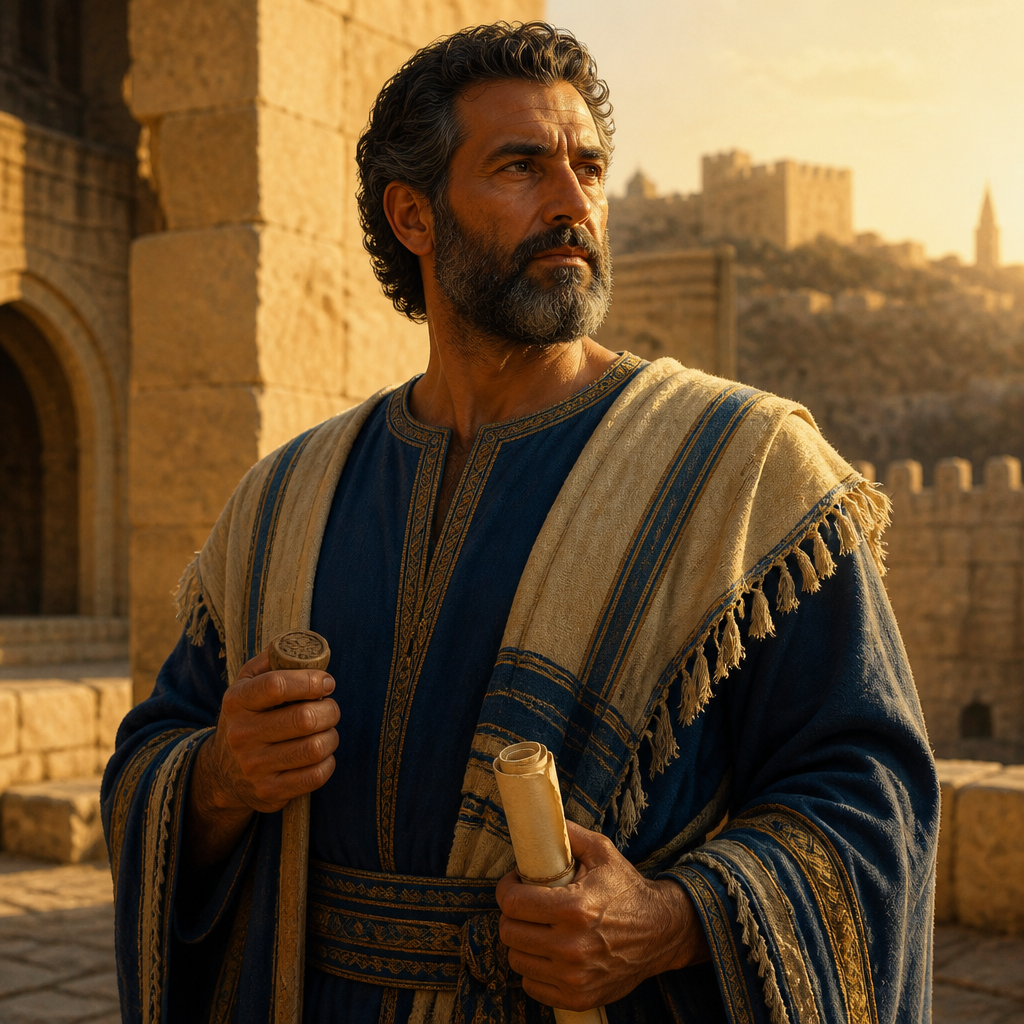 BeraiahThis page
 Adaiah, Son of ShimeiBrother1 Chronicles 8:21Stated
 Eliel, Son of ShimeiBrother1 Chronicles 8:20–21Stated
 ElienaiBrother1 Chronicles 8:20–21Stated
 Jakim, Son of ShimeiBrother1 Chronicles 8:19–21Stated
 ShimrathBrother1 Chronicles 8:21Stated
 Zabdi, Son of ShimeiBrother1 Chronicles 8:19–21Stated
 Zichri, Son of ShimeiBrother1 Chronicles 8:19–21Stated
 Zillethai, Son of ShimeiBrother1 Chronicles 8:20–21Stated
Connected Figures
Family
Father · 1 Chronicles 8:21
A prominent member of the tribe of Benjamin during the Divided Monarchy era, recognized as the father of nine sons including Adaiah and Beraiah.
Brother · 1 Chronicles 8:21
A Benjamite descendant of Shimei listed among the heads of households and valiant men in the genealogical records of the Divided Monarchy.
Brother · 1 Chronicles 8:20–21
A Benjamite leader and son of Shimei, listed among the heads of families residing in Jerusalem during the period of the Divided Monarchy.
Brother · 1 Chronicles 8:20–21
Elienai was a Benjamite leader and one of the nine sons of Shimei, listed among the heads of their ancestral houses in the genealogical records of 1 Chronicles.
Brother · 1 Chronicles 8:19–21
Jakim was a Benjamite leader during the Divided Monarchy, identified as one of the nine sons of Shimei residing in Jerusalem.
Brother · 1 Chronicles 8:21
A Benjamite man mentioned in the genealogical records of 1 Chronicles during the era of the Divided Monarchy.
Divided MonarchyFirst: 1 Chronicles 8:213 versesHead of a tribal householdBenjamin
Brother · 1 Chronicles 8:19–21
Zabdi, the son of Shimei, was a member of the tribe of Benjamin listed in the genealogical records of the Divided Monarchy period.
Brother · 1 Chronicles 8:19–21
A Benjamite leader during the Divided Monarchy period, known as one of the nine sons of Shimei listed in the genealogical records of Jerusalem.
Brother · 1 Chronicles 8:20–21
A Benjamite listed in the genealogies of 1 Chronicles, identified as one of the nine sons of Shimei.
Categories
Mentions by Book
- 1 Chronicles3
Scripture References
All 3 indexed verses, in canonical order, from the Berean Standard Bible.
1 Chronicles · 3
- 1 Chronicles 8:19Partial
Jakim, Zichri, Zabdi,
Cited as evidence on a family card; added so References, Key Verses and Mentions by Book share one index.
- 1 Chronicles 8:20Partial
Elienai, Zillethai, Eliel,
Cited as evidence on a family card; added so References, Key Verses and Mentions by Book share one index.
- 1 Chronicles 8:21
Adaiah, Beraiah, and Shimrath were the sons of Shimei.