Hazaiah
Who was Hazaiah in the Bible?
A descendant of Judah through Shelah who returned to Jerusalem during the post-exilic restoration period.
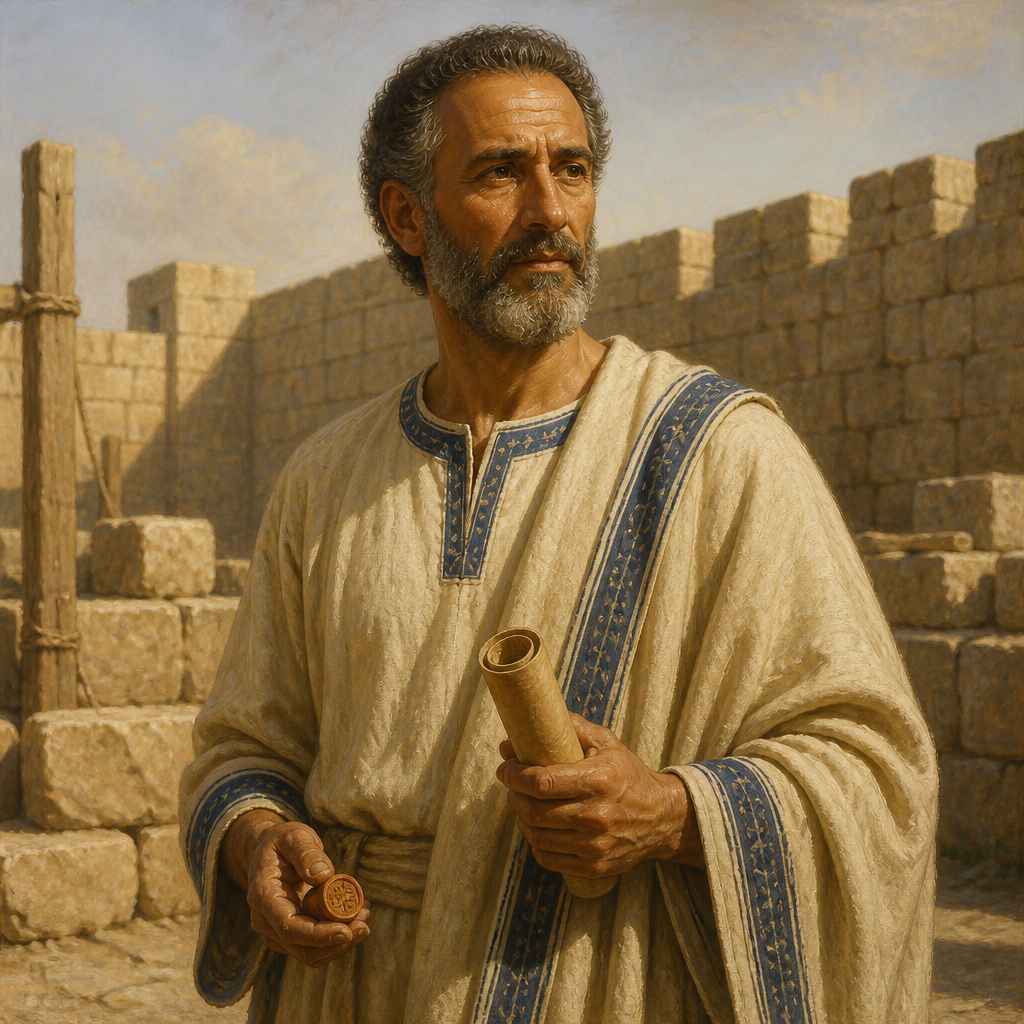
Hazaiah was a member of the tribe of Judah who lived during the era of the Exile and Return. He is specifically identified in the biblical record as a descendant of Shelah, the son of Judah. His lineage was significant enough to be recorded among the residents of Jerusalem during the time of Nehemiah, as the Jewish people sought to repopulate their ancestral capital following the Babylonian captivity.
While personal details regarding his individual actions or occupation are absent from the text, Hazaiah serves as a vital genealogical link in the reconstruction of the Judean community. He is positioned within a multi-generational list that emphasizes the continuity of the Davidic and Judean heritage despite the decades spent in exile. His presence in the record confirms the return of the Shelanite clan to their traditional lands.
Background and Family
Hazaiah is situated within the tribal structure of Judah, specifically belonging to the family of Shelah. The Bible identifies him as the son of Adaiah and the grandson of Joiarib. This lineage traces back further to Zechariah and ultimately to Shelah, one of the primary sons of the patriarch Judah. This specific branch of the tribe of Judah represents one of the ancient families that maintained its identity throughout the Babylonian exile.
The historical context of Hazaiah’s placement in scripture is the Post-Exilic Period, specifically during the governorship of Nehemiah (c. 444 BC). Following the decree of Cyrus the Great and the subsequent returns led by Zerubbabel and Ezra, the leaders in Jerusalem recognized a need to settle the city to ensure its security and religious vitality. Hazaiah is listed among those whose descendants occupied the city during this critical phase of national rebuilding.
Major Life Events
The biblical text does not provide a narrative account of Hazaiah’s life, as he appears exclusively in a genealogical record. His primary "event" in the scriptural sense is his inclusion in the list of the "sons of Judah" who dwelt in Jerusalem (Nehemiah 11:4-5). This list was compiled to document the leaders and families who volunteered or were chosen by lot to reside within the newly walled city, which at the time was sparsely populated compared to the surrounding countryside.
Relationship to Other Biblical Figures
Hazaiah’s significance in Nehemiah 11:5 is defined by his role as a connecting ancestor. He is recorded as the father of Col-hozeh and the grandfather of Baruch. His great-grandson, Maaseiah, is noted as one of the prominent residents of Jerusalem during Nehemiah’s administration. This four-generation span (Adaiah to Hazaiah to Col-hozeh to Baruch to Maaseiah) illustrates the stability of the Judean priesthood and nobility during the transition from the Persian period to the resettlement of the land.
Spiritual Significance
Although Hazaiah is a minor figure, his inclusion in the Masoretic Text highlights the biblical emphasis on heritage and divine faithfulness. For the post-exilic community, names like Hazaiah were proof that God had preserved the "remnant" of Israel. His name, which in Hebrew (Chazayah) likely means "Yah has seen" or "Vision of Yah," reflects the religious naming conventions of a people whose identity was inextricably linked to their relationship with the God of Israel. In the broader scope of the Book of Nehemiah, Hazaiah represents the hundreds of families who participated in the restoration of the covenant community, ensuring that the lineage of Judah remained intact in the city of God.
Hazaiah represents the continuity of the tribe of Judah during the restoration of Jerusalem. His presence in the genealogical records of Nehemiah 11 serves to validate the legal and spiritual claims of the returning exiles to their ancestral heritage. By tracing his lineage to Shelah, the text connects the post-exilic community to the patriarchal age, asserting that the new community is the legitimate successor to the pre-exilic kingdom.
Theologically, Hazaiah's inclusion underscores the importance of the individual within the collective history of Israel. Though no specific deeds are attributed to him, he is essential to the preservation of the family line that repopulated Jerusalem, contributing to the city's status as the center of Jewish worship and national identity in the fifth century BC.
Frequently Asked Questions
Which tribe did Hazaiah belong to?
Hazaiah belonged to the tribe of Judah, specifically descending from Shelah.
In which book of the Bible is Hazaiah mentioned?
Hazaiah is mentioned only in the Book of Nehemiah, specifically in chapter 11, verse 5.
What does the name Hazaiah mean?
The name Hazaiah (Chazayah) is Hebrew for 'Yah has seen' or 'Vision of God.'
Who was Hazaiah's father?
According to Nehemiah 11:5, Hazaiah was the son of Adaiah.
What was Hazaiah's role in Jerusalem?
While his specific role is not stated, he is listed among the ancestors of the Judean leaders who settled in Jerusalem to rebuild the city's population during the time of Nehemiah.
Family & Relationships
Parents
 Adaiah, son of JoiaribFatherNehemiah 11:5Stated
 HazaiahThis page
Children
 Col-hozeh, Father of BaruchSonNehemiah 11:5Stated
Connected Figures
Family
Father · Nehemiah 11:5
A Judean descendant of Shelah who lived in Jerusalem following the Babylonian exile during the rebuilding era of Nehemiah.
Son · Nehemiah 11:5
Col-hozeh was a member of the Tribe of Judah and an ancestor of Maaseiah, a leader who resettled in Jerusalem during the Post-Exilic Period.
Categories
Mentions by Book
- Nehemiah1
Scripture References
All 1 indexed verse, in canonical order, from the Berean Standard Bible.
Nehemiah · 1
- Nehemiah 11:5
and Maaseiah son of Baruch, the son of Col-hozeh, the son of Hazaiah, the son of Adaiah, the son of Joiarib, the son of Zechariah, a descendant of Shelah.