Baana, Father of Zadok
Who was Baana, Father of Zadok, in the Bible?
A Jewish man whose son, Zadok, was a prominent participant in the rebuilding of the Jerusalem wall during the Post-Exilic Period.
This is one of 3 people named Baana in the Bible. See all 3 →
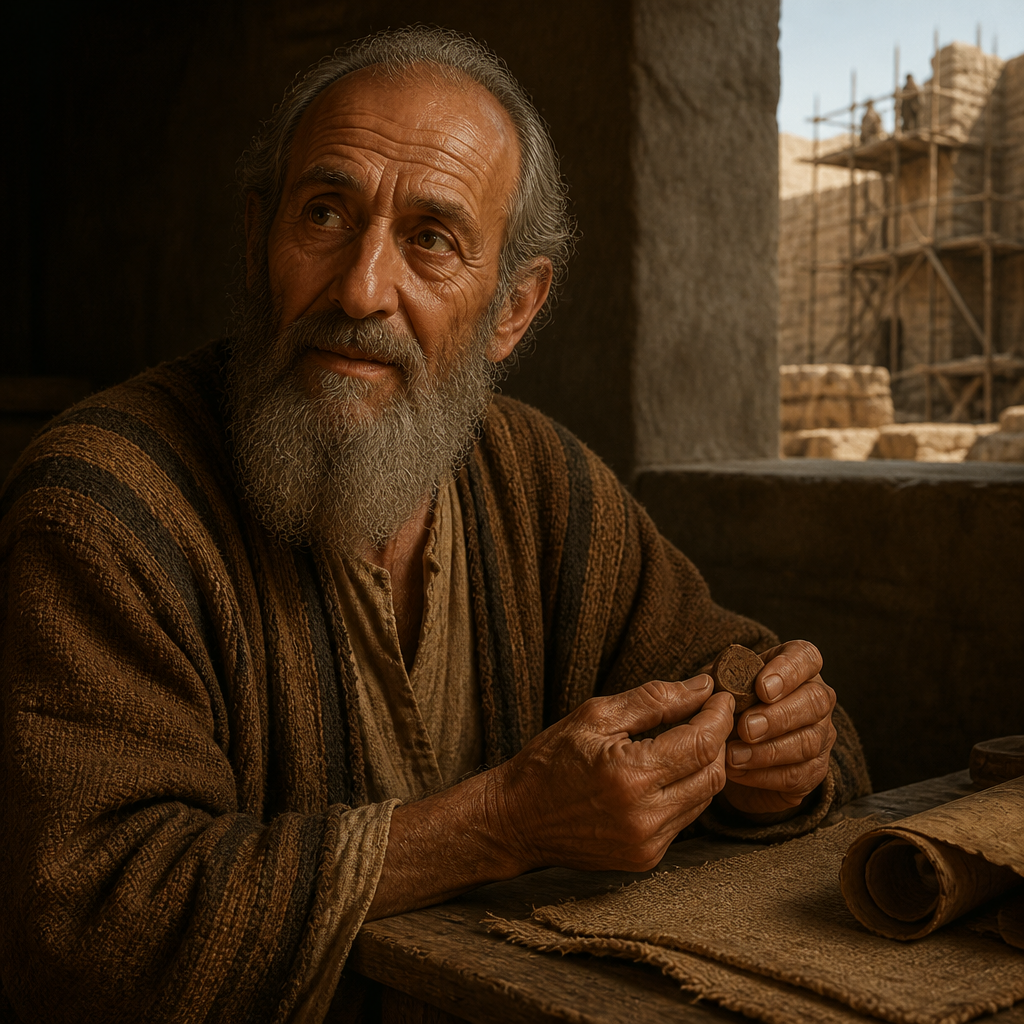
Baana was an Israelite living during the era of the Exile and Return. While he is not credited with physical labor on the walls of Jerusalem himself, he is recorded in the genealogies of the restoration as the father of Zadok, one of the builders who answered the call of Nehemiah to fortify the holy city.
His inclusion in the biblical record serves to establish the lineage and legitimacy of those returning from the Babylonian captivity. As a father of a restorer, Baana represents the generation that transitioned from the hardships of the exile to the renewal of the Jewish community in their ancestral homeland under Persian oversight in the mid-5th century BC.
Background and Family
Baana lived during the critical period of the Post-Exilic Return, a time when the Jewish remnants were returning to Judah from Babylon under the decrees of Persian monarchs. While the Bible does not specify Baana’s own occupation or his specific tribe, his name is preserved in the administrative and architectural records of the Jerusalem restoration. He is explicitly identified as the father of Zadok (Nehemiah 3:4). The name Baana itself, appearing in various forms throughout the Hebrew Bible, likely means "son of affliction" or "in answer," reflecting a common nomenclature of the era.
Major Life Events
The primary record of Baana occurs in the context of the massive engineering project led by Nehemiah in 444 BC. After the Babylonian destruction of Jerusalem in 586 BC, the city walls had remained in ruins for over a century. Nehemiah organized the returning exiles into specific work parties, assigning sections of the wall to various families and professional groups.
Baana’s son, Zadok, is listed among these dedicated laborers. According to Nehemiah 3:4, Zadok worked alongside other notable figures such as Meremoth son of Uriah and Meshullam son of Berechiah. While the text does not state that Baana was present at the wall, his name is utilized as a patronymic to distinguish his son Zadok from others of the same name and to provide a genealogical anchor for the work performed.
Relationship to Other Biblical Figures
Baana is defined primarily through his son, Zadok. This Zadok is not to be confused with the famous High Priest of the same name who served King David centuries earlier. Instead, this Zadok was a contemporary of Nehemiah and a fellow laborer in the restoration project. The mention of Baana in this context suggests he was a man of sufficient standing that his name served as a recognized identifier within the community of returning exiles.
Spiritual Significance
In the book of Nehemiah, the listing of names like Baana serves a profound theological purpose. It emphasizes that the restoration of Jerusalem was not merely the work of a single leader, but the collective effort of specific families. By recording Baana as the father of a builder, the scripture highlights the continuity of the covenant people. Even though Baana himself may have been elderly or deceased by the time the wall was built, his legacy lived on through the service of his son. The preservation of his name in the sacred text honors the families who maintained their identity during the Exile and contributed to the physical and spiritual rebuilding of Israel after 538 BC.
Baana's significance lies in his role within the genealogical record of the Post-Exilic community. His name appears in the 'wall-builders' list, which is a testament to the organizational structure of the returning Jews and their commitment to re-establishing Jerusalem as a secure center for worship and community life.
Though a minor figure, he represents the vital link between the generation of the Exile and the generation of the Restoration. His presence in the text ensures that the labor of his son, Zadok, is properly attributed to a specific family line, reinforcing the importance of lineage in the post-exilic religious and social order.
Frequently Asked Questions
Who was Baana's son?
Baana was the father of Zadok, who was one of the individuals who helped repair the walls of Jerusalem under Nehemiah's leadership.
What section of the wall did Baana's family repair?
Nehemiah 3:4 places Zadok, son of Baana, next to Meshullam son of Berechiah in the sequence of repairs, though the specific gate or tower name is not explicitly attached to his name in that verse.
Was Baana a priest?
The biblical text does not explicitly identify Baana or his son Zadok as priests in Nehemiah 3:4, though many of the wall-builders were from priestly or levitical families.
In what year did Baana's son work on the wall?
Zadok, son of Baana, worked on the walls of Jerusalem during the 20th year of King Artaxerxes I, which corresponds to approximately 444 BC.
Family & Relationships
 Baana, Father of ZadokThis page
Children
 Zadok, Son of BaanaSonNehemiah 3:4Stated
Connected Figures
Family
Son · Nehemiah 3:4
A participant in the reconstruction of Jerusalem's walls under Nehemiah, identified as the son of Baana.
Exile and ReturnFirst: Nehemiah 3:41 versesBuilder / Restorer of Jerusalem
Categories
Mentions by Book
- Nehemiah1
Scripture References
All 1 indexed verse, in canonical order, from the Berean Standard Bible.
Nehemiah · 1
- Nehemiah 3:4
Next to them, Meremoth son of Uriah, the son of Hakkoz, made repairs. Next to him, Meshullam son of Berechiah, the son of Meshezabel, made repairs; and next to him, Zadok son of Baana made repairs as well.
Others Named Baana
Compare all 3 bearers →Baana, Son of Ahilud1 Kings 4:12
A high-ranking regional administrator under King Solomon responsible for the strategic districts of Taanach, Megiddo, and Beth-shean.
Baana, Son of Hushai1 Kings 4:16
One of King Solomon’s twelve regional deputies who governed the territory of Asher and Aloth during the United Monarchy.