Amok
Who was Amok in the Bible?
A prominent priest who returned from the Babylonian exile to Jerusalem under the leadership of Zerubbabel and Jeshua.
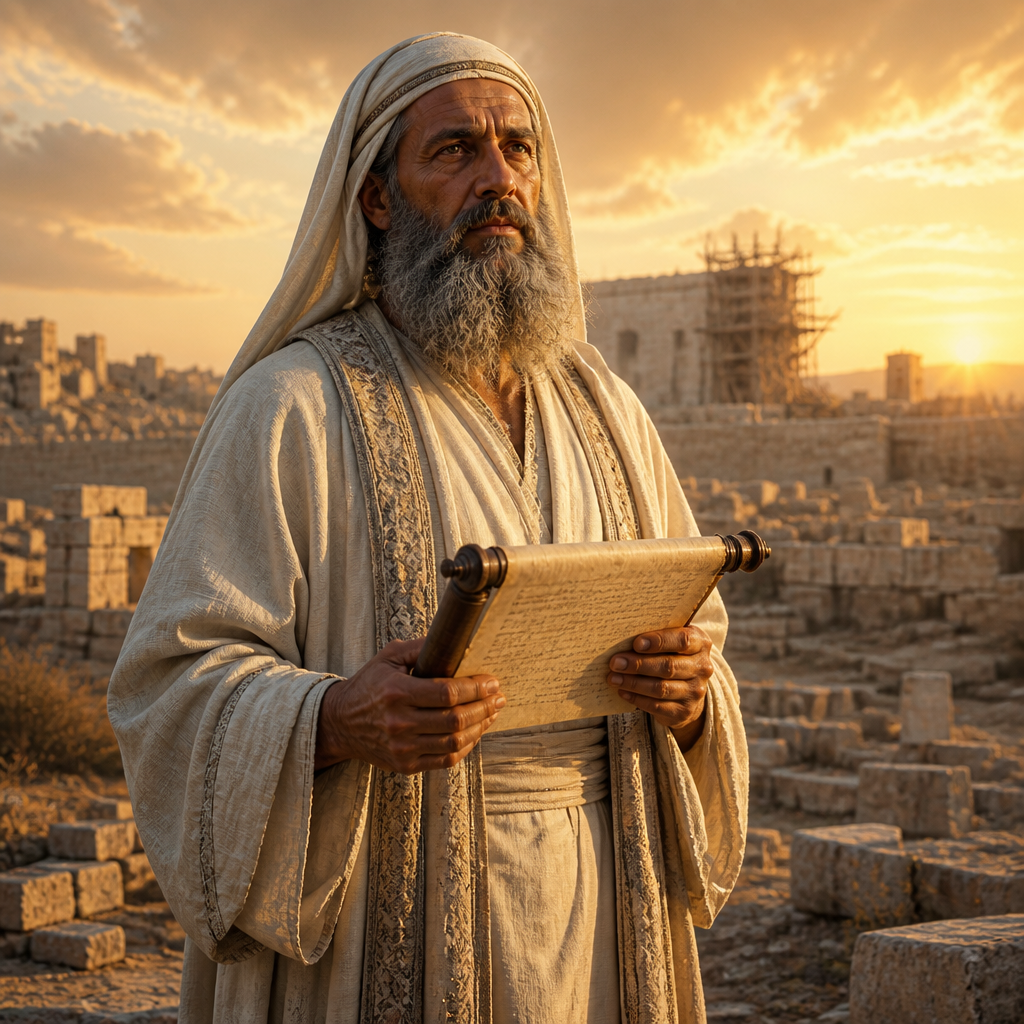
Amok was a Jewish priest and a foundational figure in the restoration of the sacrificial system and temple life in Jerusalem following the Babylonian Captivity. He is listed among the leading priests who participated in the first major wave of returnees (the aliyah) under the leadership of Governor Zerubbabel and the High Priest Jeshua (Joshua). This movement, authorized by the decree of Cyrus the Great, was pivotal in re-establishing the Jewish presence in the land of Judah.
Historically, Amok represents one of the ancestral heads of the priestly families. His inclusion in the genealogical records of Nehemiah serves to authenticate the legitimacy of the post-exilic priesthood. While his individual biographical details are sparse, his role as a 'chief of the priests' indicates he held significant ecclesiastical authority and social status during the rebuilding of the Second Temple.
Background and Family
The historical record of Amok is situated within the mid-to-late 6th century BC, specifically during the period of the Return from Exile. Amok was a member of the tribe of Levi and served within the hereditary priesthood. While his specific parentage is not recorded in the Masoretic Text, he is identified as a head of a priestly house. By the time of the return, the Jewish community was focused on documenting lineages to ensure that only those of verified Aaronic descent served at the altar. Amok’s name, which in Hebrew translates to 'deep' or 'unfathomable,' appears in the formal rosters that validated these claims.
Major Life Events
Amok’s primary contribution to the biblical narrative is his participation in the migration from Babylon to Jerusalem around 538 BC. This journey was an arduous trek across hundreds of miles of desert, undertaken by those committed to the religious restoration of Zion. Nehemiah 12:7 places Amok among the 'chiefs of the priests' during the tenure of the High Priest Jeshua. This designation suggests that Amok was not merely a participant but a leader who oversaw a division of priestly duties.
Years later, during the generation of Joiakim (the son of Jeshua), the priestly houses were reorganized. The records indicate that the family line of Amok continued into this next era. Nehemiah 12:20 notes that Eber served as the head of Amok’s priestly family during this time. This transition demonstrates the successful transplantation of the priestly order from the Babylonian Diaspora back into the local liturgical life of the Judean province.
Relationship to Other Biblical Figures
Amok is consistently grouped with other high-ranking priests such as Sallu, Hilkiah, and Jedaiah. These men served as the ecclesiastical peers of the High Priest Jeshua. Their names appear together to signify the collective leadership that governed the spiritual affairs of the returning exiles. In the subsequent generation, Amok is linked to Eber, who succeeded him as the head of his house, ensuring the continuity of the 'sons of Amok' in the service of the Temple.
Spiritual Significance
The presence of Amok in the biblical text highlights the importance of institutional continuity. In the Post-Exilic period, the survival of the Jewish faith depended on the re-establishment of the covenantal rituals. By returning to Jerusalem, Amok and his fellow priests signaled their devotion to the Law of Moses over the relative comfort of Babylon. His legacy is found in the endurance of his family line (the house of Amok), which contributed to the ongoing worship and spiritual instruction of the people of Israel during the delicate years of the Persian period.
Amok is significant as a symbol of the restoration of the Aaronic priesthood after the total disruption of the Babylonian exile. His name in the registers of Nehemiah 12 provides a documentary link between the pre-exilic traditions and the post-exilic community, proving that the sacred orders survived the captivity. The mention of his successor, Eber, further underscores the biblical theme of generational faithfulness and the preservation of the holy seed and sacred office in the land of Israel.
Frequently Asked Questions
When did Amok live?
Amok lived during the late 6th century BC, returning to Jerusalem from Babylon around 538 BC.
What was Amok's role in the Bible?
He was a chief priest and a leader among the associates of the High Priest Jeshua.
Which book of the Bible mentions Amok?
Amok is mentioned exclusively in the Book of Nehemiah, specifically in chapter 12.
Who was Amok's successor in his priestly house?
According to Nehemiah 12:20, a man named Eber served as the head of the priestly house of Amok in the following generation.
Family & Relationships
 AmokThis page
Children
 Eber, Priest of the Post-Exilic PeriodSonNehemiah 12:20
Inferred
Nehemiah 12:20 names Eber and Amok in the same verse but does not state a father tie between them; the link rests on the surrounding narrative.Evidence: Nehemiah 12:20
Connected Figures
Family
Son · Nehemiah 12:20
A head of a priestly house in Jerusalem during the generation following the return from Babylonian exile, serving under the high priest Joiakim.
Categories
Mentions by Book
- Nehemiah2
Scripture References
All 2 indexed verses, in canonical order, from the Berean Standard Bible.
Nehemiah · 2
- Nehemiah 12:7
Sallu, Amok, Hilkiah, and Jedaiah. These were the leaders of the priests and their associates in the days of Jeshua.
- Nehemiah 12:20
of Sallai, Kallai; of Amok, Eber;