Joiakim
Who was Joiakim in the Bible?
High Priest during the post-exilic period who served as a vital link in the genealogical and ecclesiastical continuity of the returned Jewish community.
Joiakim was a prominent high priest who served during the pivotal era of the Jewish return from the Babylonian exile. As the son of Jeshua (Joshua), the high priest who accompanied Zerubbabel in the first wave of returnees, Joiakim occupied a central role in the re-establishment of the sacrificial system and the governance of the Temple in Jerusalem. His tenure represents the bridge between the initial rebuilding of the altar and the subsequent reforms led by Ezra and Nehemiah.
While his name appears primarily in genealogical and administrative lists within the Book of Nehemiah, his presence signifies the institutional stability of the Aaronic priesthood during a time of great political and social transition. He oversaw a generation of priestly families who were responsible for maintaining the religious identity of the people of Judah under Persian oversight.
Background and Family
Joiakim belonged to the tribe of Levi and the specific lineage of Aaron, qualifying him for the high priesthood. He was the son of Jeshua (also known as Joshua), the son of Jozadak. His father, Jeshua, was one of the primary leaders who led the first group of exiles back to Jerusalem around 538 BC under the decree of Cyrus the Great. As the eldest son of the high priest, Joiakim inherited the office and the responsibility of the spiritual leadership of the post-exilic community.
The biblical record in Nehemiah 12:10 establishes a clear line of succession: Jeshua was the father of Joiakim, and Joiakim was the father of Eliashib. This lineage is crucial for the author of Nehemiah to demonstrate the legitimacy of the priesthood and the unbroken chain of authority from the pre-exilic Zadokite line to the contemporary leadership of Eliashib during the rebuilding of the walls.
Major Life Events
The biblical text does not provide a narrative account of Joiakim's specific deeds or individual speeches. Instead, he is contextualized by the people who served during his era. Nehemiah 12:12–21 provides a detailed register of the "heads of the priestly families" who served "in the days of Joiakim." This list includes representatives from prominent houses such as Seraiah, Jeremiah, Ezra, and Amariah, indicating that Joiakim presided over a fully functioning and organized ecclesiastical structure.
His service period is historically significant as it falls between the completion of the Second Temple (c. 516 BC) and the arrival of Nehemiah (c. 444 BC). Nehemiah 12:26 explicitly notes that certain Levites and gatekeepers "served in the days of Joiakim son of Jeshua, the son of Jozadak, and in the days of Nehemiah the governor and Ezra the priest and scribe." This verse suggests that Joiakim’s influence overlapped with or immediately preceded the major reforms that defined the mid-5th century BC.
Relationship to Other Biblical Figures
Joiakim’s primary biblical relationships are defined by his ancestry and his descendants. He is the crucial middle link in the post-exilic high-priestly succession. His father, Jeshua, worked alongside Zerubbabel to rebuild the Temple, while his son, Eliashib, later collaborated with Nehemiah in the reconstruction of Jerusalem’s walls. Joiakim acts as the chronological and genealogical connection between the builders of the Temple and the builders of the city.
Spiritual Significance
The inclusion of Joiakim in the biblical record serves a thematic purpose: the preservation of the covenant through the priesthood. Even during periods where the narrative does not record miraculous events or prophetic outbursts, the steady administration of the Law and the Temple by figures like Joiakim ensured that the Jewish people remained a distinct community. By recording the names of the family heads under his leadership, the author of Nehemiah emphasizes that the religious infrastructure remained intact through the decades of the Persian period. Joiakim represents the faithful endurance of the institutional church of Israel during an age of reconstruction.
Joiakim's significance lies in his role as the keeper of the high priestly office during a period of consolidation for the returned exiles. He ensures the continuity of the Zadokite line, which was essential for the legitimacy of the Second Temple's operations. His mention in the lists of Nehemiah serves to validate the records of the families of Israel, proving that the identity of the nation was preserved through the meticulous tracking of its spiritual leaders.
Theologically, Joiakim represents the 'quiet' years of faith—the periods between great historical shifts where the daily work of worship and administration maintains the life of the community. His presence in the text reinforces the idea that God’s providential care for Israel was active not just in the visible miracles of the return, but in the stable succession of leadership over the generations.
Frequently Asked Questions
Who was Joiakim's father?
Joiakim was the son of Jeshua (also known as Joshua), the high priest who returned from Babylon with Zerubbabel.
What tribe did Joiakim belong to?
Joiakim belonged to the tribe of Levi, specifically the lineage of Aaron and the family of Jozadak.
Who succeeded Joiakim as High Priest?
Joiakim was succeeded by his son, Eliashib, who is noted for his role in rebuilding the walls of Jerusalem during the time of Nehemiah.
In which book of the Bible is Joiakim mentioned?
Joiakim is mentioned exclusively in the book of Nehemiah, specifically in chapter 12.
Family & Relationships
Parents
 Joshua, High Priest of the ReturnFatherNehemiah 12:10Stated
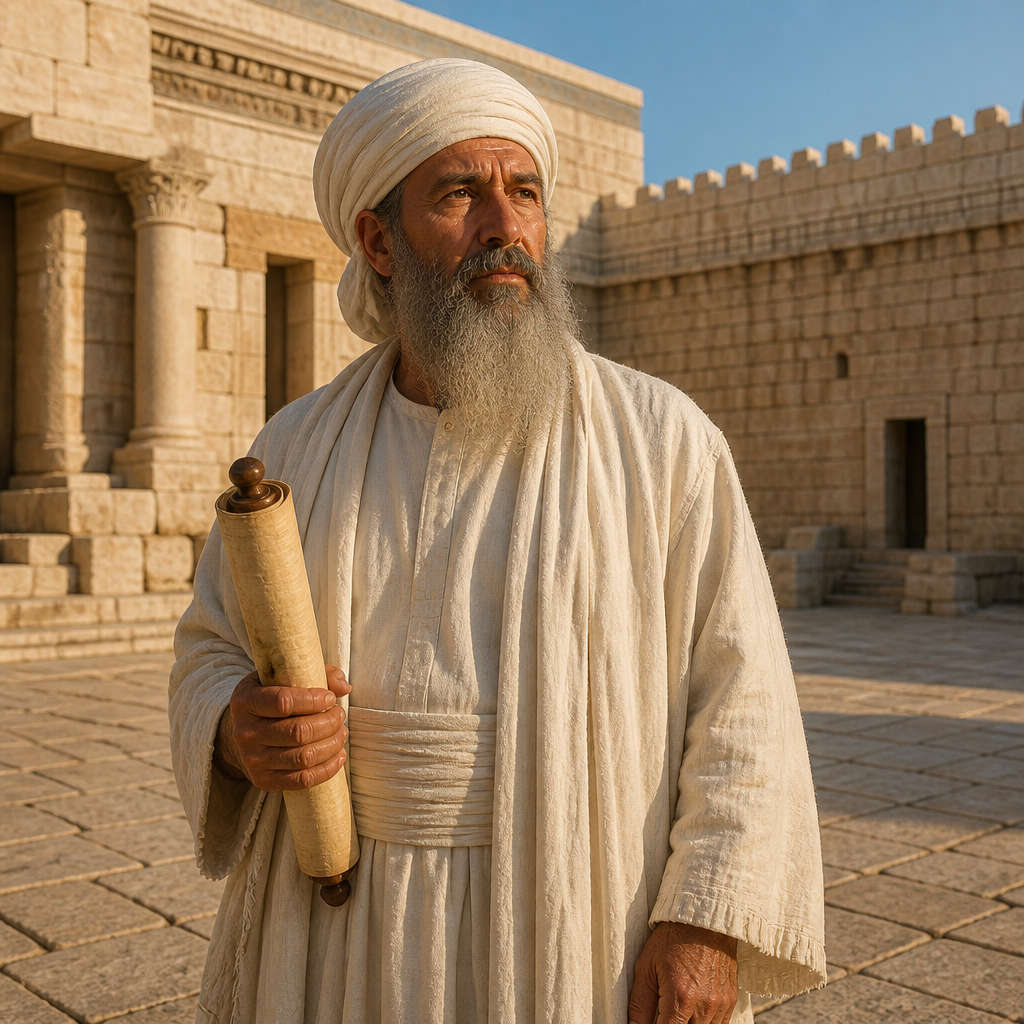 JoiakimThis page
Connected Figures
Family
Father · Nehemiah 12:10
Joshua, son of Jehozadak, was the first High Priest of the Jewish community that returned from the Babylonian exile to rebuild the Temple in Jerusalem.
Exile and ReturnFirst: Ezra 2:222 versesHigh PriestLevi
Categories
Mentions by Book
- Nehemiah3
Scripture References
All 3 indexed verses, in canonical order, from the Berean Standard Bible.
Nehemiah · 3
- Nehemiah 12:10Partial
Jeshua was the father of Joiakim, Joiakim was the father of Eliashib, Eliashib was the father of Joiada,
- Nehemiah 12:12
In the days of Joiakim, these were the heads of the priestly families: of the family of Seraiah, Meraiah; of Jeremiah, Hananiah;
- Nehemiah 12:26
They served in the days of Joiakim son of Jeshua, the son of Jozadak, and in the days of Nehemiah the governor and Ezra the priest and scribe.