Jeremiah, Son of Hilkiah
Who was Jeremiah, Son of Hilkiah, in the Bible?
A major prophet of the Divided Monarchy who predicted the fall of Jerusalem and the 70-year Babylonian exile while suffering intense persecution for his message.
This is one of 8 people named Jeremiah in the Bible. See all 8 →
Jeremiah, son of Hilkiah, stands as one of the most significant and psychologically transparent figures in the Old Testament. Serving as a prophet during the final decades of the Kingdom of Judah, he witnessed the transition from the spiritual reforms of King Josiah to the total collapse of the Davidic monarchy under the Babylonian Empire. His ministry was characterized by a deeply personal struggle: he was divinely commissioned to proclaim a message of impending doom and surrender, which earned him the hatred of his peers, priests, and kings.
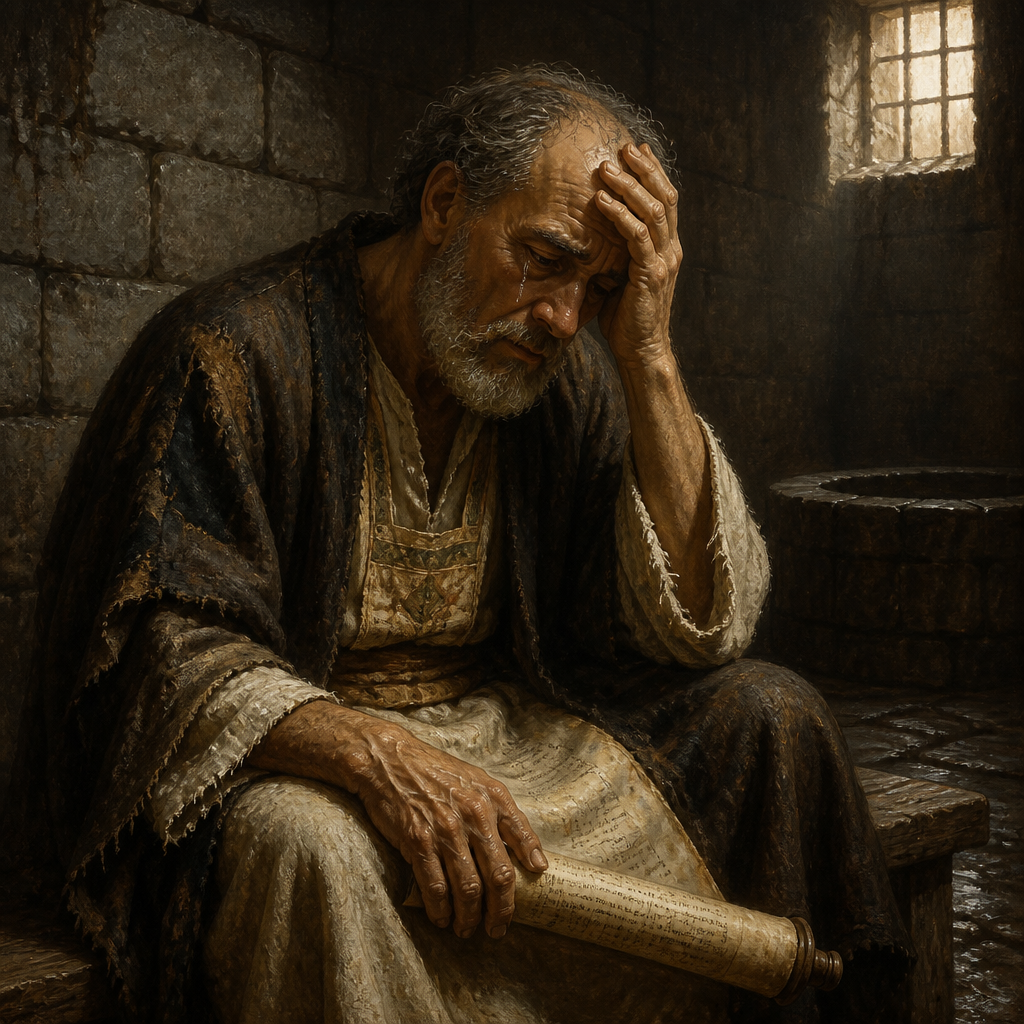
Often referred to as the 'Weeping Prophet,' Jeremiah’s life was marked by isolation and physical suffering, including imprisonment and threats of death. Despite his personal anguish, he remained a faithful mouthpiece for the LORD, accurately predicting the seventy-year duration of the Babylonian captivity and the eventual restoration of the Jewish people. His influence extended beyond his own era, as later biblical figures like Daniel and New Testament writers cited his prophecies as foundational to understanding God’s sovereign plan for Israel.
Background and Family
Jeremiah was born into a priestly family in Anathoth, a town located in the territory of Benjamin, just a few miles north of Jerusalem. He was the son of Hilkiah, a priest (Jeremiah 1:1). His priestly heritage likely informed his deep concern for the Temple and the purity of Israel's worship, yet his calling as a prophet often set him at odds with the established religious hierarchy of his day. Unlike many other prophets, Jeremiah was commanded by God to remain unmarried and childless as a symbolic sign of the impending judgment that would sweep away the next generation (Jeremiah 16:2).
Major Life Events
The Call and Early Ministry
Jeremiah’s ministry began in the thirteenth year of King Josiah’s reign (c. 627 BC) and continued through the reigns of Jehoahaz, Jehoiakim, Jehoiachin, and Zedekiah. At his calling, Jeremiah expressed hesitance, citing his youth and lack of speaking ability, but the LORD assured him that he had been consecrated before birth to be a 'prophet to the nations' (Jeremiah 1:5).
Conflict with Kings and Priests
Jeremiah’s message was consistently unpopular. He preached against the idolatry and social injustice of Judah, but most controversially, he advocated for submission to Babylon as God’s chosen instrument of judgment. During the reign of Jehoiakim, Jeremiah dictated a scroll of prophecies through his scribe Baruch. When the scroll was read to the king, Jehoiakim contemptuously cut it with a knife and burned it (Jeremiah 36:23). Jeremiah simply dictated a second, expanded scroll.
Under King Zedekiah, Jeremiah’s situation grew dire. During the Babylonian siege of Jerusalem, he was accused of desertion and treason. He was beaten and imprisoned in a dungeon (Jeremiah 37:15). Later, officials cast him into a muddy cistern to starve, from which he was rescued by Ebed-melech the Cushite (Jeremiah 38:6-13). Throughout these trials, Jeremiah continued to tell Zedekiah the truth: that surrender to Nebuchadnezzar was the only way to save the city and the Temple.
The Fall of Jerusalem and Egypt
After Jerusalem fell in 586 BC, the Babylonians treated Jeremiah with respect, allowing him to stay in the land under the governor Gedaliah. However, after Gedaliah was assassinated, a remnant of Jews feared Babylonian reprisal and fled to Egypt, forcibly taking Jeremiah with them. His final recorded prophecies were delivered in Tahpanhes, Egypt, where he continued to rebuke the people for their persistent idolatry (Jeremiah 44).
Relationship to Other Biblical Figures
Jeremiah’s most loyal associate was Baruch son of Neriah, who served as his secretary and companion through his most difficult years. He also had a complex relationship with King Zedekiah, who secretly sought Jeremiah’s counsel but was too weak to act on it for fear of his officials. The official Ahikam son of Shaphan and the court official Ebed-melech are notable for protecting Jeremiah's life at critical junctures. Centuries later, the prophet Daniel is recorded as studying Jeremiah’s writings to understand the timing of the end of the exile (Daniel 9:2).
Spiritual Significance
Jeremiah is central to the theology of the Old Testament for his internal 'confessions,' which reveal the psychological toll of the prophetic office. He famously described God’s word as a 'burning fire' shut up in his bones that he could not contain (Jeremiah 20:9).
Most significantly, Jeremiah is the herald of the 'New Covenant.' Amidst his messages of judgment, he provided the hope of a future where the law would be written on human hearts rather than stone tablets, and God would forgive the iniquity of His people (Jeremiah 31:31-34). This promise serves as a primary bridge between the Old and New Testaments, being cited by New Testament authors to explain the mission of Jesus Christ. His mourning over the fall of Josiah (2 Chronicles 35:25) and Jerusalem established a tradition of lamentation that characterizes much of Israel's liturgical memory.
Theologically, Jeremiah represents the transition from a religion centered on the physical Temple and the land to one centered on the internalized Word of God and the hope of restoration. His prophecy of the seventy-year exile (Jeremiah 25:11) provided the chronological framework for Israel’s hope during the Babylonian captivity and was specifically cited by Ezra and Daniel as the basis for the return to Jerusalem.
In the New Testament, Jeremiah’s influence is pervasive. He is mentioned by name in the Gospel of Matthew as a figure of high messianic expectation; some people even speculated that Jesus might be Jeremiah returned to life (Matthew 16:14). Furthermore, the New Testament writers view the 'New Covenant' described in Jeremiah 31 as being inaugurated through the blood of Christ, making Jeremiah one of the most pivotal prophetic voices in Christian salvation history.
Frequently Asked Questions
Why is Jeremiah called the 'Weeping Prophet'?
He earned this title because of the deep grief he expressed over the sins and the subsequent destruction of his people and the city of Jerusalem, as seen in his frequent laments and the book of Jeremiah itself.
What was the significance of the 70-year prophecy?
Jeremiah predicted that the Babylonian exile would last precisely seventy years (Jeremiah 25:11-12). This gave the exiles hope that their punishment was temporary and that God had a plan to bring them back to their land.
How did Jeremiah die?
The Bible does not record the death of Jeremiah. The last scriptural account places him in Egypt, still prophesying to the Jewish remnant that had fled there after the fall of Jerusalem.
What happened to the scrolls Jeremiah wrote?
The first scroll was burned by King Jehoiakim. At God's command, Jeremiah dictated a second scroll to Baruch, which included all the original words plus additional prophecies.
Who rescued Jeremiah from the cistern?
Ebed-melech the Cushite, a court official, received permission from King Zedekiah to pull Jeremiah out of the muddy pit using ropes and rags before he starved to death.
Family & Relationships
Parents
 Hilkiah, Father of JeremiahFatherJeremiah 1:1Stated
 Jeremiah, Son of HilkiahThis page
Extended family
 Shallum, Uncle of JeremiahUncleJeremiah 1:1
Inferred
No verse names Shallum and Jeremiah together; the nephew link is carried from the surrounding genealogy and is not stated in Scripture.Evidence: Jeremiah 1:1
Connected Figures
Family
Father · Jeremiah 1:1
A priest from the town of Anathoth in the territory of Benjamin and the father of the major prophet Jeremiah.
Divided MonarchyFirst: Jeremiah 1:12 versesPriestBenjamin
Uncle · Jeremiah 1:1
Shallum was the paternal uncle of the prophet Jeremiah and the father of Hanamel during the final years of the Divided Monarchy.
Categories
Mentions by Book
- 2 Chronicles4
- Ezra1
- Jeremiah123
- Daniel1
- Matthew3
Scripture References
All 132 indexed verses, in canonical order, from the Berean Standard Bible.
- 2 Chronicles 35:25
Then Jeremiah lamented over Josiah, and to this day all the male and female singers recite laments over Josiah. They established them as a statute for Israel, and indeed they are written in the Book of Laments.
- 2 Chronicles 36:12
And he did evil in the sight of the LORD his God and did not humble himself before Jeremiah the prophet, who spoke for the LORD.
- 2 Chronicles 36:21
So the land enjoyed its Sabbath rest all the days of the desolation, until seventy years were completed, in fulfillment of the word of the LORD spoken through Jeremiah.
- 2 Chronicles 36:22
In the first year of Cyrus king of Persia, to fulfill the word of the LORD spoken through Jeremiah, the LORD stirred the spirit of Cyrus king of Persia to send a proclamation throughout his kingdom and to put it in writing as follows:
- Ezra 1:1
In the first year of Cyrus king of Persia, to fulfill the word of the LORD spoken through Jeremiah, the LORD stirred the spirit of Cyrus king of Persia to send a proclamation throughout his kingdom and to put it in writing as follows:
- Jeremiah 1:1
These are the words of Jeremiah son of Hilkiah, one of the priests in Anathoth in the territory of Benjamin.
- Jeremiah 1:5Partial
“Before I formed you in the womb I knew you, and before you were born I set you apart and appointed you as a prophet to the nations.”
Cited as a key verse; added so References, Key Verses and Mentions by Book share one index.
- Jeremiah 1:11
And the word of the LORD came to me, asking, “Jeremiah, what do you see?” “I see a branch of an almond tree,” I replied.
- Jeremiah 7:1
This is the word that came to Jeremiah from the LORD, saying,
- Jeremiah 11:1
This is the word that came to Jeremiah from the LORD:
- Jeremiah 14:1
This is the word of the LORD that came to Jeremiah concerning the drought:
- Jeremiah 18:1
This is the word that came to Jeremiah from the LORD:
- Jeremiah 18:18
Then some said, “Come, let us make plans against Jeremiah, for the law will never be lost to the priest, nor counsel to the wise, nor an oracle to the prophet. Come, let us denounce him and pay no heed to any of his words.”
- Jeremiah 19:14
Then Jeremiah returned from Topheth, where the LORD had sent him to prophesy, and he stood in the courtyard of the house of the LORD and proclaimed to all the people,
- Jeremiah 20:1
When Pashhur the priest, the son of Immer and the chief official in the house of the LORD, heard Jeremiah prophesying these things,
- Jeremiah 20:2
he had Jeremiah the prophet beaten and put in the stocks at the Upper Gate of Benjamin, which was by the house of the LORD.
- Jeremiah 20:3Partial
The next day, when Pashhur released Jeremiah from the stocks, Jeremiah said to him, “The LORD does not call you Pashhur, but Magor-missabib.
- Jeremiah 20:9Partial
If I say, “I will not mention Him or speak any more in His name,” His message becomes a fire burning in my heart, shut up in my bones, and I become weary of holding it in, and I cannot prevail.
Cited as a key verse; added so References, Key Verses and Mentions by Book share one index.
- Jeremiah 21:1
This is the word that came to Jeremiah from the LORD when King Zedekiah sent to him Pashhur son of Malchijah and the priest Zephaniah son of Maaseiah. They said,
- Jeremiah 21:3
But Jeremiah answered, “You are to tell Zedekiah that
- Jeremiah 24:3
“Jeremiah,” the LORD asked, “what do you see?” “Figs!” I replied. “The good figs are very good, but the bad figs are very bad, so bad they cannot be eaten.”
- Jeremiah 25:1
This is the word that came to Jeremiah concerning all the people of Judah in the fourth year of Jehoiakim son of Josiah king of Judah, which was the first year of Nebuchadnezzar king of Babylon.
- Jeremiah 25:2
So the prophet Jeremiah spoke to all the people of Judah and all the residents of Jerusalem as follows:
- Jeremiah 25:13
I will bring upon that land all the words I have pronounced against it, all that is written in this book, which Jeremiah has prophesied against all the nations.
- Jeremiah 26:7
Now the priests and prophets and all the people heard Jeremiah speaking these words in the house of the LORD,
- Jeremiah 26:8
and as soon as he had finished telling all the people everything the LORD had commanded him to say, the priests and prophets and all the people seized him, shouting, “You must surely die!
- Jeremiah 26:9
How dare you prophesy in the name of the LORD that this house will become like Shiloh and this city will be desolate and deserted!” And all the people assembled against Jeremiah in the house of the LORD.
- Jeremiah 26:12
But Jeremiah said to all the officials and all the people, “The LORD sent me to prophesy against this house and against this city all the words that you have heard.
- Jeremiah 26:20
Now there was another man prophesying in the name of the LORD, Uriah son of Shemaiah from Kiriath-jearim. He prophesied against this city and against this land the same things that Jeremiah did.
- Jeremiah 26:24
Nevertheless, Ahikam son of Shaphan supported Jeremiah, so he was not handed over to the people to be put to death.
- Jeremiah 27:1
At the beginning of the reign of Zedekiah son of Josiah king of Judah, this word came to Jeremiah from the LORD.
- Jeremiah 28:5
Then the prophet Jeremiah replied to the prophet Hananiah in the presence of the priests and all the people who were standing in the house of the LORD.
- Jeremiah 28:6
“Amen!” Jeremiah said. “May the LORD do so! May the LORD fulfill the words you have prophesied, and may He restore the articles of His house and all the exiles back to this place from Babylon.
- Jeremiah 28:10
Then the prophet Hananiah took the yoke off the neck of Jeremiah the prophet and broke it.
- Jeremiah 28:11
And in the presence of all the people Hananiah proclaimed, “This is what the LORD says: ‘In this way, within two years I will break the yoke of Nebuchadnezzar king of Babylon off the neck of all the nations.’” At this, Jeremiah the prophet went on his way.
- Jeremiah 28:12Partial
But shortly after Hananiah the prophet had broken the yoke off his neck, the word of the LORD came to Jeremiah:
- Jeremiah 28:15
Then the prophet Jeremiah said to the prophet Hananiah, “Listen, Hananiah! The LORD did not send you, but you have persuaded this people to trust in a lie.
- Jeremiah 29:1
This is the text of the letter that Jeremiah the prophet sent from Jerusalem to the surviving elders among the exiles and to the priests, the prophets, and all the others Nebuchadnezzar had carried into exile from Jerusalem to Babylon.
- Jeremiah 29:10Partial
For this is what the LORD says: “When Babylon’s seventy years are complete, I will attend to you and confirm My promise to restore you to this place.
Cited as a key verse; added so References, Key Verses and Mentions by Book share one index.
- Jeremiah 29:27
So now, why have you not rebuked Jeremiah of Anathoth, who poses as a prophet among you?
- Jeremiah 29:29
(Zephaniah the priest, however, had read this letter to Jeremiah the prophet.)
- Jeremiah 29:30
Then the word of the LORD came to Jeremiah:
- Jeremiah 30:1
This is the word that came to Jeremiah from the LORD:
- Jeremiah 31:31Partial
Behold, the days are coming, declares the LORD, when I will make a new covenant with the house of Israel and with the house of Judah.
Cited as a key verse; added so References, Key Verses and Mentions by Book share one index.
- Jeremiah 31:32Partial
It will not be like the covenant I made with their fathers when I took them by the hand to lead them out of the land of Egypt—a covenant they broke, though I was a husband to them,” declares the LORD.
Cited as a key verse; added so References, Key Verses and Mentions by Book share one index.
- Jeremiah 31:33Partial
“But this is the covenant I will make with the house of Israel after those days, declares the LORD. I will put My law in their minds and inscribe it on their hearts. And I will be their God, and they will be My people.
Cited as a key verse; added so References, Key Verses and Mentions by Book share one index.
- Jeremiah 31:34Partial
No longer will each man teach his neighbor or his brother, saying, ‘Know the LORD,’ because they will all know Me, from the least of them to the greatest, declares the LORD. For I will forgive their iniquities and will remember their sins no more.”
Cited as a key verse; added so References, Key Verses and Mentions by Book share one index.
- Jeremiah 32:1
This is the word that came to Jeremiah from the LORD in the tenth year of Zedekiah king of Judah, which was the eighteenth year of Nebuchadnezzar.
- Jeremiah 32:2
At that time the army of the king of Babylon was besieging Jerusalem, and Jeremiah the prophet was imprisoned in the courtyard of the guard, which was in the palace of the king of Judah.
- Jeremiah 32:6
Jeremiah replied, “The word of the LORD came to me, saying:
- Jeremiah 32:7Partial
Behold! Hanamel, the son of your uncle Shallum, is coming to you to say, ‘Buy for yourself my field in Anathoth, for you have the right of redemption to buy it.’
Cited as evidence on a family card; added so References, Key Verses and Mentions by Book share one index.
- Jeremiah 32:26
Then the word of the LORD came to Jeremiah:
- Jeremiah 33:1
While Jeremiah was still confined in the courtyard of the guard, the word of the LORD came to him a second time:
- Jeremiah 33:19
And the word of the LORD came to Jeremiah:
- Jeremiah 33:23
Moreover, the word of the LORD came to Jeremiah:
- Jeremiah 34:1
This is the word that came to Jeremiah from the LORD when Nebuchadnezzar king of Babylon, all his army, all the earthly kingdoms under his control, and all the other nations were fighting against Jerusalem and all its surrounding cities.
- Jeremiah 34:6
In Jerusalem, then, Jeremiah the prophet relayed all these words to Zedekiah king of Judah
- Jeremiah 34:8
After King Zedekiah had made a covenant with all the people in Jerusalem to proclaim liberty, the word came to Jeremiah from the LORD
- Jeremiah 34:12
Then the word of the LORD came to Jeremiah from the LORD, saying,
- Jeremiah 35:1
This is the word that came to Jeremiah from the LORD in the days of Jehoiakim son of Josiah king of Judah:
- Jeremiah 35:12
Then the word of the LORD came to Jeremiah:
- Jeremiah 35:18
Then Jeremiah said to the house of the Rechabites: “This is what the LORD of Hosts, the God of Israel, says: ‘Because you have obeyed the command of your forefather Jonadab and have kept all his commandments and have done all that he charged you to do,
- Jeremiah 36:1
In the fourth year of Jehoiakim son of Josiah king of Judah, this word came to Jeremiah from the LORD:
- Jeremiah 36:4Partial
So Jeremiah called Baruch son of Neriah, and at the dictation of Jeremiah, Baruch wrote on a scroll all the words that the LORD had spoken to Jeremiah.
- Jeremiah 36:5
Then Jeremiah commanded Baruch, “I am restricted; I cannot enter the house of the LORD;
- Jeremiah 36:8
So Baruch son of Neriah did everything that Jeremiah the prophet had commanded him. In the house of the LORD he read the words of the LORD from the scroll.
- Jeremiah 36:10
From the chamber of Gemariah son of Shaphan the scribe, which was in the upper courtyard at the opening of the New Gate of the house of the LORD, Baruch read from the scroll the words of Jeremiah in the hearing of all the people.
- Jeremiah 36:19
Then the officials said to Baruch, “You and Jeremiah must hide yourselves and tell no one where you are.”
- Jeremiah 36:26
Instead, the king commanded Jerahmeel, a son of the king, as well as Seraiah son of Azriel and Shelemiah son of Abdeel, to seize Baruch the scribe and Jeremiah the prophet. But the LORD had hidden them.
- Jeremiah 36:27Partial
After the king had burned the scroll containing the words that Baruch had written at Jeremiah’s dictation, the word of the LORD came to Jeremiah:
- Jeremiah 36:32Partial
Then Jeremiah took another scroll and gave it to the scribe Baruch son of Neriah, and at Jeremiah’s dictation he wrote on it all the words of the scroll that Jehoiakim king of Judah had burned in the fire. And many similar words were added to them.
- Jeremiah 37:2
But he and his officers and the people of the land refused to obey the words that the LORD had spoken through Jeremiah the prophet.
- Jeremiah 37:3
Yet King Zedekiah sent Jehucal son of Shelemiah and Zephaniah the priest, the son of Maaseiah, to Jeremiah the prophet with the message, “Please pray to the LORD our God for us!”
- Jeremiah 37:4
Now Jeremiah was free to come and go among the people, for they had not yet put him in prison.
- Jeremiah 37:6
Then the word of the LORD came to Jeremiah the prophet:
- Jeremiah 37:12
Jeremiah started to leave Jerusalem to go to the land of Benjamin to claim his portion there among the people.
- Jeremiah 37:13
But when he reached the Gate of Benjamin, the captain of the guard, whose name was Irijah son of Shelemiah, the son of Hananiah, seized him and said, “You are deserting to the Chaldeans!”
- Jeremiah 37:14Partial
“That is a lie,” Jeremiah replied. “I am not deserting to the Chaldeans!” But Irijah would not listen to him; instead, he arrested Jeremiah and took him to the officials.
- Jeremiah 37:15
The officials were angry with Jeremiah, and they beat him and placed him in jail in the house of Jonathan the scribe, for it had been made into a prison.
- Jeremiah 37:16
So Jeremiah went into a cell in the dungeon and remained there a long time.
- Jeremiah 37:17
Later, King Zedekiah sent for Jeremiah and received him in his palace, where he asked him privately, “Is there a word from the LORD?” “There is,” Jeremiah replied. “You will be delivered into the hand of the king of Babylon.”
- Jeremiah 37:18
Then Jeremiah asked King Zedekiah, “How have I sinned against you or your servants or these people, that you have put me in prison?
- Jeremiah 37:21Partial
So King Zedekiah gave orders for Jeremiah to be placed in the courtyard of the guard and given a loaf of bread daily from the street of the bakers, until all the bread in the city was gone. So Jeremiah remained in the courtyard of the guard.
- Jeremiah 38:1
Now Shephatiah son of Mattan, Gedaliah son of Pashhur, Jucal son of Shelemiah, and Pashhur son of Malchijah heard that Jeremiah had been telling all the people:
- Jeremiah 38:6Partial
So they took Jeremiah and dropped him into the cistern of Malchiah, the king’s son, which was in the courtyard of the guard. They lowered Jeremiah with ropes into the cistern, which had no water but only mud, and Jeremiah sank down into the mud.
- Jeremiah 38:7
Now Ebed-melech the Cushite, a court official in the royal palace, heard that Jeremiah had been put into the cistern. While the king was sitting at the Gate of Benjamin,
- Jeremiah 38:9
“My lord the king, these men have acted wickedly in all that they have done to Jeremiah the prophet. They have dropped him into the cistern, where he will starve to death, for there is no more bread in the city.”
- Jeremiah 38:10
So the king commanded Ebed-melech the Cushite, “Take thirty men from here with you and pull Jeremiah the prophet out of the cistern before he dies.”
- Jeremiah 38:11
Then Ebed-melech took the men with him and went to the king’s palace, to a place below the storehouse. From there he took old rags and worn-out clothes and lowered them with ropes to Jeremiah in the cistern.
- Jeremiah 38:12Partial
Ebed-melech the Cushite cried out to Jeremiah, “Put these worn-out rags and clothes under your arms to pad the ropes.” Jeremiah did so,
- Jeremiah 38:13Partial
and they pulled him up with the ropes and lifted him out of the cistern. And Jeremiah remained in the courtyard of the guard.
- Jeremiah 38:14Partial
Then King Zedekiah sent for Jeremiah the prophet and received him at the third entrance to the house of the LORD. “I am going to ask you something,” said the king to Jeremiah. “Do not hide anything from me.”
- Jeremiah 38:15
“If I tell you,” Jeremiah replied, “you will surely put me to death. And even if I give you advice, you will not listen to me.”
- Jeremiah 38:16
But King Zedekiah swore secretly to Jeremiah, “As surely as the LORD lives, who has given us this life, I will not kill you, nor will I deliver you into the hands of these men who are seeking your life.”
- Jeremiah 38:17
Then Jeremiah said to Zedekiah, “This is what the LORD God of Hosts, the God of Israel, says: ‘If you indeed surrender to the officers of the king of Babylon, then you will live, this city will not be burned down, and you and your household will survive.
- Jeremiah 38:19
But King Zedekiah said to Jeremiah, “I am afraid of the Jews who have deserted to the Chaldeans, for the Chaldeans may deliver me into their hands to abuse me.”
- Jeremiah 38:20
“They will not hand you over,” Jeremiah replied. “Obey the voice of the LORD in what I am telling you, that it may go well with you and you may live.
- Jeremiah 38:24
Then Zedekiah warned Jeremiah, “Do not let anyone know about this conversation, or you will die.
- Jeremiah 38:27
When all the officials came to Jeremiah and questioned him, he relayed to them the exact words the king had commanded him to say. So they said no more to him, for no one had overheard the conversation.
- Jeremiah 38:28
And Jeremiah remained in the courtyard of the guard until the day Jerusalem was captured.
- Jeremiah 39:11
Now Nebuchadnezzar king of Babylon had given orders about Jeremiah through Nebuzaradan captain of the guard, saying,
- Jeremiah 39:14
had Jeremiah brought from the courtyard of the guard, and they turned him over to Gedaliah son of Ahikam, the son of Shaphan, to take him home. So Jeremiah remained among his own people.
- Jeremiah 39:15
And while Jeremiah had been confined in the courtyard of the guard, the word of the LORD had come to him:
- Jeremiah 40:1
This is the word that came to Jeremiah from the LORD after Nebuzaradan captain of the guard had released him at Ramah, having found him bound in chains among all the captives of Jerusalem and Judah who were being exiled to Babylon.
- Jeremiah 40:2
The captain of the guard found Jeremiah and said to him, “The LORD your God decreed this disaster on this place,
- Jeremiah 40:6
So Jeremiah went to Gedaliah son of Ahikam at Mizpah and stayed with him among the people who were left in the land.
- Jeremiah 42:2
Jeremiah the prophet and said, “May our petition come before you; pray to the LORD your God on behalf of this entire remnant. For few of us remain of the many, as you can see with your own eyes.
- Jeremiah 42:4
“I have heard you,” replied Jeremiah the prophet. “I will surely pray to the LORD your God as you request, and I will tell you everything that the LORD answers. I will not withhold a word from you.”
- Jeremiah 42:5
Then they said to Jeremiah, “May the LORD be a true and faithful witness against us if we do not act upon every word that the LORD your God sends you to tell us.
- Jeremiah 42:7
After ten days the word of the LORD came to Jeremiah,
- Jeremiah 43:1
When Jeremiah had finished telling all the people all the words of the LORD their God—everything that the LORD had sent him to say—
- Jeremiah 43:2
Azariah son of Hoshaiah, Johanan son of Kareah, and all the arrogant men said to Jeremiah, “You are lying! The LORD our God has not sent you to say, ‘You must not go to Egypt to reside there.’
- Jeremiah 43:6
the men, the women, the children, the king’s daughters, and everyone whom Nebuzaradan captain of the guard had allowed to remain with Gedaliah son of Ahikam, the son of Shaphan, as well as Jeremiah the prophet and Baruch son of Neriah.
- Jeremiah 43:8
Then the word of the LORD came to Jeremiah at Tahpanhes:
- Jeremiah 44:1
This is the word that came to Jeremiah concerning all the Jews living in the land of Egypt—in Migdol, Tahpanhes, and Memphis—and in the land of Pathros:
- Jeremiah 44:15
Then all the men who knew that their wives were burning incense to other gods, and all the women standing by—a great assembly—along with all the people living in the land of Egypt and in Pathros, said to Jeremiah,
- Jeremiah 44:20
Then Jeremiah said to all the people, both men and women, who were answering him,
- Jeremiah 44:24
Then Jeremiah said to all the people, including all the women, “Hear the word of the LORD, all those of Judah who are in the land of Egypt.
- Jeremiah 45:1Partial
This is the word that Jeremiah the prophet spoke to Baruch son of Neriah when he wrote these words on a scroll at the dictation of Jeremiah in the fourth year of Jehoiakim son of Josiah, king of Judah:
- Jeremiah 46:1
This is the word of the LORD about the nations—the word that came to Jeremiah the prophet
- Jeremiah 46:13
This is the word that the LORD spoke to Jeremiah the prophet about the coming of Nebuchadnezzar king of Babylon to strike the land of Egypt:
- Jeremiah 47:1
This is the word of the LORD that came to Jeremiah the prophet about the Philistines before Pharaoh struck down Gaza.
- Jeremiah 49:34
This is the word of the LORD that came to Jeremiah the prophet concerning Elam at the beginning of the reign of Zedekiah king of Judah.
- Jeremiah 50:1
This is the word that the LORD spoke through Jeremiah the prophet concerning Babylon and the land of the Chaldeans:
- Jeremiah 51:59
This is the message that Jeremiah the prophet gave to the quartermaster Seraiah son of Neriah, the son of Mahseiah, when he went to Babylon with King Zedekiah of Judah in the fourth year of Zedekiah’s reign.
- Jeremiah 51:60
Jeremiah had written on a single scroll about all the disaster that would come upon Babylon—all these words that had been written concerning Babylon.
- Jeremiah 51:61
And Jeremiah said to Seraiah, “When you get to Babylon, see that you read all these words aloud,
- Jeremiah 51:64
Then you are to say, ‘In the same way Babylon will sink and never rise again, because of the disaster I will bring upon her. And her people will grow weary.’” Here end the words of Jeremiah.
- Daniel 9:2
in the first year of his reign, I, Daniel, understood from the sacred books, according to the word of the LORD to Jeremiah the prophet, that the desolation of Jerusalem would last seventy years.
- Matthew 2:17
Then what was spoken through the prophet Jeremiah was fulfilled:
- Matthew 16:14
They replied, “Some say John the Baptist; others say Elijah; and still others, Jeremiah or one of the prophets.”
- Matthew 27:9
Then what was spoken through Jeremiah the prophet was fulfilled: “They took the thirty pieces of silver, the price set on Him by the people of Israel,
Others Named Jeremiah
Compare all 8 bearers →Jeremiah, Warrior at Ziklag1 Chronicles 12:4
A mighty Benjamite warrior and leader who joined David at Ziklag during his exile from King Saul.
Jeremiah, Father of JaazaniahJeremiah 35:3
A member of the house of the Rechabites during the Divided Monarchy, known as the father of the community leader Jaazaniah.
Jeremiah, Family Head of Manasseh1 Chronicles 5:24
A mighty warrior and famous family head of the Tribe of Manasseh during the Divided Monarchy.
Jeremiah of Libnah2 Kings 23:31
A resident of Libnah whose daughter, Hamutal, became the queen mother of two kings of Judah during the final years of the Divided Monarchy.
Jeremiah, Gadite Warrior of the Divided Monarchy1 Chronicles 12:10
A skilled Gadite warrior who joined David at Ziklag and was noted for his rank among the elite commanders.
Jeremiah, Gadite Defector to David1 Chronicles 12:13
A Gadite warrior and military commander who defected to David at the stronghold in the wilderness during the United Monarchy period.
Jeremiah, Priest of the Post-Exilic ReturnNehemiah 10:2
A prominent priest who returned from the Babylonian exile with Zerubbabel and later participated in the dedication of the rebuilt walls of Jerusalem.