Jehoiachin
Who was Jehoiachin in the Bible?
A king of Judah who reigned briefly in 598–597 BC before being exiled to Babylon by Nebuchadnezzar.
Jehoiachin, also referred to in scripture as Jeconiah and Coniah, was the nineteenth king of the Kingdom of Judah. Succeeding his father Jehoiakim during a period of intense geopolitical instability, his reign was remarkably short, lasting only three months and ten days. Despite the brevity of his rule, his life and subsequent long-term imprisonment in Babylon served as a pivotal symbol of the Davidic line's survival during the Babylonian Captivity.
His surrender to King Nebuchadnezzar II marked the beginning of the second major wave of the Judean exile. Though he was stripped of his authority and held in a foreign land for thirty-seven years, the biblical narrative eventually records his release and elevation within the Babylonian court, providing a glimmer of hope for the continuation of the Davidic covenant amidst the judgment of the exile.
Background and Family
Jehoiachin was born into the royal house of David during the waning years of the Judean monarchy. According to 2 Kings 24:8, he was eighteen years old when he ascended the throne in Jerusalem around 598 BC. He was the son of King Jehoiakim and Nehushta, the daughter of Elnathan of Jerusalem. His mother appears to have held significant influence, as she is frequently mentioned alongside him in the accounts of his surrender and deportation (2 Kings 24:12, 15).
His family lineage is further detailed in the genealogies of 1 Chronicles 3, which identify him as the successor of Jehoiakim and the father of several sons, most notably Shealtiel. The biblical record presents a complex picture of his household, noting that he was taken into exile along with his wives and officials. While some lists, such as 1 Chronicles 3:16, mention Zedekiah as a successor or relative, 2 Chronicles 36 and 2 Kings 24 clarify that Zedekiah (his uncle) was placed on the throne by Nebuchadnezzar to replace Jehoiachin.
Major Life Events
Jehoiachin’s reign began in the midst of a Babylonian siege. His father, Jehoiakim, had rebelled against Nebuchadnezzar, and Jehoiachin inherited a kingdom under direct assault. The biblical text evaluates his character harshly, stating he "did evil in the sight of the LORD" (2 Chronicles 36:9), following the rebellious patterns of his father.
Realizing the futility of resistance, Jehoiachin surrendered Jerusalem to Nebuchadnezzar in the eighth year of the Babylonian king's reign. This surrender led to a massive deportation: the king, the queen mother, the royal court, and the "leading men of the land" were carried away to Babylon. This group included skilled craftsmen and metalsmiths, effectively stripping Jerusalem of its intellectual and military leadership (2 Kings 24:14–16). Among those exiled during this specific wave was the prophet Ezekiel, who subsequently dated his visions by the years of Jehoiachin’s captivity (Ezekiel 1:2).
Jehoiachin remained a prisoner in Babylon for thirty-seven years. The narrative of 2 Kings 25:27–30 and Jeremiah 52:31–34 records a dramatic shift in his circumstances upon the death of Nebuchadnezzar. The new Babylonian king, Evil-merodach, showed favor to Jehoiachin, releasing him from prison on the twenty-seventh day of the twelfth month. Jehoiachin was given a seat of honor above all other captive kings in Babylon, was allowed to change out of his prison garments, and was provided a regular allowance for the remainder of his life.
Relationship to Other Biblical Figures
Jehoiachin stands as a bridge between the independent monarchy and the exilic community. He was the nephew of Zedekiah, who was appointed by Nebuchadnezzar to rule in his stead, though Jeremiah 28:4 indicates that some Judeans initially hoped for Jehoiachin’s swift restoration. The prophet Jeremiah, however, delivered a stinging rebuke against him (using the name Coniah), comparing him to a "shattered pot" and a "signet ring" that God would pluck off and cast away (Jeremiah 22:24–28).
In the New Testament, Jehoiachin (called Jeconiah) occupies a critical position in the genealogy of Jesus Christ. Matthew 1:11–12 lists him as the ancestor of Shealtiel and the grandfather of Zerubbabel, the leader who would eventually guide the return from exile. This placement confirms that despite the divine judgment pronounced upon him, the legal line of Davidic succession continued through his descendants.
Spiritual Significance
Jehoiachin’s life illustrates the tension between divine judgment and divine mercy. His exile was the fulfillment of prophetic warnings regarding Judah's idolatry and political faithlessness. Jeremiah’s prophecy in Jeremiah 22:30—declaring that none of his descendants would prosper sitting on the throne of David—created a significant theological dilemma regarding the future of the Davidic covenant.
However, his release from prison in his old age serves as a symbol of hope. To the exiles in Babylon, the fact that their king was alive, eating at the table of the Babylonian monarch, suggested that God had not entirely abandoned the house of David. This restoration, though not a return to the throne, prefigured the eventual return of the people to the land and the preservation of the messianic line.
Jehoiachin represents the end of the active Davidic monarchy in Jerusalem and the beginning of the long wait for a restored Davidic king. His surrender saved the city of Jerusalem from immediate total destruction (which would eventually occur under Zedekiah), and his survival in Babylon ensured the continuity of the royal genealogy. The mention of his release at the very end of the Book of Kings is intended to give the original readers a sense of cautious optimism that the exile was not the final word on God's relationship with the House of David.
Theologically, Jehoiachin is a figure of transition. He carries the weight of the 'evil' kings of Judah but also bears the promise of the future. His inclusion in the genealogy of Matthew 1 demonstrates how God weaves even the lives of failed and exiled kings into the tapestry of the ancestry of the Messiah, Jesus Christ.
Frequently Asked Questions
Was Jehoiachin 8 or 18 years old when he became king?
There is a textual variant between 2 Chronicles 36:9 (which says eight) and 2 Kings 24:8 (which says eighteen). Most scholars and translations favor eighteen, as he was old enough to have wives and be held responsible for his 'evil' actions, though some suggest he may have been co-regent at age eight.
Why did Jeremiah call him 'Coniah'?
Jeremiah 22:24 uses the shortened form 'Coniah' (dropping the 'Jeho' prefix, which refers to Yahweh) as a likely rhetorical device to signify the removal of God's blessing and presence from his reign.
Did Jehoiachin ever return to Jerusalem?
No. The biblical record in 2 Kings 25 and Jeremiah 52 states that he remained in Babylon until his death, though he was eventually released from prison and treated with honor by the Babylonian king Evil-merodach.
What does the name Jehoiachin mean?
The name Jehoiachin means 'Yahweh establishes' or 'Yahweh will uphold,' which is ironic given that his reign lasted only three months and resulted in exile.
How many children did Jehoiachin have?
1 Chronicles 3:17-18 lists several sons born to him during or after his captivity, including Shealtiel, Malchiram, Pedaiah, Shenazzar, Jekamiah, Hoshama, and Nedabiah.
Family & Relationships
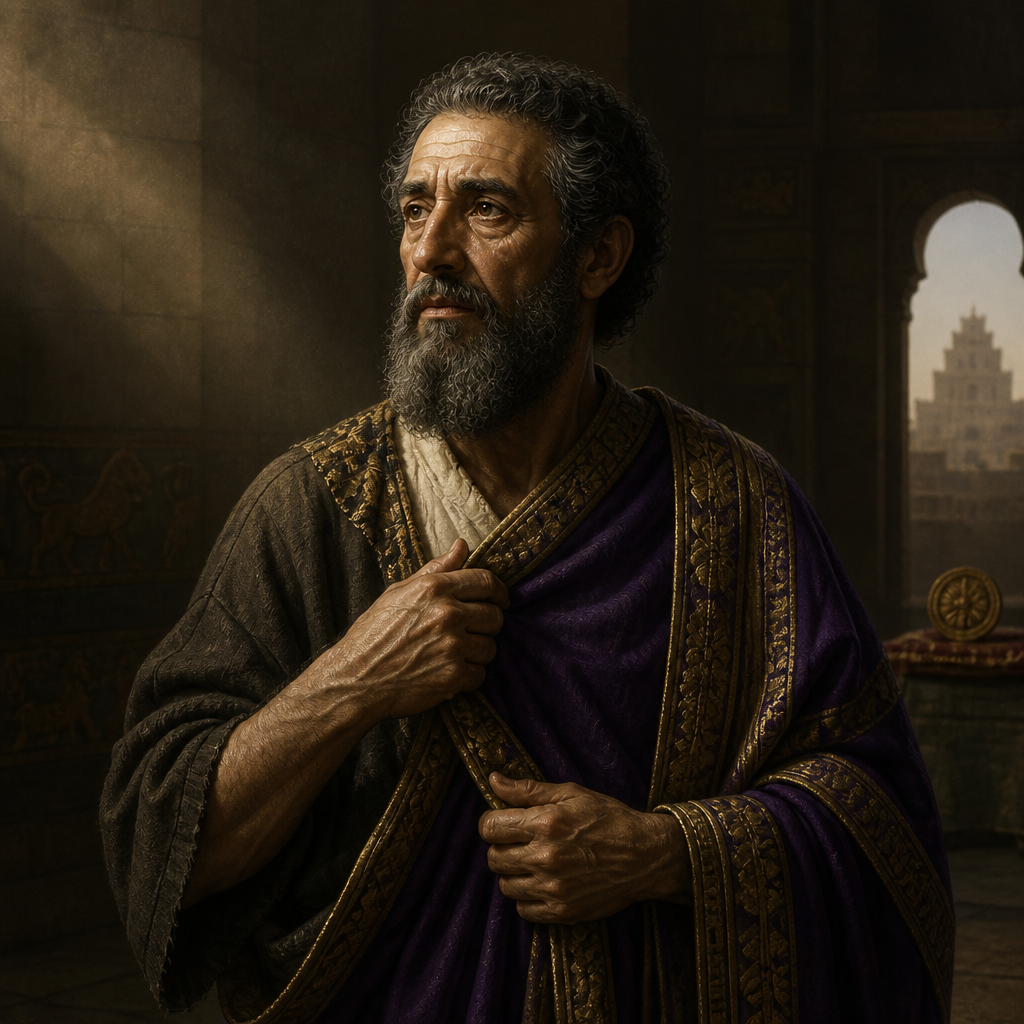 JehoiachinThis page
Children
 HoshamaSon1 Chronicles 3:17–18Stated
 Jekamiah, Son of JeconiahSon1 Chronicles 3:17–18Stated
 MalchiramSon1 Chronicles 3:17–18Stated
 NedabiahSon1 Chronicles 3:17–18Stated
 Pedaiah, Father of ZerubbabelSon1 Chronicles 3:17–18Stated
 Shealtiel, Father of ZerubbabelSon1 Chronicles 3:17Stated
 ShenazzarSon1 Chronicles 3:17–18Stated
 Zedekiah, Son of JehoiakimSon2 Kings 24:17
Inferred
2 Kings 24:17 names Zedekiah and Jehoiachin in the same verse but does not state a father tie between them; the link rests on the surrounding narrative.Evidence: 2 Kings 24:17
Extended family
 Elnathan, Father of NehushtaGrandfather2 Kings 24:8
Inferred
2 Kings 24:8 names Jehoiachin and Elnathan in the same verse but does not state a grandfather tie between them; the link rests on the surrounding narrative.Evidence: 2 Kings 24:8
Connected Figures
Family

Father · 2 Kings 24:6
The second son of King Josiah who reigned over Judah for eleven years as a vassal to Egypt and later Babylon, known for his wickedness and opposition to the prophet Jeremiah.
Divided MonarchyFirst: 2 Kings 23:3440 versesKing of JudahJudah

Mother · 2 Kings 24:8
Nehushta was the Queen Mother of Judah, daughter of Elnathan of Jerusalem, and mother of King Jehoiachin during the final years of the Divided Monarchy.
Divided MonarchyFirst: 2 Kings 24:83 versesQueen Mother of Judah
Son · 1 Chronicles 3:17–18
A prince of the house of David and descendant of King Jehoiachin during the period of the Exile and Return and the Babylonian exile.
Exile and ReturnFirst: 1 Chronicles 3:182 versesPrince of JudahJudah
Son · 1 Chronicles 3:17–18
A prince of the royal house of Judah and a son of King Jehoiachin, recorded in the Davidic genealogy during the era of the Exile and Return.
Exile and ReturnFirst: 1 Chronicles 3:182 versesPrince of the Davidic Royal HouseJudah
Son · 1 Chronicles 3:17–18
A prince of the house of David, listed in 1 Chronicles 3:18 among the sons of Jeconiah alongside his brother Shealtiel.
Exile and ReturnFirst: 1 Chronicles 3:182 versesPrince of the House of DavidJudah
Son · 1 Chronicles 3:17–18
Nedabiah was a member of the Davidic royal line, a son of King Jehoiachin (Jeconiah) during the era of the Exile and Return and the Babylonian Exile.
Exile and ReturnFirst: 1 Chronicles 3:182 versesPrince of the Davidic LineJudah
Son · 1 Chronicles 3:17–18
A member of the Davidic royal line through whom the messianic genealogy continued during the late Exile and Return and transition to the Exile.
Exile and ReturnFirst: 1 Chronicles 3:183 versesPrince of the House of DavidJudah
Son · 1 Chronicles 3:17
Shealtiel was a prince of the royal house of Judah and the legal heir to King Jehoiachin, serving as a critical link in the Davidic lineage during the Babylonian Exile.
Exile and ReturnFirst: 1 Chronicles 3:1714 versesPrince of JudahJudah
Son · 1 Chronicles 3:17–18
Shenazzar was a prince of the tribe of Judah and a son of Jeconiah during the era of the Exile and Return and the Babylonian exile.
Exile and ReturnFirst: 1 Chronicles 3:182 versesPrince of JudahJudah
Son · 2 Kings 24:17
A descendant of the Davidic royal line listed in the genealogy of King Jehoiakim during the Divided Monarchy.
Divided MonarchyFirst: 1 Chronicles 3:163 versesPrince of JudahJudah
Grandfather · 2 Kings 24:8
Elnathan was a prominent resident of Jerusalem during the Divided Monarchy and the maternal grandfather of King Jehoiachin.
Divided MonarchyFirst: 2 Kings 24:82 versesJerusalemite Noble
Categories
Mentions by Book
- 2 Kings5
- 1 Chronicles3
- 2 Chronicles2
- Esther1
- Jeremiah9
- Ezekiel1
- Matthew2
Scripture References
All 23 indexed verses, in canonical order, from the Berean Standard Bible.
2 Kings · 5
- 2 Kings 24:6
And Jehoiakim rested with his fathers, and his son Jehoiachin reigned in his place.
- 2 Kings 24:8
Jehoiachin was eighteen years old when he became king, and he reigned in Jerusalem three months. His mother’s name was Nehushta daughter of Elnathan; she was from Jerusalem.
- 2 Kings 24:12
Jehoiachin king of Judah, his mother, his servants, his commanders, and his officials all surrendered to the king of Babylon. So in the eighth year of his reign, the king of Babylon took him captive.
- 2 Kings 24:15
Nebuchadnezzar carried away Jehoiachin to Babylon, as well as the king’s mother, his wives, his officials, and the leading men of the land. He took them into exile from Jerusalem to Babylon.
- 2 Kings 25:27Partial
On the twenty-seventh day of the twelfth month of the thirty-seventh year of the exile of Judah’s King Jehoiachin, in the year Evil-merodach became king of Babylon, he released King Jehoiachin of Judah from prison.
1 Chronicles · 3
- 1 Chronicles 3:16
The successors of Jehoiakim: Jeconiah his son, and Zedekiah.
- 1 Chronicles 3:17
The descendants of Jeconiah the captive: Shealtiel his son,
- 1 Chronicles 3:18Partial
Malchiram, Pedaiah, Shenazzar, Jekamiah, Hoshama, and Nedabiah.
Cited as evidence on a family card; added so References, Key Verses and Mentions by Book share one index.
2 Chronicles · 2
- 2 Chronicles 36:8
As for the rest of the acts of Jehoiakim, the abominations he committed, and all that was found against him, they are indeed written in the Book of the Kings of Israel and Judah. And his son Jehoiachin reigned in his place.
- 2 Chronicles 36:9
Jehoiachin was eighteen years old when he became king, and he reigned in Jerusalem three months and ten days. And he did evil in the sight of the LORD.
Esther · 1
- Esther 2:6
He had been carried into exile from Jerusalem by Nebuchadnezzar king of Babylon among those taken captive with Jeconiah king of Judah.
Jeremiah · 9
- Jeremiah 22:11
For this is what the LORD says concerning Shallum son of Josiah, king of Judah, who succeeded his father Josiah but has gone forth from this place: “He will never return,
- Jeremiah 22:24
“As surely as I live,” declares the LORD, “even if you, Coniah son of Jehoiakim king of Judah, were a signet ring on My right hand, I would pull you off.
- Jeremiah 22:28
Is this man Coniah a despised and shattered pot, a jar that no one wants? Why are he and his descendants hurled out and cast into a land they do not know?
- Jeremiah 24:1
After Nebuchadnezzar king of Babylon had carried away Jeconiah son of Jehoiakim king of Judah, as well as the officials of Judah and the craftsmen and metalsmiths from Jerusalem, and had brought them to Babylon, the LORD showed me two baskets of figs placed in front of the temple of the LORD.
- Jeremiah 27:20
which Nebuchadnezzar king of Babylon did not take when he carried Jeconiah son of Jehoiakim king of Judah into exile from Jerusalem to Babylon, along with all the nobles of Judah and Jerusalem.
- Jeremiah 28:4
And I will restore to this place Jeconiah son of Jehoiakim king of Judah, along with all the exiles from Judah who went to Babylon,’ declares the LORD, ‘for I will break the yoke of the king of Babylon.’”
- Jeremiah 29:2
(This was after King Jeconiah, the queen mother, the court officials, the officials of Judah and Jerusalem, the craftsmen, and the metalsmiths had been exiled from Jerusalem.)
- Jeremiah 37:1
Nebuchadnezzar king of Babylon made Zedekiah son of Josiah the king of Judah, and he reigned in place of Coniah son of Jehoiakim.
- Jeremiah 52:31Partial
On the twenty-fifth day of the twelfth month of the thirty-seventh year of the exile of Jehoiachin king of Judah, in the first year of the reign of Evil-merodach king of Babylon, he pardoned Jehoiachin king of Judah and released him from prison.
Ezekiel · 1
- Ezekiel 1:2
On the fifth day of the month—it was the fifth year of the exile of King Jehoiachin—
Matthew · 2
- Matthew 1:11
and Josiah the father of Jeconiah and his brothers at the time of the exile to Babylon.
- Matthew 1:12
After the exile to Babylon: Jeconiah was the father of Shealtiel, Shealtiel the father of Zerubbabel,