Shenazzar
Who was Shenazzar in the Bible?
Shenazzar was a prince of the tribe of Judah and a son of Jeconiah during the era of the Exile and Return and the Babylonian exile.
Shenazzar was a member of the royal house of David during the late period of the Exile and Return and the onset of the Babylonian captivity. As a descendant of the kings of Judah, his lineage represents the continuity of the Davidic line during one of Israel's most turbulent historical transitions. While his personal actions are not detailed in the biblical narrative, his inclusion in the genealogical records of 1 Chronicles serves a vital role in documenting the survival of the royal seed.
He is identified as a son of Jeconiah, which places him in the immediate family circle of some of the most significant figures of the Restoration period. His siblings include Pedaiah and Malchiram, making him part of the generational bridge between the fallen monarchy and the post-exilic community that would eventually return to Jerusalem.
Background and Family
Shenazzar appears in the genealogical records of the Tribe of Judah, specifically within the lineage of the Davidic kings. According to 1 Chronicles 3:18, he is listed as one of the sons of Jeconiah. His father was King Jehoiachin (also known as Jeconiah), the monarch who was carried away into Babylonian captivity. This placement within the genealogy confirms Shenazzar’s status as a prince of Judah, born either during the final years of the kingdom or, more likely, during the early years of the exile in Babylon.
His immediate family included six brothers: Shealtiel, Malchiram, Pedaiah, Jekamiah, Hoshama, and Nedabiah. Because these names appear in the context of the Davidic succession, they carry significant weight in the preservation of the messianic line. The biblical record focusing on this specific branch of the family highlights the biological preservation of the house of David despite the loss of political sovereignty.
Major Life Events
The biblical text provides no specific biographical anecdotes or historical actions performed by Shenazzar. His entire presence in the Holy Scriptures is confined to a single verse in the book of 1 Chronicles. Consequently, there are no recorded military exploits, political appointments, or religious reforms associated with his name. His life is defined by his identity and his place within the sacred lineage rather than by individual deeds.
Scholars often note that the names of Jehoiachin's sons, including Shenazzar, reflect the cultural environment of the time. The preservation of these names suggests that the royal family maintained their identity and genealogical records even while living under Babylonian rule.
Relationship to Other Biblical Figures
Shenazzar’s primary significance is found in his relationship to his siblings and his father. He was the brother of Pedaiah, who is identified in the same passage as the father of Zerubbabel. Zerubbabel would later become the governor of Judah and the leader of the first wave of exiles returning to Jerusalem to rebuild the Temple. As the uncle of Zerubbabel, Shenazzar was part of the inner circle of the Davidic elite who survived the transition from the Exile and Return to the Exilic Period.
Spiritual Significance
The spiritual significance of Shenazzar lies in the theology of the "Remnant." By including his name in the permanent record of 1 Chronicles, the chronicler demonstrates God's faithfulness to the covenant made with David. Even when the throne was vacant and the people were in exile, names like Shenazzar served as evidence that the royal line had not been extinguished. His existence, though quietly recorded, was a necessary link in the chain leading toward the eventual restoration of the people and, ultimately, the genealogy of Jesus Christ as presented in the New Testament.
Shenazzar’s significance is primarily genealogical and covenantal. As a son of King Jehoiachin (Jeconiah), he represents the survival of the Davidic dynasty during the Babylonian Exile. His inclusion in 1 Chronicles 3:18 ensures that the transition of the royal line is fully documented, providing a legal and historical basis for the leadership of his nephew, Zerubbabel.
Theologically, Shenazzar serves as a witness to God's providence. The meticulous preservation of his name within the tribe of Judah reinforces the biblical theme that God maintains His promises to the house of David, even under the judgment of exile. He is a silent but essential placeholder in the history of redemption.
Frequently Asked Questions
Who was Shenazzar's father?
Shenazzar was a son of King Jehoiachin (Jeconiah) of Judah.
Which tribe did Shenazzar belong to?
He belonged to the Tribe of Judah, specifically the royal line of David.
In which book of the Bible is Shenazzar mentioned?
Shenazzar is mentioned only once in the Bible, in 1 Chronicles 3:18.
Was Shenazzar a king?
No, Shenazzar was a prince of Judah, but he did not reign as king, as he lived during the period when the Davidic monarchy had been deposed by Babylon.
Family & Relationships
Parents
 JehoiachinFather1 Chronicles 3:17–18Stated
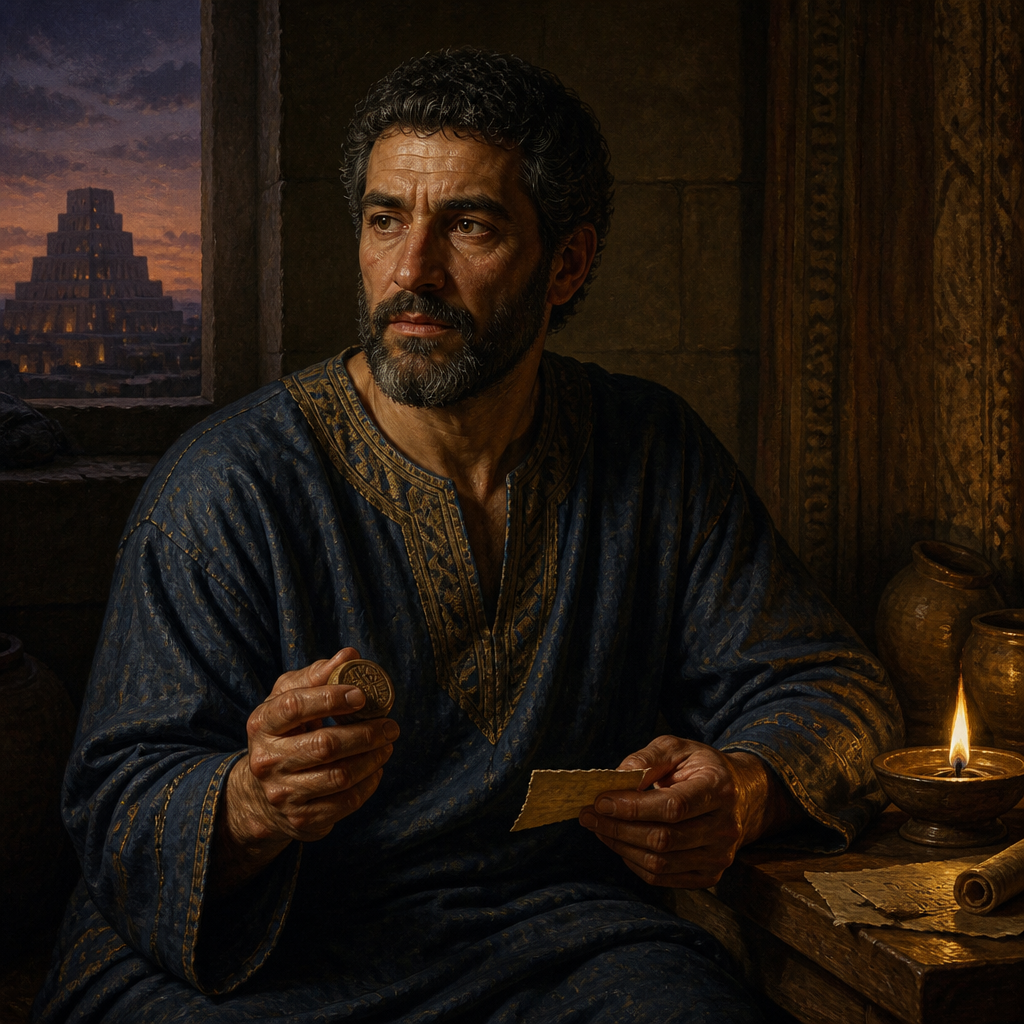 ShenazzarThis page
 HoshamaBrother1 Chronicles 3:18Stated
 Jekamiah, Son of JeconiahBrother1 Chronicles 3:18Stated
 MalchiramBrother1 Chronicles 3:18Stated
 NedabiahBrother1 Chronicles 3:18Stated
 Pedaiah, Father of ZerubbabelBrother1 Chronicles 3:18Stated
 Shealtiel, Father of ZerubbabelBrother1 Chronicles 3:17–18Stated
Connected Figures
Family
Father · 1 Chronicles 3:17–18
A king of Judah who reigned briefly in 598–597 BC before being exiled to Babylon by Nebuchadnezzar.
Divided MonarchyFirst: 2 Kings 24:623 versesKing of JudahJudah
Brother · 1 Chronicles 3:18
A prince of the house of David and descendant of King Jehoiachin during the period of the Exile and Return and the Babylonian exile.
Exile and ReturnFirst: 1 Chronicles 3:182 versesPrince of JudahJudah
Brother · 1 Chronicles 3:18
A prince of the royal house of Judah and a son of King Jehoiachin, recorded in the Davidic genealogy during the era of the Exile and Return.
Exile and ReturnFirst: 1 Chronicles 3:182 versesPrince of the Davidic Royal HouseJudah
Brother · 1 Chronicles 3:18
A prince of the house of David, listed in 1 Chronicles 3:18 among the sons of Jeconiah alongside his brother Shealtiel.
Exile and ReturnFirst: 1 Chronicles 3:182 versesPrince of the House of DavidJudah
Brother · 1 Chronicles 3:18
Nedabiah was a member of the Davidic royal line, a son of King Jehoiachin (Jeconiah) during the era of the Exile and Return and the Babylonian Exile.
Exile and ReturnFirst: 1 Chronicles 3:182 versesPrince of the Davidic LineJudah
Brother · 1 Chronicles 3:18
A member of the Davidic royal line through whom the messianic genealogy continued during the late Exile and Return and transition to the Exile.
Exile and ReturnFirst: 1 Chronicles 3:183 versesPrince of the House of DavidJudah
Brother · 1 Chronicles 3:17–18
Shealtiel was a prince of the royal house of Judah and the legal heir to King Jehoiachin, serving as a critical link in the Davidic lineage during the Babylonian Exile.
Exile and ReturnFirst: 1 Chronicles 3:1714 versesPrince of JudahJudah
Categories
Mentions by Book
- 1 Chronicles2
Scripture References
All 2 indexed verses, in canonical order, from the Berean Standard Bible.
1 Chronicles · 2
- 1 Chronicles 3:17Partial
The descendants of Jeconiah the captive: Shealtiel his son,
Cited as a key verse; added so References, Key Verses and Mentions by Book share one index.
- 1 Chronicles 3:18
Malchiram, Pedaiah, Shenazzar, Jekamiah, Hoshama, and Nedabiah.