Shealtiel, Father of Zerubbabel
Who was Shealtiel, Father of Zerubbabel, in the Bible?
Shealtiel was a prince of the royal house of Judah and the legal heir to King Jehoiachin, serving as a critical link in the Davidic lineage during the Babylonian Exile.
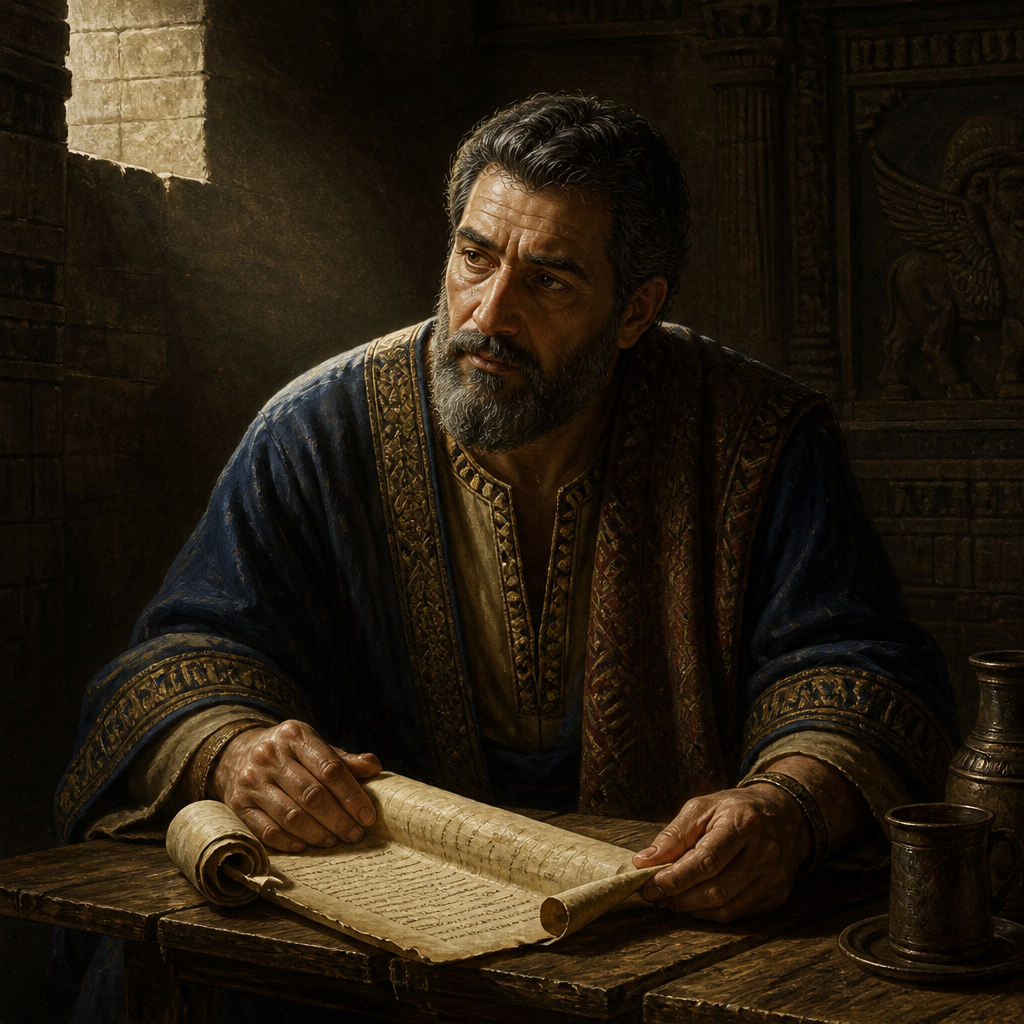
Shealtiel (whose name means 'I have asked of God') was a prominent member of the Judean royal family during the period of the Babylonian Exile and the early years of the Return. As the son of King Jehoiachin (also known as Jeconiah), Shealtiel represented the ongoing hope of the Davidic dynasty while the Jewish people were in captivity. Although he never reigned as an independent king in Jerusalem, his status as the heir to the throne of Judah remained central to the identity of the exiled community.
He is most frequently recognized in the biblical narrative as the father of Zerubbabel, the governor who led the first major wave of Jewish exiles back to Jerusalem and oversaw the reconstruction of the Second Temple. Shealtiel serves as the essential genealogical bridge between the fallen monarchy of the Old Testament and the Messianic lineage recorded in the New Testament.
Background and Family
Scripture names Shealtiel's father twice and differently: 1 Chronicles 3:17 and Matthew 1:12 call him the son of Jehoiachin (Jeconiah), while Luke 3:27 calls him the son of Neri — one man, two genealogies, the same well-known divergence that runs through his son Zerubbabel.
Shealtiel was born during one of the most tumultuous periods in the history of Judah. His father, King Jehoiachin, was taken into Babylonian captivity by Nebuchadnezzar II in 597 BC after a brief three-month reign. According to 1 Chronicles 3:17, Shealtiel was the first-born son of "Jeconiah the captive." This status as the first-born of the deposed king meant that, in the eyes of the exiled Judeans, Shealtiel was the legitimate heir to the throne of David.
The genealogical records in 1 Chronicles 3 list Shealtiel alongside several brothers: Malchiram, Pedaiah, Shenazzar, Jekamiah, Hoshama, and Nedabiah. While the text explicitly identifies Shealtiel as the son of Jeconiah, the subsequent line of descent introduces a point of scholarly discussion. While 1 Chronicles 3:19 lists Zerubbabel as the son of Shealtiel’s brother Pedaiah, every other mention of Zerubbabel in the Hebrew Bible (Ezra 3:2, 3:8, 5:2; Nehemiah 12:1; Haggai 1:1, 1:12, 1:14, 2:2, 2:23) and the New Testament (Matthew 1:12) identifies him as the "son of Shealtiel."
Major Life Events
Though the biblical text does not provide a narrative account of Shealtiel’s personal actions or words, his life is defined by the era of the Exile and Return. He lived through the period described in the later chapters of 2 Kings and the end of 2 Chronicles, where the Davidic line was preserved within the Babylonian court. The Babylonian records (the Jehoiachin Ration Tablets) corroborate the presence of Jehoiachin’s sons in Babylon, receiving rations from the royal stores.
Shealtiel’s primary significance lies in his role as a father and a progenitor. By the time of the decree of Cyrus the Great in 539 BC, which allowed the Jews to return to their homeland, Shealtiel’s son (or legal heir), Zerubbabel, emerged as the political leader of the remnant. The repetitive titling of Zerubbabel as the "son of Shealtiel" throughout the books of Ezra, Nehemiah, and Haggai suggests that Shealtiel’s name carried significant weight as a marker of legitimate Davidic authority. It served to validate Zerubbabel’s leadership in the eyes of the returning community and the Persian administration.
Relationship to Other Biblical Figures
Shealtiel’s relationships are defined by his placement within the royal genealogy. He is the son of Jehoiachin, the grandson of Jehoiakim, and a direct descendant of King Josiah. His relationship with his son Zerubbabel is the most cited aspect of his life. In the prophetic ministry of Haggai, the prophet repeatedly addresses Zerubbabel by referencing his father:
"In the second year of the reign of Darius... the word of the LORD came through Haggai the prophet to Zerubbabel son of Shealtiel, governor of Judah..." (Haggai 1:1)
This identification was crucial because it linked the current reconstruction efforts to the ancient promises made to the House of David. Furthermore, Shealtiel is linked to the high priestly line through his son’s close partnership with Jeshua (Joshua) son of Jozadak. Together, the "son of Shealtiel" and the "son of Jozadak" represented the restoration of the two pillars of Israelite society: the monarchy and the priesthood.
Spiritual Significance
Theological focus on Shealtiel centers on the preservation of the Messianic line. In the Gospel of Matthew, Shealtiel is a vital link in the genealogy of Jesus Christ. Matthew 1:12 states, "After the exile to Babylon: Jeconiah was the father of Shealtiel, Shealtiel the father of Zerubbabel."
His inclusion in this list highlights the fulfillment of God’s covenant with David (2 Samuel 7). Despite the judgment of the Exile and the apparent end of the Judean kingdom, the line was not severed. Shealtiel represents the "remnant" of the royal line, kept alive in Babylon to eventually produce the promised Messiah. His name, meaning "I have asked of God," may reflect the prayerful hope of a captive king for a successor who would restore the people. Through Shealtiel, the legal right to the throne of David passed from the pre-exilic kings to the post-exilic leaders and ultimately to the New Testament figure of Christ.
Shealtiel serves as the primary genealogical link that preserves the Davidic covenant through the Babylonian Exile. His importance is not found in personal exploits, but in his status as the legal heir of King Jehoiachin, ensuring that the 'scepter' did not depart from Judah during the seventy years of captivity. By appearing in both the Old Testament genealogies and the New Testament lineage of Jesus, he demonstrates the continuity of God's redemptive plan across the divide of the Exile.
Furthermore, the consistent biblical identification of Zerubbabel as the 'son of Shealtiel' underscores the theme of legitimacy. In the post-exilic period, when Israel had no king, Shealtiel’s name provided the necessary credentials for Zerubbabel to lead the reconstruction of the Temple and the reorganization of the Jewish state under Persian rule. He is the bridge between the glory of the first Temple and the struggle to build the second.
Frequently Asked Questions
Who was Shealtiel's father?
Shealtiel was the son of King Jehoiachin (also known as Jeconiah), the penultimate king of Judah who was taken captive to Babylon.
Was Shealtiel a king?
Shealtiel was a prince of Judah and the heir to the throne, but he never reigned as a king in Jerusalem, as the monarchy was suspended during the Babylonian Exile.
Is Zerubbabel the son of Shealtiel or Pedaiah?
Most biblical books (Ezra, Nehemiah, Haggai, Matthew) call Zerubbabel the son of Shealtiel. However, 1 Chronicles 3:19 identifies him as the son of Pedaiah (Shealtiel's brother). Scholars often suggest Zerubbabel may have been Shealtiel's legal son through a levirate marriage or that Pedaiah raised him after Shealtiel's early death.
What does the name Shealtiel mean?
The name Shealtiel is of Hebrew origin (Shealtiy'el) and means 'I have asked of God' or 'Asked of God.'
Why is Shealtiel important in the New Testament?
He is included in the genealogy of Jesus in Matthew 1:12, serving as a critical link in the ancestral line from King David to Joseph, the legal father of Jesus.
Family & Relationships
Parents
 JehoiachinFather1 Chronicles 3:17Stated
 NeriFatherLuke 3:27Stated
 Shealtiel, Father of ZerubbabelThis page
 HoshamaBrother1 Chronicles 3:17–18Stated
 Jekamiah, Son of JeconiahBrother1 Chronicles 3:17–18Stated
 MalchiramBrother1 Chronicles 3:17–18Stated
 NedabiahBrother1 Chronicles 3:17–18Stated
 Pedaiah, Father of ZerubbabelBrother1 Chronicles 3:17–18Stated
 ShenazzarBrother1 Chronicles 3:17–18Stated
 Zedekiah, Son of JehoiakimBrother1 Chronicles 3:16
Inferred
Reconstructed through Jehoiachin: 2 Kings 24:17 ties Zedekiah to Jehoiachin (itself an inferred link); 1 Chronicles 3:17 ties Jeconiah to Shealtiel. No verse states the brother link between Zedekiah and Shealtiel directly.Evidence: 1 Chronicles 3:16
Children
 Zerubbabel, Governor of JudahSonEzra 3:2Stated
Extended family
 DavidAncestorLuke 3:27
Inferred
No verse names David and Shealtiel together; the descendant link is carried from the surrounding genealogy and is not stated in Scripture.Evidence: Luke 3:27
Connected Figures
Family
Father · 1 Chronicles 3:17
A king of Judah who reigned briefly in 598–597 BC before being exiled to Babylon by Nebuchadnezzar.
Divided MonarchyFirst: 2 Kings 24:623 versesKing of JudahJudah
Father · Luke 3:27
Neri was a descendant of King David through the line of Nathan and a direct ancestor of Jesus Christ according to the genealogy recorded in the Gospel of Luke.
Son · Ezra 3:2
A Davidic prince and governor who led the first wave of Jewish exiles from Babylon to Jerusalem and laid the foundation for the Second Temple.
Exile and ReturnFirst: 1 Chronicles 3:1929 versesGovernor of JudahJudah
Brother · 1 Chronicles 3:17–18
A prince of the house of David and descendant of King Jehoiachin during the period of the Exile and Return and the Babylonian exile.
Exile and ReturnFirst: 1 Chronicles 3:182 versesPrince of JudahJudah
Brother · 1 Chronicles 3:17–18
A prince of the royal house of Judah and a son of King Jehoiachin, recorded in the Davidic genealogy during the era of the Exile and Return.
Exile and ReturnFirst: 1 Chronicles 3:182 versesPrince of the Davidic Royal HouseJudah
Brother · 1 Chronicles 3:17–18
A prince of the house of David, listed in 1 Chronicles 3:18 among the sons of Jeconiah alongside his brother Shealtiel.
Exile and ReturnFirst: 1 Chronicles 3:182 versesPrince of the House of DavidJudah
Brother · 1 Chronicles 3:17–18
Nedabiah was a member of the Davidic royal line, a son of King Jehoiachin (Jeconiah) during the era of the Exile and Return and the Babylonian Exile.
Exile and ReturnFirst: 1 Chronicles 3:182 versesPrince of the Davidic LineJudah
Brother · 1 Chronicles 3:17–18
A member of the Davidic royal line through whom the messianic genealogy continued during the late Exile and Return and transition to the Exile.
Exile and ReturnFirst: 1 Chronicles 3:183 versesPrince of the House of DavidJudah
Brother · 1 Chronicles 3:17–18
Shenazzar was a prince of the tribe of Judah and a son of Jeconiah during the era of the Exile and Return and the Babylonian exile.
Exile and ReturnFirst: 1 Chronicles 3:182 versesPrince of JudahJudah
Brother · 1 Chronicles 3:16
A descendant of the Davidic royal line listed in the genealogy of King Jehoiakim during the Divided Monarchy.
Divided MonarchyFirst: 1 Chronicles 3:163 versesPrince of JudahJudah
Ancestor · Luke 3:27
The second king of the United Monarchy of Israel, a shepherd-warrior and psalmist known as a man after God's own heart.
United MonarchyFirst: Ruth 4:17998 versesKing of Israel, Shepherd, Musician, WarriorJudah
Categories
Mentions by Book
- 1 Chronicles3
- Ezra3
- Nehemiah1
- Haggai5
- Matthew1
- Luke1
Scripture References
All 14 indexed verses, in canonical order, from the Berean Standard Bible.
1 Chronicles · 3
- 1 Chronicles 3:16Partial
The successors of Jehoiakim: Jeconiah his son, and Zedekiah.
Cited as evidence on a family card; added so References, Key Verses and Mentions by Book share one index.
- 1 Chronicles 3:17
The descendants of Jeconiah the captive: Shealtiel his son,
- 1 Chronicles 3:18Partial
Malchiram, Pedaiah, Shenazzar, Jekamiah, Hoshama, and Nedabiah.
Cited as evidence on a family card; added so References, Key Verses and Mentions by Book share one index.
Ezra · 3
- Ezra 3:2
Then Jeshua son of Jozadak and his fellow priests, along with Zerubbabel son of Shealtiel and his associates, began to build the altar of the God of Israel to sacrifice burnt offerings on it, as it is written in the Law of Moses the man of God.
- Ezra 3:8
In the second month of the second year after they had arrived at the house of God in Jerusalem, Zerubbabel son of Shealtiel, Jeshua son of Jozadak, and the rest of their associates including the priests, the Levites, and all who had returned to Jerusalem from the captivity, began the work. They appointed Levites twenty years of age or older to supervise the construction of the house of the LORD.
- Ezra 5:2
Then Zerubbabel son of Shealtiel and Jeshua son of Jozadak rose up and began to rebuild the house of God in Jerusalem. And the prophets of God were with them, helping them.
Nehemiah · 1
- Nehemiah 12:1
Now these are the priests and Levites who went up with Zerubbabel son of Shealtiel and with Jeshua: Seraiah, Jeremiah, Ezra,
Haggai · 5
- Haggai 1:1
In the second year of the reign of Darius, on the first day of the sixth month, the word of the LORD came through Haggai the prophet to Zerubbabel son of Shealtiel, governor of Judah, and to Joshua son of Jehozadak, the high priest, stating
- Haggai 1:12
Then Zerubbabel son of Shealtiel and Joshua son of Jehozadak, the high priest, as well as all the remnant of the people, obeyed the voice of the LORD their God and the words of the prophet Haggai, because the LORD their God had sent him. So the people feared the LORD.
- Haggai 1:14
So the LORD stirred the spirit of Zerubbabel son of Shealtiel, governor of Judah, and the spirit of Joshua son of Jehozadak, the high priest, as well as the spirit of all the remnant of the people. And they came and began the work on the house of the LORD of Hosts, their God,
- Haggai 2:2
“Speak to Zerubbabel son of Shealtiel, governor of Judah, and to Joshua son of Jehozadak, the high priest, and also to the remnant of the people. Ask them,
- Haggai 2:23
On that day, declares the LORD of Hosts, I will take you, My servant, Zerubbabel son of Shealtiel, declares the LORD, and I will make you like My signet ring, for I have chosen you, declares the LORD of Hosts.”
Matthew · 1
- Matthew 1:12Partial
After the exile to Babylon: Jeconiah was the father of Shealtiel, Shealtiel the father of Zerubbabel,
Luke · 1
- Luke 3:27
the son of Joanan, the son of Rhesa, the son of Zerubbabel, the son of Shealtiel, the son of Neri,