Jehoiakim
Who was Jehoiakim in the Bible?
The second son of King Josiah who reigned over Judah for eleven years as a vassal to Egypt and later Babylon, known for his wickedness and opposition to the prophet Jeremiah.
Jehoiakim, originally named Eliakim, was a king of the Tribe of Judah during the volatile final decades of the Divided Monarchy. He was the second son of the righteous King Josiah, but unlike his father, Jehoiakim is consistently characterized in the biblical record by his administrative cruelty, spiritual rebellion, and defiance of God's prophets. His reign began in 609 BC after Pharaoh Neco II of Egypt deposed his brother Jehoahaz and installed Jehoiakim as a puppet king, renaming him to signify Egyptian suzerainty.
Jehoiakim’s tenure was marked by shifting geopolitical loyalties between the competing empires of Egypt and Babylon. Initially a vassal of Egypt, he was forced to pivot his allegiance to King Nebuchadnezzar II of Babylon following the Battle of Carchemish. His internal policy was defined by heavy taxation of the Judean populace to pay foreign tribute and the systematic persecution of those who preached repentance. The biblical accounts in 2 Kings, 2 Chronicles, and the Book of Jeremiah provide a portrait of a monarch whose refusal to heed divine warnings directly accelerated the downfall of the Kingdom of Judah.
Background and Family
Jehoiakim was born to King Josiah and his wife Zebidah, daughter of Pedaiah of Rumah (2 Kings 23:36). Though he was Josiah's second son, he was bypassed for the throne upon his father's death at the Battle of Megiddo in 609 BC. The people of the land initially crowned his younger brother, Jehoahaz. However, after only three months, Pharaoh Neco II of Egypt deposed Jehoahaz and summoned Eliakim, placing him on the throne and changing his name to Jehoiakim, which means "Yahweh has established."
Jehoiakim was twenty-five years old when he began his reign. He was married to Nehushta and had at least one son, Jehoiachin (also known as Jeconiah or Coniah), who would briefly succeed him. His siblings included the ill-fated Jehoahaz, Shallum, and Zedekiah, the latter of whom would eventually serve as the final king of Judah before the Babylonian destruction.
Major Life Events
The Egyptian Vassalage
Jehoiakim’s reign began under the shadow of Egyptian dominance. To meet the heavy indemnity of one hundred talents of silver and a talent of gold imposed by Pharaoh Neco, Jehoiakim did not draw from the royal treasury alone; instead, he "taxed the land and exacted the silver and the gold from the people... each according to his wealth" (2 Kings 23:35). This early action set a precedent for a reign characterized by social injustice and the exploitation of his subjects.
The Rise of Babylon
In the fourth year of Jehoiakim’s reign (c. 605 BC), the geopolitical landscape shifted permanently at the Battle of Carchemish, where Nebuchadnezzar of Babylon defeated the Egyptian forces. Shortly thereafter, Nebuchadnezzar besieged Jerusalem. According to Daniel 1:1-2, the Lord delivered Jehoiakim into Nebuchadnezzar's hand, and some of the vessels of the Temple were carried off to Babylon. Jehoiakim became a Babylonian vassal for three years before attempting a desperate and ultimately doomed rebellion (2 Kings 24:1).
Conflict with Jeremiah
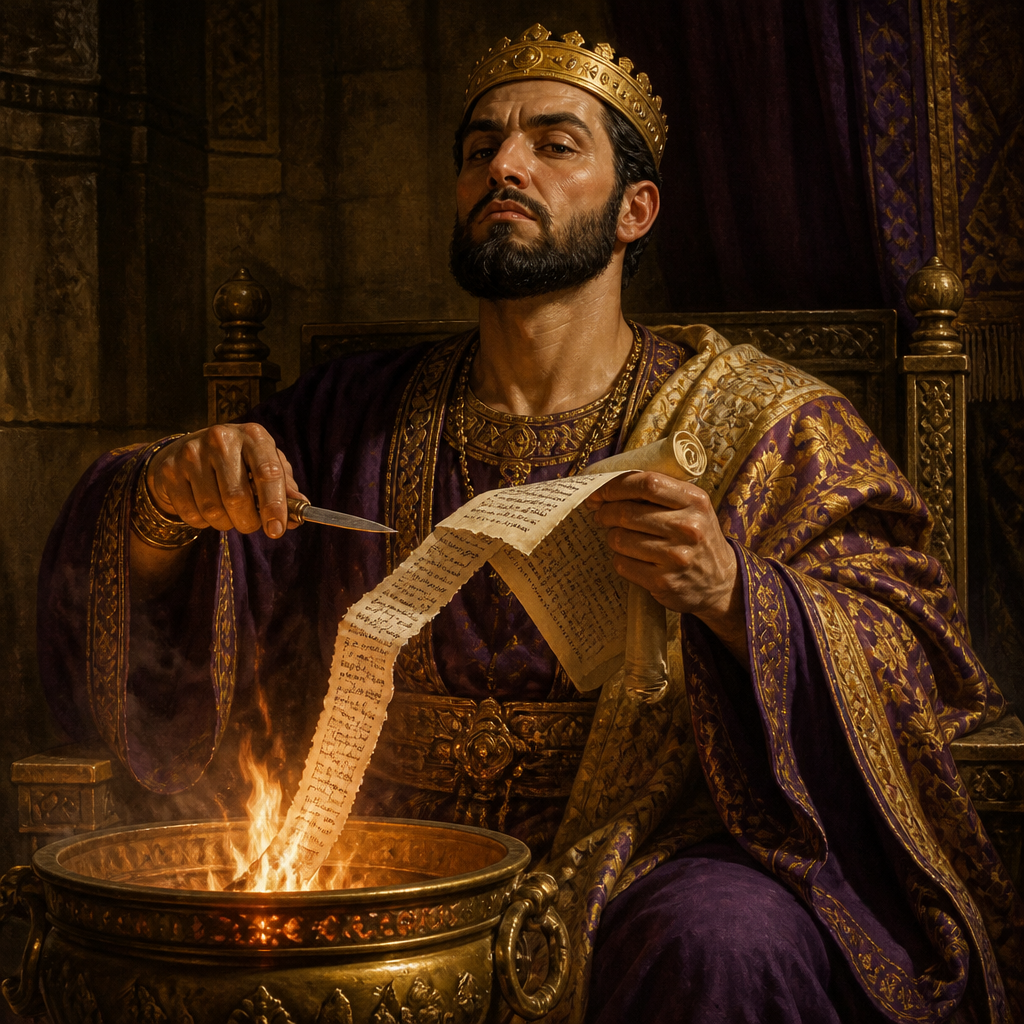
Much of what is known regarding Jehoiakim’s character comes from the contemporary ministry of the prophet Jeremiah. Unlike his father Josiah, who tore his clothes in repentance upon hearing the Law, Jehoiakim responded to divine warning with contempt. In one of the most famous scenes of his reign, recorded in Jeremiah 36, the king sat in his winter palace before a firepot. As the words of Jeremiah’s scroll—warning of Babylonian judgment—were read to him, he took a scribe’s knife, cut the scroll into strips, and threw them into the fire until the entire scroll was consumed.
Persecution of the Prophets
Jehoiakim’s hostility extended to physical violence against God’s messengers. When the prophet Uriah son of Shemaiah prophesied against Jerusalem, Jehoiakim sought to kill him. Even when Uriah fled to Egypt, Jehoiakim sent a delegation led by Elnathan son of Achbor to extradite him. Uriah was brought back to Jerusalem and executed by the sword, and his body was tossed into a common grave (Jeremiah 26:20-23).
Relationship to Other Biblical Figures
Jehoiakim is frequently contrasted with his father, Josiah. While Josiah is remembered for his reform and discovery of the Book of the Law, Jehoiakim is remembered for destroying the written Word of God. His relationship with Jeremiah was one of sustained antagonism; Jeremiah predicted that Jehoiakim would be buried with "the burial of a donkey," dragged away and cast out beyond the gates of Jerusalem (Jeremiah 22:19).
He was also the father of Jehoiachin, whose short three-month reign ended in Babylonian captivity, and the brother of Zedekiah, who reigned during the final siege of Jerusalem. The chroniclers and prophets alike use Jehoiakim as the benchmark for "doing evil in the sight of the Lord," noting that Zedekiah followed in the same wicked path (2 Kings 24:19; Jeremiah 52:2).
Spiritual Significance
Theologically, Jehoiakim represents the spiritual hardening of the Judean monarchy. His reign signifies the point of no return for the kingdom. By burning the scroll of Jeremiah, he symbolically and literally rejected the final opportunities for national repentance. The biblical narrative suggests that the calamities that befell Judah—the invasions, the loss of Temple treasures, and the eventual exile—were a direct result of the "abominations" committed during his tenure (2 Chronicles 36:8). His life serves as a scriptural warning regarding the consequences of institutionalizing injustice and silencing the prophetic voice in favor of political expediency.
Jehoiakim's significance lies in his role as the king who presided over the beginning of the end for the Kingdom of Judah. His actions demonstrated a total abandonment of the Davidic covenant and the reforms of his father, Josiah. By systematically taxing the poor to pay foreign powers and murdering prophets like Uriah, he embodied the moral decay that necessitated the Babylonian Exile.
Furthermore, his interaction with Jeremiah's scroll serves as a pivotal moment in the history of biblical revelation. His attempt to destroy the written Word of God resulted not in the silencing of the message, but in the command to rewrite the scroll with added judgments. This highlights the biblical theme of the indestructibility of God's Word despite the opposition of earthly authorities.
Frequently Asked Questions
What was Jehoiakim's original name?
His original name was Eliakim. It was changed to Jehoiakim by Pharaoh Neco II when he was placed on the throne as a vassal king.
How did Jehoiakim treat the prophet Jeremiah?
Jehoiakim was hostile toward Jeremiah. He ignored his warnings and famously cut up and burned a scroll containing Jeremiah's prophecies of judgment.
How long did Jehoiakim reign?
Jehoiakim reigned in Jerusalem for eleven years, from approximately 609 BC to 598 BC.
What happened to the prophet Uriah during Jehoiakim’s reign?
King Jehoiakim had Uriah extradited from Egypt and executed by the sword because he prophesied against Jerusalem, reflecting the king's intolerance for divine rebuke.
Who succeeded Jehoiakim as king?
He was succeeded by his son, Jehoiachin (also known as Jeconiah), who reigned for only three months before being taken captive to Babylon.
Family & Relationships
Parents
 Josiah, King of JudahFatherJeremiah 1:3Stated
 ZebidahMother2 Kings 23:36Stated
 NehushtaWife2 Kings 24:6
Inferred
Reconstructed through Jehoiachin: 2 Kings 24:8 ties Nehushta to Jehoiachin; 2 Kings 24:6 ties Jehoiachin to Jehoiakim. No verse states the husband link between Nehushta and Jehoiakim directly.Evidence: 2 Kings 24:6; 2 Kings 24:8; Jeremiah 22:24; Jeremiah 24:1; Jeremiah 27:20
 JehoiakimThis page
 Jehoahaz, Son of JosiahBrother1 Chronicles 3:15Stated
 Zedekiah, Last King of JudahBrother1 Chronicles 3:15Stated
 Johanan, Son of JosiahBrother1 Chronicles 3:15Stated
Children
 JehoiachinSon2 Kings 24:6Stated
 Zedekiah, Son of JehoiakimSon2 Kings 24:19
Inferred
2 Kings 24:19 names Zedekiah and Jehoiakim in the same verse but does not state a father tie between them; the link rests on the surrounding narrative.Evidence: 2 Kings 24:19
Extended family
 Elnathan, Father of NehushtaFather-in-law2 Kings 24:8
Inferred
Reconstructed through Jehoiachin: 2 Kings 24:8 ties Elnathan to Jehoiachin (itself an inferred link); 2 Kings 24:6 ties Jehoiachin to Jehoiakim. No verse states the son-in-law link between Elnathan and Jehoiakim directly.Evidence: 2 Kings 24:8
 Pedaiah of RumahGrandfather2 Kings 23:36
Inferred
2 Kings 23:36 names Jehoiakim and Pedaiah in the same verse but does not state a grandfather tie between them; the link rests on the surrounding narrative.Evidence: 2 Kings 23:36
Connected Figures
Family
Father · Jeremiah 1:3
A righteous king of the Divided Monarchy who initiated sweeping religious reforms and restored the temple and the Passover after the discovery of the Book of the Law.
Divided MonarchyFirst: 1 Kings 13:253 versesKing of JudahJudah
Mother · 2 Kings 23:36
The mother of King Jehoiakim of Judah and a wife of King Josiah, hailing from the village of Rumah.
Divided MonarchyFirst: 2 Kings 23:362 versesQueen Mother of Judah
Wife · 2 Kings 24:6
Nehushta was the Queen Mother of Judah, daughter of Elnathan of Jerusalem, and mother of King Jehoiachin during the final years of the Divided Monarchy.
Divided MonarchyFirst: 2 Kings 24:83 versesQueen Mother of Judah
Son · 2 Kings 24:6
A king of Judah who reigned briefly in 598–597 BC before being exiled to Babylon by Nebuchadnezzar.
Divided MonarchyFirst: 2 Kings 24:623 versesKing of JudahJudah
Son · 2 Kings 24:19
A descendant of the Davidic royal line listed in the genealogy of King Jehoiakim during the Divided Monarchy.
Divided MonarchyFirst: 1 Chronicles 3:163 versesPrince of JudahJudah
Brother · 1 Chronicles 3:15
Jehoahaz was the seventeenth king of Judah, whose brief three-month reign in 609 BC ended when he was deposed and imprisoned by Pharaoh Neco II.
Divided MonarchyFirst: 2 Kings 23:308 versesKing of JudahJudah
Brother · 1 Chronicles 3:15
The final king of the Kingdom of Judah who reigned during the Babylonian siege of Jerusalem and oversaw the city's eventual destruction.
Divided MonarchyFirst: 2 Kings 24:1754 versesKing of JudahJudah
Brother · 1 Chronicles 3:15
The firstborn son of King Josiah of Judah who, despite his birthright, never ascended to the throne during the Divided Monarchy.
Divided MonarchyFirst: 1 Chronicles 3:151 versesPrince of JudahJudah
Father-in-law · 2 Kings 24:8
Elnathan was a prominent resident of Jerusalem during the Divided Monarchy and the maternal grandfather of King Jehoiachin.
Divided MonarchyFirst: 2 Kings 24:82 versesJerusalemite Noble
Grandfather · 2 Kings 23:36
Pedaiah was a resident of Rumah and the father of Zebidah, the mother of King Jehoiakim of Judah.
Divided MonarchyFirst: 2 Kings 23:361 versesLandowner or local figure of standing
Categories
Mentions by Book
- 2 Kings9
- 1 Chronicles2
- 2 Chronicles3
- Jeremiah24
- Daniel2
Scripture References
All 40 indexed verses, in canonical order, from the Berean Standard Bible.
- 2 Kings 23:34
Then Pharaoh Neco made Eliakim son of Josiah king in place of his father Josiah, and he changed Eliakim’s name to Jehoiakim. But Neco took Jehoahaz and carried him off to Egypt, where he died.
- 2 Kings 23:35
So Jehoiakim paid the silver and gold to Pharaoh Neco, but to meet Pharaoh’s demand he taxed the land and exacted the silver and the gold from the people, each according to his wealth.
- 2 Kings 23:36
Jehoiakim was twenty-five years old when he became king, and he reigned in Jerusalem eleven years. His mother’s name was Zebidah daughter of Pedaiah; she was from Rumah.
- 2 Kings 24:1
During Jehoiakim’s reign, Nebuchadnezzar king of Babylon invaded. So Jehoiakim became his vassal for three years, until he turned and rebelled against Nebuchadnezzar.
- 2 Kings 24:5
As for the rest of the acts of Jehoiakim, along with all his accomplishments, are they not written in the Book of the Chronicles of the Kings of Judah?
- 2 Kings 24:6
And Jehoiakim rested with his fathers, and his son Jehoiachin reigned in his place.
- 2 Kings 24:7Partial
Now the king of Egypt did not march out of his land again, because the king of Babylon had taken all his territory, from the Brook of Egypt to the Euphrates River.
Cited as evidence on a family card; added so References, Key Verses and Mentions by Book share one index.
- 2 Kings 24:8Partial
Jehoiachin was eighteen years old when he became king, and he reigned in Jerusalem three months. His mother’s name was Nehushta daughter of Elnathan; she was from Jerusalem.
Cited as evidence on a family card; added so References, Key Verses and Mentions by Book share one index.
- 2 Kings 24:19
And Zedekiah did evil in the sight of the LORD, just as Jehoiakim had done.
- 1 Chronicles 3:15
The sons of Josiah: Johanan was the firstborn, Jehoiakim the second, Zedekiah the third, and Shallum the fourth.
- 1 Chronicles 3:16
The successors of Jehoiakim: Jeconiah his son, and Zedekiah.
- 2 Chronicles 36:4
Then Neco king of Egypt made Eliakim brother of Jehoahaz king over Judah and Jerusalem, and he changed Eliakim’s name to Jehoiakim. But Neco took Eliakim’s brother Jehoahaz and carried him off to Egypt.
- 2 Chronicles 36:5
Jehoiakim was twenty-five years old when he became king, and he reigned in Jerusalem eleven years. And he did evil in the sight of the LORD his God.
- 2 Chronicles 36:8
As for the rest of the acts of Jehoiakim, the abominations he committed, and all that was found against him, they are indeed written in the Book of the Kings of Israel and Judah. And his son Jehoiachin reigned in his place.
- Jeremiah 1:3
and through the days of Jehoiakim son of Josiah king of Judah, until the fifth month of the eleventh year of Zedekiah son of Josiah king of Judah, when the people of Jerusalem went into exile.
- Jeremiah 22:18
Therefore this is what the LORD says concerning Jehoiakim son of Josiah king of Judah: “They will not mourn for him: ‘Alas, my brother! Alas, my sister!’ They will not mourn for him: ‘Alas, my master! Alas, his splendor!’
- Jeremiah 22:24
“As surely as I live,” declares the LORD, “even if you, Coniah son of Jehoiakim king of Judah, were a signet ring on My right hand, I would pull you off.
- Jeremiah 24:1
After Nebuchadnezzar king of Babylon had carried away Jeconiah son of Jehoiakim king of Judah, as well as the officials of Judah and the craftsmen and metalsmiths from Jerusalem, and had brought them to Babylon, the LORD showed me two baskets of figs placed in front of the temple of the LORD.
- Jeremiah 25:1
This is the word that came to Jeremiah concerning all the people of Judah in the fourth year of Jehoiakim son of Josiah king of Judah, which was the first year of Nebuchadnezzar king of Babylon.
- Jeremiah 26:1
At the beginning of the reign of Jehoiakim son of Josiah king of Judah, this word came from the LORD:
- Jeremiah 26:21
King Jehoiakim and all his mighty men and officials heard his words, and the king sought to put him to death. But when Uriah found out about it, he fled in fear and went to Egypt.
- Jeremiah 26:22
Then King Jehoiakim sent men to Egypt: Elnathan son of Achbor along with some other men.
- Jeremiah 26:23
They brought Uriah out of Egypt and took him to King Jehoiakim, who had him put to the sword and his body thrown into the burial place of the common people.
- Jeremiah 27:1
At the beginning of the reign of Zedekiah son of Josiah king of Judah, this word came to Jeremiah from the LORD.
- Jeremiah 27:20
which Nebuchadnezzar king of Babylon did not take when he carried Jeconiah son of Jehoiakim king of Judah into exile from Jerusalem to Babylon, along with all the nobles of Judah and Jerusalem.
- Jeremiah 28:4
And I will restore to this place Jeconiah son of Jehoiakim king of Judah, along with all the exiles from Judah who went to Babylon,’ declares the LORD, ‘for I will break the yoke of the king of Babylon.’”
- Jeremiah 35:1
This is the word that came to Jeremiah from the LORD in the days of Jehoiakim son of Josiah king of Judah:
- Jeremiah 36:1
In the fourth year of Jehoiakim son of Josiah king of Judah, this word came to Jeremiah from the LORD:
- Jeremiah 36:9
Now in the ninth month of the fifth year of Jehoiakim son of Josiah king of Judah, a fast before the LORD was proclaimed to all the people of Jerusalem and all who had come there from the cities of Judah.
- Jeremiah 36:23
And as soon as Jehudi had read three or four columns, Jehoiakim would cut them off with a scribe’s knife and throw them into the firepot, until the entire scroll had been consumed by the fire.
Cited as a key verse; added so References, Key Verses and Mentions by Book share one index.
- Jeremiah 36:28
“Take another scroll and rewrite on it the very words that were on the original scroll, which Jehoiakim king of Judah has burned.
- Jeremiah 36:29
You are to proclaim concerning Jehoiakim king of Judah that this is what the LORD says: You have burned the scroll and said, ‘Why have you written on it that the king of Babylon would surely come and destroy this land and deprive it of man and beast?’
- Jeremiah 36:30
Therefore this is what the LORD says about Jehoiakim king of Judah: He will have no one to sit on David’s throne, and his body will be thrown out and exposed to heat by day and frost by night.
- Jeremiah 36:32
Then Jeremiah took another scroll and gave it to the scribe Baruch son of Neriah, and at Jeremiah’s dictation he wrote on it all the words of the scroll that Jehoiakim king of Judah had burned in the fire. And many similar words were added to them.
- Jeremiah 37:1
Nebuchadnezzar king of Babylon made Zedekiah son of Josiah the king of Judah, and he reigned in place of Coniah son of Jehoiakim.
- Jeremiah 45:1
This is the word that Jeremiah the prophet spoke to Baruch son of Neriah when he wrote these words on a scroll at the dictation of Jeremiah in the fourth year of Jehoiakim son of Josiah, king of Judah:
- Jeremiah 46:2
concerning Egypt and the army of Pharaoh Neco king of Egypt, which was defeated at Carchemish on the Euphrates River by Nebuchadnezzar king of Babylon in the fourth year of Jehoiakim the son of Josiah king of Judah:
- Jeremiah 52:2
And Zedekiah did evil in the sight of the LORD, just as Jehoiakim had done.
- Daniel 1:1
In the third year of the reign of Jehoiakim king of Judah, Nebuchadnezzar king of Babylon came to Jerusalem and besieged it.
- Daniel 1:2
And the Lord delivered into his hand Jehoiakim king of Judah, along with some of the articles from the house of God. He carried these off to the land of Shinar, to the house of his god, where he put them in the treasury of his god.