Jehoahaz, Son of Josiah
Who was Jehoahaz, Son of Josiah, in the Bible?
Jehoahaz was the seventeenth king of Judah, whose brief three-month reign in 609 BC ended when he was deposed and imprisoned by Pharaoh Neco II.
This is one of 2 people named Jehoahaz in the Bible. See all 2 →
Jehoahaz was a king of the Southern Kingdom of Judah who reigned during a period of intense geopolitical instability following the death of his father, the reformer King Josiah. Though he was not the eldest son, he was the choice of the 'people of the land,' who anointed him king in Jerusalem in 609 BC. His ascension marked the beginning of the end for the Judean monarchy as the nation became a pawn in the struggle between the waning Assyrian Empire, the rising Neo-Babylonian Empire, and the resurgent Saite Dynasty of Egypt.
His reign is one of the shortest in the history of the Davidic line, lasting only three months. During this brief window, he failed to maintain the spiritual reforms of his father, and his rule was abruptly terminated by external military intervention. He is notably the first king of Judah to die in exile, marking a somber precursor to the eventual Babylonian Captivity that would claim the rest of the nation just decades later.
Background and Family
Jehoahaz was the son of King Josiah and Hamutal, the daughter of Jeremiah of Libnah. He was born into a royal family during a time of significant spiritual and political transition. His father, Josiah, had led one of the most comprehensive religious reformations in Judah’s history, purging the land of idolatry and centralizing worship at the Temple in Jerusalem. According to the genealogical records in 1 Chronicles 3:15, Josiah had four sons: Johanan, Jehoiakim, Zedekiah, and Shallum. While the biblical text in 2 Kings and 2 Chronicles focuses on his royal name, Jehoahaz, he is identified as Shallum in other contexts, which suggests Jehoahaz may have been his throne name.
Jehoahaz was twenty-three years old when he ascended the throne. Notably, he was not the firstborn son of Josiah; his brother Jehoiakim (Eliakim) was older. The biblical record specifies that the "people of the land" took Jehoahaz and anointed him (2 Kings 23:30), a phrase often used in the Old Testament to describe a popular movement or a decision by the national assembly, perhaps bypassing the traditional birthright because Jehoahaz was perceived as more aligned with the anti-Egyptian faction in Jerusalem.
Major Life Events
The reign of Jehoahaz was defined by the aftermath of the Battle of Megiddo. His father, Josiah, had been killed attempting to intercept Pharaoh Neco II, who was marching to assist the collapsing Assyrian Empire against the Babylonians. Following Josiah’s tragic death, Jehoahaz was hastily crowned. However, he only managed to hold the throne for three months in Jerusalem.
During this short tenure, the author of 2 Kings records that "he did evil in the sight of the Lord, according to all that his fathers had done" (2 Kings 23:32). This assessment indicates a rapid departure from the godly legacy of Josiah. Meanwhile, Pharaoh Neco, returning from his campaign in the north, asserted Egyptian hegemony over the Levant. Neco viewed the unauthorized coronation of Jehoahaz as an act of defiance or an unfavorable political development.
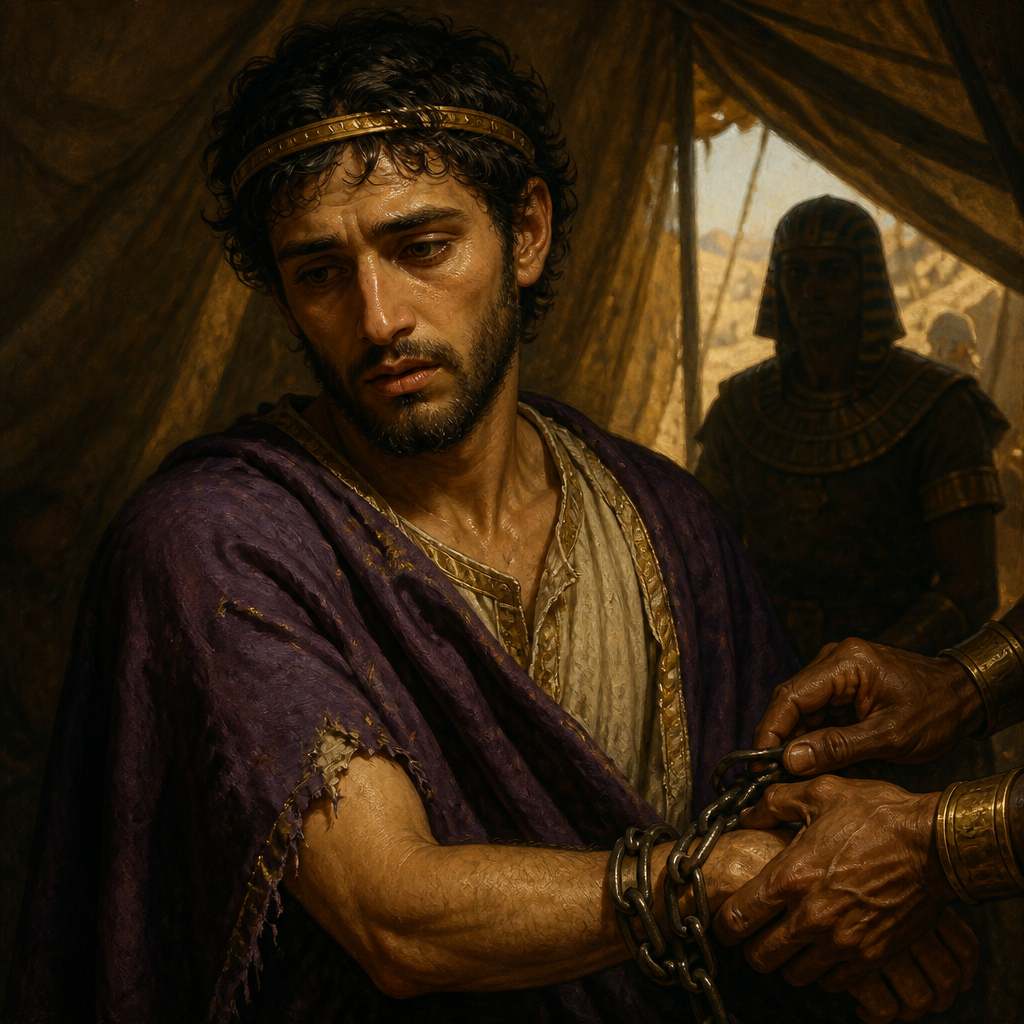
Neco summoned Jehoahaz to Riblah in the land of Hamath, where he put the king in chains to prevent him from reigning further in Jerusalem. The Pharaoh imposed a heavy tribute on the Kingdom of Judah—one hundred talents of silver and a talent of gold. Neco then installed Jehoahaz’s older brother, Eliakim, as a puppet king, renaming him Jehoiakim. Jehoahaz was taken as a prisoner to Egypt, where he remained until his death. This fulfilled the grim reality that he would never return to see his homeland again.
Relationship to Other Biblical Figures
Jehoahaz’s life is inextricably linked to the tragic end of the House of David. He was the brother of two subsequent kings: Jehoiakim, who was placed on the throne by Egypt, and Zedekiah, who would eventually be the last king of Judah before the Babylonian destruction. His mother, Hamutal, is also the mother of Zedekiah, distinguishing this branch of Josiah’s family from the lineage of Jehoiakim’s mother, Zebidah.
His relationship with his father Josiah is one of sharp contrast. While Josiah is celebrated for his faithfulness, Jehoahaz is summarized by his failure to sustain that devotion. His removal by Pharaoh Neco established the pattern of foreign interference that would plague his brothers' reigns, as Judah transitioned from an Egyptian vassal to a Babylonian vassal.
Spiritual Significance
The spiritual significance of Jehoahaz lies in the speed with which Judah regressed after the death of a righteous leader. The brief reign of Jehoahaz serves as a warning regarding the fragility of spiritual reform when it is not deeply rooted in the hearts of the subsequent generation. The biblical narrative uses Jehoahaz to illustrate that the judgment Josiah had delayed through his repentance was now actively proceeding against the city of Jerusalem.
Furthermore, the fate of Jehoahaz—dying in a foreign land—was a significant cultural and theological blow to the Judean psyche. The Davidic covenant promised a throne in Jerusalem; seeing a son of David carried off in chains to Egypt signaled that the protective hand of God was being withdrawn due to the nation's persistent idolatry and refusal to follow the Law of Moses.
Jehoahaz represents the tragic beginning of the final collapse of the Kingdom of Judah. As the first king of the Divided Monarchy to be deposed by a foreign power and taken into permanent exile, his life serves as a physical manifestation of the broken relationship between Yahweh and the Davidic line during the late 7th century BC. His brief reign highlights the immediate failure of the populace to maintain the reforms of Josiah, demonstrating that political sovereignty was inextricably linked to spiritual fidelity.
His deposition by Pharaoh Neco II also marks a shift in Judah's status from an independent kingdom to a contested territory between the great powers of Egypt and Babylon. The brief mention of Jehoahaz in the biblical record serves to transition the narrative from the hope of Josiah’s era to the inevitable judgment of the Babylonian exile, proving that even the 'chosen' line of David was subject to divine discipline when they 'did evil in the sight of the Lord.'
Frequently Asked Questions
How long did Jehoahaz reign over Judah?
Jehoahaz had one of the shortest reigns in the history of Judah, lasting only three months in 609 BC.
Why was Jehoahaz taken to Egypt?
Pharaoh Neco II deposed him at Riblah, likely because he was chosen by the people without Egyptian approval. Neco wanted a ruler more favorable to Egyptian interests and took Jehoahaz as a prisoner to ensure Judah's submission.
Was Jehoahaz the oldest son of King Josiah?
No. According to 1 Chronicles 3:15, he was the fourth son (Shallum). His older brother Jehoiakim was passed over by the people initially but was later installed by the Egyptians.
What was the spiritual character of Jehoahaz's reign?
Despite being the son of the righteous King Josiah, the Bible records that Jehoahaz did evil in the sight of the Lord, continuing the idolatrous practices of his ancestors rather than his father’s reforms.
What happened to Jehoahaz after he was captured?
He was taken in chains to Egypt, where the biblical record in 2 Kings 23:34 states he eventually died in exile.
Family & Relationships
Parents
 Josiah, King of JudahFather2 Kings 23:30Stated
 HamutalMother2 Kings 23:31Stated
 Jehoahaz, Son of JosiahThis page
 JehoiakimBrother1 Chronicles 3:15Stated
 Zedekiah, Last King of JudahBrother1 Chronicles 3:15Stated
 Johanan, Son of JosiahBrother1 Chronicles 3:15Stated
Connected Figures
Family
Father · 2 Kings 23:30
A righteous king of the Divided Monarchy who initiated sweeping religious reforms and restored the temple and the Passover after the discovery of the Book of the Law.
Divided MonarchyFirst: 1 Kings 13:253 versesKing of JudahJudah
Mother · 2 Kings 23:31
The daughter of Jeremiah of Libnah, wife of King Josiah, and mother of two kings of Judah: Jehoahaz and Zedekiah.
Divided MonarchyFirst: 2 Kings 23:314 versesQueen Mother of Judah
Brother · 1 Chronicles 3:15
The second son of King Josiah who reigned over Judah for eleven years as a vassal to Egypt and later Babylon, known for his wickedness and opposition to the prophet Jeremiah.
Divided MonarchyFirst: 2 Kings 23:3440 versesKing of JudahJudah
Brother · 1 Chronicles 3:15
The final king of the Kingdom of Judah who reigned during the Babylonian siege of Jerusalem and oversaw the city's eventual destruction.
Divided MonarchyFirst: 2 Kings 24:1754 versesKing of JudahJudah
Brother · 1 Chronicles 3:15
The firstborn son of King Josiah of Judah who, despite his birthright, never ascended to the throne during the Divided Monarchy.
Divided MonarchyFirst: 1 Chronicles 3:151 versesPrince of JudahJudah
Categories
Mentions by Book
- 2 Kings3
- 1 Chronicles1
- 2 Chronicles3
- Jeremiah1
Scripture References
All 8 indexed verses, in canonical order, from the Berean Standard Bible.
2 Kings · 3
- 2 Kings 23:30
From Megiddo his servants carried his body in a chariot, brought him to Jerusalem, and buried him in his own tomb. Then the people of the land took Jehoahaz son of Josiah, anointed him, and made him king in place of his father.
- 2 Kings 23:31
Jehoahaz was twenty-three years old when he became king, and he reigned in Jerusalem three months. His mother’s name was Hamutal daughter of Jeremiah; she was from Libnah.
- 2 Kings 23:34
Then Pharaoh Neco made Eliakim son of Josiah king in place of his father Josiah, and he changed Eliakim’s name to Jehoiakim. But Neco took Jehoahaz and carried him off to Egypt, where he died.
1 Chronicles · 1
- 1 Chronicles 3:15
The sons of Josiah: Johanan was the firstborn, Jehoiakim the second, Zedekiah the third, and Shallum the fourth.
2 Chronicles · 3
- 2 Chronicles 36:1
Then the people of the land took Jehoahaz son of Josiah and made him king in Jerusalem in place of his father.
- 2 Chronicles 36:2
Jehoahaz was twenty-three years old when he became king, and he reigned in Jerusalem three months.
- 2 Chronicles 36:4
Then Neco king of Egypt made Eliakim brother of Jehoahaz king over Judah and Jerusalem, and he changed Eliakim’s name to Jehoiakim. But Neco took Eliakim’s brother Jehoahaz and carried him off to Egypt.
Jeremiah · 1
- Jeremiah 22:11Partial
For this is what the LORD says concerning Shallum son of Josiah, king of Judah, who succeeded his father Josiah but has gone forth from this place: “He will never return,
Cited as evidence on a family card; added so References, Key Verses and Mentions by Book share one index.
Others Named Jehoahaz
Compare all 2 bearers →Jehoahaz, Son of Jehu2 Kings 10:35
The eleventh king of the northern kingdom of Israel, Jehoahaz reigned during a period of severe military decline and Aramean oppression.