Josiah, King of Judah
Who was Josiah, King of Judah, in the Bible?
A righteous king of the Divided Monarchy who initiated sweeping religious reforms and restored the temple and the Passover after the discovery of the Book of the Law.
This is one of 2 people named Josiah in the Bible. See all 2 →
Josiah was the sixteenth king of the Kingdom of Judah, reigning for thirty-one years in Jerusalem during the late 7th century BC. He ascended to the throne at the tender age of eight following the assassination of his father, Amon. Unlike his immediate predecessors, Manasseh and Amon, who were noted for their idolatry, Josiah is remembered as one of the most uniquely faithful kings in the Davidic line. His reign was defined by a profound spiritual awakening that redirected the nation's focus back to the covenant with Yahweh.
The defining moment of Josiah's reign occurred during his eighteenth year when, while repairing the Temple of Solomon, the High Priest Hilkiah discovered a scroll described as the 'Book of the Law.' This discovery prompted Josiah to lead a nationwide purge of pagan influences, reaching even into the former Northern Kingdom. His efforts culminated in a monumental celebration of the Passover that, according to biblical writers, had not been equaled since the days of the prophet Samuel.
Background and Family
Josiah was born into the royal house of David during a turbulent period in Judah's history. According to 2 Kings 22:1, he was the son of King Amon and Jedidah, the daughter of Adaiah of Bozkath. His father, Amon, reigned for only two years before being murdered by his own servants. The 'people of the land' intervened by executing the conspirators and installing the eight-year-old Josiah as king in roughly 640 BC.
Josiah’s family life was complex, involving several wives and sons who would eventually witness the final collapse of the Judean monarchy. His known partners included Zebidah (mother of Jehoiakim) and Hamutal (mother of Jehoahaz and Zedekiah). His sons included Johanan (the firstborn), Eliakim (Jehoiakim), Shallum (Jehoahaz), and Mattaniah (Zedekiah). The biblical record emphasizes that despite the wickedness of his father and grandfather, Josiah chose a path of righteousness, adhering strictly to the ways of his ancestor David.
Major Life Events
The Discovery of the Law
In the eighteenth year of his reign, Josiah commissioned the scribe Shaphan to oversee the restoration of the Temple of the LORD. During the renovations, Hilkiah the High Priest found the 'Book of the Law' (likely a scroll of Deuteronomy). When Shaphan read the book to Josiah, the king tore his clothes in grief, realizing that the nation had failed to uphold the covenantal requirements of God.
Seeking divine guidance, Josiah sent a delegation to Huldah the prophetess. She confirmed that while judgment was coming upon Judah for its long history of idolatry, Josiah himself would be spared from seeing the disaster because of his humble heart and repentance.
The Great Reformation
Following the oracle from Huldah, Josiah gathered all the elders and people of Judah at the temple. He read the words of the covenant aloud and made a personal vow to follow the LORD. This sparked a massive iconoclastic campaign. Josiah ordered the removal of all vessels made for Baal and Asherah from the temple. He systematically destroyed the high places, broke down the sacred pillars, and defiled the 'topheth' in the Valley of Hinnom to end child sacrifice.
Notably, Josiah extended his reforms beyond the borders of Judah into the territory of the former Northern Kingdom of Israel. In Bethel, he demolished the altar built by Jeroboam I, fulfilling a prophecy delivered three centuries earlier by an unnamed man of God (1 Kings 13:2). To ensure the sites were not reused, he burned the bones of pagan priests upon their altars.
The Restoration of Passover
Central to Josiah's religious revival was the restoration of the Passover. In his eighteenth year, the king provided 30,000 lambs and goats and 3,000 bulls from his own property to facilitate the festival. The Chronicler notes that no king since the time of Samuel had observed a Passover with such devotion and adherence to the written Law.
Death at Megiddo
Josiah's reign came to a tragic and sudden end in 609 BC. Pharaoh Neco of Egypt was marching toward the Euphrates River to assist the Assyrians against the rising Babylonian power. Despite Neco's warnings that he had no quarrel with Judah, Josiah intercepted the Egyptian army at Megiddo. Disguising himself for battle, Josiah was struck by Egyptian archers. The two accounts of what followed differ: 2 Kings 23:29-30 says Neco killed him at Megiddo and his servants carried his body to Jerusalem, while 2 Chronicles 35:23-24 says he was carried from Megiddo in a second chariot and died in Jerusalem, where he was buried in the tomb of his fathers. His death was a cause of national mourning, lamented deeply by the prophet Jeremiah.
Relationship to Other Biblical Figures
Josiah’s reign was supported by a circle of significant spiritual leaders. Hilkiah the priest was instrumental in the temple restoration, while Shaphan the scribe served as the king's administrative right hand. The prophetess Huldah provided the crucial theological interpretation of the found scroll. Additionally, the prophets Jeremiah and Zephaniah began their ministries during Josiah’s reign; their writings reflect the spiritual climate of his era and the impending judgment that Josiah’s righteousness only temporarily delayed.
Spiritual Significance
Josiah is presented as the ultimate model of the 'penitent king.' His legacy is defined by his total commitment to the Written Word. The author of Kings provides the highest possible commendation: 'Neither before nor after Josiah was there a king like him who turned to the LORD as he did—with all his heart and with all his soul and with all his strength, in accordance with all the Law of Moses' (2 Kings 23:25).
His life illustrates the principle that individual righteousness can bring a 'reprieve' from judgment, though it may not entirely cancel the consequences of a nation's collective rebellion. In the New Testament, Josiah is recorded in the genealogy of Jesus Christ (Matthew 1:10-11), serving as a vital link in the Davidic line leading to the Messiah.
Josiah represents the pinnacle of the Davidic monarchy's devotion to the Mosaic Law. His reign serves as a theological turning point where the 'Book of the Law' became the central authority for the life of the people, a shift that proved vital for the survival of the Jewish faith during the upcoming Babylonian Exile. He is the only king specifically prophesied by name centuries before his birth (1 Kings 13:2), highlighting his role as a divinely appointed reformer.
Theologically, Josiah’s life demonstrates the impact of humble repentance. Even though the prophetess Huldah confirmed that Judah’s destruction was inevitable due to the sins of Manasseh, Josiah’s personal piety earned him a peaceful death before the exile began. His commitment to the Passover also reaffirmed the communal identity of Israel as a people delivered by God, setting a standard for liturgical purity that influenced post-exilic Judaism.
Frequently Asked Questions
How old was Josiah when he became king?
Josiah was eight years old when he ascended to the throne of Judah.
What was the 'Book of the Law' found during Josiah's reign?
While the Bible calls it the 'Book of the Law' found in the temple, most scholars believe it was either the entire Pentateuch or, more specifically, the book of Deuteronomy, which contains the laws regarding centralized worship and the blessings and curses of the covenant.
Who was the prophetess who spoke to Josiah?
The prophetess Huldah. Josiah sent Hilkiah the priest and Shaphan the scribe to consult her after the Law was found.
How did King Josiah die?
Josiah was mortally wounded by Egyptian archers at Megiddo while trying to stop Pharaoh Neco. The two accounts of his death differ: 2 Kings 23:29-30 says Neco killed him at Megiddo and his servants carried his body to Jerusalem, while 2 Chronicles 35:23-24 says he was carried away wounded and died in Jerusalem.
Which prophets were active during Josiah's reign?
Jeremiah and Zephaniah both began their prophetic ministries during the reign of Josiah. The prophetess Huldah was also an active contemporary.
Family & Relationships
Parents
 Amon, King of JudahFather2 Kings 21:24Stated
 JedidahMother2 Kings 22:1Stated
 HamutalWife2 Kings 23:30
Inferred
Reconstructed through Zedekiah: 2 Kings 24:18 ties Hamutal to Zedekiah; Jeremiah 1:3 ties Zedekiah to Josiah. No verse states the husband link between Hamutal and Josiah directly.Evidence: 2 Kings 23:30; 2 Kings 23:31; 2 Chronicles 36:1; Jeremiah 22:11
 ZebidahWife2 Kings 23:36
Inferred
Reconstructed through Jehoiakim: 2 Kings 23:36 ties Zebidah to Jehoiakim; Jeremiah 1:3 ties Jehoiakim to Josiah. No verse states the husband link between Zebidah and Josiah directly.Evidence: 2 Kings 23:36; Jeremiah 1:3; Jeremiah 22:18; Jeremiah 25:1; Jeremiah 26:1
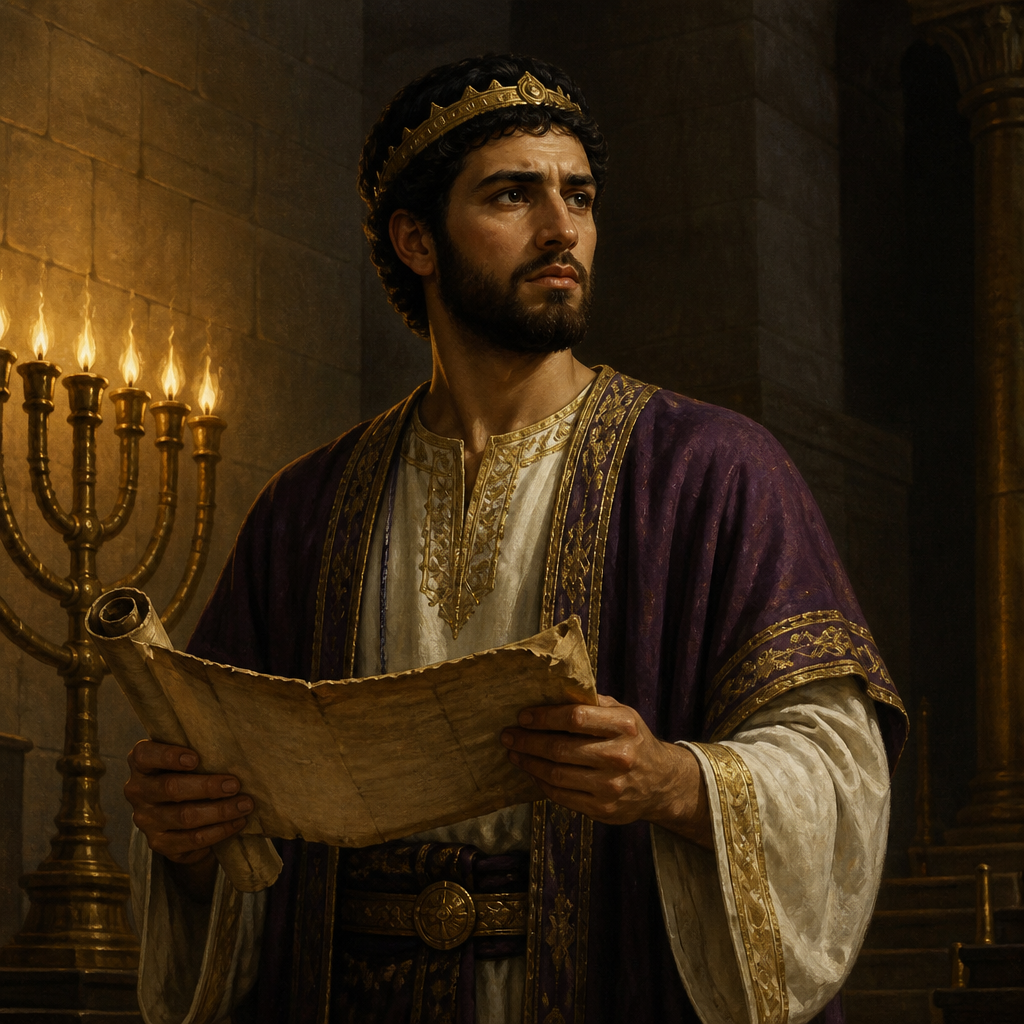 Josiah, King of JudahThis page
Children
 Jehoahaz, Son of JosiahSon2 Kings 23:30Stated
 JehoiakimSonJeremiah 1:3Stated
 Zedekiah, Last King of JudahSonJeremiah 1:3Stated
 Johanan, Son of JosiahSon1 Chronicles 3:15Stated
Connected Figures
Family
Father · 2 Kings 21:24
The fifteenth king of Judah whose brief, two-year reign was marked by extreme idolatry and ended in his assassination by his own officials.
Divided MonarchyFirst: 2 Kings 21:1816 versesKing of JudahJudah
Mother · 2 Kings 22:1
The mother of King Josiah and wife of King Amon, identified as the daughter of Adaiah of Bozkath.
Divided MonarchyFirst: 2 Kings 22:12 versesQueen Mother of JudahJudah
Wife · 2 Kings 23:30
The daughter of Jeremiah of Libnah, wife of King Josiah, and mother of two kings of Judah: Jehoahaz and Zedekiah.
Divided MonarchyFirst: 2 Kings 23:314 versesQueen Mother of Judah
Wife · 2 Kings 23:36
The mother of King Jehoiakim of Judah and a wife of King Josiah, hailing from the village of Rumah.
Divided MonarchyFirst: 2 Kings 23:362 versesQueen Mother of Judah
Son · 2 Kings 23:30
Jehoahaz was the seventeenth king of Judah, whose brief three-month reign in 609 BC ended when he was deposed and imprisoned by Pharaoh Neco II.
Divided MonarchyFirst: 2 Kings 23:308 versesKing of JudahJudah
Son · Jeremiah 1:3
The second son of King Josiah who reigned over Judah for eleven years as a vassal to Egypt and later Babylon, known for his wickedness and opposition to the prophet Jeremiah.
Divided MonarchyFirst: 2 Kings 23:3440 versesKing of JudahJudah
Son · Jeremiah 1:3
The final king of the Kingdom of Judah who reigned during the Babylonian siege of Jerusalem and oversaw the city's eventual destruction.
Divided MonarchyFirst: 2 Kings 24:1754 versesKing of JudahJudah
Son · 1 Chronicles 3:15
The firstborn son of King Josiah of Judah who, despite his birthright, never ascended to the throne during the Divided Monarchy.
Divided MonarchyFirst: 1 Chronicles 3:151 versesPrince of JudahJudah
Categories
Mentions by Book
- 1 Kings1
- 2 Kings15
- 1 Chronicles2
- 2 Chronicles16
- Jeremiah16
- Zephaniah1
- Matthew2
Scripture References
All 53 indexed verses, in canonical order, from the Berean Standard Bible.
- 1 Kings 13:2
And he cried out against the altar by the word of the LORD, “O altar, O altar, this is what the LORD says: ‘A son named Josiah will be born to the house of David, and upon you he will sacrifice the priests of the high places who burn incense upon you, and human bones will be burned upon you.’”
- 2 Kings 21:24
But the people of the land killed all those who had conspired against King Amon, and they made his son Josiah king in his place.
- 2 Kings 21:26
And he was buried in his tomb in the garden of Uzza, and his son Josiah reigned in his place.
- 2 Kings 22:1
Josiah was eight years old when he became king, and he reigned in Jerusalem thirty-one years. His mother’s name was Jedidah daughter of Adaiah; she was from Bozkath.
- 2 Kings 22:3
Now in the eighteenth year of his reign, King Josiah sent the scribe, Shaphan son of Azaliah, the son of Meshullam, to the house of the LORD, saying,
- 2 Kings 23:16
And as Josiah turned, he saw the tombs there on the hillside, and he sent someone to take the bones out of the tombs, and he burned them on the altar to defile it, according to the word of the LORD proclaimed by the man of God who had foretold these things.
- 2 Kings 23:19
Just as Josiah had done at Bethel, so also in the cities of Samaria he removed all the shrines of the high places set up by the kings of Israel who had provoked the LORD to anger.
- 2 Kings 23:23
But in the eighteenth year of Josiah’s reign, this Passover was observed to the LORD in Jerusalem.
- 2 Kings 23:24
Furthermore, Josiah removed the mediums and spiritists, the household gods and idols, and all the abominations that were seen in the land of Judah and in Jerusalem. He did this to carry out the words of the law written in the book that Hilkiah the priest had found in the house of the LORD.
- 2 Kings 23:25
Neither before nor after Josiah was there any king like him, who turned to the LORD with all his heart and with all his soul and with all his strength, according to all the Law of Moses.
Cited as a key verse; added so References, Key Verses and Mentions by Book share one index.
- 2 Kings 23:28
As for the rest of the acts of Josiah and all his accomplishments, are they not written in the Book of the Chronicles of the Kings of Judah?
- 2 Kings 23:29
During Josiah’s reign, Pharaoh Neco king of Egypt marched up to help the king of Assyria at the Euphrates River. King Josiah went out to confront him, but Neco faced him and killed him at Megiddo.
- 2 Kings 23:30
From Megiddo his servants carried his body in a chariot, brought him to Jerusalem, and buried him in his own tomb. Then the people of the land took Jehoahaz son of Josiah, anointed him, and made him king in place of his father.
- 2 Kings 23:31Partial
Jehoahaz was twenty-three years old when he became king, and he reigned in Jerusalem three months. His mother’s name was Hamutal daughter of Jeremiah; she was from Libnah.
Cited as evidence on a family card; added so References, Key Verses and Mentions by Book share one index.
- 2 Kings 23:34Partial
Then Pharaoh Neco made Eliakim son of Josiah king in place of his father Josiah, and he changed Eliakim’s name to Jehoiakim. But Neco took Jehoahaz and carried him off to Egypt, where he died.
- 2 Kings 23:36Partial
Jehoiakim was twenty-five years old when he became king, and he reigned in Jerusalem eleven years. His mother’s name was Zebidah daughter of Pedaiah; she was from Rumah.
Cited as evidence on a family card; added so References, Key Verses and Mentions by Book share one index.
- 1 Chronicles 3:14
Amon his son, and Josiah his son.
- 1 Chronicles 3:15
The sons of Josiah: Johanan was the firstborn, Jehoiakim the second, Zedekiah the third, and Shallum the fourth.
- 2 Chronicles 33:25
But the people of the land killed all those who had conspired against King Amon, and they made his son Josiah king in his place.
- 2 Chronicles 34:1
Josiah was eight years old when he became king, and he reigned in Jerusalem thirty-one years.
- 2 Chronicles 34:3
In the eighth year of his reign, while he was still young, Josiah began to seek the God of his father David, and in the twelfth year he began to cleanse Judah and Jerusalem of the high places, the Asherah poles, the carved idols, and the cast images.
Cited as a key verse; added so References, Key Verses and Mentions by Book share one index.
- 2 Chronicles 34:33
And Josiah removed all the abominations from all the lands belonging to the Israelites, and he required everyone in Israel to serve the LORD their God. Throughout his reign they did not turn aside from following the LORD, the God of their fathers.
- 2 Chronicles 35:1
Then Josiah kept the Passover to the LORD in Jerusalem, and the Passover lamb was slaughtered on the fourteenth day of the first month.
- 2 Chronicles 35:7
From his own flocks and herds Josiah contributed 30,000 lambs and goats plus 3,000 bulls for the Passover offerings for all the people who were present.
- 2 Chronicles 35:16
So on that day the entire service of the LORD was carried out for celebrating the Passover and offering burnt offerings on the altar of the LORD, according to the command of King Josiah.
- 2 Chronicles 35:18
No such Passover had been observed in Israel since the days of Samuel the prophet. None of the kings of Israel ever observed a Passover like the one that Josiah observed with the priests, the Levites, all Judah, the Israelites who were present, and the people of Jerusalem.
- 2 Chronicles 35:19
In the eighteenth year of Josiah’s reign, this Passover was observed.
- 2 Chronicles 35:20Partial
After all this, when Josiah had set the temple in order, Neco king of Egypt marched up to fight at Carchemish by the Euphrates, and Josiah went out to confront him.
- 2 Chronicles 35:22
Josiah, however, did not turn away from him; instead, in order to engage him in battle, he disguised himself. He did not listen to Neco’s words from the mouth of God, but went to fight him on the Plain of Megiddo.
- 2 Chronicles 35:23
There the archers shot King Josiah, who said to his servants, “Take me away, for I am badly wounded!”
- 2 Chronicles 35:24
So his servants took him out of his chariot, put him in his second chariot, and brought him to Jerusalem, where he died. And Josiah was buried in the tomb of his fathers, and all Judah and Jerusalem mourned for him.
- 2 Chronicles 35:25Partial
Then Jeremiah lamented over Josiah, and to this day all the male and female singers recite laments over Josiah. They established them as a statute for Israel, and indeed they are written in the Book of Laments.
- 2 Chronicles 35:26
As for the rest of the acts of Josiah and his deeds of loving devotion according to what is written in the Law of the LORD—
- 2 Chronicles 36:1
Then the people of the land took Jehoahaz son of Josiah and made him king in Jerusalem in place of his father.
- Jeremiah 1:2
The word of the LORD came to Jeremiah in the thirteenth year of the reign of Josiah son of Amon king of Judah,
- Jeremiah 1:3Partial
and through the days of Jehoiakim son of Josiah king of Judah, until the fifth month of the eleventh year of Zedekiah son of Josiah king of Judah, when the people of Jerusalem went into exile.
- Jeremiah 3:6
Now in the days of King Josiah, the LORD said to me, “Have you seen what faithless Israel has done? She has gone up on every high hill and under every green tree to prostitute herself there.
- Jeremiah 22:11Partial
For this is what the LORD says concerning Shallum son of Josiah, king of Judah, who succeeded his father Josiah but has gone forth from this place: “He will never return,
- Jeremiah 22:18
Therefore this is what the LORD says concerning Jehoiakim son of Josiah king of Judah: “They will not mourn for him: ‘Alas, my brother! Alas, my sister!’ They will not mourn for him: ‘Alas, my master! Alas, his splendor!’
- Jeremiah 25:1
This is the word that came to Jeremiah concerning all the people of Judah in the fourth year of Jehoiakim son of Josiah king of Judah, which was the first year of Nebuchadnezzar king of Babylon.
- Jeremiah 25:3
“From the thirteenth year of Josiah son of Amon king of Judah until this very day—twenty-three years—the word of the LORD has come to me, and I have spoken to you again and again, but you have not listened.
- Jeremiah 26:1
At the beginning of the reign of Jehoiakim son of Josiah king of Judah, this word came from the LORD:
- Jeremiah 27:1
At the beginning of the reign of Zedekiah son of Josiah king of Judah, this word came to Jeremiah from the LORD.
- Jeremiah 35:1
This is the word that came to Jeremiah from the LORD in the days of Jehoiakim son of Josiah king of Judah:
- Jeremiah 36:1
In the fourth year of Jehoiakim son of Josiah king of Judah, this word came to Jeremiah from the LORD:
- Jeremiah 36:2
“Take a scroll and write on it all the words I have spoken to you concerning Israel, Judah, and all the nations, from the day I first spoke to you during the reign of Josiah until today.
- Jeremiah 36:9
Now in the ninth month of the fifth year of Jehoiakim son of Josiah king of Judah, a fast before the LORD was proclaimed to all the people of Jerusalem and all who had come there from the cities of Judah.
- Jeremiah 37:1
Nebuchadnezzar king of Babylon made Zedekiah son of Josiah the king of Judah, and he reigned in place of Coniah son of Jehoiakim.
- Jeremiah 45:1
This is the word that Jeremiah the prophet spoke to Baruch son of Neriah when he wrote these words on a scroll at the dictation of Jeremiah in the fourth year of Jehoiakim son of Josiah, king of Judah:
- Jeremiah 46:2
concerning Egypt and the army of Pharaoh Neco king of Egypt, which was defeated at Carchemish on the Euphrates River by Nebuchadnezzar king of Babylon in the fourth year of Jehoiakim the son of Josiah king of Judah:
- Zephaniah 1:1
This is the word of the LORD that came to Zephaniah son of Cushi, the son of Gedaliah, the son of Amariah, the son of Hezekiah, in the days of Josiah son of Amon king of Judah:
- Matthew 1:10
Hezekiah was the father of Manasseh, Manasseh the father of Amon, Amon the father of Josiah,
- Matthew 1:11
and Josiah the father of Jeconiah and his brothers at the time of the exile to Babylon.
Others Named Josiah
Compare all 2 bearers →Josiah, Son of ZephaniahZechariah 6:10
A resident of Jerusalem during the Post-Exilic Period who hosted a delegation of returnees from Babylon and whose home served as the site for the symbolic crowning of the High Priest Joshua.