Huldah
Who was Huldah in the Bible?
A prominent prophetess in Jerusalem during the reign of King Josiah who authenticated the Book of the Law found in the Temple.
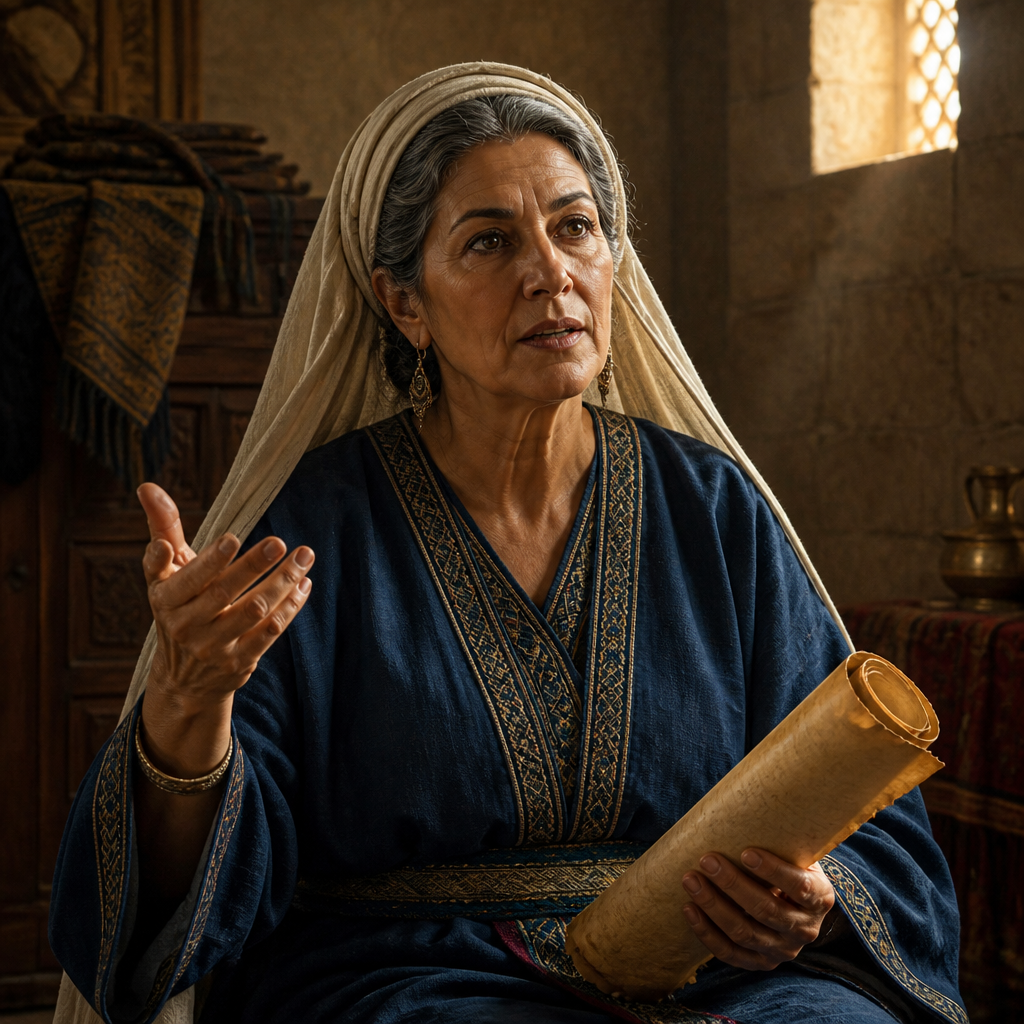
Huldah was a prophetess who resided in Jerusalem during the late seventh century BC, specifically during the reign of King Josiah of Judah. She is one of the few women in the Old Testament explicitly identified with the title of prophetess, occupying a position of such high spiritual authority that the high priest and royal officials sought her counsel regarding the word of the Lord. Her ministry occurred at a critical juncture in Judah's history when the kingdom was attempting to return to Mosaic Law after decades of apostasy.
She was the wife of Shallum, the keeper of the royal or temple wardrobe, and she lived in the Second District (or Mishneh) of Jerusalem. While her contemporary Jeremiah was also active during this period, the royal delegation specifically sought Huldah to verify the authenticity of the scroll discovered during the temple renovations. Her authoritative response not only confirmed the divine origin of the text but also precipitated one of the greatest religious reformations in the history of the Divided Monarchy.
Background and Family
The biblical record provides specific details regarding Huldah’s social standing and location, though her tribal ancestry remains unknown. According to 2 Kings 22:14 and 2 Chronicles 34:22, she was the wife of Shallum, son of Tikvah (or Tokhath), the son of Harhas (or Hasrah). Shallum held the significant office of "keeper of the wardrobe," a role that likely involved the oversight of priestly vestments or royal garments. This position suggests that Huldah’s family was closely connected to the religious and political establishment of Jerusalem.
Huldah resided in the "Second District" (Hebrew: Mishneh) of Jerusalem. Scholars generally identify this area as a newer residential section or a suburb located on the Western Hill, which had been enclosed by walls during the expansion of the city under Hezekiah. Her accessibility to the temple officials indicates she was a well-known and respected figure within the capital’s prophetic circles.
Major Life Events
The primary event defining Huldah’s biblical legacy occurred in the eighteenth year of King Josiah’s reign (c. 622 BC). During repairs to the Temple of Solomon, the High Priest Hilkiah discovered the "Book of the Law." When the contents were read to King Josiah, he tore his robes in grief, recognizing that Judah had failed to uphold the covenant and was subject to the curses written therein.
To determine the validity of the scroll and the immediate fate of the nation, Josiah dispatched a high-level delegation—including Hilkiah the priest, Ahikam, Achbor, Shaphan the scribe, and Asaiah—to "inquire of the Lord." The group went directly to Huldah. Her response was immediate and uncompromising. She prefaced her message with the prophetic messenger formula, "This is what the Lord, the God of Israel, says."
She confirmed that the Lord would indeed bring disaster upon Jerusalem and its inhabitants because of their idolatry, stating that His wrath would not be quenched. However, she offered a specific word of grace to Josiah: because his heart was tender and he had humbled himself, he would be gathered to his grave in peace and would not see the coming catastrophe. This prophecy was the catalyst for Josiah’s subsequent campaign to purge Judah of idols and celebrate the Passover.
Relationship to Other Biblical Figures
Huldah operated in the same era as the prophets Jeremiah and Zephaniah. The biblical text does not explain why Hilkiah and the royal officials chose Huldah over her male contemporaries. Some commentators suggest her proximity to the Temple or her status within the Jerusalem elite made her the most immediate authority; others note that her message of domestic peace for Josiah was particularly suited to a prophetess. Regardless of the reason, the account demonstrates that her authority was recognized as equal to any male prophet of the age.
Spiritual Significance
Huldah’s significance lies in her role as the first person recorded to provide a formal authentication of a written scripture. While earlier prophets spoke the word of the Lord, Huldah was called upon to validate a text. This represents a pivotal moment in the transition from oral prophecy to the authority of the written Word. Her unflinching delivery of God's judgment, tempered by a specific promise of mercy for the repentant king, characterizes her as a pivotal figure in the preservation of the Yahwistic faith during the final decades of the Kingdom of Judah.
Huldah is unique in the Old Testament as a woman whose prophetic authority was sought by the highest religious and civil leaders of the land, including the High Priest and the King's advisors. Her role in validating the 'Book of the Law' (likely portions of Deuteronomy) marks a foundational moment in the history of biblical canonization, where a prophet confirms the authority of the written text.
Theologically, Huldah’s message emphasizes the inevitability of divine justice for national sin while highlighting the efficacy of individual repentance. Her prophecy set the stage for Josiah’s reforms, which delayed the Babylonian exile and provided a spiritual template for the survival of the Jewish faith during the upcoming period of captivity.
Frequently Asked Questions
Where did Huldah live?
Huldah lived in Jerusalem, specifically in the 'Second District' (also called the Mishneh), which was a newer section of the city located near the temple and palace complexes.
Who was Huldah's husband?
She was married to Shallum, the son of Tikvah. He held the official title of 'keeper of the wardrobe,' responsible for royal or priestly garments.
Why did King Josiah send his officials to Huldah?
Josiah sought to 'inquire of the Lord' after the Book of the Law was found. Huldah was a recognized prophetess capable of confirming the authenticity of the scroll and explaining God's will regarding the nation's future.
What did Huldah prophesy about King Josiah?
She prophesied that because Josiah had a tender heart and humbled himself before God, he would be 'gathered to his grave in peace' and would not live to see the destruction God planned for Jerusalem.
Family & Relationships
 Shallum, Keeper of the WardrobeHusband2 Kings 22:14Stated
 HuldahThis page
Extended family
 Tikvah, Father-in-law of HuldahFather-in-law2 Kings 22:14
Inferred
2 Kings 22:14 names Huldah and Tikvah in the same verse but does not state a father-in-law tie between them; the link rests on the surrounding narrative.Evidence: 2 Kings 22:14
 HarhasRelative2 Kings 22:14Stated
Connected Figures
Family
Husband · 2 Kings 22:14
A high-ranking royal official in the kingdom of Judah and the husband of Huldah the prophetess during the reign of King Josiah.
Divided MonarchyFirst: 2 Kings 22:142 versesKeeper of the Wardrobe
Father-in-law · 2 Kings 22:14
A Judean man during the Divided Monarchy whose lineage is linked to the royal court and the prophetess Huldah.
Divided MonarchyFirst: 2 Kings 22:142 versesupper classJudah
Relative · 2 Kings 22:14
An ancestral figure during the Divided Monarchy whose grandson served as the keeper of the royal wardrobe under King Josiah.
Divided MonarchyFirst: 2 Kings 22:142 versesCourt-related lineageJudah
Categories
Mentions by Book
- 2 Kings1
- 2 Chronicles7
Scripture References
All 8 indexed verses, in canonical order, from the Berean Standard Bible.
2 Kings · 1
- 2 Kings 22:14
So Hilkiah the priest, Ahikam, Achbor, Shaphan, and Asaiah went and spoke to Huldah the prophetess, the wife of Shallum son of Tikvah, the son of Harhas, the keeper of the wardrobe. She lived in Jerusalem, in the Second District.
2 Chronicles · 7
- 2 Chronicles 34:22
So Hilkiah and those the king had designated went and spoke to Huldah the prophetess, the wife of Shallum son of Tokhath, the son of Hasrah, the keeper of the wardrobe. She lived in Jerusalem, in the Second District.
- 2 Chronicles 34:23
And Huldah said to them, “This is what the LORD, the God of Israel, says: ‘Tell the man who sent you
Cited as a key verse; added so References, Key Verses and Mentions by Book share one index.
- 2 Chronicles 34:24Partial
that this is what the LORD says: I am about to bring calamity on this place and on its people, according to all the curses written in the book that has been read in the presence of the king of Judah,
Cited as a key verse; added so References, Key Verses and Mentions by Book share one index.
- 2 Chronicles 34:25Partial
because they have forsaken Me and burned incense to other gods, that they might provoke Me to anger with all the works of their hands. My wrath will be poured out upon this place and will not be quenched.’
Cited as a key verse; added so References, Key Verses and Mentions by Book share one index.
- 2 Chronicles 34:26Partial
But as for the king of Judah, who sent you to inquire of the LORD, tell him that this is what the LORD, the God of Israel, says: ‘As for the words that you heard,
Cited as a key verse; added so References, Key Verses and Mentions by Book share one index.
- 2 Chronicles 34:27Partial
because your heart was tender and you humbled yourself before God when you heard His words against this place and against its people, and because you have humbled yourself before Me and have torn your clothes and wept before Me, I have heard you,’ declares the LORD.
Cited as a key verse; added so References, Key Verses and Mentions by Book share one index.
- 2 Chronicles 34:28Partial
‘Now I will indeed gather you to your fathers, and you will be gathered to your grave in peace. Your eyes will not see all the calamity that I will bring on this place and on its people.’” So they brought her answer back to the king.
Cited as a key verse; added so References, Key Verses and Mentions by Book share one index.