Josiah, Son of Zephaniah
Who was Josiah, Son of Zephaniah, in the Bible?
A resident of Jerusalem during the Post-Exilic Period who hosted a delegation of returnees from Babylon and whose home served as the site for the symbolic crowning of the High Priest Joshua.
This is one of 2 people named Josiah in the Bible. See all 2 →
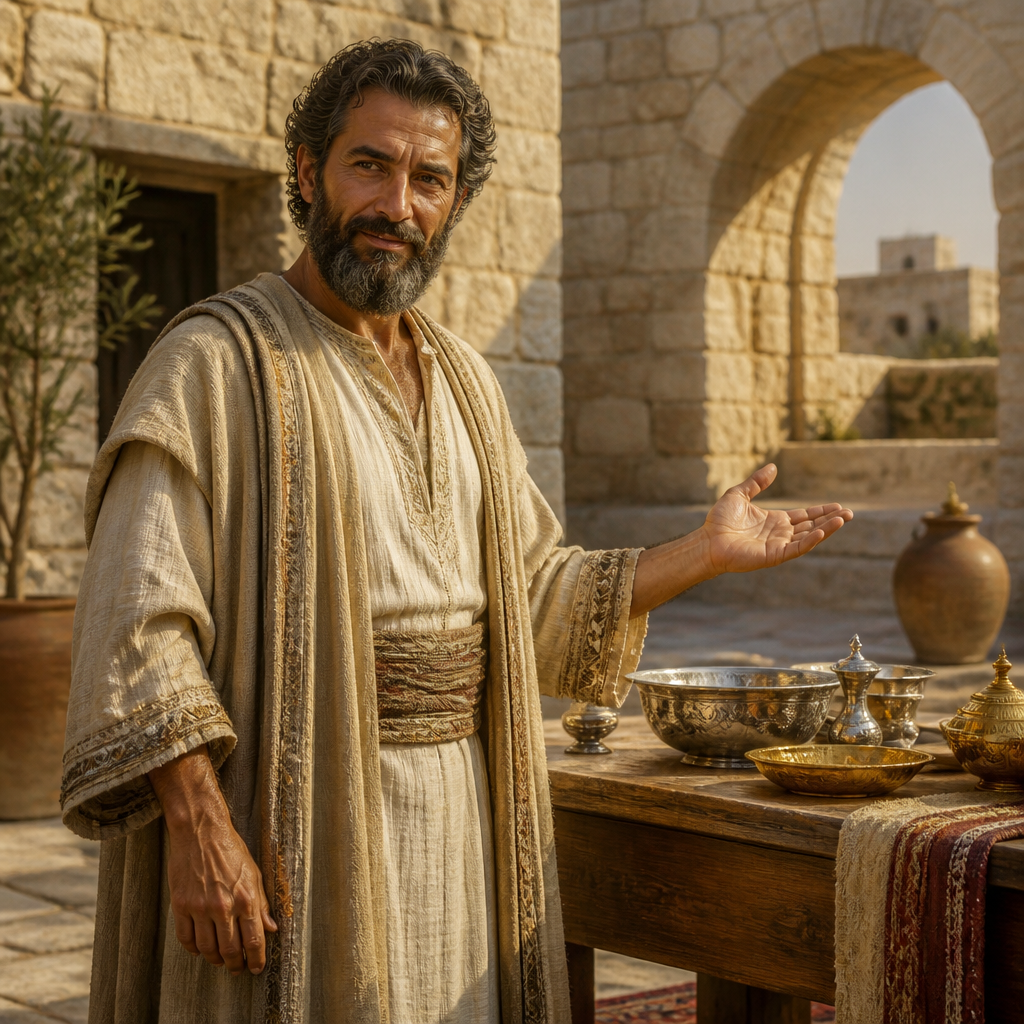
Josiah, son of Zephaniah, was a Judean living in Jerusalem during the early years of the return from the Babylonian Exile (c. 6th century BC). While he is not described as a political leader or a priest, his inclusion in the prophetic record of Zechariah suggests he was a person of standing and hospitality among the community of returnees. His primary significance in the biblical narrative is tied to his role as a host for a specific prophetic act involving the High Priest and treasures brought from Babylon.
In the second year of Darius I (c. 520 BC), Josiah received a group of three men—Heldai, Tobijah, and Jedaiah—who had arrived from the Babylonian diaspora carrying gifts of silver and gold. The prophet Zechariah was divinely instructed to go to Josiah’s house to perform a symbolic coronation that would represent the future 'Branch' who would build the temple and rule with peace. Josiah is also referred to by the honorific 'Hen' (meaning 'favor' or 'grace') in some translations of the text.
Background and Family
Josiah is identified specifically as the son of Zephaniah. The biblical record does not provide further details regarding his lineage, his tribe, or his specific profession. However, the context of the Post-Exilic Period (the era following the decree of Cyrus the Great in 538 BC) suggests he was among the families who had either remained in the land or returned early to participate in the reconstruction of Jerusalem. His home was significant enough to be designated by God as the meeting place for a high-level diplomatic and spiritual event.
Major Life Events
The single recorded event in Josiah’s life occurs in the eighth month of the second year of the reign of King Darius. A delegation arrived from Babylon consisting of Heldai, Tobijah, and Jedaiah, bearing offerings for the work of the Lord. The prophet Zechariah was commanded by God to take silver and gold from these men and proceed to the house of Josiah.
"Take an offering from the exiles—from Heldai, Tobijah, and Jedaiah, who have arrived from Babylon—and go that same day to the house of Josiah son of Zephaniah." (Zechariah 6:10)
Inside Josiah’s residence, the silver and gold were fashioned into a crown. This crown was placed upon the head of Joshua son of Jozadak, the High Priest. This act was highly unusual, as crowns were typically reserved for the Davidic kings, not the priesthood. Josiah functioned as a witness and facilitator for this prophetic oracle concerning the "Branch" (the Messiah), who would eventually unite the offices of king and priest.
Relationship to Other Biblical Figures
Josiah’s primary associations are with the prophet Zechariah and the three returnees from Babylon. He is also linked to the High Priest Joshua through the ceremony conducted in his home. In Zechariah 6:14, the text mentions a memorial to be kept in the temple. The verse refers to the "gracious son of Zephaniah," which most scholars identify as Josiah, using a descriptive epithet or an alternative name, Hen.
Spiritual Significance
Though Josiah is a minor figure in terms of the number of verses dedicated to him, his presence underscores the importance of the laypeople in the restoration of Israel. His home became a sanctuary for prophetic revelation. The crown produced in his house was to remain in the temple as a "memorial," ensuring that the hospitality of Josiah and the contributions of the Babylonian exiles would be remembered by future generations. His role exemplifies the biblical theme of personal resources being dedicated to the advancement of God's redemptive plan.
Josiah son of Zephaniah serves as a crucial lay witness to one of the most significant Messianic prophecies in the minor prophets. By opening his home to the prophet Zechariah and the Babylonian delegation, he facilitated the symbolic coronation of Joshua the High Priest, which prefigured the coming of the Messiah as both King and Priest. His role highlights the integration of the returning diaspora with the local residents of Jerusalem in the Post-Exilic community.
The inclusion of his name in the final memorial instructions (Zechariah 6:14) indicates that his contribution—specifically his hospitality and participation in the prophetic act—was sovereignly recognized and preserved. He represents the 'hidden' supporters of the restoration whose domestic spaces became the backdrop for divine communication.
Frequently Asked Questions
What is the meaning of the name Josiah?
The name Josiah (Yoshiyahu) generally means 'Yahweh supports' or 'Healed by Yahweh.'
Why did Zechariah go to Josiah's house?
Zechariah was commanded by God to go there to meet a delegation of exiles from Babylon and to use their gold and silver to make a crown for the High Priest Joshua.
Who was Josiah's father?
Josiah is identified as the son of Zephaniah.
Is Josiah the son of Zephaniah a priest?
The Bible does not explicitly state his profession. However, he acted as a host for a prophetic and priestly ceremony, suggesting he was a respected member of the Jerusalem community.
What happened to the crown made in Josiah's house?
According to Zechariah 6:14, the crown was to be kept in the Temple of the LORD as a memorial to Josiah (referred to as the 'son of Zephaniah') and the men who brought the gold.
Family & Relationships
Parents
 Zephaniah, Father of JosiahFatherZechariah 6:10Stated
 Josiah, Son of ZephaniahThis page
Connected Figures
Family
Father · Zechariah 6:10
A resident of Jerusalem during the post-exilic return whose household hosted newly arrived Babylonian exiles and served as the site for a prophetic coronation ceremony.
Categories
Mentions by Book
- Zechariah2
Scripture References
All 2 indexed verses, in canonical order, from the Berean Standard Bible.
Zechariah · 2
- Zechariah 6:10
“Take an offering from the exiles—from Heldai, Tobijah, and Jedaiah, who have arrived from Babylon—and go that same day to the house of Josiah son of Zephaniah.
- Zechariah 6:14
The crown will reside in the temple of the LORD as a memorial to Helem, Tobijah, Jedaiah, and the gracious son of Zephaniah.
Others Named Josiah
Compare all 2 bearers →Josiah, King of Judah1 Kings 13:2
A righteous king of the Divided Monarchy who initiated sweeping religious reforms and restored the temple and the Passover after the discovery of the Book of the Law.