Zephaniah, Father of Josiah
Who was Zephaniah, Father of Josiah, in the Bible?
A resident of Jerusalem during the post-exilic return whose household hosted newly arrived Babylonian exiles and served as the site for a prophetic coronation ceremony.
This is one of 3 people named Zephaniah in the Bible. See all 3 →
Zephaniah was a figure of the post-exilic community in Jerusalem during the late 6th century BC. While he is not credited with a specific administrative or priestly office in the biblical text, his status in the community is evidenced by his son, Josiah, whose home became a focal point for receiving returning exiles from Babylon. Zephaniah lived during the critical period of reconstruction following the decree of Cyrus the Great, a time when the Jewish remnant was focused on rebuilding the Temple and restoring the Davidic and Aaronic leadership structures.
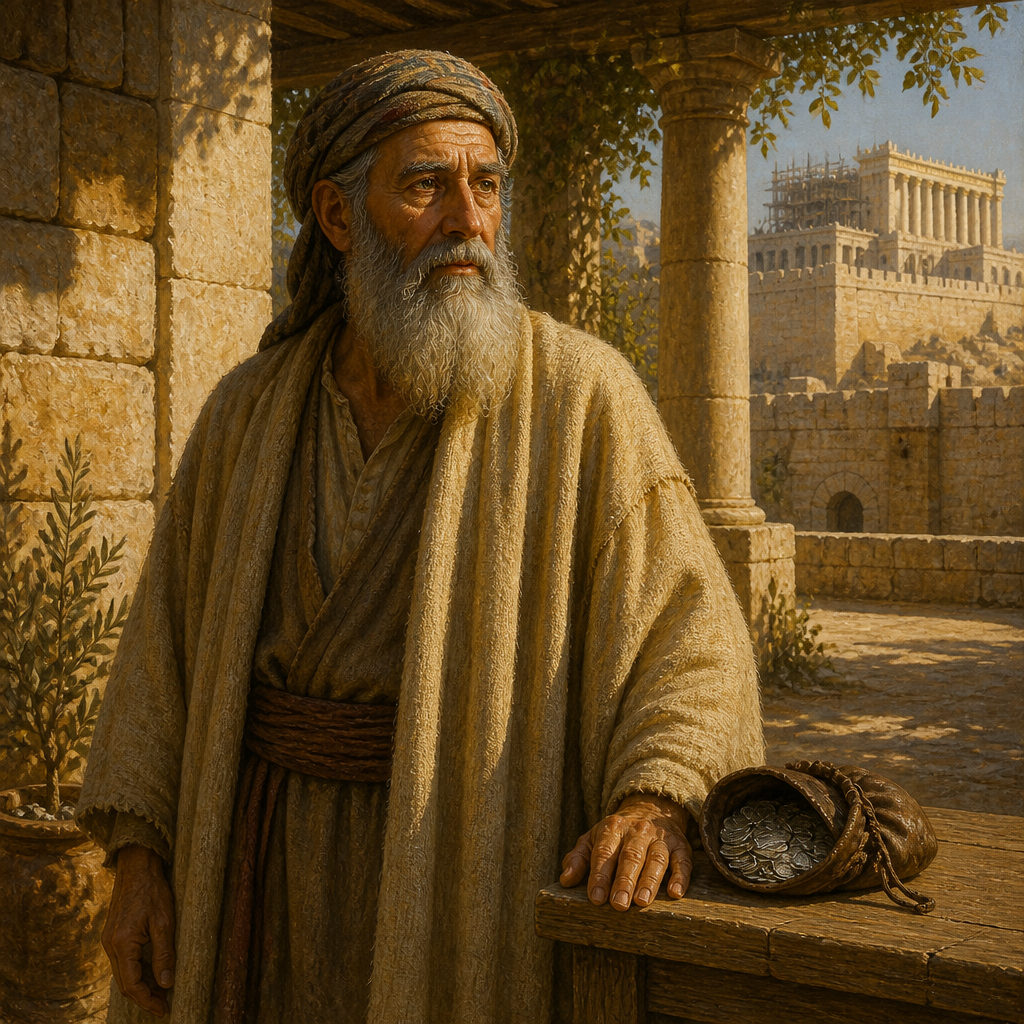
His primary significance in the biblical narrative is linked to his role as a householder and father. Through his son, Josiah, Zephaniah is connected to the prophetic actions of Zechariah, who was commanded by God to collect gold and silver from returning exiles to create a symbolic crown. The presence of these treasures in his son’s house suggests that Zephaniah’s family held a position of trust and hospitality within the burgeoning post-exilic society.
Background and Family
Zephaniah lived during the Exilic and Return era, specifically during the reign of the Persian King Darius I, around 520 BC. The biblical record does not explicitly state his tribe or lineage, though his residence in Jerusalem during the time of the Temple’s reconstruction implies he was part of the remnant that had returned to Judah. He is identified exclusively as the father of Josiah (and potentially Hen, depending on the interpretation of Zechariah 6:14). His name, Tsephanyahu, translates to "Yahweh has hidden" or "Yahweh has treasured," a common theophoric name in the post-exilic period.
Major Life Events
The most significant event involving Zephaniah’s household occurs in the eighth month of the second year of Darius. The prophet Zechariah received a divine command to visit the house of Zephaniah’s son, Josiah. The text indicates that three specific men—Heldai, Tobijah, and Jedaiah—had recently arrived from the Babylonian exile bearing gifts of silver and gold.
“Take an offering from the exiles—from Heldai, Tobijah, and Jedaiah, who have arrived from Babylon—and go that same day to the house of Josiah son of Zephaniah.” (Zechariah 6:10)
This specific instruction highlights that Zephaniah’s family provided a logistical hub for the returning community. The gold and silver brought to this house were fashioned into a crown to be placed on the head of Joshua the high priest, symbolizing the future "Branch" who would unite the offices of king and priest.
Relationship to Other Biblical Figures
Zephaniah is primarily defined by his relationship to his son, Josiah. In Zechariah 6:14, the text mentions a "memorial" residing in the Temple for those who contributed to the crown. While the verse mentions Helem, Tobijah, and Jedaiah, it also honors "the son of Zephaniah." This suggests that the hospitality and cooperation of Zephaniah's family were viewed as a pious contribution to the restoration of the Yahwistic cultus. Zephaniah’s contemporary was the prophet Zechariah, through whom the divine instructions regarding Zephaniah’s household were mediated.
Spiritual Significance
Though Zephaniah himself is not recorded as speaking or performing miracles, his inclusion in the book of Zechariah underscores the importance of the "quiet" supporters of the restoration. His home (via his son) became the staging ground for a major messianic prophecy regarding the "man whose name is the Branch." The theological weight of the events occurring under his roof—the crowning of the high priest and the preservation of a memorial in the Temple—elevates Zephaniah from a mere resident to a recognized participant in the fulfillment of God’s promises to the post-exilic community.
Zephaniah’s significance lies in his role as a facilitator for the post-exilic restoration. By providing a home through his son where the exiles could gather and where the symbolic crown of the High Priest was fashioned, he represents the essential support system required for the fulfillment of prophetic mandates. His name is preserved as a 'memorial' in the text, honoring the hospitality and faithfulness of those who assisted the returning remnant in re-establishing the worship of Yahweh in Jerusalem.
Frequently Asked Questions
Who was Zephaniah in the book of Zechariah?
He was the father of Josiah, a man whose home in Jerusalem was used to receive returning exiles and silver and gold for the Temple.
What era did this Zephaniah live in?
He lived during the Post-Exilic Period, specifically around 520 BC during the time of the prophet Zechariah and the rebuilding of the Second Temple.
Did Zephaniah go to Babylon?
The Bible does not specify if he was an exile who returned or a resident of Judah; however, his son lived in Jerusalem to receive those arriving from Babylon.
Why is Zephaniah’s son mentioned in the Temple memorial?
Because his son Josiah hosted the exiles and the fashioning of the symbolic crown, he (referred to as the son of Zephaniah) was honored with a lasting memorial in the Temple of the Lord.
Family & Relationships
 Zephaniah, Father of JosiahThis page
Children
 Josiah, Son of ZephaniahSonZechariah 6:10Stated
Connected Figures
Family
Son · Zechariah 6:10
A resident of Jerusalem during the Post-Exilic Period who hosted a delegation of returnees from Babylon and whose home served as the site for the symbolic crowning of the High Priest Joshua.
Exile and ReturnFirst: Zechariah 6:102 versesHost / Resident of Jerusalem
Categories
Mentions by Book
- Zechariah2
Scripture References
All 2 indexed verses, in canonical order, from the Berean Standard Bible.
Zechariah · 2
- Zechariah 6:10
“Take an offering from the exiles—from Heldai, Tobijah, and Jedaiah, who have arrived from Babylon—and go that same day to the house of Josiah son of Zephaniah.
- Zechariah 6:14
The crown will reside in the temple of the LORD as a memorial to Helem, Tobijah, Jedaiah, and the gracious son of Zephaniah.
Others Named Zephaniah
Compare all 3 bearers →Zephaniah the ProphetZephaniah 1:1
The prophet of Judah in the days of Josiah, son of Cushi and a descendant of King Hezekiah, whose oracles form the book of Zephaniah.
Zephaniah, Priest of the Divided Monarchy2 Kings 25:18
A high-ranking priest of the second order who served as a royal intermediary to the prophet Jeremiah during the final years of the Kingdom of Judah.