Hilkiah, Father of Jeremiah
Who was Hilkiah, Father of Jeremiah, in the Bible?
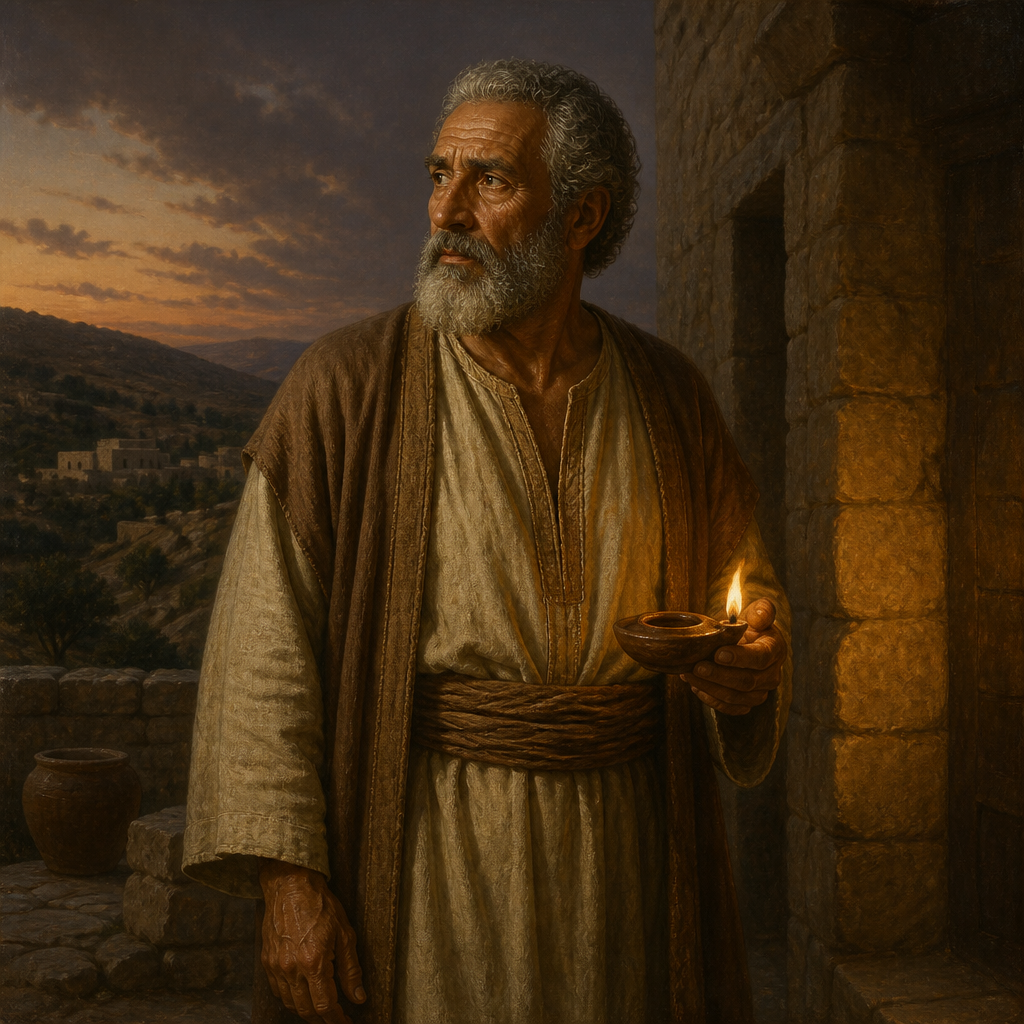
A priest from the town of Anathoth in the territory of Benjamin and the father of the major prophet Jeremiah.
This is one of 7 people named Hilkiah in the Bible. See all 7 →
Hilkiah was a member of the Aaronic priesthood residing in Anathoth, a village located within the tribal territory of Benjamin. He is historically and biblically significant primarily as the father of Jeremiah, one of the most prominent prophets in the Old Testament. Hilkiah’s lineage and professional standing as a priest provided the cultural and religious framework for Jeremiah’s early life and subsequent ministry during the late Divided Monarchy.
Residing in Anathoth, Hilkiah was part of a community traditionally associated with the descendants of the priest Abiathar, whom King Solomon had exiled to that location centuries earlier. While Hilkiah's own direct actions are not recorded in the biblical text, his identity as a priest and his paternity of Jeremiah establish the hereditary and ecclesiastical context of the Book of Jeremiah.
Background and Family
Hilkiah lived during the period of the Divided Monarchy, specifically in the late 7th century BC. He was a resident of Anathoth, a town roughly three miles northeast of Jerusalem that had been designated as a city for the Levites within the territory of Benjamin (Joshua 21:18). According to the genealogical record provided in Jeremiah 1:1, Hilkiah was the son of Shallum and the brother of another Shallum. He belonged to the priestly class, indicating he was a descendant of Aaron, though the specific line of his descent is often associated by scholars with the house of Abiathar due to his residence in Anathoth.
Major Life Events
The biblical record concerning Hilkiah is sparse, limited to his identification in the opening verse of the prophecy of Jeremiah. No specific deeds, speeches, or interactions are recorded for him. However, his status as a priest in Anathoth suggests he was involved in the religious life of the Judean community during a time of significant political and spiritual upheaval. As the father of Jeremiah, he would have been present during the early years of the prophet’s calling, which began in the thirteenth year of the reign of King Josiah (c. 627 BC).
Relationship to Other Biblical Figures
Hilkiah's primary relationship is with his son, Jeremiah. The text explicitly identifies Jeremiah as the "son of Hilkiah." This patronymic serves to authenticate Jeremiah’s credentials, grounding his prophetic authority in a recognized priestly family. The relationship between father and son in this context implies that Jeremiah was raised in an environment saturated with the Torah and the liturgical traditions of Israel, even if Jeremiah’s own ministry eventually led him to critique the priestly establishment in Jerusalem. Additionally, the text identifies Hilkiah as the son of Shallum, providing a brief ancestral link to the previous generation of the priesthood.
Spiritual Significance
While Hilkiah himself is a silent figure in the biblical narrative, his significance lies in his role as the progenitor of a prophet. The mention of his priestly status in Anathoth highlights the fulfillment of God’s sovereignty, showing how the Word of the Lord came to a man from a priestly family to deliver a message that would often challenge the very institutions his family represented. Hilkiah represents the link between the established religious order of the Divided Monarchy and the radical prophetic voice that emerged to warn Judah of its impending exile.
Hilkiah serves as the vital genealogical link for the prophet Jeremiah, establishing the prophet's social and religious standing as a priest from Anathoth. His presence in the text anchors Jeremiah’s ministry in a specific historical and geographical reality, ensuring the reader understands the prophet’s background within the tribe of Benjamin and the Aaronic priesthood.
Theologically, Hilkiah’s identity as a priest reminds the reader that God often works through established lineages and traditions to bring forth new and challenging revelations. By identifying Jeremiah as Hilkiah's son, the text emphasizes that the prophet was not a social outcast by birth, but a member of the religious elite who was called by God to speak truth to power.
Frequently Asked Questions
Who was the father of Jeremiah the prophet?
The father of Jeremiah the prophet was Hilkiah, a priest from the town of Anathoth.
What was Hilkiah's occupation?
Hilkiah was a priest, as stated in Jeremiah 1:1.
Where did Hilkiah live?
Hilkiah lived in Anathoth, which was located in the territory of Benjamin.
Who was Hilkiah's father?
According to the biblical record, Hilkiah was the son of Shallum.
Is this Hilkiah the same man who found the Book of the Law?
No, the Bible mentions multiple men named Hilkiah. The father of Jeremiah is a distinct individual from the High Priest Hilkiah who discovered the Book of the Law during King Josiah's reign.
Family & Relationships
 Hilkiah, Father of JeremiahThis page
 Shallum, Uncle of JeremiahBrotherJeremiah 1:1
Inferred
No verse names Shallum and Hilkiah together; the brother link is carried from the surrounding genealogy and is not stated in Scripture.Evidence: Jeremiah 1:1
Children
 Jeremiah, Son of HilkiahSonJeremiah 1:1Stated
Connected Figures
Family
Son · Jeremiah 1:1
A major prophet of the Divided Monarchy who predicted the fall of Jerusalem and the 70-year Babylonian exile while suffering intense persecution for his message.
Divided MonarchyFirst: 2 Chronicles 35:25132 versesProphet and PriestBenjamin
Brother · Jeremiah 1:1
Shallum was the paternal uncle of the prophet Jeremiah and the father of Hanamel during the final years of the Divided Monarchy.
Categories
Mentions by Book
- Jeremiah2
Scripture References
All 2 indexed verses, in canonical order, from the Berean Standard Bible.
Jeremiah · 2
- Jeremiah 1:1
These are the words of Jeremiah son of Hilkiah, one of the priests in Anathoth in the territory of Benjamin.
- Jeremiah 32:7Partial
Behold! Hanamel, the son of your uncle Shallum, is coming to you to say, ‘Buy for yourself my field in Anathoth, for you have the right of redemption to buy it.’
Cited as evidence on a family card; added so References, Key Verses and Mentions by Book share one index.
Others Named Hilkiah
Compare all 7 bearers →Hilkiah, Son of Hosah1 Chronicles 26:11
A Merarite Levite and gatekeeper appointed by King David to serve at the Tabernacle.
Hilkiah, Father of Eliakim2 Kings 18:18
A high-ranking official during the Divided Monarchy and the father of King Hezekiah’s palace administrator, Eliakim.
Hilkiah the High Priest2 Kings 22:4
The high priest during the reign of King Josiah who discovered the 'Book of the Law' in the Temple, sparking a national spiritual reformation in Judah.
Hilkiah, a Priest of the ReturnNehemiah 12:7
A prominent priest and leader who returned from the Babylonian exile to Jerusalem during the time of Jeshua.
Hilkiah, Son of Amzi1 Chronicles 6:45
A Merarite Levite from the line of Ethan who served in the musical service of the house of the Lord during the era of the conquest and the judges.
Hilkiah, Associate of EzraNehemiah 8:4
A notable leader or priest who stood beside Ezra the scribe during the public reading of the Law following the return from Babylonian exile.