Hilkiah, Father of Eliakim
Who was Hilkiah, Father of Eliakim, in the Bible?
A high-ranking official during the Divided Monarchy and the father of King Hezekiah’s palace administrator, Eliakim.
This is one of 7 people named Hilkiah in the Bible. See all 7 →
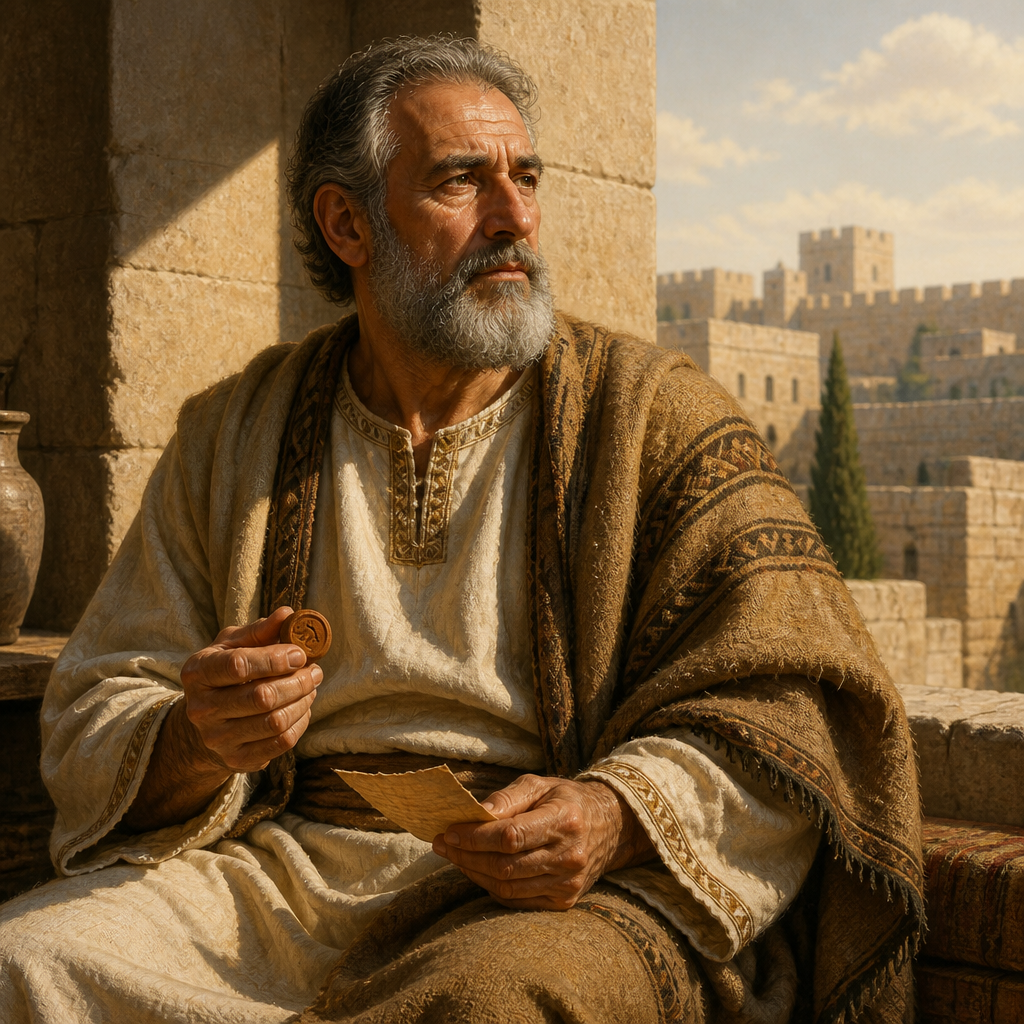
Hilkiah was a prominent figure within the Judean royal court during the late 8th century BC, specifically serving during the reign of King Hezekiah. While the biblical narrative focuses heavily on the actions of his son, Eliakim, Hilkiah’s identity as the patriarch of this influential family is established through multiple citations in the books of 2 Kings and Isaiah. His position in society was such that his name served as a primary identifier for one of the kingdom's most powerful civil servants during a time of existential threat from the Assyrian Empire.
In the biblical record, Hilkiah is situated within the period of the Divided Monarchy, a time when the Southern Kingdom of Judah faced immense political pressure. His lineage became a symbol of divine transition in leadership, as his son was prophesied to replace the disgraced official Shebna. Hilkiah’s legacy is thus tied to the administrative stability and spiritual resilience of Jerusalem during the crisis of the Assyrian siege under Sennacherib.
Background and Family
Hilkiah lived during the Divided Monarchy, a period characterized by the separate existence of the kingdoms of Israel and Judah. Specifically, he is identified in the context of King Hezekiah’s reign (c. 715–686 BC). While the biblical text does not explicitly state Hilkiah’s own occupation or tribe, his status is inferred through his son, Eliakim. In the ancient Near East, the standing of a father was often inextricably linked to the offices held by his children.
Because Eliakim attained the position of "palace administrator" (asher al-habayit), a role second only to the king, it is highly probable that Hilkiah belonged to the Judean aristocracy or the priestly class, though the text remains silent on his specific tribal affiliation. The name Hilkiah itself means "the LORD is my portion," suggesting a family heritage rooted in the worship of the God of Israel.
Major Life Events
While the biblical record does not describe Hilkiah’s personal actions, his presence is felt through the diplomatic and prophetic events surrounding his son. The most significant historical moment involving Hilkiah's household occurred in 701 BC during the Assyrian invasion of Judah.
When the Rabshakeh, the messenger of the Assyrian King Sennacherib, arrived at the walls of Jerusalem to demand surrender, King Hezekiah sent a delegation to meet him. Hilkiah’s son, Eliakim, led this delegation (2 Kings 18:18). Throughout this tense exchange, the biblical text repeatedly identifies Eliakim as the "son of Hilkiah." This repetition serves to ground Eliakim's authority in his hereditary line.
When the Rabshakeh delivered a blasphemous and intimidating speech in the Hebrew language to terrify the inhabitants of Jerusalem, Eliakim—bearing his father's name—pleaded for the negotiation to continue in Aramaic to protect the morale of the people (2 Kings 18:26). Following the failed negotiations, Eliakim returned to King Hezekiah with his clothes torn in grief, a report that emphasized the gravity of the threat facing Hilkiah’s descendants and the nation at large.
Relationship to Other Biblical Figures
Hilkiah’s most significant relationship is with his son, Eliakim. However, his name is also consistently juxtaposed with two other major court officials: Shebna the scribe and Joah son of Asaph. In the court of Hezekiah, these three men formed the inner circle of the king’s advisors.
In the book of Isaiah, Hilkiah is mentioned in a significant prophetic oracle. Isaiah 22 records a divine judgment against Shebna, who had apparently become arrogant and self-serving. God declares that He will strip Shebna of his authority and "summon My servant, Eliakim son of Hilkiah" (Isaiah 22:20). In this context, Hilkiah’s name is associated with the "servant" whom God chose to lead the royal household, contrasting the faithfulness of Hilkiah’s line with the corruption of Shebna.
Spiritual Significance
The spiritual significance of Hilkiah lies in the concept of a godly legacy during a time of national reform. King Hezekiah was known for his efforts to purge Judah of idolatry and return the nation to the covenant of the LORD. By raising a son who was deemed a "servant" by God and who held the keys to the Davidic house (Isaiah 22:22), Hilkiah represents the quiet strength of the Judean faithful who supported the Davidic monarchy.
In the prophetic literature, the mention of Hilkiah’s name reinforces the legitimacy of Eliakim’s appointment. It suggests that Hilkiah’s household was one of merit and divine favor, standing as a bulwark against the external threats of Assyria and the internal threats of administrative corruption. Though Hilkiah himself remains in the background of the narrative, his name persists as a marker of the righteous administration that helped Judah survive one of its darkest hours.
Hilkiah serves as the patriarchal anchor for Eliakim, one of King Hezekiah’s most trusted and godly officials. His primary significance in the biblical canon is found in his association with the transition of power from the self-seeking Shebna to the faithful Eliakim, a shift that Isaiah describes as a divine appointment.
Theologically, Hilkiah represents the importance of lineage and the transmission of character within the royal administration of Judah. By providing the identifying patronymic for Eliakim in both historical (2 Kings) and prophetic (Isaiah) texts, the Bible honors Hilkiah as the source of a man who was entrusted with the 'key of the house of David,' symbolizing the stability and continuity of the Judean state under God's protection.
Frequently Asked Questions
Who was Hilkiah's most famous relative?
Hilkiah's most famous relative was his son, Eliakim, who served as the palace administrator (essentially the prime minister) under King Hezekiah.
What role did Hilkiah play in the Assyrian siege of Jerusalem?
Hilkiah himself is not recorded as being present; however, his son Eliakim represented the king during the negotiations with the Assyrian messengers outside the walls of Jerusalem.
Is Hilkiah the one who found the Book of the Law?
No. The Hilkiah who found the Book of the Law was the High Priest during the reign of King Josiah, who lived several decades after this Hilkiah.
In which books of the Bible is this Hilkiah mentioned?
This specific Hilkiah is mentioned in the books of 2 Kings and Isaiah.
What does the name Hilkiah mean?
The name Hilkiah (Chilqiyahu) means 'Yahweh is my portion' or 'My portion is Yahweh' in Hebrew.
Family & Relationships
 Hilkiah, Father of EliakimThis page
Children
 Eliakim son of HilkiahSon2 Kings 18:18Stated
Connected Figures
Family
Son · 2 Kings 18:18
A high-ranking official and palace administrator under King Hezekiah during the Assyrian invasion of Judah.
Divided MonarchyFirst: 2 Kings 18:189 versesPalace Administrator
Categories
Mentions by Book
- 2 Kings3
- Isaiah3
Scripture References
All 6 indexed verses, in canonical order, from the Berean Standard Bible.
2 Kings · 3
- 2 Kings 18:18
Then they called for the king. And Eliakim son of Hilkiah the palace administrator, Shebnah the scribe, and Joah son of Asaph the recorder, went out to them.
- 2 Kings 18:26
Then Eliakim son of Hilkiah, along with Shebnah and Joah, said to the Rabshakeh, “Please speak to your servants in Aramaic, since we understand it. Do not speak with us in Hebrew in the hearing of the people on the wall.”
- 2 Kings 18:37
Then Hilkiah’s son Eliakim the palace administrator, Shebna the scribe, and Asaph’s son Joah the recorder came to Hezekiah with their clothes torn, and they relayed to him the words of the Rabshakeh.
Isaiah · 3
- Isaiah 22:20
On that day I will summon My servant, Eliakim son of Hilkiah.
- Isaiah 36:3
Then Eliakim son of Hilkiah the palace administrator, Shebna the scribe, and Joah son of Asaph the recorder, went out to him.
- Isaiah 36:22
Then Hilkiah’s son Eliakim the palace administrator, Shebna the scribe, and Asaph’s son Joah the recorder came to Hezekiah with their clothes torn, and they relayed to him the words of the Rabshakeh.
Others Named Hilkiah
Compare all 7 bearers →Hilkiah, Son of Hosah1 Chronicles 26:11
A Merarite Levite and gatekeeper appointed by King David to serve at the Tabernacle.
Hilkiah the High Priest2 Kings 22:4
The high priest during the reign of King Josiah who discovered the 'Book of the Law' in the Temple, sparking a national spiritual reformation in Judah.
Hilkiah, a Priest of the ReturnNehemiah 12:7
A prominent priest and leader who returned from the Babylonian exile to Jerusalem during the time of Jeshua.
Hilkiah, Son of Amzi1 Chronicles 6:45
A Merarite Levite from the line of Ethan who served in the musical service of the house of the Lord during the era of the conquest and the judges.
Hilkiah, Father of JeremiahJeremiah 1:1
A priest from the town of Anathoth in the territory of Benjamin and the father of the major prophet Jeremiah.
Hilkiah, Associate of EzraNehemiah 8:4
A notable leader or priest who stood beside Ezra the scribe during the public reading of the Law following the return from Babylonian exile.