Abiathar
Who was Abiathar in the Bible?
The last high priest from the line of Eli, Abiathar was a loyal companion to David during his exile but was eventually deposed by Solomon for supporting Adonijah.
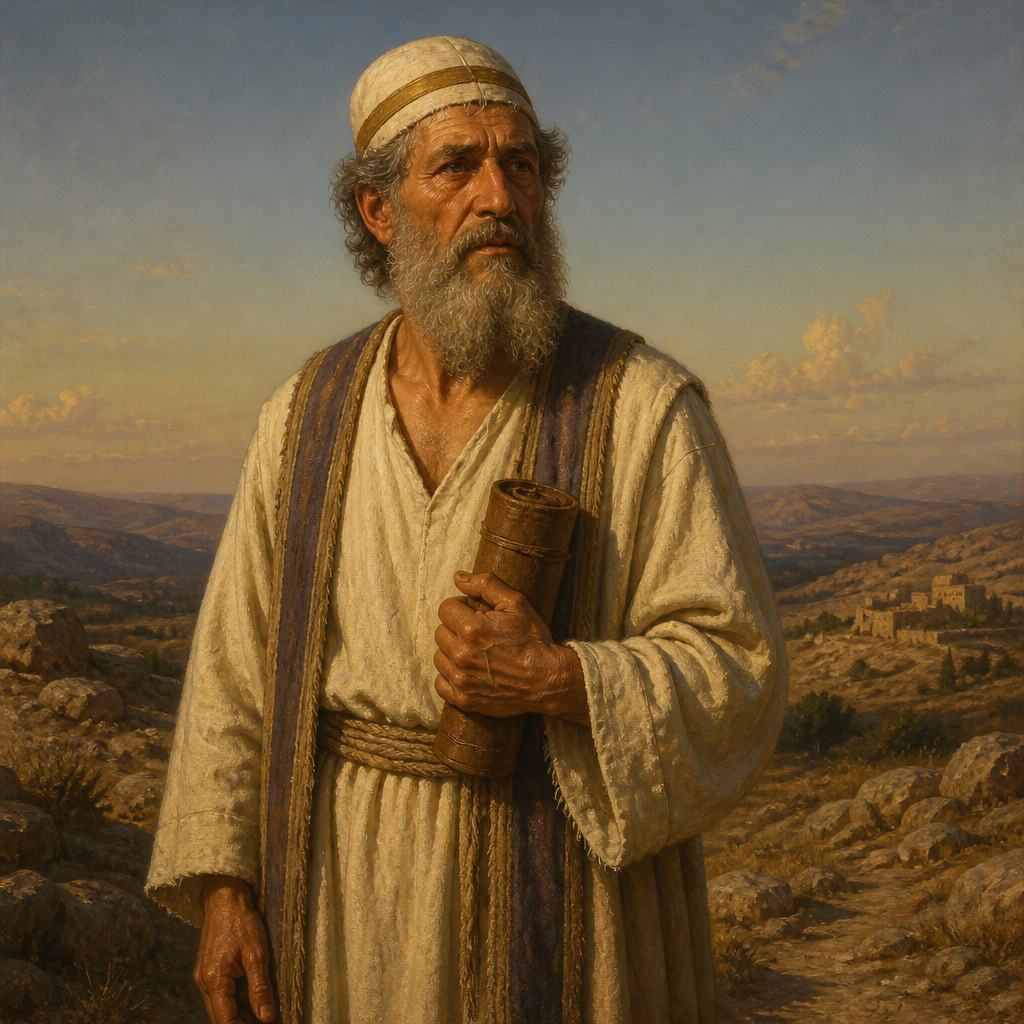
Abiathar, whose name means "father of abundance," was a significant high priest during the United Monarchy of Israel. As the son of Ahimelech and a descendant of Eli, he represented the priestly line of Ithamar. His life is defined by dramatic shifts in fortune: beginning as the sole survivor of a brutal massacre at Nob, rising to become a chief spiritual advisor and high priest to King David, and ultimately ending his career in exile following a failed political alliance.
Background and Family
Abiathar was born into the priestly house of Eli, specifically the line of Ithamar, one of Aaron’s sons. His father, Ahimelech, served as the high priest at Nob, where the Tabernacle was stationed during the reign of King Saul. Abiathar’s family history was shadowed by a curse placed upon the house of Eli (1 Samuel 2:31–36), which foretold that the priestly line would be cut short and replaced.
His introduction into the biblical narrative is marked by tragedy. When King Saul discovered that Ahimelech had assisted David by providing him with the showbread and the sword of Goliath, he ordered the execution of the priests. According to 1 Samuel 22, the Edomite Doeg carried out the slaughter, killing eighty-five priests and the entire population of Nob. Abiathar was the only son of Ahimelech to escape the massacre. He fled to David’s camp, bringing with him the sacred ephod—a garment used for seeking divine guidance.
Major Life Events
Service to David in Exile
Upon joining David, Abiathar became the fugitive king's personal priest. David, feeling a sense of responsibility for the death of Abiathar’s family, promised him protection: "Stay with me; do not be afraid, for he who seeks my life seeks your life, but with me you shall be in safekeeping" (1 Samuel 22:23). Throughout David’s years as an outlaw, Abiathar used the ephod to provide David with oracular guidance from the LORD, notably at Keilah and Ziklag.
The Dual Priesthood
Once David was established as King of Israel, Abiathar was appointed high priest alongside Zadok. This dual priesthood is a unique feature of the United Monarchy. While Zadok was of the line of Eleazar, Abiathar remained the representative of the Ithamar line. During the rebellion of Absalom, Abiathar remained fiercely loyal to David. He helped carry the Ark of the Covenant out of Jerusalem during David’s retreat, though David eventually sent him and Zadok back to the city to act as informants. Abiathar’s son, Jonathan, served as a courier, risking his life to bring David news of the rebel council’s plans.
The Rebellion of Adonijah and Exile
The turning point in Abiathar’s life occurred during the transition of power from David to his successor. As David aged, his son Adonijah attempted to seize the throne. Abiathar, along with the military commander Joab, supported Adonijah’s claim (1 Kings 1:7). This decision proved fatal to his career. When David instead moved to crown Solomon, the conspiracy collapsed.
After Solomon was established as king, he dealt with the conspirators. While Joab was executed, Solomon spared Abiathar’s life because of his years of loyal service to David and his history of carrying the Ark. However, Solomon banished him to his family lands in Anathoth. 1 Kings 2:27 explicitly notes that this act fulfilled the prophecy against the house of Eli, as the high priesthood was transferred exclusively to the line of Zadok.
Relationship to Other Biblical Figures
Abiathar’s primary relationship was with King David. For decades, they shared the hardships of the wilderness and the responsibilities of the state. He also maintained a professional partnership with Zadok, though they represented two different priestly lineages. In the New Testament, Jesus mentions Abiathar in Mark 2:26, referencing the incident where David ate the bread of the Presence. While some scholars debate the chronology of this reference, it highlights Abiathar’s lasting identification with David's reign.
Spiritual Significance
Abiathar serves as a bridge between the era of the Judges and the establishment of the Temple. His life illustrates the tension between divine sovereignty and human choice. His survival at Nob was seen as a preservation of the priestly line, yet his eventual deposition demonstrated the fulfillment of divine judgment upon his ancestors. His story concludes the influence of the house of Eli, signaling a new chapter in Israel’s cultic history under the Zadokite priesthood, which would remain dominant until the destruction of the Temple.
Theologically, Abiathar represents the transition of the priesthood and the outworking of divine prophecy. His removal from office by Solomon is framed not merely as a political purge, but as the final fulfillment of the judgment against the house of Eli declared generations earlier in Shiloh. This shift solidified the Zadokite line, which biblical tradition views as the legitimate line for the high priesthood leading into the Second Temple period.
Furthermore, Abiathar’s role as the keeper of the ephod during David’s exile emphasizes the importance of divine inquiry in the life of the king. His partnership with David highlights the close relationship between the monarchy and the priesthood during the formation of the United Kingdom of Israel.
Frequently Asked Questions
Why was Abiathar removed from the priesthood?
Abiathar was removed by King Solomon for supporting Adonijah's attempt to take the throne instead of Solomon. His removal also fulfilled the prophecy that the house of Eli would be removed from the priesthood.
Which son of Abiathar served as a messenger for David?
His son Jonathan served as a messenger, helping to convey vital intelligence from Jerusalem to David during Absalom’s rebellion.
What did Abiathar bring with him when he fled to David?
He brought the sacred ephod, which contained the Urim and Thummim, allowing David to seek direct guidance from God during his years as a fugitive.
Where was Abiathar sent after he was deposed?
King Solomon banished him to his private estate in the town of Anathoth, a city assigned to the Levites.
How many priests were killed at Nob before Abiathar escaped?
According to 1 Samuel 22, eighty-five priests were killed by Doeg the Edomite on Saul's orders.
Family & Relationships
Parents
 Ahimelech, High Priest of NobFather1 Samuel 23:6Stated
 AbiatharThis page
Children
 Ahimelech, Son of AbiatharSon2 Samuel 8:17Stated
 Jonathan, Son of Abiathar the PriestSon2 Samuel 15:27Stated
Extended family
 Ahitub, Son of PhinehasGrandfather1 Samuel 23:6
Inferred
1 Samuel 22:20 lists Ahitub and Abiathar among the sons of ahimelech, but does not say how the two of them are related.Evidence: 1 Samuel 23:6; 1 Samuel 30:7; 1 Samuel 22:9; 1 Samuel 22:11; 1 Samuel 22:20
 EliAncestor1 Kings 2:27
Inferred
1 Kings 2:27 names Abiathar and Eli in the same verse but does not state an ancestor tie between them; the link rests on the surrounding narrative.Evidence: 1 Kings 2:27
Connected Figures
Family
Father · 1 Samuel 23:6
The High Priest at Nob who unknowingly assisted David during his flight from King Saul, resulting in the tragic execution of his priestly household.
United MonarchyFirst: 1 Samuel 14:313 versesHigh PriestLevi
Son · 2 Samuel 8:17
A high-ranking priest during the reign of King David and a member of the line of Ithamar who assisted in the organization of the sanctuary service.
Son · 2 Samuel 15:27
A loyal priest of the tribe of Levi who served as a courier and intelligence agent for King David during the rebellions of Absalom and Adonijah.
United MonarchyFirst: 2 Samuel 15:277 versesPriest and courierLevi
Grandfather · 1 Samuel 23:6
A Levite priest and grandson of Eli who served during the United Monarchy and fathered the High Priest Ahimelech.
Ancestor · 1 Kings 2:27
Eli was a high priest of Israel at Shiloh and a judge during the era of the conquest and the judges, known for mentoring the prophet Samuel.
Conquest and JudgesFirst: 1 Samuel 1:332 versesHigh Priest and JudgeLevi
Categories
Mentions by Book
- 1 Samuel8
- 2 Samuel9
- 1 Kings9
- 1 Chronicles4
- Mark1
Scripture References
All 31 indexed verses, in canonical order, from the Berean Standard Bible.
- 1 Samuel 22:9Partial
But Doeg the Edomite, who had stationed himself with Saul’s servants, answered: “I saw the son of Jesse come to Ahimelech son of Ahitub at Nob.
Cited as evidence on a family card; added so References, Key Verses and Mentions by Book share one index.
- 1 Samuel 22:11Partial
Then the king sent messengers to summon Ahimelech the priest, the son of Ahitub, and his father’s whole family, who were priests at Nob. And all of them came to the king.
Cited as evidence on a family card; added so References, Key Verses and Mentions by Book share one index.
- 1 Samuel 22:20
But one of the sons of Ahimelech son of Ahitub escaped. His name was Abiathar, and he fled to David.
- 1 Samuel 22:21
And Abiathar told David that Saul had killed the priests of the LORD.
- 1 Samuel 22:22
Then David said to Abiathar, “I knew that Doeg the Edomite was there that day, and that he was sure to tell Saul. I myself am responsible for the lives of everyone in your father’s house.
- 1 Samuel 23:6
(Now Abiathar son of Ahimelech had brought the ephod with him when he fled to David at Keilah.)
- 1 Samuel 23:9
When David learned that Saul was plotting evil against him, he said to Abiathar the priest, “Bring the ephod.”
- 1 Samuel 30:7Partial
Then David said to Abiathar the priest, the son of Ahimelech, “Bring me the ephod.” So Abiathar brought it to him,
- 2 Samuel 8:17
Zadok son of Ahitub and Ahimelech son of Abiathar were priests; Seraiah was the scribe;
- 2 Samuel 15:24
Zadok was also there, and all the Levites with him were carrying the ark of the covenant of God. And they set down the ark of God, and Abiathar offered sacrifices until all the people had passed out of the city.
- 2 Samuel 15:27
The king also said to Zadok the priest, “Are you not a seer? Return to the city in peace—you with your son Ahimaaz, and Abiathar with his son Jonathan.
- 2 Samuel 15:29
So Zadok and Abiathar returned the ark of God to Jerusalem and stayed there.
- 2 Samuel 15:35Partial
Will not Zadok and Abiathar the priests be there with you? Report to them everything you hear from the king’s palace.
- 2 Samuel 15:36
Indeed, their two sons, Ahimaaz son of Zadok and Jonathan son of Abiathar, are there with them. Send them to me with everything you hear.”
- 2 Samuel 17:15
So Hushai told Zadok and Abiathar, the priests, “This is what Ahithophel has advised Absalom and the elders of Israel, and this is what I have advised.
- 2 Samuel 19:11
Then King David sent this message to Zadok and Abiathar, the priests: “Say to the elders of Judah, ‘Why should you be the last to restore the king to his palace, since the talk of all Israel has reached the king at his quarters?
- 2 Samuel 20:25
Sheva was the scribe; Zadok and Abiathar were priests;
- 1 Kings 1:7
So Adonijah conferred with Joab son of Zeruiah and with Abiathar the priest, who supported him.
- 1 Kings 1:19
And he has sacrificed an abundance of oxen, fattened calves, and sheep, and has invited all the other sons of the king, as well as Abiathar the priest and Joab the commander of the army. But he has not invited your servant Solomon.
- 1 Kings 1:25
For today he has gone down and sacrificed an abundance of oxen, fattened calves, and sheep, and has invited all the sons of the king, the commanders of the army, and Abiathar the priest. And behold, they are eating and drinking before him, saying, ‘Long live King Adonijah!’
- 1 Kings 1:42
As he was speaking, suddenly Jonathan the son of Abiathar the priest arrived. “Come in,” said Adonijah, “for you are a man of valor. You must be bringing good news.”
- 1 Kings 2:22
King Solomon answered his mother, “Why do you request Abishag the Shunammite for Adonijah? Since he is my older brother, you might as well request the kingdom for him and for Abiathar the priest and for Joab son of Zeruiah!”
- 1 Kings 2:26
Then the king said to Abiathar the priest, “Go back to your fields in Anathoth. Even though you deserve to die, I will not put you to death at this time, since you carried the ark of the Lord GOD before my father David, and you suffered through all that my father suffered.”
- 1 Kings 2:27
So Solomon banished Abiathar from the priesthood of the LORD and thus fulfilled the word that the LORD had spoken at Shiloh against the house of Eli.
- 1 Kings 2:35
And the king appointed Benaiah son of Jehoiada in Joab’s place over the army, and he appointed Zadok the priest in Abiathar’s place.
- 1 Kings 4:4
Benaiah son of Jehoiada was in charge of the army; Zadok and Abiathar were priests;
- 1 Chronicles 15:11
David summoned the priests Zadok and Abiathar and the Levites Uriel, Asaiah, Joel, Shemaiah, Eliel, and Amminadab.
- 1 Chronicles 18:16
Zadok son of Ahitub and Ahimelech son of Abiathar were priests; Shavsha was the scribe;
- 1 Chronicles 24:6
The scribe, Shemaiah son of Nethanel, a Levite, recorded their names in the presence of the king and of the officers: Zadok the priest, Ahimelech son of Abiathar, and the heads of families of the priests and the Levites—one family being taken from Eleazar, and then one from Ithamar.
- 1 Chronicles 27:34
Ahithophel was succeeded by Jehoiada son of Benaiah, then by Abiathar. Joab was the commander of the king’s army.
- Mark 2:26
During the high priesthood of Abiathar, he entered the house of God and ate the consecrated bread, which was lawful only for the priests. And he gave some to his companions as well.”