Joab, Commander of the Army
Who was Joab, Commander of the Army, in the Bible?
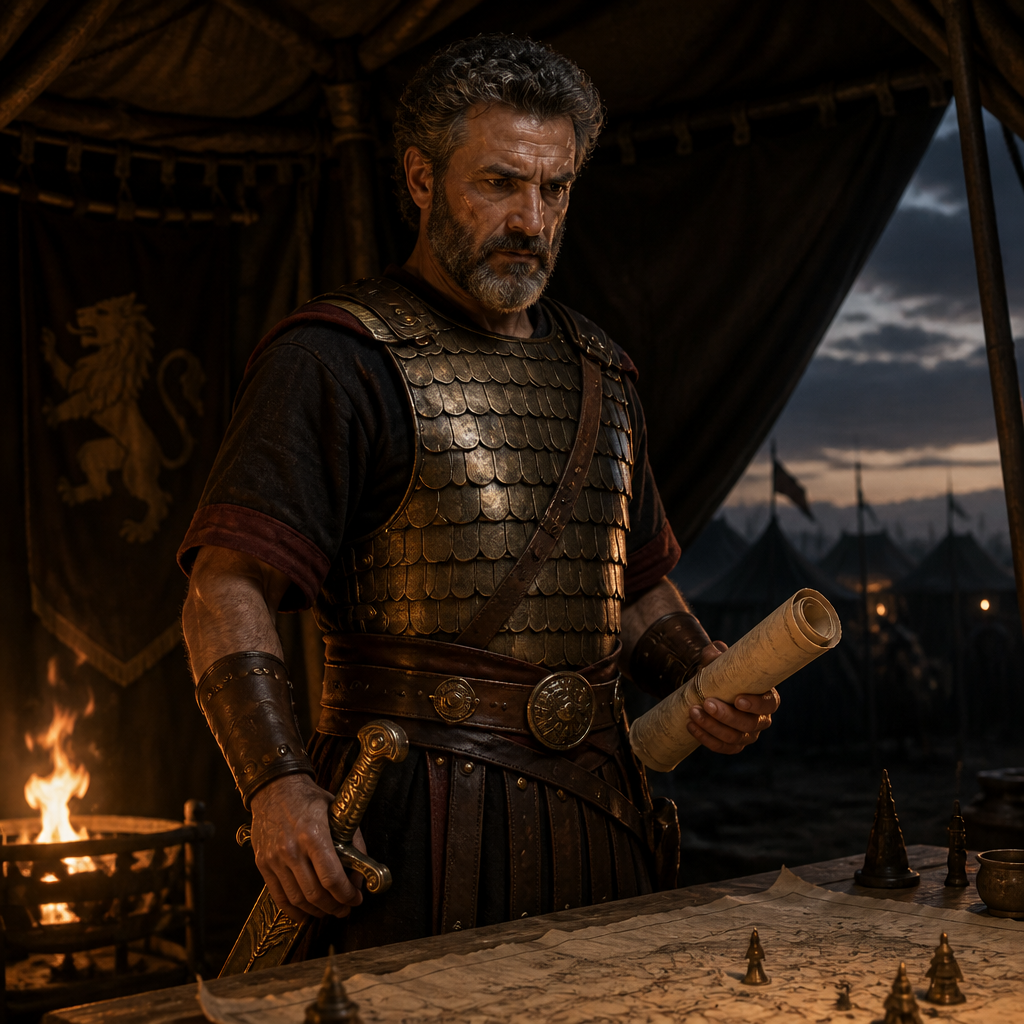
Joab was the nephew of King David and the supreme commander of Israel's military during the United Monarchy, known for his tactical brilliance and ruthless pragmatism.
This is one of 4 people named Joab in the Bible. See all 4 →
Joab, the son of Zeruiah, stands as one of the most complex and influential figures in the history of the United Monarchy of Israel. As the nephew of King David, he rose to prominence during the king's early struggles against the house of Saul and eventually secured his position as commander-in-chief of the national army. Joab was a man of fierce loyalty to the Davidic throne, yet he often operated according to his own moral and political code, frequently clashing with David's more merciful impulses.
Throughout his long career, Joab was instrumental in expanding Israel's borders, securing the capital city of Jerusalem, and suppressing numerous internal rebellions. However, his legacy is deeply stained by acts of calculated violence, including the assassinations of rival generals Abner and Amasa, and the execution of David’s son, Absalom. His life serves as a study in the tension between necessary military strength and the corruptive nature of unchecked political power.
Background and Family
Joab was a member of the tribe of Judah and the son of Zeruiah, who was a sister of King David (1 Chronicles 2:16). This familial tie placed Joab and his brothers, Abishai and Asahel, in the inner circle of David's burgeoning movement during the reign of Saul. While the Bible identifies his mother, Zeruiah, the identity of his father is not explicitly detailed, though 2 Samuel 2:32 mentions a family tomb in Bethlehem. Joab’s brothers were also notable warriors; Abishai was a frequent companion in David’s exploits, and Asahel was famously "fleet of foot like a wild gazelle" (2 Samuel 2:18).
Joab’s rise to the supreme command of Israel's forces was not merely a result of nepotism but of military achievement. According to 1 Chronicles 11:6, David promised the position of chief commander to whoever first struck the Jebusites during the conquest of Jerusalem. Joab successfully led the assault and subsequently oversaw the restoration and fortification of the city, securing his place as the king's right hand.
Major Life Events
The Rivalry with Abner
The early years of Joab's career were defined by the civil war between David (king of Judah) and Ish-bosheth (son of Saul, king of Israel). During a skirmish at the pool of Gibeon, the commander of Ish-bosheth's forces, Abner, killed Joab's brother Asahel in self-defense. Although David later negotiated a peace treaty with Abner to unite the kingdoms, Joab refused to accept the reconciliation. Driven by both personal vengeance and political suspicion, Joab deceived Abner, luring him into a private meeting in Hebron where he stabbed him to death. David publicly condemned the act, yet he felt unable to fully restrain the sons of Zeruiah (2 Samuel 3:39).
Military Conquests and Uriah the Hittite
Joab was the architect of many of David’s greatest military victories. He led campaigns against the Arameans, Edomites, and Ammonites. During the siege of Rabbah, Joab proved his absolute—albeit dark—loyalty to David by carrying out the king's secret order to ensure the death of Uriah the Hittite. Joab placed Uriah at the forefront of the heaviest fighting and then withdrew support, effectively executing the man to cover David’s adultery with Bathsheba (2 Samuel 11).
The Rebellion of Absalom
Joab’s relationship with David reached a breaking point during the rebellion of the king’s son, Absalom. Initially, Joab acted as a mediator, using a wise woman from Tekoa to convince David to allow Absalom to return to Jerusalem (2 Samuel 14). However, when Absalom eventually led an open revolt, Joab took command of the loyalist forces. Despite David’s explicit command to "treat the young man Absalom gently," Joab personally killed Absalom while the prince was trapped in a tree. Joab later rebuked a grieving David, forcing the king to acknowledge the troops who had saved his throne (2 Samuel 19:5-7).
The Census and Downfall
In David’s later years, Joab showed a rare moment of spiritual discernment by opposing David’s sinful census of the people, though he was ultimately overruled (2 Samuel 24). As David’s death approached, Joab’s political instincts finally failed him. He backed Adonijah as the successor to the throne instead of Solomon. Following Solomon's coronation, and acting on David's deathbed instructions to settle the account of Joab’s past murders, Solomon ordered Joab's execution. Joab fled to the Tabernacle and took hold of the horns of the altar, but he was struck down there by Benaiah (1 Kings 2:28-34).
Relationship to Other Biblical Figures
Joab’s most significant relationship was with King David. He was the king’s enforcer—the man who did the "dirty work" that David’s conscience or public image would not allow. While David relied on Joab’s competence, he often lamented Joab's ruthlessness.
Joab also had a competitive and lethal relationship with his rivals, Abner and Amasa. In both cases, Joab viewed these men as threats to his position and the stability of David’s reign. His brothers Abishai and Asahel were his closest allies, forming a formidable military triumvirate that defined the early years of the United Monarchy.
Spiritual Significance
Joab serves as a cautionary figure in the biblical narrative. He represents a form of "secular" devotion to the kingdom of God—he fought for God's anointed king and defended the nation, yet he lacked the heart for God that characterized David. Joab’s reliance on the sword, his willingness to shed innocent blood in peacetime, and his eventual death by the sword illustrate the biblical principle that those who live by violence will be judged by it. His life highlights the danger of placing political and military expediency above divine law and human mercy.
Theologically, Joab represents the 'sons of Zeruiah' who are too difficult for David to manage, illustrating the limits of the king's power and the messy reality of the early Israelite state. He is a man who understands the logistics of the kingdom but fails to grasp the ethics of the covenant. His opposition to the census in 2 Samuel 24 shows that even a hardened warrior could recognize when the king was overstepping his bounds before God, yet his long history of bloodguilt eventually necessitated his removal to ensure the 'peace' of Solomon’s reign.
His death at the horns of the altar is deeply symbolic. While the altar was a place of refuge, the Law of Moses provided no sanctuary for a premeditated murderer (Exodus 21:14). Joab’s end reinforces the theme that justice eventually reaches even the most powerful and well-connected individuals, as Solomon purges the 'blood of war shed in peacetime' to establish a stable and righteous kingdom.
Frequently Asked Questions
Why did Joab kill Abner?
Joab killed Abner primarily to avenge the death of his brother, Asahel, whom Abner had killed in battle. Additionally, Joab likely viewed Abner as a political threat to his own position as commander of the army.
Did Joab help David kill Uriah?
Yes. When David sent Joab a letter instructing him to place Uriah the Hittite in the heat of the battle and then retreat, Joab obeyed. He assigned Uriah to a dangerous position where he was sure to be killed by the Ammonites.
Why did David order Solomon to kill Joab?
On his deathbed, David instructed Solomon to execute Joab because Joab had murdered two innocent commanders, Abner and Amasa, during times of peace. David wanted to remove the stain of this bloodguilt from his royal house.
How did Joab die?
After Solomon became king, Joab fled to the tent of the Lord and took hold of the horns of the altar for sanctuary. However, by the king's command, Benaiah son of Jehoiada struck him down and killed him there.
Why did Joab kill Absalom against David's orders?
Joab prioritized the stability of the kingdom over David's personal feelings. He believed that as long as Absalom lived, he would remain a threat to David’s throne and the safety of the nation.
Family & Relationships
Parents
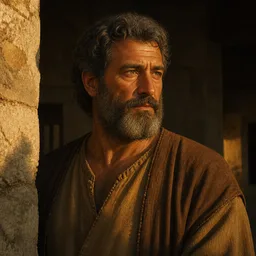 Husband of ZeruiahFather1 Samuel 26:6
Inferred
No verse names Husband of Zeruiah and Joab together; the son link is carried from the surrounding genealogy and is not stated in Scripture.Evidence: 1 Samuel 26:6
 ZeruiahMother2 Samuel 2:13Stated
 Joab, Commander of the ArmyThis page
 AbishaiBrother1 Samuel 26:6Stated
 Asahel, Brother of JoabBrother2 Samuel 3:27Stated
Extended family
 DavidUncle1 Samuel 26:6
Inferred
1 Samuel 26:6 names David and Joab in the same verse but does not state a nephew tie between them; the link rests on the surrounding narrative.Evidence: 1 Samuel 26:6
 Amasa, Nephew of DavidRelative2 Samuel 17:25
Inferred
2 Samuel 17:25 names Joab and Amasa in the same verse but does not state a relative tie between them; the link rests on the surrounding narrative.Evidence: 2 Samuel 17:25
Connected Figures
Family
Father · 1 Samuel 26:6
The unnamed father of David's three most prominent military leaders: Joab, Abishai, and Asahel during the United Monarchy.
Mother · 2 Samuel 2:13
The sister of King David and mother of his three most powerful military leaders, Joab, Abishai, and Asahel, during the United Monarchy.
United MonarchyFirst: 1 Samuel 26:638 versesMatriarch of the Davidic Royal FamilyJudah
Brother · 1 Samuel 26:6
A high-ranking military commander and nephew of King David, known for his fierce loyalty, battlefield prowess, and leadership during the United Monarchy.
United MonarchyFirst: 1 Samuel 26:624 versesMilitary CommanderJudah
Brother · 2 Samuel 3:27
A renowned warrior and nephew of King David known for his incredible speed, who served as a commander in David's army before being killed by Abner.
United MonarchyFirst: 2 Samuel 2:1816 versesMilitary Commander, Elite WarriorJudah
Uncle · 1 Samuel 26:6
The second king of the United Monarchy of Israel, a shepherd-warrior and psalmist known as a man after God's own heart.
United MonarchyFirst: Ruth 4:17998 versesKing of Israel, Shepherd, Musician, WarriorJudah
Relative · 2 Samuel 17:25
Amasa was a military commander and nephew of King David who served as general under Absalom and later briefly replaced Joab before his assassination.
United MonarchyFirst: 2 Samuel 17:2513 versesMilitary Commander
Categories
Mentions by Book
- 1 Samuel1
- 2 Samuel84
- 1 Kings13
- 1 Chronicles22
- Psalms1
Scripture References
All 121 indexed verses, in canonical order, from the Berean Standard Bible.
- 1 Samuel 26:6
And David asked Ahimelech the Hittite and Abishai son of Zeruiah, Joab’s brother, “Who will go down with me to Saul in the camp?” “I will go with you,” answered Abishai.
- 2 Samuel 2:13
So Joab son of Zeruiah and the servants of David marched out and met them by the pool of Gibeon. And the two groups took up positions on opposite sides of the pool.
- 2 Samuel 2:14Partial
Then Abner said to Joab, “Let us have the young men get up and compete before us.” “Let them get up,” Joab replied.
- 2 Samuel 2:18
The three sons of Zeruiah were there: Joab, Abishai, and Asahel. Now Asahel was fleet of foot like a wild gazelle,
- 2 Samuel 2:22
Once again, Abner warned Asahel, “Stop chasing me. Why should I strike you to the ground? How could I show my face to your brother Joab?”
- 2 Samuel 2:24
But Joab and Abishai pursued Abner. By sunset, they had gone as far as the hill of Ammah opposite Giah on the way to the wilderness of Gibeon.
- 2 Samuel 2:26
Then Abner called out to Joab: “Must the sword devour forever? Do you not realize that this will only end in bitterness? How long before you tell the troops to stop pursuing their brothers?”
- 2 Samuel 2:27
“As surely as God lives,” Joab replied, “if you had not spoken up, the troops would have continued pursuing their brothers until morning.”
- 2 Samuel 2:28
So Joab blew the ram’s horn, and all the troops stopped; they no longer pursued Israel or continued to fight.
- 2 Samuel 2:30
When Joab returned from pursuing Abner, he gathered all the troops. In addition to Asahel, nineteen of David’s servants were missing,
- 2 Samuel 2:32
And they took Asahel and buried him in his father’s tomb in Bethlehem. Then Joab and his men marched all night and reached Hebron at daybreak.
- 2 Samuel 3:22
Just then David’s soldiers and Joab returned from a raid, bringing with them a great plunder. But Abner was not with David in Hebron, because David had sent him on his way in peace.
- 2 Samuel 3:23Partial
When Joab and all his troops arrived, he was informed, “Abner son of Ner came to see the king, who sent him on his way in peace.”
- 2 Samuel 3:24
So Joab went to the king and said, “What have you done? Look, Abner came to you. Why did you dismiss him? Now he is getting away!
- 2 Samuel 3:26
As soon as Joab had left David, he sent messengers after Abner, who brought him back from the well of Sirah. But David was unaware of it.
- 2 Samuel 3:27
When Abner returned to Hebron, Joab pulled him aside into the gateway, as if to speak to him privately, and there Joab stabbed him in the stomach. So Abner died on account of the blood of Joab’s brother Asahel.
- 2 Samuel 3:29Partial
May it whirl over the head of Joab and over the entire house of his father, and may the house of Joab never be without one having a discharge or skin disease, or one who leans on a staff or falls by the sword or lacks food.”
- 2 Samuel 3:30
(Joab and his brother Abishai murdered Abner because he had killed their brother Asahel in the battle at Gibeon.)
- 2 Samuel 3:31
Then David ordered Joab and all the people with him, “Tear your clothes, put on sackcloth, and mourn before Abner.” And King David himself walked behind the funeral bier.
- 2 Samuel 8:16
Joab son of Zeruiah was over the army; Jehoshaphat son of Ahilud was the recorder;
- 2 Samuel 10:7
On hearing this, David sent Joab and the entire army of mighty men.
- 2 Samuel 10:9
When Joab saw the battle lines before him and behind him, he selected some of the best men of Israel and arrayed them against the Arameans.
- 2 Samuel 10:13
So Joab and his troops advanced to fight the Arameans, who fled before him.
- 2 Samuel 10:14
When the Ammonites saw that the Arameans had fled, they too fled before Abishai, and they entered the city. So Joab returned from fighting against the Ammonites and came to Jerusalem.
- 2 Samuel 11:1
In the spring, at the time when kings march out to war, David sent out Joab and his servants with the whole army of Israel. They destroyed the Ammonites and besieged Rabbah, but David remained in Jerusalem.
- 2 Samuel 11:6Partial
At this, David sent orders to Joab: “Send me Uriah the Hittite.” So Joab sent him to David.
- 2 Samuel 11:7
When Uriah came to him, David asked how Joab and the troops were doing and how the war was going.
- 2 Samuel 11:11
Uriah answered, “The ark and Israel and Judah are dwelling in tents, and my master Joab and his soldiers are camped in the open field. How can I go to my house to eat and drink and sleep with my wife? As surely as you live, and as your soul lives, I will not do such a thing!”
- 2 Samuel 11:14
The next morning David wrote a letter to Joab and sent it with Uriah.
- 2 Samuel 11:16
So as Joab besieged the city, he assigned Uriah to a place where he knew the strongest enemy soldiers were.
- 2 Samuel 11:17
And when the men of the city came out and fought against Joab, some of David’s servants fell, and Uriah the Hittite also died.
- 2 Samuel 11:18
Joab sent to David a full account of the battle
- 2 Samuel 11:22
So the messenger set out and reported to David all that Joab had sent him to say.
- 2 Samuel 11:25
Then David told the messenger, “Say this to Joab: ‘Do not let this matter upset you, for the sword devours one as well as another. Strengthen your attack against the city and demolish it.’ Encourage him with these words.”
- 2 Samuel 12:26
Meanwhile, Joab fought against Rabbah of the Ammonites and captured the royal fortress.
- 2 Samuel 12:27
Then Joab sent messengers to David to say, “I have fought against Rabbah and have captured the water supply of the city.
- 2 Samuel 14:1
Now Joab son of Zeruiah perceived that the king’s heart longed for Absalom.
- 2 Samuel 14:2
So Joab sent to Tekoa to bring a wise woman from there. He told her, “Please pretend to be a mourner; put on clothes for mourning and do not anoint yourself with oil. Act like a woman who has mourned for the dead a long time.
- 2 Samuel 14:3
Then go to the king and speak these words to him.” And Joab put the words in her mouth.
- 2 Samuel 14:19Partial
So the king asked, “Is the hand of Joab behind all this?” The woman answered, “As surely as you live, my lord the king, no one can turn to the right or to the left from anything that my lord the king says. Yes, your servant Joab is the one who gave me orders; he told your maidservant exactly what to say.
- 2 Samuel 14:20
Joab your servant has done this to bring about this change of affairs, but my lord has wisdom like the wisdom of the angel of God, to know everything that happens in the land.”
- 2 Samuel 14:21
Then the king said to Joab, “I hereby grant this request. Go, bring back the young man Absalom.”
- 2 Samuel 14:22Partial
Joab fell facedown in homage and blessed the king. “Today,” said Joab, “your servant knows that he has found favor in your eyes, my lord the king, because the king has granted his request.”
- 2 Samuel 14:23
So Joab got up, went to Geshur, and brought Absalom to Jerusalem.
- 2 Samuel 14:29
Then he sent for Joab to send him to the king, but Joab refused to come to him. So Absalom sent a second time, but Joab still would not come.
- 2 Samuel 14:30
Then Absalom said to his servants, “Look, Joab’s field is next to mine, and he has barley there. Go and set it on fire!” And Absalom’s servants set the field on fire.
- 2 Samuel 14:31
Then Joab came to Absalom’s house and demanded, “Why did your servants set my field on fire?”
- 2 Samuel 14:32
“Look,” said Absalom, “I sent for you and said, ‘Come here. I want to send you to the king to ask: Why have I come back from Geshur? It would be better for me if I were still there.’ So now, let me see the king’s face, and if there is iniquity in me, let him kill me.”
- 2 Samuel 14:33
So Joab went and told the king, and David summoned Absalom, who came to him and bowed facedown before him. Then the king kissed Absalom.
- 2 Samuel 17:25Partial
Absalom had appointed Amasa over the army in place of Joab. Amasa was the son of a man named Ithra, the Ishmaelite who had married Abigail, the daughter of Nahash and sister of Zeruiah the mother of Joab.
- 2 Samuel 18:2Partial
He sent out the troops, a third under Joab, a third under Joab’s brother Abishai son of Zeruiah, and a third under Ittai the Gittite. And the king said to the troops, “I will surely march out with you as well.”
- 2 Samuel 18:5
Now the king had commanded Joab, Abishai, and Ittai, “Treat the young man Absalom gently for my sake.” And all the people heard the king’s orders to each of the commanders regarding Absalom.
- 2 Samuel 18:10
When one of the men saw this, he told Joab, “I just saw Absalom hanging in an oak tree!”
- 2 Samuel 18:11
“You just saw him!” Joab exclaimed. “Why did you not strike him to the ground right there? I would have given you ten shekels of silver and a warrior’s belt!”
- 2 Samuel 18:12
The man replied, “Even if a thousand shekels of silver were weighed out into my hands, I would not raise my hand against the son of the king. For we heard the king command you and Abishai and Ittai, ‘Protect the young man Absalom for my sake.’
- 2 Samuel 18:14
But Joab declared, “I am not going to wait like this with you!” And he took three spears in his hand and thrust them through the heart of Absalom while he was still alive in the oak tree.
- 2 Samuel 18:15
And ten young men who carried Joab’s armor surrounded Absalom, struck him, and killed him.
- 2 Samuel 18:16Partial
Then Joab blew the ram’s horn, and the troops broke off their pursuit of Israel because Joab had restrained them.
- 2 Samuel 18:20
But Joab replied, “You are not the man to take good news today. You may do it another day, but you must not do so today, because the king’s son is dead.”
- 2 Samuel 18:21Partial
So Joab said to a Cushite, “Go, tell the king what you have seen.” The Cushite bowed to Joab and took off running.
- 2 Samuel 18:22Partial
Ahimaaz son of Zadok, however, persisted and said to Joab, “No matter what, please let me also run behind the Cushite!” “My son,” Joab replied, “why do you want to run, since you will not receive a reward?”
- 2 Samuel 18:29
The king asked, “Is the young man Absalom all right?” And Ahimaaz replied, “When Joab sent the king’s servant and your servant, I saw a great tumult, but I do not know what it was.”
- 2 Samuel 19:1
Then it was reported to Joab, “The king is weeping and mourning over Absalom.”
- 2 Samuel 19:5
Then Joab went into the house and said to the king, “Today you have disgraced all your servants who have saved your life and the lives of your sons and daughters, of your wives, and of your concubines.
- 2 Samuel 19:13
And say to Amasa, ‘Aren’t you my flesh and blood? May God punish me, and ever so severely, if from now on you are not the commander of my army in place of Joab!’”
- 2 Samuel 20:7
So Joab’s men, along with the Cherethites, the Pelethites, and all the mighty men, marched out of Jerusalem in pursuit of Sheba son of Bichri.
- 2 Samuel 20:8
And while they were at the great stone in Gibeon, Amasa joined them. Now Joab was dressed in military attire, with a dagger strapped to his belt. And as he stepped forward, he slipped the dagger from its sheath.
- 2 Samuel 20:9Partial
“Are you well, my brother?” Joab asked Amasa. And with his right hand Joab grabbed Amasa by the beard to kiss him.
- 2 Samuel 20:10Partial
Amasa was not on guard against the dagger in Joab’s hand, and Joab stabbed him in the stomach and spilled out his intestines on the ground. And Joab did not need to strike him again, for Amasa was dead. Then Joab and his brother Abishai pursued Sheba son of Bichri.
- 2 Samuel 20:11Partial
One of Joab’s young men stood near Amasa and said, “Whoever favors Joab, and whoever is for David, let him follow Joab!”
- 2 Samuel 20:13
As soon as Amasa’s body was removed from the road, all the men went on with Joab to pursue Sheba son of Bichri.
- 2 Samuel 20:15
And Joab’s troops came and besieged Sheba in Abel-beth-maacah and built a siege ramp against the outer rampart of the city. As all the troops with Joab were battering the wall to topple it,
- 2 Samuel 20:16
a wise woman called out from the city, “Listen! Listen! Please tell Joab to come here so that I may speak with him.”
- 2 Samuel 20:17
When he had come near to her, the woman asked, “Are you Joab?” “I am,” he replied. “Listen to the words of your servant,” she said. “I am listening,” he answered.
- 2 Samuel 20:20
“Far be it!” Joab declared. “Far be it from me to swallow up or destroy!
- 2 Samuel 20:21
That is not the case. But a man named Sheba son of Bichri, from the hill country of Ephraim, has lifted up his hand against the king, against David. Deliver him alone, and I will depart from the city.” “Look,” the woman replied, “his head will be thrown to you over the wall.”
- 2 Samuel 20:22Partial
Then the woman went to all the people with her wise counsel, and they cut off the head of Sheba son of Bichri and threw it to Joab. So he blew the ram’s horn and his men dispersed from the city, each to his own home. And Joab returned to the king in Jerusalem.
- 2 Samuel 20:23
Now Joab was over the whole army of Israel; Benaiah son of Jehoiada was over the Cherethites and Pelethites;
- 2 Samuel 23:18
Now Abishai, the brother of Joab and son of Zeruiah, was chief of the Three, and he wielded his spear against three hundred men, killed them, and won a name along with the Three.
- 2 Samuel 23:24
Now these were members of the Thirty: Asahel the brother of Joab, Elhanan son of Dodo of Bethlehem,
- 2 Samuel 23:37
Zelek the Ammonite, Naharai the Beerothite, the armor-bearer of Joab son of Zeruiah,
- 2 Samuel 24:2
So the king said to Joab the commander of his army, who was with him, “Go now throughout the tribes of Israel from Dan to Beersheba and register the troops, so that I may know their number.”
- 2 Samuel 24:3
But Joab replied to the king, “May the LORD your God multiply the troops a hundred times over, and may the eyes of my lord the king see it. But why does my lord the king want to do such a thing?”
- 2 Samuel 24:4Partial
Nevertheless, the king’s word prevailed against Joab and against the commanders of the army. So Joab and the commanders of the army departed from the presence of the king to register the troops of Israel.
- 2 Samuel 24:9
And Joab reported to the king the total number of the troops. In Israel there were 800,000 men of valor who drew the sword, and in Judah there were 500,000.
- 1 Kings 1:7
So Adonijah conferred with Joab son of Zeruiah and with Abiathar the priest, who supported him.
- 1 Kings 1:19
And he has sacrificed an abundance of oxen, fattened calves, and sheep, and has invited all the other sons of the king, as well as Abiathar the priest and Joab the commander of the army. But he has not invited your servant Solomon.
- 1 Kings 1:41
Now Adonijah and all his guests were finishing their feast when they heard the sound of the ram’s horn. “Why is the city in such a loud uproar?” asked Joab.
- 1 Kings 2:5
Moreover, you know what Joab son of Zeruiah did to me—what he did to Abner son of Ner and Amasa son of Jether, the two commanders of the armies of Israel. He killed them in peacetime to avenge the blood of war. He stained with the blood of war the belt around his waist and the sandals on his feet.
- 1 Kings 2:22
King Solomon answered his mother, “Why do you request Abishag the Shunammite for Adonijah? Since he is my older brother, you might as well request the kingdom for him and for Abiathar the priest and for Joab son of Zeruiah!”
- 1 Kings 2:28Partial
When the news reached Joab, who had conspired with Adonijah but not with Absalom, he fled to the tent of the LORD and took hold of the horns of the altar.
- 1 Kings 2:29
It was reported to King Solomon: “Joab has fled to the tent of the LORD and is now beside the altar.” So Solomon sent Benaiah son of Jehoiada, saying, “Go, strike him down!”
- 1 Kings 2:30
And Benaiah entered the tent of the LORD and said to Joab, “The king says, ‘Come out!’” But Joab replied, “No, I will die here.” So Benaiah relayed the message to the king, saying, “This is how Joab answered me.”
- 1 Kings 2:31
And the king replied, “Do just as he says. Strike him down and bury him, and so remove from me and from the house of my father the innocent blood that Joab shed.
- 1 Kings 2:33
Their blood will come back upon the heads of Joab and his descendants forever; but for David, his descendants, his house, and his throne, there shall be peace from the LORD forever.”
- 1 Kings 11:15
Earlier, when David was in Edom, Joab the commander of the army had gone to bury the dead and had struck down every male in Edom.
- 1 Kings 11:16
Joab and all Israel had stayed there six months, until he had killed every male in Edom.
- 1 Kings 11:21
When Hadad heard in Egypt that David had rested with his fathers and that Joab, the commander of the army, was dead, he said to Pharaoh, “Let me go, that I may return to my own country.”
- 1 Chronicles 2:15Partial
Ozem sixth, and David seventh.
Cited as evidence on a family card; added so References, Key Verses and Mentions by Book share one index.
- 1 Chronicles 2:16
Their sisters were Zeruiah and Abigail. And the three sons of Zeruiah were Abishai, Joab, and Asahel.
- 1 Chronicles 11:6
Now David had said, “Whoever is the first to strike down a Jebusite will become chief commander.” And Joab son of Zeruiah went up first, and he became the chief.
- 1 Chronicles 11:8
He built up the city around it, from the supporting terraces to the surrounding wall, while Joab restored the rest of the city.
- 1 Chronicles 11:20
Now Abishai, the brother of Joab, was chief of the Three, and he wielded his spear against three hundred men, killed them, and won a name along with the Three.
- 1 Chronicles 11:26
Now these were the mighty men: Asahel the brother of Joab, Elhanan son of Dodo of Bethlehem,
- 1 Chronicles 11:39
Zelek the Ammonite, Naharai the Beerothite, the armor-bearer of Joab son of Zeruiah,
- 1 Chronicles 18:15
Joab son of Zeruiah was over the army; Jehoshaphat son of Ahilud was the recorder;
- 1 Chronicles 19:8
On hearing this, David sent Joab and the entire army of mighty men.
- 1 Chronicles 19:10
When Joab saw the battle lines before him and behind him, he selected some of the best men of Israel and arrayed them against the Arameans.
- 1 Chronicles 19:14
So Joab and his troops advanced to fight the Arameans, who fled before him.
- 1 Chronicles 19:15
When the Ammonites saw that the Arameans had fled, they too fled before Joab’s brother Abishai, and they entered the city. So Joab went back to Jerusalem.
- 1 Chronicles 20:1Partial
In the spring, at the time when kings march out to war, Joab led out the army and ravaged the land of the Ammonites. He came to Rabbah and besieged it, but David remained in Jerusalem. And Joab attacked Rabbah and demolished it.
- 1 Chronicles 21:2
So David said to Joab and the commanders of the troops, “Go and count the Israelites from Beersheba to Dan and bring me a report, so that I may know their number.”
- 1 Chronicles 21:3
But Joab replied, “May the LORD multiply His troops a hundred times over. My lord the king, are they not all servants of my lord? Why does my lord want to do this? Why should he bring guilt on Israel?”
- 1 Chronicles 21:4Partial
Nevertheless, the king’s word prevailed against Joab. So Joab departed and traveled throughout Israel, and then he returned to Jerusalem.
- 1 Chronicles 21:5
And Joab reported to David the total number of the troops. In all Israel there were 1,100,000 men who drew the sword, including 470,000 in Judah.
- 1 Chronicles 21:6
But Joab did not include Levi and Benjamin in the count, because the king’s command was detestable to him.
- 1 Chronicles 26:28
Everything that had been dedicated by Samuel the seer, Saul son of Kish, Abner son of Ner, and Joab son of Zeruiah, along with everything else that was dedicated, was under the care of Shelomith and his brothers.
- 1 Chronicles 27:7
The fourth, for the fourth month, was Joab’s brother Asahel, and his son Zebadiah was commander after him. There were 24,000 men in his division.
- 1 Chronicles 27:24
Joab son of Zeruiah began to count the men but did not finish. For because of this census wrath came upon Israel, and the number was not entered in the Book of the Chronicles of King David.
- 1 Chronicles 27:34
Ahithophel was succeeded by Jehoiada son of Benaiah, then by Abiathar. Joab was the commander of the king’s army.
- Psalms 60:1
For the choirmaster. To the tune of “The Lily of the Covenant.” A Miktam of David for instruction. When he fought Aram-naharaim and Aram-zobah, and Joab returned and struck down 12,000 Edomites in the Valley of Salt. You have rejected us, O God; You have broken us; You have been angry; restore us!
Others Named Joab
Compare all 4 bearers →Joab, Ancestor of ObadiahEzra 8:9
Joab was a post-exilic patriarchal figure whose descendants returned to Jerusalem from Babylon with the priest Ezra during the reign of Artaxerxes.
Joab, Descendant of Pahath-moabEzra 2:6
An ancestral figure whose descendants were among the first group of Jewish exiles to return from Babylon to Jerusalem under Zerubbabel.
Joab, Father of Ge-harashim1 Chronicles 4:14
Joab was a descendant of Kenaz from the tribe of Judah and the ancestral founder of Ge-harashim, a community noted for its skilled craftsmen.