Absalom
Who was Absalom in the Bible?
The third son of King David, Absalom was a charismatic prince who staged a major rebellion against his father and was ultimately killed in battle by Joab.
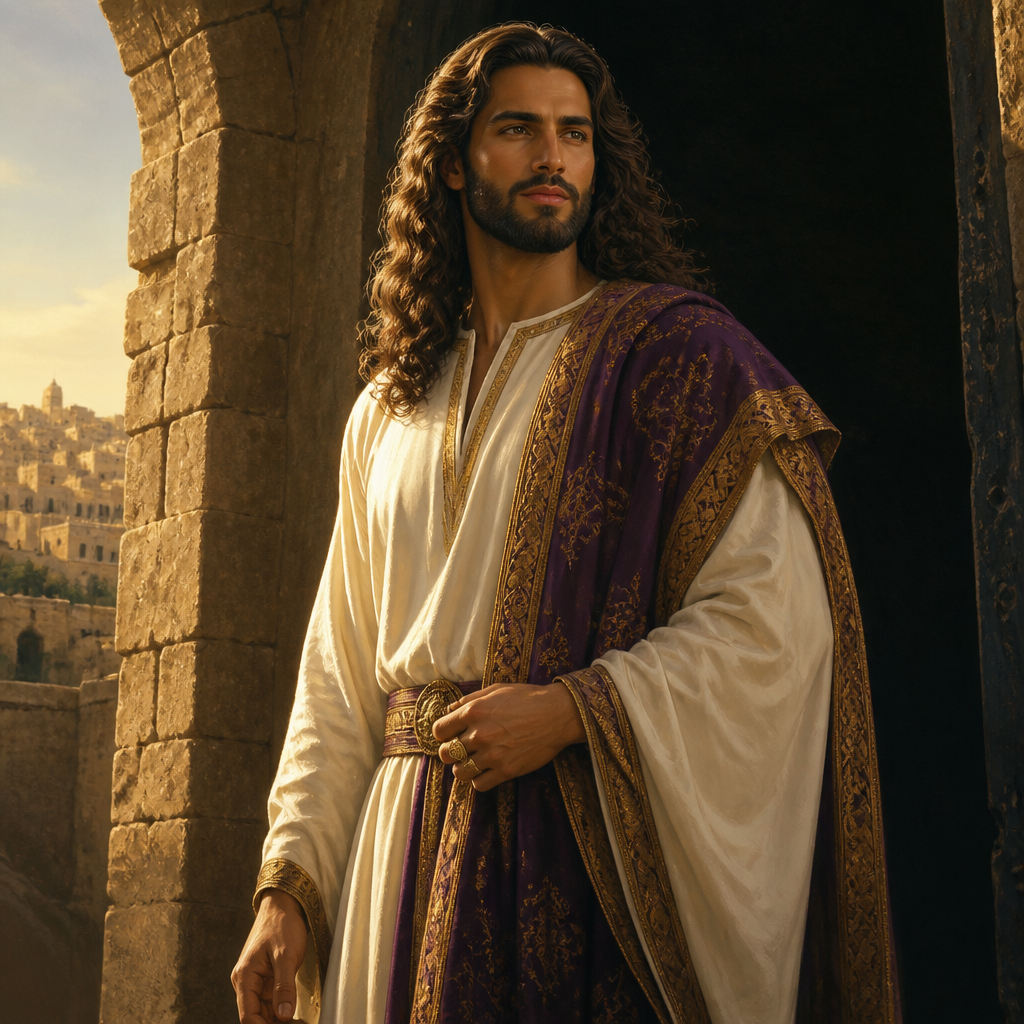
Absalom was the third son born to King David during his reign in Hebron. His mother was Maacah, the daughter of King Talmai of Geshur, making Absalom a figure of royal descent on both sides. He is frequently cited in the biblical narrative as a man of extraordinary physical beauty and charismatic appeal, possessing a head of hair so thick that its annual weight was recorded as a point of public fascination. Despite his privileged position, his life was marked by familial violence, long-standing resentment, and a calculated quest for the throne.
Absalom’s story is a central pillar of the 'Succession Narrative' in the books of Samuel. It documents the transition of his character from a silent, vengeful brother to a revolutionary leader who momentarily forced David into exile. His rebellion represents one of the most significant domestic crises in the history of the United Monarchy, illustrating the deep fractures within David's household following the king's own moral failures. The life of Absalom concludes with a tragic irony: the very hair that symbolized his princely glory became the instrument of his physical entrapment, leading to his execution by Joab.
Background and Family
Absalom was born in Hebron as the third son of David (2 Samuel 3:3). His mother, Maacah, was a princess of Geshur, a small Aramean kingdom. This international marriage provided Absalom with a unique political standing compared to his half-brothers. He was part of a large household that included his full sister, Tamar, and numerous half-siblings, including the firstborn Amnon and the eventual successor Solomon. Absalom himself became a father to three sons and one daughter, whom he named Tamar after his sister (2 Samuel 14:27).
Major Life Events
The Revenge for Tamar
The trajectory of Absalom’s life changed following the rape of his sister Tamar by their half-brother Amnon, David’s eldest son. When King David failed to punish Amnon, Absalom took Tamar into his home and harbored a silent, intense hatred for two years (2 Samuel 13:22). He eventually orchestrated a trap at a sheep-shearing festival in Baal-hazor, ordering his servants to kill Amnon when he was 'merry with wine.' Following the assassination, Absalom fled to his maternal grandfather in Geshur, where he remained in exile for three years.
Return and Restoration
Through a stratagem devised by Joab, David’s general, the king was persuaded to allow Absalom to return to Jerusalem. However, David refused to see his son's face for an additional two years. Frustrated by this partial restoration, Absalom forced a meeting with Joab by setting Joab’s barley fields on fire (2 Samuel 14:30). This aggressive tactic worked; Joab mediated, and David finally received and kissed his son, though the reconciliation was superficial.
The Rebellion and Usurpation
Following his return to favor, Absalom began a four-year campaign to undermine David’s authority. He sat at the city gate, intercepting citizens with legal grievances and telling them, 'If only someone would appoint me judge in the land' (2 Samuel 15:4). By projecting an image of justice and accessibility, he 'stole the hearts' of the people.
Under the guise of fulfilling a vow, Absalom traveled to Hebron, the old capital, and declared himself king. The conspiracy was so successful that David was forced to flee Jerusalem to avoid a massacre. Absalom entered the capital and, on the advice of Ahithophel, publicly slept with David’s concubines on the palace roof to signify a total break with his father’s house (2 Samuel 16:22).
The Battle of Ephraim and Death
Absalom’s reign was short-lived. David’s loyalists organized at Mahanaim. Despite David’s explicit command to 'treat the young man Absalom gently,' the battle in the Forest of Ephraim was decisive for David’s veteran troops. While fleeing on a mule, Absalom’s head was caught in the thick branches of a large oak tree, leaving him suspended in midair (2 Samuel 18:9). Joab, disregarding the king’s orders, struck three spears through Absalom’s heart. He was buried in a pit in the forest, covered by a heap of stones—a stark contrast to the monument he had built for himself in the King’s Valley.
Relationship to Other Biblical Figures
Absalom’s relationship with David was defined by a cycle of love and rebellion. David’s grief upon hearing of Absalom's death—crying, 'O my son Absalom! My son, my son!'—is one of the most poignant displays of parental anguish in Scripture. His relationship with Joab was purely pragmatic and eventually antagonistic. Furthermore, his reliance on Ahithophel for counsel and his later rejection of it in favor of Hushai (who was secretly working for David) proved to be his tactical undoing, as the Bible notes the Lord had purposed to thwart the 'good counsel' of Ahithophel to bring disaster on Absalom (2 Samuel 17:14).
Spiritual Significance
Absalom is often viewed as a cautionary figure regarding the dangers of pride and the destructive nature of unresolved bitterness. His beauty and charisma served as a mask for a ruthless ambition. Theologically, the rebellion of Absalom is frequently interpreted as part of the divine judgment pronounced by the prophet Nathan against David for his sin with Bathsheba: 'the sword shall never depart from your house' (2 Samuel 12:10). Absalom’s life illustrates the tragic ripple effects of sin within a family and the futility of seeking a kingdom through deception and violence rather than divine appointment.
Absalom represents the internal threat to the Davidic Covenant and serves as a foil to the humble, divinely chosen king. His rebellion is the fulfillment of the prophetic judgment against David's household, showing that even the 'man after God's own heart' faced severe earthly consequences for his moral failures. Absalom's life also highlights the biblical theme that outward appearance and popular acclaim do not equate to divine approval or character.
Frequently Asked Questions
How did Absalom die?
While riding a mule during the battle in the Forest of Ephraim, Absalom’s head became entangled in the branches of an oak tree. As he hung there, Joab, the commander of David's army, struck him with three spears, and Joab's armor-bearers finished the execution.
Why did Absalom rebel against David?
Absalom’s rebellion stemmed from a combination of personal resentment—largely due to David's failure to punish Amnon for the rape of Tamar—and his own political ambition to seize the throne of Israel.
What was unique about Absalom's physical appearance?
The Bible describes him as the most handsome man in Israel, without a single flaw from head to toe. He was particularly famous for his thick hair, which he cut only once a year when it became too heavy; the hair weighed two hundred shekels by the royal standard.
Did Absalom have any children?
Yes, 2 Samuel 14:27 records that he had three sons and one daughter named Tamar. However, 2 Samuel 18:18 suggests his sons may have died young, as he built a monument to himself because he said he had 'no son to preserve the memory' of his name.
Who was Absalom's mother?
Absalom's mother was Maacah, the daughter of King Talmai of Geshur. This made Absalom both a prince of Israel and a grandson of a foreign king.
Family & Relationships
Parents
 DavidFather2 Samuel 13:1Stated
 Maacah, Daughter of King TalmaiMother2 Samuel 3:3Stated
 AbsalomThis page
 Adonijah, Son of DavidBrother2 Samuel 3:3–4Stated
 Amnon, Firstborn Son of DavidBrother2 Samuel 13:4Stated
 ChileabBrother2 Samuel 3:3Stated
 Eliada, Son of DavidBrother2 Samuel 13:1
Inferred
Reconstructed through David and Eliphelet: 2 Samuel 13:1 ties Absalom to David; 1 Chronicles 3:6 ties David to Eliphelet; 1 Chronicles 3:8 ties Eliphelet to Eliada. No verse states the brother link between Absalom and Eliada directly.Evidence: 2 Samuel 13:1; 1 Chronicles 3:8
 Eliphelet, Son of DavidBrother2 Samuel 13:1
Inferred
Reconstructed through David: 1 Chronicles 3:6 ties Eliphelet to David; 2 Samuel 13:1 ties David to Absalom. No verse states the brother link between Eliphelet and Absalom directly.Evidence: 2 Samuel 13:1; 1 Chronicles 3:6
 Elishama, Son of DavidBrother2 Samuel 13:1
Inferred
Reconstructed through David and Eliphelet: 2 Samuel 13:1 ties Absalom to David; 1 Chronicles 3:6 ties David to Eliphelet; 1 Chronicles 3:8 ties Eliphelet to Elishama. No verse states the brother link between Absalom and Elishama directly.Evidence: 2 Samuel 13:1; 1 Chronicles 3:6
 ElishuaBrother2 Samuel 13:1
Inferred
Reconstructed through David: 2 Samuel 13:1 ties Absalom to David; 1 Chronicles 3:6 ties David to Elishua. No verse states the brother link between Absalom and Elishua directly.Evidence: 2 Samuel 13:1; 1 Chronicles 3:6
 IbharBrother2 Samuel 13:1
Inferred
Reconstructed through David: 2 Samuel 13:1 ties Absalom to David; 1 Chronicles 3:6 ties David to Ibhar. No verse states the brother link between Absalom and Ibhar directly.Evidence: 2 Samuel 13:1; 1 Chronicles 3:6
 IthreamBrother2 Samuel 3:3–5Stated
 Japhia, Son of DavidBrother2 Samuel 13:1
Inferred
No verse names Japhia and Absalom together; the brother link is carried from the surrounding genealogy and is not stated in Scripture.Evidence: 2 Samuel 13:1; 1 Chronicles 3:7
 Nathan, Son of DavidBrother2 Samuel 13:1
Inferred
Reconstructed through David: 2 Samuel 13:1 ties Absalom to David; Luke 3:31 ties David to Nathan. No verse states the brother link between Absalom and Nathan directly.Evidence: 2 Samuel 13:1; Luke 3:31
 Nepheg, Son of DavidBrother2 Samuel 13:1
Inferred
No verse names Absalom and Nepheg together; the brother link is carried from the surrounding genealogy and is not stated in Scripture.Evidence: 2 Samuel 13:1; 1 Chronicles 3:7
 Shammua, Son of DavidBrother2 Samuel 3:3
Inferred
Reconstructed through Nathan and David: 2 Samuel 5:14 ties Shammua to Nathan (itself an inferred link); Luke 3:31 ties Nathan to David; 2 Samuel 13:1 ties David to Absalom. No verse states the brother link between Shammua and Absalom directly.Evidence: 2 Samuel 3:3
 Shephatiah, Son of DavidBrother2 Samuel 3:3–4Stated
 Shobab, Son of DavidBrother2 Samuel 13:1
Inferred
Reconstructed through Nathan and David: 1 Chronicles 3:5 ties Shobab to Nathan; Luke 3:31 ties Nathan to David; 2 Samuel 13:1 ties David to Absalom. No verse states the brother link between Shobab and Absalom directly.Evidence: 2 Samuel 13:1; 1 Chronicles 3:4
 SolomonBrother1 Kings 2:7–12Stated
 Tamar, Daughter of DavidSister2 Samuel 13:4Stated
 ElpeletBrother2 Samuel 3:3
Inferred
No verse names Absalom and Elpelet together; the brother link is carried from the surrounding genealogy and is not stated in Scripture.Evidence: 2 Samuel 3:3
 NogahBrother2 Samuel 13:1
Inferred
No verse names Absalom and Nogah together; the brother link is carried from the surrounding genealogy and is not stated in Scripture.Evidence: 2 Samuel 13:1; 1 Chronicles 3:7
 Jerimoth, Son of DavidBrother2 Samuel 13:1
Inferred
Reconstructed through David: 2 Chronicles 11:18 ties Jerimoth to David; 2 Samuel 13:1 ties David to Absalom. No verse states the brother link between Jerimoth and Absalom directly.Evidence: 2 Samuel 13:1; 2 Chronicles 11:18
Children
 Tamar, Daughter of AbsalomDaughter2 Samuel 14:27Stated
Extended family
 Ammihud, Father of TalmaiGreat-Grandfather2 Samuel 13:37
Inferred
2 Samuel 13:37 names Ammihud and Absalom in the same verse but does not state a great-grandson tie between them; the link rests on the surrounding narrative.Evidence: 2 Samuel 13:37
 Talmai, King of GeshurGrandfather2 Samuel 3:3
Inferred
2 Samuel 3:3 names Absalom and Talmai in the same verse but does not state a grandfather tie between them; the link rests on the surrounding narrative.Evidence: 2 Samuel 3:3
 Maacah, Queen Mother of JudahGranddaughter2 Samuel 3:3
Inferred
2 Samuel 3:3 names Maacah and Absalom in the same verse but does not state a grandfather tie between them; the link rests on the surrounding narrative.Evidence: 2 Samuel 3:3
 Shelomith, Child of RehoboamGrandchild2 Chronicles 11:20
Inferred
2 Chronicles 11:20 names Absalom and Shelomith in the same verse but does not state a grandchild tie between them; the link rests on the surrounding narrative.Evidence: 2 Chronicles 11:20
 Ziza, Son of RehoboamGrandson2 Chronicles 11:20
Inferred
2 Chronicles 11:20 names Ziza and Absalom in the same verse but does not state a grandfather tie between them; the link rests on the surrounding narrative.Evidence: 2 Chronicles 11:20
 Jonadab, Son of ShimeahCousin2 Samuel 13:32
Inferred
2 Samuel 13:32 names Absalom and Jonadab in the same verse but does not state a cousin tie between them; the link rests on the surrounding narrative.Evidence: 2 Samuel 13:32
Connected Figures
Family
Father · 2 Samuel 13:1
The second king of the United Monarchy of Israel, a shepherd-warrior and psalmist known as a man after God's own heart.
United MonarchyFirst: Ruth 4:17998 versesKing of Israel, Shepherd, Musician, WarriorJudah
Mother · 2 Samuel 3:3
A foreign princess and wife of King David who became the mother of Absalom and Tamar during the United Monarchy.
United MonarchyFirst: 2 Samuel 3:38 versesQueen Consort of Israel
Daughter · 2 Samuel 14:27
A woman of the United Monarchy known for her beauty and status as the daughter of Absalom and the mother of Queen Maacah.
United MonarchyFirst: 2 Samuel 14:275 versesPrincess of IsraelJudah
Brother · 2 Samuel 3:3–4
The fourth son of King David, Adonijah attempted to seize the throne of Israel during his father's final days, ultimately failing and meeting his execution under King Solomon.
United MonarchyFirst: 2 Samuel 3:434 versesPrince of IsraelJudah
Brother · 2 Samuel 13:4
The firstborn son of King David, Amnon is primarily known for the violation of his half-sister Tamar, an act that triggered a bloody cycle of revenge within the royal family.
United MonarchyFirst: 2 Samuel 3:232 versesPrince and heir apparentJudah
Brother · 2 Samuel 3:3
Chileab was the second son of King David, born in Hebron to Abigail the widow of Nabal of Carmel during the United Monarchy.
United MonarchyFirst: 2 Samuel 3:313 versesPrince of IsraelJudah
Brother · 2 Samuel 13:1
Eliada was a son of King David born in Jerusalem, listed among the children of the United Monarchy period.
United MonarchyFirst: 2 Samuel 5:1616 versesPrince of IsraelJudah
Brother · 2 Samuel 13:1
Eliphelet was a son of King David, born in Jerusalem during the United Monarchy, and is listed among the royal children in the books of Samuel and Chronicles.
United MonarchyFirst: 2 Samuel 5:1615 versesPrince of IsraelJudah
Brother · 2 Samuel 13:1
A son of King David born in Jerusalem during the United Monarchy and listed among the royal descendants in the books of Samuel and Chronicles.
United MonarchyFirst: 2 Samuel 5:1616 versesPrince of IsraelJudah
Brother · 2 Samuel 13:1
A son of King David born in Jerusalem during the early years of the United Monarchy.
United MonarchyFirst: 2 Samuel 5:1514 versesPrince of IsraelJudah
Brother · 2 Samuel 13:1
Ibhar was a son of King David, born in Jerusalem during the era of the United Monarchy.
United MonarchyFirst: 2 Samuel 5:1514 versesPrince of IsraelJudah
Brother · 2 Samuel 3:3–5
The sixth son of King David, born to his wife Eglah during David's seven-year reign in Hebron.
United MonarchyFirst: 2 Samuel 3:512 versesPrince of IsraelJudah
Categories
Mentions by Book
- 2 Samuel86
- 1 Kings10
- 1 Chronicles3
- 2 Chronicles3
- Psalms1
- Luke1
Scripture References
All 104 indexed verses, in canonical order, from the Berean Standard Bible.
- 2 Samuel 3:3
his second was Chileab, by Abigail the widow of Nabal of Carmel; his third was Absalom, the son of Maacah daughter of King Talmai of Geshur;
- 2 Samuel 3:4Partial
his fourth was Adonijah, the son of Haggith; his fifth was Shephatiah, the son of Abital;
Cited as evidence on a family card; added so References, Key Verses and Mentions by Book share one index.
- 2 Samuel 3:5Partial
and his sixth was Ithream, by David’s wife Eglah. These sons were born to David in Hebron.
Cited as evidence on a family card; added so References, Key Verses and Mentions by Book share one index.
- 2 Samuel 5:14Partial
These are the names of the children born to him in Jerusalem: Shammua, Shobab, Nathan, Solomon,
Cited as evidence on a family card; added so References, Key Verses and Mentions by Book share one index.
- 2 Samuel 13:1
After some time, David’s son Amnon fell in love with Tamar, the beautiful sister of David’s son Absalom.
- 2 Samuel 13:4
and he asked Amnon, “Why are you, the son of the king, so depressed morning after morning? Won’t you tell me?” Amnon replied, “I am in love with Tamar, my brother Absalom’s sister.”
- 2 Samuel 13:20Partial
Her brother Absalom said to her, “Has your brother Amnon been with you? Be quiet for now, my sister. He is your brother. Do not take this thing to heart.” So Tamar lived as a desolate woman in the house of her brother Absalom.
- 2 Samuel 13:22Partial
And Absalom never said a word to Amnon, either good or bad, because he hated Amnon for violating his sister Tamar.
- 2 Samuel 13:23Partial
Two years later, when Absalom’s sheepshearers were at Baal-hazor near Ephraim, he invited all the sons of the king.
- 2 Samuel 13:24
And he went to the king and said, “Your servant has just hired shearers. Will the king and his servants please come with me?”
- 2 Samuel 13:25
“No, my son,” the king replied, “we should not all go, or we would be a burden to you.” Although Absalom urged him, he was not willing to go, but gave him his blessing.
- 2 Samuel 13:26
“If not,” said Absalom, “please let my brother Amnon go with us.” “Why should he go with you?” the king asked.
- 2 Samuel 13:27
But Absalom urged him, so the king sent Amnon and the rest of his sons.
- 2 Samuel 13:28
Now Absalom had ordered his young men, “Watch Amnon until his heart is merry with wine, and when I order you to strike Amnon down, you are to kill him. Do not be afraid. Have I not commanded you? Be courageous and valiant!”
- 2 Samuel 13:29Partial
So Absalom’s young men did to Amnon just as Absalom had ordered. Then all the other sons of the king got up, and each one fled on his mule.
- 2 Samuel 13:30
While they were on the way, a report reached David: “Absalom has struck down all the sons of the king; not one of them is left!”
- 2 Samuel 13:32
But Jonadab, the son of David’s brother Shimeah, spoke up: “My lord must not think they have killed all the sons of the king, for only Amnon is dead. In fact, Absalom has planned this since the day Amnon violated his sister Tamar.
- 2 Samuel 13:34
Meanwhile, Absalom had fled. When the young man standing watch looked up, he saw many people coming down the road west of him, along the side of the hill. And the watchman went and reported to the king, “I see men coming from the direction of Horonaim, along the side of the hill.”
- 2 Samuel 13:37
Now Absalom fled and went to Talmai son of Ammihud, the king of Geshur. But David mourned for his son every day.
- 2 Samuel 13:38
After Absalom had fled and gone to Geshur, he stayed there three years.
- 2 Samuel 13:39
And King David longed to go to Absalom, for he had been consoled over Amnon’s death.
- 2 Samuel 14:1
Now Joab son of Zeruiah perceived that the king’s heart longed for Absalom.
- 2 Samuel 14:21
Then the king said to Joab, “I hereby grant this request. Go, bring back the young man Absalom.”
- 2 Samuel 14:23
So Joab got up, went to Geshur, and brought Absalom to Jerusalem.
- 2 Samuel 14:24
But the king added, “He may return to his house, but he must not see my face.” So Absalom returned to his own house, but he did not see the face of the king.
- 2 Samuel 14:25
Now there was not a man in all Israel as handsome and highly praised as Absalom. From the sole of his foot to the top of his head, he did not have a single flaw.
- 2 Samuel 14:27
Three sons were born to Absalom, and a daughter named Tamar, who was a beautiful woman.
- 2 Samuel 14:28
Now Absalom lived in Jerusalem two years without seeing the face of the king.
- 2 Samuel 14:29
Then he sent for Joab to send him to the king, but Joab refused to come to him. So Absalom sent a second time, but Joab still would not come.
- 2 Samuel 14:30
Then Absalom said to his servants, “Look, Joab’s field is next to mine, and he has barley there. Go and set it on fire!” And Absalom’s servants set the field on fire.
- 2 Samuel 14:31
Then Joab came to Absalom’s house and demanded, “Why did your servants set my field on fire?”
- 2 Samuel 14:32
“Look,” said Absalom, “I sent for you and said, ‘Come here. I want to send you to the king to ask: Why have I come back from Geshur? It would be better for me if I were still there.’ So now, let me see the king’s face, and if there is iniquity in me, let him kill me.”
- 2 Samuel 14:33Partial
So Joab went and told the king, and David summoned Absalom, who came to him and bowed facedown before him. Then the king kissed Absalom.
- 2 Samuel 15:1
Some time later, Absalom provided for himself a chariot with horses and fifty men to run ahead of him.
- 2 Samuel 15:2Partial
He would get up early and stand beside the road leading to the city gate. Whenever anyone had a grievance to bring before the king for a decision, Absalom would call out and ask, “What city are you from?” And if he replied, “Your servant is from one of the tribes of Israel,”
- 2 Samuel 15:3
Absalom would say, “Look, your claims are good and right, but the king has no deputy to hear you.”
- 2 Samuel 15:4
And he would add, “If only someone would appoint me judge in the land, then everyone with a grievance or dispute could come to me, and I would give him justice.”
- 2 Samuel 15:6Partial
Absalom did this to all the Israelites who came to the king for justice. In this way he stole the hearts of the men of Israel.
- 2 Samuel 15:7
After four years had passed, Absalom said to the king, “Please let me go to Hebron to fulfill a vow I have made to the LORD.
- 2 Samuel 15:10Partial
Then Absalom sent spies throughout the tribes of Israel with this message: “When you hear the sound of the horn, you are to say, ‘Absalom reigns in Hebron!’”
- 2 Samuel 15:11
Two hundred men from Jerusalem accompanied Absalom. They had been invited as guests and they went along innocently, for they knew nothing about the matter.
- 2 Samuel 15:12Partial
While Absalom was offering the sacrifices, he sent for Ahithophel the Gilonite, David’s counselor, to come from his hometown of Giloh. So the conspiracy gained strength, and Absalom’s following kept increasing.
- 2 Samuel 15:13
Then a messenger came to David and reported, “The hearts of the men of Israel are with Absalom.”
- 2 Samuel 15:14
And David said to all the servants with him in Jerusalem, “Arise and let us flee, or we will not escape from Absalom! We must leave quickly, or he will soon overtake us, heap disaster on us, and put the city to the sword.”
- 2 Samuel 15:31
Now someone told David: “Ahithophel is among the conspirators with Absalom.” So David pleaded, “O LORD, please turn the counsel of Ahithophel into foolishness!”
- 2 Samuel 15:34
But you can thwart the counsel of Ahithophel for me if you return to the city and say to Absalom: ‘I will be your servant, my king; in the past I was your father’s servant, but now I will be your servant.’
- 2 Samuel 15:37
So David’s friend Hushai arrived in Jerusalem just as Absalom was entering the city.
- 2 Samuel 16:8
The LORD has paid you back for all the blood of the house of Saul, in whose place you have reigned, and the LORD has delivered the kingdom into the hand of your son Absalom. See, you have come to ruin because you are a man of bloodshed!”
- 2 Samuel 16:15
Then Absalom and all the men of Israel came to Jerusalem, and Ahithophel was with him.
- 2 Samuel 16:16Partial
And David’s friend Hushai the Archite went to Absalom and said to him, “Long live the king! Long live the king!”
- 2 Samuel 16:17
“Is this the loyalty you show your friend?” Absalom replied. “Why did you not go with your friend?”
- 2 Samuel 16:18
“Not at all,” Hushai answered. “For the one chosen by the LORD, by this people, and by all the men of Israel—his I will be, and with him I will remain.
- 2 Samuel 16:20
Then Absalom said to Ahithophel, “Give me counsel. What should we do?”
- 2 Samuel 16:21
Ahithophel replied, “Sleep with your father’s concubines, whom he has left to take care of the palace. When all Israel hears that you have become a stench to your father, then the hands of all who are with you will be strengthened.”
- 2 Samuel 16:22Partial
So they pitched a tent for Absalom on the roof, and he slept with his father’s concubines in the sight of all Israel.
- 2 Samuel 16:23
Now in those days the advice of Ahithophel was like the consultation of the word of God. Such was the regard that both David and Absalom had for Ahithophel’s advice.
- 2 Samuel 17:1
Furthermore, Ahithophel said to Absalom, “Let me choose twelve thousand men and set out tonight in pursuit of David.
- 2 Samuel 17:4
This proposal seemed good to Absalom and all the elders of Israel.
- 2 Samuel 17:5
Then Absalom said, “Summon Hushai the Archite as well, and let us hear what he too has to say.”
- 2 Samuel 17:6Partial
So Hushai came to Absalom, who told him, “Ahithophel has spoken this proposal. Should we carry it out? If not, what do you say?”
- 2 Samuel 17:7
Hushai replied, “This time the advice of Ahithophel is not sound.”
- 2 Samuel 17:9
Surely by now he is hiding in a cave or some other location. If some of your troops fall first, whoever hears of it will say, ‘There has been a slaughter among the troops who follow Absalom.’
- 2 Samuel 17:14Partial
Then Absalom and all the men of Israel said, “The advice of Hushai the Archite is better than that of Ahithophel.” For the LORD had purposed to thwart the good counsel of Ahithophel in order to bring disaster on Absalom.
- 2 Samuel 17:15
So Hushai told Zadok and Abiathar, the priests, “This is what Ahithophel has advised Absalom and the elders of Israel, and this is what I have advised.
- 2 Samuel 17:18
But a young man did see them and told Absalom. So the two left quickly and came to the house of a man in Bahurim. He had a well in his courtyard, and they climbed down into it.
- 2 Samuel 17:20
When Absalom’s servants came to the woman at the house, they asked, “Where are Ahimaaz and Jonathan?” “They have crossed over the brook,” she replied. The men searched but did not find them, so they returned to Jerusalem.
- 2 Samuel 17:24
Then David went to Mahanaim, and Absalom crossed the Jordan with all the men of Israel.
- 2 Samuel 17:25
Absalom had appointed Amasa over the army in place of Joab. Amasa was the son of a man named Ithra, the Ishmaelite who had married Abigail, the daughter of Nahash and sister of Zeruiah the mother of Joab.
- 2 Samuel 17:26
So the Israelites and Absalom camped in the land of Gilead.
- 2 Samuel 18:5Partial
Now the king had commanded Joab, Abishai, and Ittai, “Treat the young man Absalom gently for my sake.” And all the people heard the king’s orders to each of the commanders regarding Absalom.
- 2 Samuel 18:9Partial
Now Absalom was riding on his mule when he met the servants of David, and as the mule went under the thick branches of a large oak, Absalom’s head was caught fast in the tree. The mule under him kept going, so that he was suspended in midair.
- 2 Samuel 18:10
When one of the men saw this, he told Joab, “I just saw Absalom hanging in an oak tree!”
- 2 Samuel 18:12
The man replied, “Even if a thousand shekels of silver were weighed out into my hands, I would not raise my hand against the son of the king. For we heard the king command you and Abishai and Ittai, ‘Protect the young man Absalom for my sake.’
- 2 Samuel 18:14
But Joab declared, “I am not going to wait like this with you!” And he took three spears in his hand and thrust them through the heart of Absalom while he was still alive in the oak tree.
- 2 Samuel 18:15
And ten young men who carried Joab’s armor surrounded Absalom, struck him, and killed him.
- 2 Samuel 18:17
They took Absalom, cast him into a large pit in the forest, and piled a huge mound of stones over him. Meanwhile, all the Israelites fled, each to his home.
- 2 Samuel 18:18Partial
During his lifetime, Absalom had set up for himself a pillar in the King’s Valley, for he had said, “I have no son to preserve the memory of my name.” So he gave the pillar his name, and to this day it is called Absalom’s Monument.
- 2 Samuel 18:29
The king asked, “Is the young man Absalom all right?” And Ahimaaz replied, “When Joab sent the king’s servant and your servant, I saw a great tumult, but I do not know what it was.”
- 2 Samuel 18:32
The king asked the Cushite, “Is the young man Absalom all right?” And the Cushite replied, “May the enemies of my lord the king and all who rise up against you to harm you be like that young man.”
- 2 Samuel 18:33Partial
The king was shaken and went up to the chamber over the gate and wept. And as he walked, he cried out, “O my son Absalom! My son, my son Absalom! If only I had died instead of you, O Absalom, my son, my son!”
- 2 Samuel 19:1
Then it was reported to Joab, “The king is weeping and mourning over Absalom.”
- 2 Samuel 19:4Partial
But the king covered his face and cried out at the top of his voice, “O my son Absalom! O Absalom, my son, my son!”
- 2 Samuel 19:6
You love those who hate you and hate those who love you! For you have made it clear today that the commanders and soldiers mean nothing to you. I know today that if Absalom were alive and all of us were dead, it would have pleased you!
- 2 Samuel 19:9
And all the people throughout the tribes of Israel were arguing, “The king rescued us from the hand of our enemies and delivered us from the hand of the Philistines, but now he has fled the land because of Absalom.
- 2 Samuel 19:10
But Absalom, the man we anointed over us, has died in battle. So why do you say nothing about restoring the king?”
- 2 Samuel 20:6
And David said to Abishai, “Now Sheba the son of Bichri will do us more harm than Absalom. Take your lord’s servants and pursue him, or he will find fortified cities and elude us.”
- 1 Kings 1:6
(His father had never once reprimanded him by saying, “Why do you act this way?” Adonijah was also very handsome, born next after Absalom.)
- 1 Kings 2:7
But show loving devotion to the sons of Barzillai the Gileadite, and let them be among those who eat at your table, because they stood by me when I fled from your brother Absalom.
- 1 Kings 2:8Partial
Keep an eye on Shimei the son of Gera, the Benjamite from Bahurim who is with you. He called down bitter curses against me on the day I went to Mahanaim, but when he came down to meet me at the Jordan, I swore to him by the LORD: ‘I will never put you to the sword.’
Cited as evidence on a family card; added so References, Key Verses and Mentions by Book share one index.
- 1 Kings 2:9Partial
Now therefore, do not hold him guiltless, for you are a wise man. You know what you ought to do to him to bring his gray head down to Sheol in blood.”
Cited as evidence on a family card; added so References, Key Verses and Mentions by Book share one index.
- 1 Kings 2:10Partial
Then David rested with his fathers and was buried in the City of David.
Cited as evidence on a family card; added so References, Key Verses and Mentions by Book share one index.
- 1 Kings 2:11Partial
The length of David’s reign over Israel was forty years—seven years in Hebron and thirty-three years in Jerusalem.
Cited as evidence on a family card; added so References, Key Verses and Mentions by Book share one index.
- 1 Kings 2:12Partial
So Solomon sat on the throne of his father David, and his kingdom was firmly established.
Cited as evidence on a family card; added so References, Key Verses and Mentions by Book share one index.
- 1 Kings 2:28
When the news reached Joab, who had conspired with Adonijah but not with Absalom, he fled to the tent of the LORD and took hold of the horns of the altar.
- 1 Kings 15:2
and he reigned in Jerusalem three years. His mother’s name was Maacah daughter of Abishalom.
- 1 Kings 15:10
and he reigned in Jerusalem forty-one years. His grandmother’s name was Maacah daughter of Abishalom.
- 1 Chronicles 3:2
the third was Absalom the son of Maacah daughter of King Talmai of Geshur; the fourth was Adonijah the son of Haggith;
- 1 Chronicles 3:4Partial
These six sons were born to David in Hebron, where he reigned seven years and six months. And David reigned in Jerusalem thirty-three years,
Cited as evidence on a family card; added so References, Key Verses and Mentions by Book share one index.
- 1 Chronicles 3:6Partial
David’s other sons were Ibhar, Elishua, Eliphelet,
Cited as evidence on a family card; added so References, Key Verses and Mentions by Book share one index.
- 2 Chronicles 11:18Partial
And Rehoboam married Mahalath, who was the daughter of David’s son Jerimoth and of Abihail, the daughter of Jesse’s son Eliab.
Cited as evidence on a family card; added so References, Key Verses and Mentions by Book share one index.
- 2 Chronicles 11:20
After her, he married Maacah daughter of Absalom, and she bore to him Abijah, Attai, Ziza, and Shelomith.
- 2 Chronicles 11:21
Rehoboam loved Maacah daughter of Absalom more than all his wives and concubines. In all, he had eighteen wives and sixty concubines, and he was the father of twenty-eight sons and sixty daughters.
- Psalms 3:1
A Psalm of David, when he fled from his son Absalom. O LORD, how my foes have increased! How many rise up against me!
- Luke 3:31Partial
the son of Melea, the son of Menna, the son of Mattatha, the son of Nathan, the son of David,
Cited as evidence on a family card; added so References, Key Verses and Mentions by Book share one index.