Nathan, Son of David
Who was Nathan, Son of David, in the Bible?
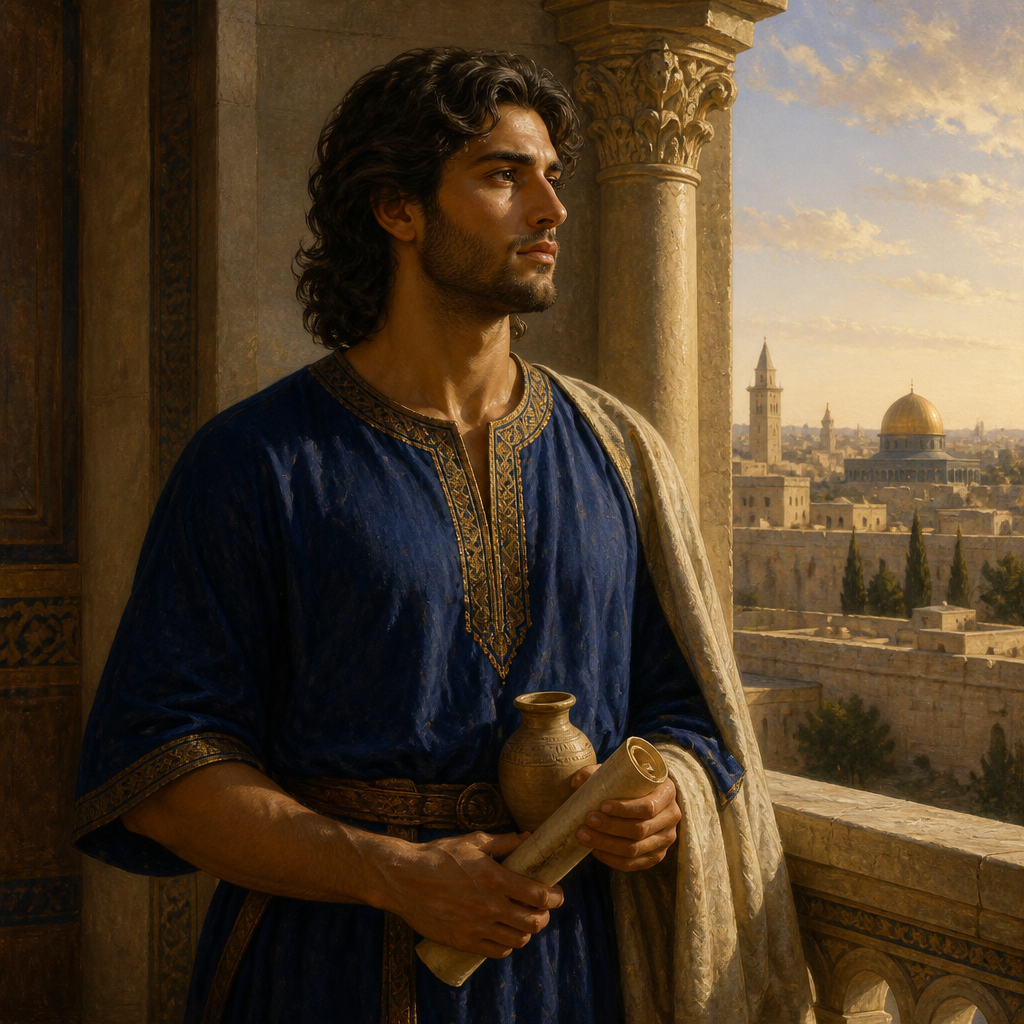
Nathan was a son of King David and Bathsheba, born in Jerusalem during the United Monarchy, and is listed as a direct ancestor of Jesus Christ in the genealogy provided by Luke.
This is one of 6 people named Nathan in the Bible. See all 6 →
Nathan was a prince of Israel during the United Monarchy, born to King David after he had established his capital in Jerusalem. As the son of David and Bathsheba, Nathan occupied a significant position within the royal household, appearing in the genealogical records alongside his famous full-brother, Solomon. While he did not succeed his father on the throne, his lineage remained prominent in the history of the house of David.
Historically, Nathan is noted as one of the four sons born to David and Bathsheba in Jerusalem. His presence in the biblical text is primarily genealogical, serving to document the expansion of David’s dynasty and the fulfillment of the divine promise regarding David’s offspring. His legacy is most clearly defined by his inclusion in the New Testament lineage of Jesus, distinguishing his branch of the Davidic family tree.
Background and Family
Nathan was born in Jerusalem during the height of the United Monarchy, a period marked by the consolidation of the twelve tribes under the house of David. According to 2 Samuel 5:14 and 1 Chronicles 14:4, he was among the children born to David after the king moved his residence from Hebron to Jerusalem. The Chronicler provides specific maternal detail in 1 Chronicles 3:5, noting that Nathan was one of four sons born to David by Bathsheba (referred to there as Bath-shua), the daughter of Ammiel. His full-brothers included Shammua (or Shimea), Shobab, and Solomon.
As a member of the royal family, Nathan grew up in a large household consisting of many half-siblings from David’s various wives. His elder half-brothers included Amnon, Chileab, Absalom, and Adonijah. The biblical record lists Nathan as the third son of Bathsheba, placing him chronologically before Solomon, who would eventually succeed David as king.
Major Life Events
The biblical narrative does not record specific deeds, speeches, or political actions performed by Nathan during his lifetime. Unlike his brothers Absalom or Adonijah, Nathan is not associated with the various internal conflicts or rebellions that troubled David’s later reign. His life is characterized by his status as a royal prince and a progenitor of a specific branch of the Davidic line.
In the prophetic literature of Zechariah, written centuries after the United Monarchy, the "house of Nathan" is mentioned specifically in a vision of national mourning (Zechariah 12:12). The descendants of Nathan were recognized as a distinct and significant sub-clan within the broader house of David, standing alongside the royal line of Solomon and the priestly lines of Levi and Shimei.
Relationship to Other Biblical Figures
Nathan’s primary significance in the biblical canon is found in his relationship to the genealogy of Jesus Christ. While the Gospel of Matthew traces the legal and royal line of Jesus through King Solomon, the Gospel of Luke traces the biological or alternative ancestry through Nathan (Luke 3:31). Luke identifies Nathan as the father of Mattatha and the son of David.
This dual genealogy has led scholars to conclude that while Solomon provided the regal right to the throne, Nathan provided the physical descent from David for the lineage ending in Mary, the mother of Jesus. This places Nathan as a critical link in the messianic expectations of the New Testament.
Spiritual Significance
Theologically, Nathan represents the quiet continuity of God's promises. While he did not wear a crown or exercise the wisdom of Solomon, his inclusion in the genealogy of Christ emphasizes that every branch of the Davidic family played a role in the unfolding of redemptive history. The mention in Zechariah 12:12 implies that the family of Nathan was deeply integrated into the spiritual life of Israel, participating in the communal repentance and mourning that the prophet describes. His life illustrates that prominence in the biblical record is not always measured by overt action, but by one's place in the covenantal purposes of God.
Nathan serves as a vital genealogical link between King David and Jesus Christ. His presence in Luke’s genealogy ensures that the Messiah is a physical descendant of David, even through a non-regal line. This highlights the breadth of the Davidic Covenant, showing that God's favor rested upon the house of David in its entirety.
Furthermore, the distinction of the 'house of Nathan' in prophetic literature indicates the enduring legacy of his specific family line within the tribe of Judah. He represents the silent but essential actors in the biblical narrative whose primary role is the preservation of a godly heritage across generations.
Frequently Asked Questions
Was Nathan the son of David the same person as Nathan the Prophet?
No. Nathan the son of David was a royal prince born to Bathsheba, whereas Nathan the Prophet was a contemporary advisor to King David who confronted him regarding his sin.
Who was Nathan's mother?
Nathan's mother was Bathsheba (also called Bath-shua), the daughter of Ammiel.
Does Nathan appear in the genealogy of Jesus?
Yes. Nathan is listed in Luke 3:31 as an ancestor of Jesus, connecting the lineage of David to Mattatha.
Was Nathan older or younger than Solomon?
According to the lists in 2 Samuel 5:14 and 1 Chronicles 3:5, Nathan is listed before Solomon, suggesting he was an older brother.
What tribe did Nathan belong to?
Nathan belonged to the Tribe of Judah, as he was a son of David.
Family & Relationships
 Nathan, Son of DavidThis page
 AbsalomBrother2 Samuel 13:1
Inferred
Reconstructed through David: 2 Samuel 13:1 ties Absalom to David; Luke 3:31 ties David to Nathan. No verse states the brother link between Absalom and Nathan directly.Evidence: 2 Samuel 13:1; Luke 3:31
 Adonijah, Son of DavidBrother2 Samuel 3:4
Inferred
Reconstructed through Solomon: 2 Samuel 5:14 ties Nathan to Solomon; 1 Kings 2:22 ties Solomon to Adonijah. No verse states the brother link between Nathan and Adonijah directly.Evidence: 2 Samuel 3:4; Luke 3:31
 Amnon, Firstborn Son of DavidBrother2 Samuel 13:1
Inferred
Reconstructed through David: 2 Samuel 3:2 ties Amnon to David; Luke 3:31 ties David to Nathan. No verse states the brother link between Amnon and Nathan directly.Evidence: 2 Samuel 13:1; Luke 3:31
 ChileabBrother2 Samuel 3:2
Inferred
Reconstructed through Abigail and David: 2 Samuel 3:3 ties Chileab to Abigail (itself an inferred link); 1 Samuel 25:39 ties Abigail to David; Luke 3:31 ties David to Nathan. No verse states the brother link between Chileab and Nathan directly.Evidence: 2 Samuel 3:2; Luke 3:31
 Eliada, Son of DavidBrother1 Chronicles 3:5–8Stated
 Eliphelet, Son of DavidBrother1 Chronicles 3:5–6Stated
 Elishama, Son of DavidBrother1 Chronicles 3:5–8Stated
 ElishuaBrother1 Chronicles 3:5–6Stated
 IbharBrother1 Chronicles 3:5–6Stated
 IthreamBrother2 Samuel 3:5
Inferred
Reconstructed through David: 2 Samuel 3:5 ties Ithream to David; Luke 3:31 ties David to Nathan. No verse states the brother link between Ithream and Nathan directly.Evidence: 2 Samuel 3:5; Luke 3:31
 Japhia, Son of DavidBrother1 Chronicles 3:5–7Stated
 Nepheg, Son of DavidBrother1 Chronicles 3:5–7Stated
 Shammua, Son of DavidBrother2 Samuel 5:14
Inferred
2 Samuel 5:14 names Shammua and Nathan in the same verse but does not state a brother tie between them; the link rests on the surrounding narrative.Evidence: 2 Samuel 5:14
 Shephatiah, Son of DavidBrother2 Samuel 3:4
Inferred
Reconstructed through Solomon and Adonijah: 2 Samuel 5:14 ties Nathan to Solomon; 1 Kings 2:22 ties Solomon to Adonijah; 2 Samuel 3:4 ties Adonijah to Shephatiah. No verse states the brother link between Nathan and Shephatiah directly.Evidence: 2 Samuel 3:4; Luke 3:31
 Shobab, Son of DavidBrother1 Chronicles 3:5Stated
 SolomonBrother2 Samuel 5:14Stated
 Tamar, Daughter of DavidSister1 Chronicles 3:9
Inferred
Reconstructed through David: 1 Chronicles 3:9 ties Tamar to David; Luke 3:31 ties David to Nathan. No verse states the brother link between Tamar and Nathan directly.Evidence: 1 Chronicles 3:9; Luke 3:31
 ElpeletBrother2 Samuel 5:14
Inferred
No verse names Nathan and Elpelet together; the brother link is carried from the surrounding genealogy and is not stated in Scripture.Evidence: 2 Samuel 5:14
 NogahBrother1 Chronicles 3:5–7Stated
 Jerimoth, Son of DavidBrother2 Chronicles 11:18
Inferred
Reconstructed through David: 2 Chronicles 11:18 ties Jerimoth to David; Luke 3:31 ties David to Nathan. No verse states the brother link between Jerimoth and Nathan directly.Evidence: 2 Chronicles 11:18; Luke 3:31
Children
 MattathaSonLuke 3:31Stated
Connected Figures
Family

Father · Luke 3:31
The second king of the United Monarchy of Israel, a shepherd-warrior and psalmist known as a man after God's own heart.
United MonarchyFirst: Ruth 4:17998 versesKing of Israel, Shepherd, Musician, WarriorJudah

Mother · 1 Chronicles 3:5
The daughter of Eliam, wife of Uriah the Hittite, and later the wife of King David and mother of King Solomon.
United MonarchyFirst: 2 Samuel 11:312 versesQueen Consort, Queen MotherJudah
Son · Luke 3:31
Mattatha was a descendant of King David and an ancestor of Jesus Christ, recorded in the genealogy of the Gospel of Luke.
Brother · 2 Samuel 13:1
The third son of King David, Absalom was a charismatic prince who staged a major rebellion against his father and was ultimately killed in battle by Joab.
United MonarchyFirst: 2 Samuel 3:3104 versesPrince / Rebel LeaderJudah
Brother · 2 Samuel 3:4
The fourth son of King David, Adonijah attempted to seize the throne of Israel during his father's final days, ultimately failing and meeting his execution under King Solomon.
United MonarchyFirst: 2 Samuel 3:434 versesPrince of IsraelJudah
Brother · 2 Samuel 13:1
The firstborn son of King David, Amnon is primarily known for the violation of his half-sister Tamar, an act that triggered a bloody cycle of revenge within the royal family.
United MonarchyFirst: 2 Samuel 3:232 versesPrince and heir apparentJudah
Brother · 2 Samuel 3:2
Chileab was the second son of King David, born in Hebron to Abigail the widow of Nabal of Carmel during the United Monarchy.
United MonarchyFirst: 2 Samuel 3:313 versesPrince of IsraelJudah
Brother · 1 Chronicles 3:5–8
Eliada was a son of King David born in Jerusalem, listed among the children of the United Monarchy period.
United MonarchyFirst: 2 Samuel 5:1616 versesPrince of IsraelJudah
Brother · 1 Chronicles 3:5–6
Eliphelet was a son of King David, born in Jerusalem during the United Monarchy, and is listed among the royal children in the books of Samuel and Chronicles.
United MonarchyFirst: 2 Samuel 5:1615 versesPrince of IsraelJudah
Brother · 1 Chronicles 3:5–8
A son of King David born in Jerusalem during the United Monarchy and listed among the royal descendants in the books of Samuel and Chronicles.
United MonarchyFirst: 2 Samuel 5:1616 versesPrince of IsraelJudah
Brother · 1 Chronicles 3:5–6
A son of King David born in Jerusalem during the early years of the United Monarchy.
United MonarchyFirst: 2 Samuel 5:1514 versesPrince of IsraelJudah
Brother · 1 Chronicles 3:5–6
Ibhar was a son of King David, born in Jerusalem during the era of the United Monarchy.
United MonarchyFirst: 2 Samuel 5:1514 versesPrince of IsraelJudah
Categories
Mentions by Book
- 2 Samuel5
- 1 Chronicles6
- 2 Chronicles1
- Zechariah1
- Luke1
Scripture References
All 14 indexed verses, in canonical order, from the Berean Standard Bible.
2 Samuel · 5
- 2 Samuel 3:2Partial
And sons were born to David in Hebron: His firstborn was Amnon, by Ahinoam of Jezreel;
Cited as evidence on a family card; added so References, Key Verses and Mentions by Book share one index.
- 2 Samuel 3:4Partial
his fourth was Adonijah, the son of Haggith; his fifth was Shephatiah, the son of Abital;
Cited as evidence on a family card; added so References, Key Verses and Mentions by Book share one index.
- 2 Samuel 3:5Partial
and his sixth was Ithream, by David’s wife Eglah. These sons were born to David in Hebron.
Cited as evidence on a family card; added so References, Key Verses and Mentions by Book share one index.
- 2 Samuel 5:14
These are the names of the children born to him in Jerusalem: Shammua, Shobab, Nathan, Solomon,
- 2 Samuel 13:1Partial
After some time, David’s son Amnon fell in love with Tamar, the beautiful sister of David’s son Absalom.
Cited as evidence on a family card; added so References, Key Verses and Mentions by Book share one index.
1 Chronicles · 6
- 1 Chronicles 3:5
and these sons were born to him in Jerusalem: Shimea, Shobab, Nathan, and Solomon. These four were born to him by Bathsheba daughter of Ammiel.
- 1 Chronicles 3:6Partial
David’s other sons were Ibhar, Elishua, Eliphelet,
Cited as evidence on a family card; added so References, Key Verses and Mentions by Book share one index.
- 1 Chronicles 3:7Partial
Nogah, Nepheg, Japhia,
Cited as evidence on a family card; added so References, Key Verses and Mentions by Book share one index.
- 1 Chronicles 3:8Partial
Elishama, Eliada, and Eliphelet—nine in all.
Cited as evidence on a family card; added so References, Key Verses and Mentions by Book share one index.
- 1 Chronicles 3:9Partial
These were all the sons of David, besides the sons by his concubines. And Tamar was their sister.
Cited as evidence on a family card; added so References, Key Verses and Mentions by Book share one index.
- 1 Chronicles 14:4
These are the names of the children born to him in Jerusalem: Shammua, Shobab, Nathan, Solomon,
2 Chronicles · 1
- 2 Chronicles 11:18Partial
And Rehoboam married Mahalath, who was the daughter of David’s son Jerimoth and of Abihail, the daughter of Jesse’s son Eliab.
Cited as evidence on a family card; added so References, Key Verses and Mentions by Book share one index.
Zechariah · 1
- Zechariah 12:12
The land will mourn, each clan on its own: the clan of the house of David and their wives, the clan of the house of Nathan and their wives,
Luke · 1
- Luke 3:31
the son of Melea, the son of Menna, the son of Mattatha, the son of Nathan, the son of David,
Others Named Nathan
Compare all 6 bearers →Nathan the Prophet2 Samuel 7:2
A pivotal prophet during the United Monarchy who served as King David's advisor, delivered the Davidic Covenant, and confronted the king regarding his sin with Bathsheba.
Nathan, Son of Attai1 Chronicles 2:36
A member of the tribe of Judah mentioned in the genealogical records of 1 Chronicles during the United Monarchy.
Nathan of Zobah2 Samuel 23:36
Nathan of Zobah was a man of the United Monarchy era known primarily as the father of Igal and the brother of Joel, both of whom were elite warriors for King David.
Nathan of the Sons of BaniEzra 10:39
A returning Jewish exile who committed to divorcing his foreign wife in obedience to the reforms of Ezra.
Nathan, Leader of the ReturnEzra 8:16
A prominent leader summoned by Ezra at the Ahava Canal to secure Levites for the temple during the return to Jerusalem.