Tamar, Daughter of David
Who was Tamar, Daughter of David, in the Bible?
A princess of the United Monarchy and daughter of King David, whose tragic violation by her half-brother Amnon triggered a violent feud within the royal house.
This is one of 3 people named Tamar in the Bible. See all 3 →
Tamar, Daughter of David, was a princess of Israel during the height of the United Monarchy in the 10th century BC. As the daughter of King David and Maacah, the daughter of Talmai, king of Geshur, she held a high social and political standing in the Judean court. The biblical record describes her primarily through her role in a succession of events that fractured David’s family, beginning with the obsession and subsequent assault by her eldest half-brother, Amnon. Her story is one of the most sobering accounts in the Deuteronomistic History, highlighting the internal decay of the Davidic household.
Tamar is characterized by the biblical text as exceptionally beautiful and a virgin, a status of significant cultural weight in ancient Israelite society. Her narrative, found primarily in 2 Samuel 13, serves as a pivotal turning point in the reign of David, illustrating the fulfillment of Nathan’s prophecy that the sword would never depart from David’s house. Despite her status as royalty, her life became defined by the trauma she endured and the subsequent vengeance sought by her full brother, Absalom, which eventually led to civil war.
Background and Family
Tamar was born into the royal household of King David during his reign in Jerusalem. She was the daughter of Maacah, a princess from Geshur, making her a full sibling to Absalom, David’s third son. The genealogical records in 1 Chronicles 3:9 confirm her unique status by listing her specifically alongside the sons of David, noting, "Tamar was their sister."
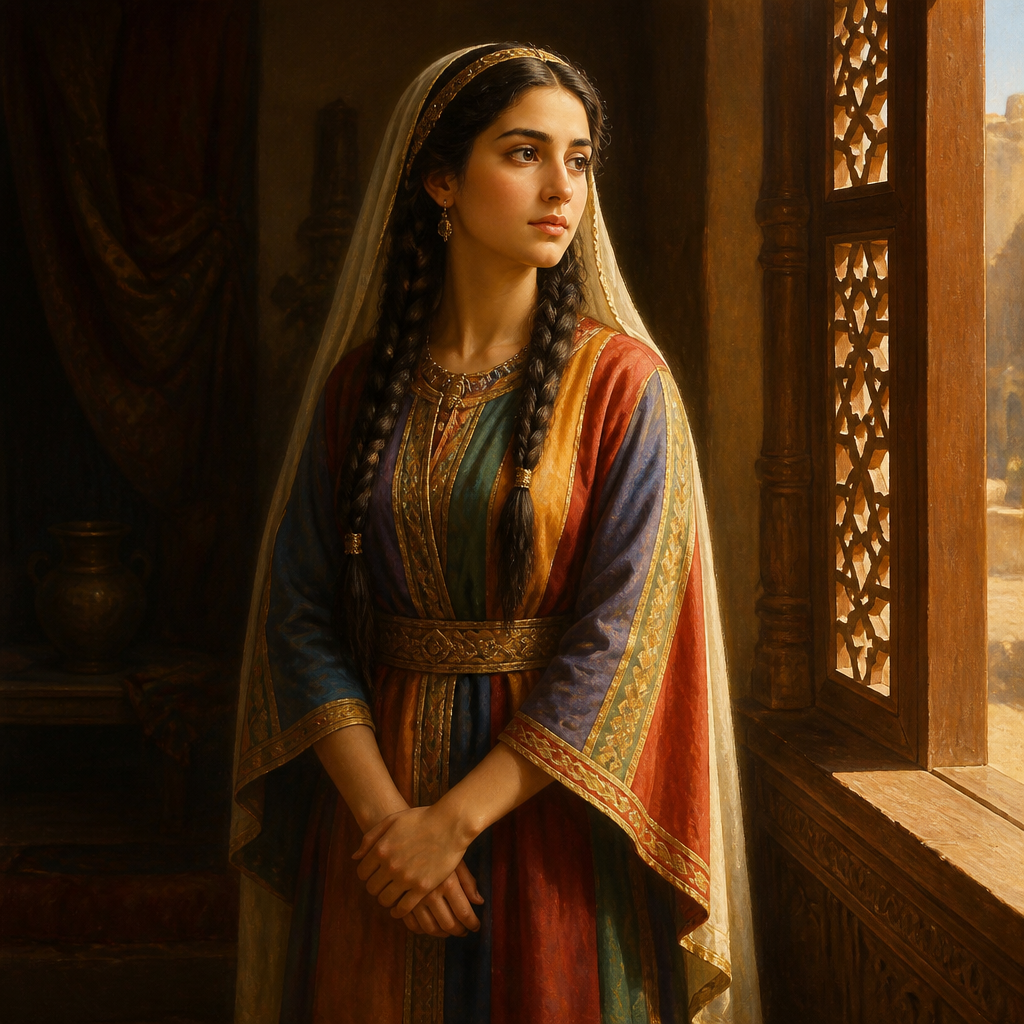
Growing up in the royal court, Tamar lived as a virgin princess, distinguished by the "richly ornamented robe" (or a long-sleeved robe) typically worn by the king’s virgin daughters. Her family environment was complex, consisting of numerous half-brothers including Amnon (the firstborn), Solomon, Adonijah, and Nathan. The biblical text emphasizes her beauty, a trait she shared with her brother Absalom, which unfortunately became the catalyst for the tragedy that followed.
Major Life Events
The central narrative of Tamar’s life begins with the lust of her half-brother Amnon, the heir apparent to the throne. Amnon became "sick with frustration" because of his desire for Tamar, but because she was a virgin and well-guarded, he found it impossible to approach her. Upon the advice of his cunning cousin Jonadab, Amnon feigned illness and requested that King David send Tamar to prepare food for him.
David, unaware of Amnon’s true intentions, sent Tamar to Amnon’s house. The biblical account details her obedience and skill as she kneaded dough and baked cakes in his presence. When the food was ready, Amnon ordered all attendants to leave and forced Tamar into his bedroom. Tamar’s response was one of courageous reason; she pleaded with him, saying:
"No, my brother! Do not force me, for such a thing ought not to be done in Israel. Do not do this disgraceful thing! Where could I carry my shame? And as for you, you would be like one of the fools in Israel."
Despite her plea and her suggestion to speak to the king—believing David might permit a legal union—Amnon refused to listen and violated her. Immediately following the act, Amnon’s lust turned to intense hatred. He had her forcibly ejected from his house by his servant.
In a profound expression of grief and public protest, Tamar put ashes on her head, tore her ornate royal robe, and went away crying bitterly with her hand on her head. This public display of mourning and the loss of her virginity signaled the end of her prospects for a traditional marriage and future.
Relationship to Other Biblical Figures
Tamar’s primary relationships were defined by the contrasting actions of her brothers. While Amnon was her violator, Absalom became her protector and eventually her avenger. Upon seeing her distress, Absalom counseled her to remain quiet and live in his house, though the text notes he harbored a deep, silent hatred for Amnon.
King David’s role in Tamar’s life is portrayed as one of passive failure. Although 2 Samuel 13:21 notes that David was "very angry" when he heard of the incident, the text does not record him taking any punitive action against his firstborn son, Amnon. This lack of justice drove Absalom to take matters into his own hands. Two years later, Absalom orchestrated the assassination of Amnon during a sheep-shearing festival, an act of vengeance that eventually led to Absalom’s rebellion against David.
Throughout these tumultuous years, Tamar remained in Absalom’s house as a "desolate woman." The biblical record provides no further details of her life after the murder of Amnon, focusing instead on the political fallout of the event.
Spiritual Significance
In the broader context of the United Monarchy, Tamar’s story serves as a tragic fulfillment of the divine judgment pronounced by the prophet Nathan following David’s sin with Bathsheba. The violence within the home—specifically the sexual sin and the subsequent fratricide—mirrors the patterns of David’s own transgressions.
From a scholarly perspective, Tamar represents the vulnerable individuals who suffer due to the failures of leadership and the breakdown of moral law within the covenant community. Her articulate defense of "what is done in Israel" highlights her commitment to the social and moral standards of her people, even when those in power abandoned them. While the biblical text leaves her in a state of desolation, her presence in the genealogies of 1 Chronicles ensures that her place in the history of the Davidic line is never forgotten.
Theologically, Tamar's narrative illustrates the devastating consequences of unchecked lust and the failure of justice within the covenant community. Her story is a stark reminder that even within the 'golden age' of the United Monarchy, the royal household was marred by the same sins that plagued the common people. Tamar's cry for justice and her refusal to be silenced by shame serve as a literary and moral indictment of David's domestic failures.
Furthermore, Tamar is significant as one of the few women named in the Davidic genealogies. Her inclusion in 1 Chronicles 3:9 alongside David's nineteen sons underscores her importance to the identity of the tribe of Judah and the house of David. She stands as a figure of suffering and unrectified wrong, whose story catalyzed the most significant internal crisis of David's reign.
Frequently Asked Questions
Who was Tamar's mother?
Tamar was the daughter of Maacah, who was the daughter of Talmai, King of Geshur. This made her a princess of both Israel and Geshur.
What did Tamar's ornate robe represent?
According to 2 Samuel 13:18, the richly ornamented or long-sleeved robe was the traditional garment worn by the virgin daughters of the king. Tearing it was a sign of extreme grief and the loss of her status.
How did King David react to the violation of Tamar?
The Bible states that David was very angry, but he did not punish Amnon. This lack of disciplinary action is often cited as the reason Absalom decided to kill Amnon himself.
What happened to Tamar after Amnon was killed?
The biblical text does not provide details on her later life, only stating that she lived as a 'desolate woman' in the house of her brother Absalom.
Was Tamar related to Solomon?
Yes, Solomon was one of Tamar's half-brothers, as both were children of King David by different mothers.
Family & Relationships
Parents
 DavidFather1 Chronicles 3:9Stated
 Maacah, Daughter of King TalmaiMother2 Samuel 3:3
Inferred
Reconstructed through Absalom: 2 Samuel 13:4 ties Tamar to Absalom; 2 Samuel 3:3 ties Absalom to Maacah. No verse states the mother link between Tamar and Maacah directly.Evidence: 2 Samuel 3:3; 1 Chronicles 3:2; 2 Samuel 13:4; 2 Samuel 13:20; 2 Samuel 13:32
 Tamar, Daughter of DavidThis page
 AbsalomBrother2 Samuel 13:4Stated
 Adonijah, Son of DavidBrother2 Samuel 3:4
Inferred
Reconstructed through Solomon and David: 1 Kings 2:22 ties Adonijah to Solomon; 2 Samuel 12:24 ties Solomon to David; 1 Chronicles 3:9 ties David to Tamar. No verse states the sister link between Adonijah and Tamar directly.Evidence: 2 Samuel 3:4; 1 Chronicles 3:9
 Amnon, Firstborn Son of DavidBrother2 Samuel 13:2Stated
 ChileabBrother2 Samuel 3:2
Inferred
Reconstructed through Absalom: 2 Samuel 13:4 ties Tamar to Absalom; 2 Samuel 3:3 ties Absalom to Chileab. No verse states the brother link between Tamar and Chileab directly.Evidence: 2 Samuel 3:2; 1 Chronicles 3:9
 Eliada, Son of DavidBrother1 Chronicles 3:4–9Stated
 Eliphelet, Son of DavidBrother1 Chronicles 3:6–9Stated
 Elishama, Son of DavidBrother1 Chronicles 3:4–9Stated
 ElishuaBrother1 Chronicles 3:6–9Stated
 IbharBrother1 Chronicles 3:6–9Stated
 IthreamBrother2 Samuel 3:5
Inferred
Reconstructed through David: 2 Samuel 3:5 ties Ithream to David; 1 Chronicles 3:9 ties David to Tamar. No verse states the sister link between Ithream and Tamar directly.Evidence: 2 Samuel 3:5; 1 Chronicles 3:9
 Japhia, Son of DavidBrother1 Chronicles 3:4–9Stated
 Nathan, Son of DavidBrother1 Chronicles 3:9
Inferred
Reconstructed through David: Luke 3:31 ties Nathan to David; 1 Chronicles 3:9 ties David to Tamar. No verse states the sister link between Nathan and Tamar directly.Evidence: 1 Chronicles 3:9; Luke 3:31
 Nepheg, Son of DavidBrother1 Chronicles 3:4–9Stated
 Shammua, Son of DavidBrother2 Samuel 5:14
Inferred
Reconstructed through David and Solomon: 1 Chronicles 3:9 ties Tamar to David; 2 Samuel 12:24 ties David to Solomon; 2 Samuel 5:14 ties Solomon to Shammua (itself an inferred link). No verse states the brother link between Tamar and Shammua directly.Evidence: 2 Samuel 5:14
 Shephatiah, Son of DavidBrother2 Samuel 3:4
Inferred
No verse names Tamar and Shephatiah together; the brother link is carried from the surrounding genealogy and is not stated in Scripture.Evidence: 2 Samuel 3:4; 1 Chronicles 3:9
 Shobab, Son of DavidBrother1 Chronicles 3:4–9Stated
 SolomonBrother1 Chronicles 3:9–10Stated
 ElpeletBrother2 Samuel 13:1
Inferred
No verse names Elpelet and Tamar together; the sister link is carried from the surrounding genealogy and is not stated in Scripture.Evidence: 2 Samuel 13:1
 NogahBrother1 Chronicles 3:4–9Stated
 Jerimoth, Son of DavidBrother1 Chronicles 3:9
Inferred
Reconstructed through David: 1 Chronicles 3:9 ties Tamar to David; 2 Chronicles 11:18 ties David to Jerimoth. No verse states the brother link between Tamar and Jerimoth directly.Evidence: 1 Chronicles 3:9; 2 Chronicles 11:18
Connected Figures
Family
Father · 1 Chronicles 3:9
The second king of the United Monarchy of Israel, a shepherd-warrior and psalmist known as a man after God's own heart.
United MonarchyFirst: Ruth 4:17998 versesKing of Israel, Shepherd, Musician, WarriorJudah
Mother · 2 Samuel 3:3
A foreign princess and wife of King David who became the mother of Absalom and Tamar during the United Monarchy.
United MonarchyFirst: 2 Samuel 3:38 versesQueen Consort of Israel
Brother · 2 Samuel 13:4
The third son of King David, Absalom was a charismatic prince who staged a major rebellion against his father and was ultimately killed in battle by Joab.
United MonarchyFirst: 2 Samuel 3:3104 versesPrince / Rebel LeaderJudah
Brother · 2 Samuel 3:4
The fourth son of King David, Adonijah attempted to seize the throne of Israel during his father's final days, ultimately failing and meeting his execution under King Solomon.
United MonarchyFirst: 2 Samuel 3:434 versesPrince of IsraelJudah
Brother · 2 Samuel 13:2
The firstborn son of King David, Amnon is primarily known for the violation of his half-sister Tamar, an act that triggered a bloody cycle of revenge within the royal family.
United MonarchyFirst: 2 Samuel 3:232 versesPrince and heir apparentJudah
Brother · 2 Samuel 3:2
Chileab was the second son of King David, born in Hebron to Abigail the widow of Nabal of Carmel during the United Monarchy.
United MonarchyFirst: 2 Samuel 3:313 versesPrince of IsraelJudah
Brother · 1 Chronicles 3:4–9
Eliada was a son of King David born in Jerusalem, listed among the children of the United Monarchy period.
United MonarchyFirst: 2 Samuel 5:1616 versesPrince of IsraelJudah
Brother · 1 Chronicles 3:6–9
Eliphelet was a son of King David, born in Jerusalem during the United Monarchy, and is listed among the royal children in the books of Samuel and Chronicles.
United MonarchyFirst: 2 Samuel 5:1615 versesPrince of IsraelJudah
Brother · 1 Chronicles 3:4–9
A son of King David born in Jerusalem during the United Monarchy and listed among the royal descendants in the books of Samuel and Chronicles.
United MonarchyFirst: 2 Samuel 5:1616 versesPrince of IsraelJudah
Brother · 1 Chronicles 3:6–9
A son of King David born in Jerusalem during the early years of the United Monarchy.
United MonarchyFirst: 2 Samuel 5:1514 versesPrince of IsraelJudah
Brother · 1 Chronicles 3:6–9
Ibhar was a son of King David, born in Jerusalem during the era of the United Monarchy.
United MonarchyFirst: 2 Samuel 5:1514 versesPrince of IsraelJudah
Brother · 2 Samuel 3:5
The sixth son of King David, born to his wife Eglah during David's seven-year reign in Hebron.
United MonarchyFirst: 2 Samuel 3:512 versesPrince of IsraelJudah
Categories
Mentions by Book
- 2 Samuel19
- 1 Chronicles8
- 2 Chronicles1
Scripture References
All 28 indexed verses, in canonical order, from the Berean Standard Bible.
- 2 Samuel 3:2Partial
And sons were born to David in Hebron: His firstborn was Amnon, by Ahinoam of Jezreel;
Cited as evidence on a family card; added so References, Key Verses and Mentions by Book share one index.
- 2 Samuel 3:3Partial
his second was Chileab, by Abigail the widow of Nabal of Carmel; his third was Absalom, the son of Maacah daughter of King Talmai of Geshur;
Cited as evidence on a family card; added so References, Key Verses and Mentions by Book share one index.
- 2 Samuel 3:4Partial
his fourth was Adonijah, the son of Haggith; his fifth was Shephatiah, the son of Abital;
Cited as evidence on a family card; added so References, Key Verses and Mentions by Book share one index.
- 2 Samuel 3:5Partial
and his sixth was Ithream, by David’s wife Eglah. These sons were born to David in Hebron.
Cited as evidence on a family card; added so References, Key Verses and Mentions by Book share one index.
- 2 Samuel 5:14Partial
These are the names of the children born to him in Jerusalem: Shammua, Shobab, Nathan, Solomon,
Cited as evidence on a family card; added so References, Key Verses and Mentions by Book share one index.
- 2 Samuel 13:1
After some time, David’s son Amnon fell in love with Tamar, the beautiful sister of David’s son Absalom.
- 2 Samuel 13:2
Amnon was sick with frustration over his sister Tamar, for she was a virgin, and it seemed implausible for him to do anything to her.
- 2 Samuel 13:4
and he asked Amnon, “Why are you, the son of the king, so depressed morning after morning? Won’t you tell me?” Amnon replied, “I am in love with Tamar, my brother Absalom’s sister.”
- 2 Samuel 13:5
Jonadab told him, “Lie down on your bed and pretend you are ill. When your father comes to see you, say to him, ‘Please let my sister Tamar come and give me something to eat. Let her prepare it in my sight so I may watch her and eat it from her hand.’”
- 2 Samuel 13:6
So Amnon lay down and feigned illness. When the king came to see him, Amnon said, “Please let my sister Tamar come and make a couple of cakes in my sight, so that I may eat from her hand.”
- 2 Samuel 13:7
Then David sent word to Tamar at the palace: “Please go to the house of Amnon your brother and prepare a meal for him.”
- 2 Samuel 13:8
So Tamar went to the house of her brother Amnon, who was lying down. She took some dough, kneaded it, made cakes in his sight, and baked them.
- 2 Samuel 13:10Partial
Then Amnon said to Tamar, “Bring the food into the bedroom, so that I may eat it from your hand.” Tamar took the cakes she had made and went to her brother Amnon’s bedroom.
- 2 Samuel 13:12Partial
“No, my brother!” she cried. “Do not violate me, for such a thing should never be done in Israel. Do not do this disgraceful thing!
Cited as a key verse; added so References, Key Verses and Mentions by Book share one index.
- 2 Samuel 13:13Partial
Where could I ever take my shame? And you would be like one of the fools in Israel! Please speak to the king, for he will not withhold me from you.”
Cited as a key verse; added so References, Key Verses and Mentions by Book share one index.
- 2 Samuel 13:19
And Tamar put ashes on her head and tore her robe. And putting her hand on her head, she went away crying aloud.
- 2 Samuel 13:20
Her brother Absalom said to her, “Has your brother Amnon been with you? Be quiet for now, my sister. He is your brother. Do not take this thing to heart.” So Tamar lived as a desolate woman in the house of her brother Absalom.
- 2 Samuel 13:22
And Absalom never said a word to Amnon, either good or bad, because he hated Amnon for violating his sister Tamar.
- 2 Samuel 13:32
But Jonadab, the son of David’s brother Shimeah, spoke up: “My lord must not think they have killed all the sons of the king, for only Amnon is dead. In fact, Absalom has planned this since the day Amnon violated his sister Tamar.
- 1 Chronicles 3:2Partial
the third was Absalom the son of Maacah daughter of King Talmai of Geshur; the fourth was Adonijah the son of Haggith;
Cited as evidence on a family card; added so References, Key Verses and Mentions by Book share one index.
- 1 Chronicles 3:4Partial
These six sons were born to David in Hebron, where he reigned seven years and six months. And David reigned in Jerusalem thirty-three years,
Cited as evidence on a family card; added so References, Key Verses and Mentions by Book share one index.
- 1 Chronicles 3:5Partial
and these sons were born to him in Jerusalem: Shimea, Shobab, Nathan, and Solomon. These four were born to him by Bathsheba daughter of Ammiel.
Cited as evidence on a family card; added so References, Key Verses and Mentions by Book share one index.
- 1 Chronicles 3:6Partial
David’s other sons were Ibhar, Elishua, Eliphelet,
Cited as evidence on a family card; added so References, Key Verses and Mentions by Book share one index.
- 1 Chronicles 3:7Partial
Nogah, Nepheg, Japhia,
Cited as evidence on a family card; added so References, Key Verses and Mentions by Book share one index.
- 1 Chronicles 3:8Partial
Elishama, Eliada, and Eliphelet—nine in all.
Cited as evidence on a family card; added so References, Key Verses and Mentions by Book share one index.
- 1 Chronicles 3:9
These were all the sons of David, besides the sons by his concubines. And Tamar was their sister.
- 1 Chronicles 3:10Partial
Solomon’s son was Rehoboam: Abijah was his son, Asa his son, Jehoshaphat his son,
Cited as evidence on a family card; added so References, Key Verses and Mentions by Book share one index.
- 2 Chronicles 11:18Partial
And Rehoboam married Mahalath, who was the daughter of David’s son Jerimoth and of Abihail, the daughter of Jesse’s son Eliab.
Cited as evidence on a family card; added so References, Key Verses and Mentions by Book share one index.
Others Named Tamar
Compare all 3 bearers →Tamar, Daughter-in-law of JudahGenesis 38:6
A resourceful woman of the Patriarchal period who secured her place in the messianic lineage by bearing twins to her father-in-law, Judah.
Tamar, Daughter of Absalom2 Samuel 14:27
A woman of the United Monarchy known for her beauty and status as the daughter of Absalom and the mother of Queen Maacah.