Elishua
Who was Elishua in the Bible?
A son of King David born in Jerusalem during the early years of the United Monarchy.
Elishua was a prince of Israel during the United Monarchy, specifically one of the sons born to King David after he established Jerusalem as his capital. His name, derived from the Hebrew roots 'El' (God) and 'shua' (wealth or salvation), likely signifies 'God is my salvation' or 'God is my fortune,' reflecting the religious optimism of David’s early reign. Elishua is primarily known to history through the genealogical records of the Davidic dynasty found in the books of Samuel and Chronicles.
While Elishua did not ascend to the throne, his inclusion in the official royal registers underscores the expansion of David’s household and the fulfillment of the divine promise regarding the proliferation of David’s lineage. He is listed among the siblings who grew up in the royal court, witnessing the transition of Israel from a collection of tribes into a centralized regional power. Despite the lack of recorded personal exploits, his presence in the biblical text serves a vital structural role in documenting the house of David.
Background and Family
Elishua appears in the biblical record during a pivotal era of Israel’s history—the consolidation of the United Monarchy under King David. Following David’s departure from Hebron and his conquest of the Jebusite stronghold of Jerusalem, the biblical narrative notes a significant expansion of the royal family. Elishua is explicitly identified as one of the children born to David in Jerusalem (2 Samuel 5:13–15).
According to the genealogical lists in 2 Samuel 5, 1 Chronicles 3, and 1 Chronicles 14, Elishua was born to David’s wives and concubines taken in Jerusalem. While his specific mother is not named individually in the primary lists, he is categorized among the sons born in the new capital, distinguishing him from his older half-brothers like Amnon and Absalom who were born in Hebron. His immediate siblings and half-siblings included prominent historical figures such as Solomon, Nathan, and Tamar.
Major Life Events
The biblical text does not record specific deeds, military campaigns, or political roles for Elishua. His life is defined by his status as a royal son within the court of Jerusalem. In the lists provided in 2 Samuel 5:15 and 1 Chronicles 3:6, Elishua is consistently placed between Ibhar and either Eliphelet or Nepheg. This positioning suggests his relative birth order among the Jerusalem-born sons.
Living in the court of David, Elishua would have been witness to the arrival of the Ark of the Covenant in Jerusalem and the various internal struggles that characterized David’s later reign. However, unlike his brothers Amnon, Absalom, and Adonijah, Elishua is never mentioned in connection with the various revolts or succession crises that plagued the family. The silence of the text regarding his adult life suggests he may have died young, remained a loyal member of the court without political ambition, or simply occupied a standard administrative role that did not warrant narrative focus.
Relationship to Other Biblical Figures
Elishua’s primary significance lies in his relation to the Davidic line. As a son of David, he was a member of the tribe of Judah and part of the immediate family of the man whom the Bible describes as being "after God’s own heart." He was a brother to the future King Solomon, through whom the Messianic line would eventually proceed. The genealogical records list him alongside siblings such as Shammua, Shobab, and Nathan, as well as several brothers who shared similar names, such as Elishama and Eliphelet.
Spiritual Significance
Although Elishua is a minor figure in terms of narrative action, his inclusion in the Bible is theologically significant. The repetitive listing of David’s sons across three different passages (2 Samuel 5, 1 Chronicles 3, and 1 Chronicles 14) emphasizes the theme of God’s blessing upon the Davidic house. In the Ancient Near East, a large number of healthy sons was viewed as a direct sign of divine favor and political stability. By documenting Elishua, the chroniclers demonstrate that God was faithful to multiply David’s seed, providing a physical manifestation of the Davidic Covenant established in 2 Samuel 7. Elishua represents one thread in the large tapestry of the family from which the ultimate 'Son of David' would eventually emerge.
Elishua’s significance is primarily genealogical and structural. His presence in three distinct lists of David's children confirms the historical reality of David's expanding household in Jerusalem. Theologically, he represents the fulfillment of God’s promise to establish David’s house, contributing to the legal and biological record of the royal lineage of Judah.
Additionally, Elishua’s name—meaning 'God is salvation'—serves as a linguistic marker of the Yahwistic faith prevalent in David's court. While his life remains hidden in the shadows of his more famous brothers, he stands as a testament to the preservation of the Davidic line through the centuries.
Frequently Asked Questions
Who was Elishua's father?
Elishua was the son of King David, the second king of the United Monarchy of Israel.
Where was Elishua born?
According to 2 Samuel 5:13-16, Elishua was born in Jerusalem after David moved his capital there from Hebron.
What does the name Elishua mean?
The name Elishua (אֱלִישׁוּעַ) is generally translated from Hebrew as 'God is my salvation' or 'God is wealth.'
Did Elishua ever become king?
No, Elishua was one of David's younger sons and is not recorded as having ever held the throne; his half-brother Solomon eventually succeeded David.
In which books of the Bible is Elishua mentioned?
Elishua is mentioned in 2 Samuel, 1 Chronicles 3, and 1 Chronicles 14.
Family & Relationships
Parents
 DavidFather1 Chronicles 3:6Stated
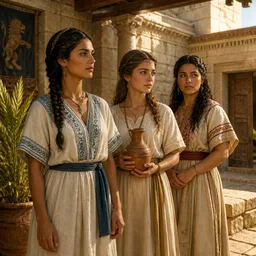 Jerusalem Wives of DavidMother2 Samuel 5:15
Inferred
No verse names Jerusalem Wives and Elishua together; the son link is carried from the surrounding genealogy and is not stated in Scripture.Evidence: 2 Samuel 5:15
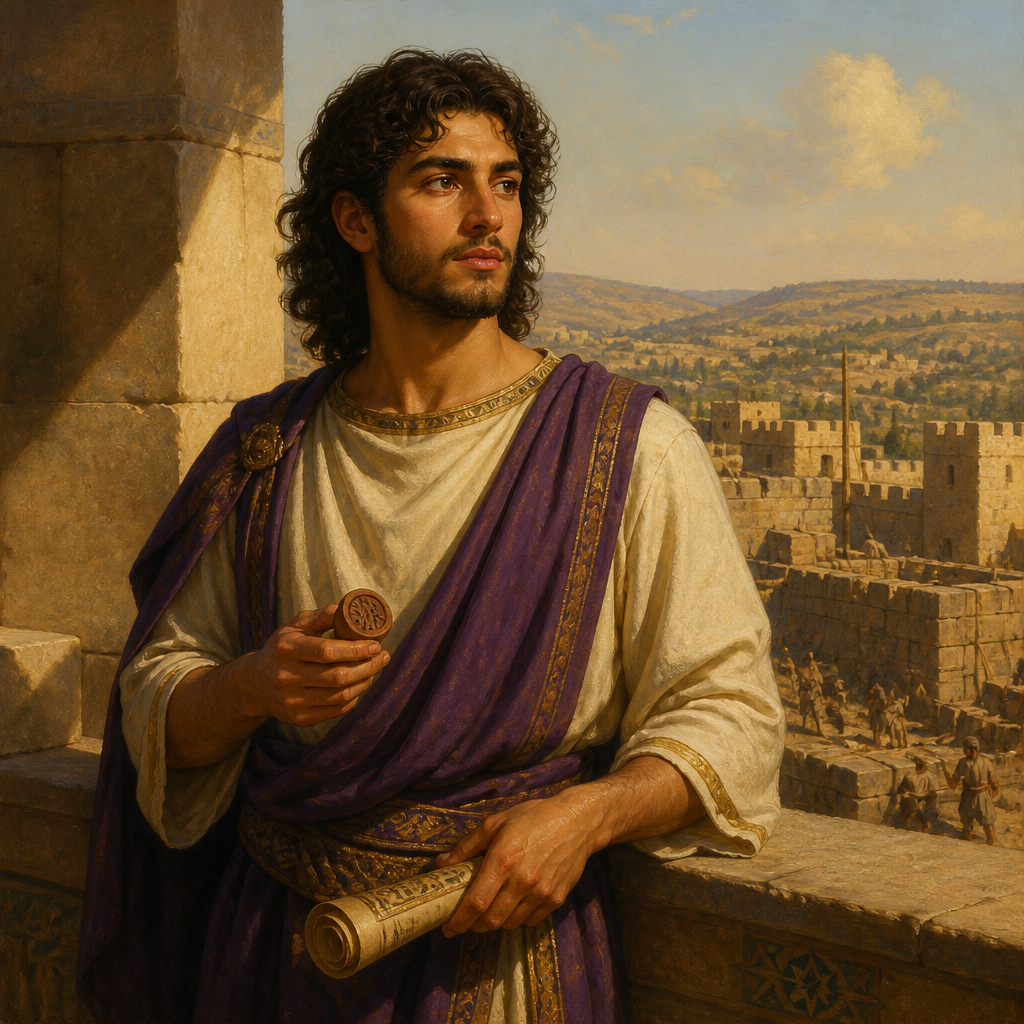 ElishuaThis page
 AbsalomBrother2 Samuel 13:1
Inferred
Reconstructed through David: 2 Samuel 13:1 ties Absalom to David; 1 Chronicles 3:6 ties David to Elishua. No verse states the brother link between Absalom and Elishua directly.Evidence: 2 Samuel 13:1; 1 Chronicles 3:6
 Adonijah, Son of DavidBrother2 Samuel 3:4
Inferred
Reconstructed through Solomon and David: 1 Kings 2:22 ties Adonijah to Solomon; 2 Samuel 12:24 ties Solomon to David; 1 Chronicles 3:6 ties David to Elishua. No verse states the brother link between Adonijah and Elishua directly.Evidence: 2 Samuel 3:4; 1 Chronicles 3:6
 Amnon, Firstborn Son of DavidBrother2 Samuel 13:1
Inferred
Reconstructed through David: 2 Samuel 3:2 ties Amnon to David; 1 Chronicles 3:6 ties David to Elishua. No verse states the brother link between Amnon and Elishua directly.Evidence: 2 Samuel 13:1; 1 Chronicles 3:6
 ChileabBrother2 Samuel 3:2
Inferred
Reconstructed through Abigail and David: 2 Samuel 3:3 ties Chileab to Abigail (itself an inferred link); 1 Samuel 25:39 ties Abigail to David; 1 Chronicles 3:6 ties David to Elishua. No verse states the brother link between Chileab and Elishua directly.Evidence: 2 Samuel 3:2; 1 Chronicles 3:6
 Eliada, Son of DavidBrother1 Chronicles 3:6–8Stated
 Eliphelet, Son of DavidBrother1 Chronicles 3:6Stated
 Elishama, Son of DavidBrother1 Chronicles 3:6–8Stated
 IbharBrother1 Chronicles 3:6Stated
 IthreamBrother2 Samuel 3:5
Inferred
Reconstructed through David: 1 Chronicles 3:6 ties Elishua to David; 2 Samuel 3:5 ties David to Ithream. No verse states the brother link between Elishua and Ithream directly.Evidence: 2 Samuel 3:5; 1 Chronicles 3:6
 Japhia, Son of DavidBrother1 Chronicles 3:6–7Stated
 Nathan, Son of DavidBrother1 Chronicles 3:5–6Stated
 Nepheg, Son of DavidBrother1 Chronicles 3:6–7Stated
 Shammua, Son of DavidBrother2 Samuel 5:14
Inferred
Reconstructed through David and Solomon: 1 Chronicles 3:6 ties Elishua to David; 2 Samuel 12:24 ties David to Solomon; 2 Samuel 5:14 ties Solomon to Shammua (itself an inferred link). No verse states the brother link between Elishua and Shammua directly.Evidence: 2 Samuel 5:14
 Shephatiah, Son of DavidBrother2 Samuel 3:4
Inferred
No verse names Shephatiah and Elishua together; the brother link is carried from the surrounding genealogy and is not stated in Scripture.Evidence: 2 Samuel 3:4; 1 Chronicles 3:6
 Shobab, Son of DavidBrother1 Chronicles 3:5–6Stated
 SolomonBrother1 Chronicles 3:5–6Stated
 Tamar, Daughter of DavidSister1 Chronicles 3:6–9Stated
 ElpeletBrother2 Samuel 5:15
Inferred
No verse names Elpelet and Elishua together; the brother link is carried from the surrounding genealogy and is not stated in Scripture.Evidence: 2 Samuel 5:15
 NogahBrother1 Chronicles 3:6–7Stated
 Jerimoth, Son of DavidBrother1 Chronicles 3:6
Inferred
Reconstructed through David: 1 Chronicles 3:6 ties Elishua to David; 2 Chronicles 11:18 ties David to Jerimoth. No verse states the brother link between Elishua and Jerimoth directly.Evidence: 1 Chronicles 3:6; 2 Chronicles 11:18
Connected Figures
Family
Father · 1 Chronicles 3:6
The second king of the United Monarchy of Israel, a shepherd-warrior and psalmist known as a man after God's own heart.
United MonarchyFirst: Ruth 4:17998 versesKing of Israel, Shepherd, Musician, WarriorJudah
Mother · 2 Samuel 5:15
A group of women from the tribe of Judah who married King David after his move to Jerusalem, mothering several of his sons.
United MonarchyFirst: 2 Samuel 5:136 versesRoyal ConsortsJudah
Brother · 2 Samuel 13:1
The third son of King David, Absalom was a charismatic prince who staged a major rebellion against his father and was ultimately killed in battle by Joab.
United MonarchyFirst: 2 Samuel 3:3104 versesPrince / Rebel LeaderJudah
Brother · 2 Samuel 3:4
The fourth son of King David, Adonijah attempted to seize the throne of Israel during his father's final days, ultimately failing and meeting his execution under King Solomon.
United MonarchyFirst: 2 Samuel 3:434 versesPrince of IsraelJudah
Brother · 2 Samuel 13:1
The firstborn son of King David, Amnon is primarily known for the violation of his half-sister Tamar, an act that triggered a bloody cycle of revenge within the royal family.
United MonarchyFirst: 2 Samuel 3:232 versesPrince and heir apparentJudah
Brother · 2 Samuel 3:2
Chileab was the second son of King David, born in Hebron to Abigail the widow of Nabal of Carmel during the United Monarchy.
United MonarchyFirst: 2 Samuel 3:313 versesPrince of IsraelJudah
Brother · 1 Chronicles 3:6–8
Eliada was a son of King David born in Jerusalem, listed among the children of the United Monarchy period.
United MonarchyFirst: 2 Samuel 5:1616 versesPrince of IsraelJudah
Brother · 1 Chronicles 3:6
Eliphelet was a son of King David, born in Jerusalem during the United Monarchy, and is listed among the royal children in the books of Samuel and Chronicles.
United MonarchyFirst: 2 Samuel 5:1615 versesPrince of IsraelJudah
Brother · 1 Chronicles 3:6–8
A son of King David born in Jerusalem during the United Monarchy and listed among the royal descendants in the books of Samuel and Chronicles.
United MonarchyFirst: 2 Samuel 5:1616 versesPrince of IsraelJudah
Brother · 1 Chronicles 3:6
Ibhar was a son of King David, born in Jerusalem during the era of the United Monarchy.
United MonarchyFirst: 2 Samuel 5:1514 versesPrince of IsraelJudah
Brother · 2 Samuel 3:5
The sixth son of King David, born to his wife Eglah during David's seven-year reign in Hebron.
United MonarchyFirst: 2 Samuel 3:512 versesPrince of IsraelJudah
Brother · 1 Chronicles 3:6–7
Japhia was a son of King David born in Jerusalem, listed among the children born to David after he established his throne in the holy city.
United MonarchyFirst: 2 Samuel 5:1515 versesPrince of IsraelJudah
Categories
Mentions by Book
- 2 Samuel7
- 1 Chronicles6
- 2 Chronicles1
Scripture References
All 14 indexed verses, in canonical order, from the Berean Standard Bible.
2 Samuel · 7
- 2 Samuel 3:2Partial
And sons were born to David in Hebron: His firstborn was Amnon, by Ahinoam of Jezreel;
Cited as evidence on a family card; added so References, Key Verses and Mentions by Book share one index.
- 2 Samuel 3:4Partial
his fourth was Adonijah, the son of Haggith; his fifth was Shephatiah, the son of Abital;
Cited as evidence on a family card; added so References, Key Verses and Mentions by Book share one index.
- 2 Samuel 3:5Partial
and his sixth was Ithream, by David’s wife Eglah. These sons were born to David in Hebron.
Cited as evidence on a family card; added so References, Key Verses and Mentions by Book share one index.
- 2 Samuel 5:13Partial
After he had arrived from Hebron, David took more concubines and wives from Jerusalem, and more sons and daughters were born to him.
Cited as evidence on a family card; added so References, Key Verses and Mentions by Book share one index.
- 2 Samuel 5:14Partial
These are the names of the children born to him in Jerusalem: Shammua, Shobab, Nathan, Solomon,
Cited as evidence on a family card; added so References, Key Verses and Mentions by Book share one index.
- 2 Samuel 5:15
Ibhar, Elishua, Nepheg, Japhia,
- 2 Samuel 13:1Partial
After some time, David’s son Amnon fell in love with Tamar, the beautiful sister of David’s son Absalom.
Cited as evidence on a family card; added so References, Key Verses and Mentions by Book share one index.
1 Chronicles · 6
- 1 Chronicles 3:5Partial
and these sons were born to him in Jerusalem: Shimea, Shobab, Nathan, and Solomon. These four were born to him by Bathsheba daughter of Ammiel.
Cited as evidence on a family card; added so References, Key Verses and Mentions by Book share one index.
- 1 Chronicles 3:6
David’s other sons were Ibhar, Elishua, Eliphelet,
- 1 Chronicles 3:7Partial
Nogah, Nepheg, Japhia,
Cited as evidence on a family card; added so References, Key Verses and Mentions by Book share one index.
- 1 Chronicles 3:8Partial
Elishama, Eliada, and Eliphelet—nine in all.
Cited as evidence on a family card; added so References, Key Verses and Mentions by Book share one index.
- 1 Chronicles 3:9Partial
These were all the sons of David, besides the sons by his concubines. And Tamar was their sister.
Cited as evidence on a family card; added so References, Key Verses and Mentions by Book share one index.
- 1 Chronicles 14:5
Ibhar, Elishua, Elpelet,
2 Chronicles · 1
- 2 Chronicles 11:18Partial
And Rehoboam married Mahalath, who was the daughter of David’s son Jerimoth and of Abihail, the daughter of Jesse’s son Eliab.
Cited as evidence on a family card; added so References, Key Verses and Mentions by Book share one index.