Shephatiah, Son of David
Who was Shephatiah, Son of David, in the Bible?
Shephatiah was the fifth son of King David, born in Hebron to his wife Abital during the early years of the United Monarchy.
This is one of 9 people named Shephatiah in the Bible. See all 9 →
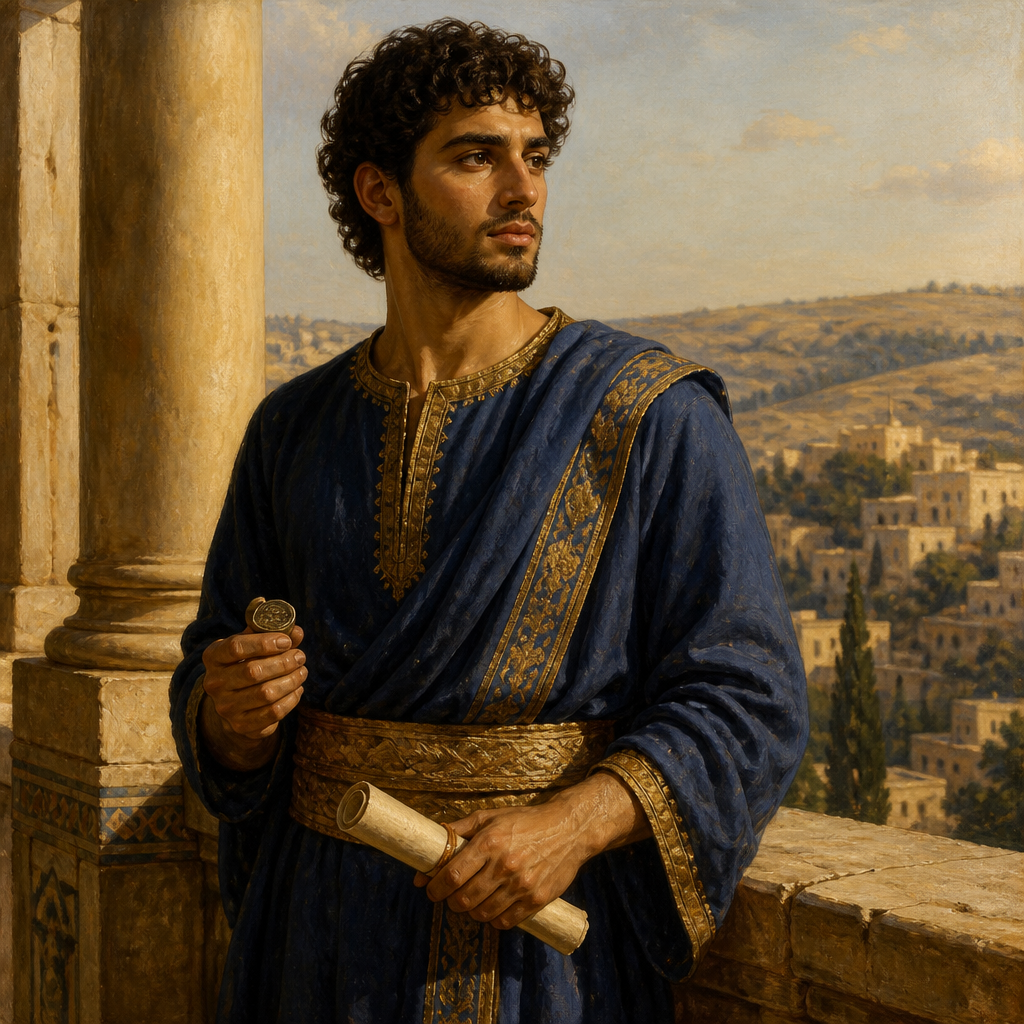
Shephatiah was a prince of the United Monarchy of Israel, identified in the biblical record as the fifth son born to King David. His birth occurred during David's seven-and-a-half-year reign in Hebron, a pivotal period before the king consolidated his power over all twelve tribes and established Jerusalem as the national capital.
Though his name—which translates to 'the LORD has judged' or 'Judged of God'—suggests a significant spiritual acknowledgement of God’s sovereignty, Shephatiah remains a background figure in the biblical narrative. He is primarily known through formal genealogical records that establish the dynastic line of the House of David and the Tribe of Judah.
Background and Family
Shephatiah was born during a tumultuous yet formative era in Israel’s history. Following the death of King Saul, David was anointed king over the house of Judah and established his seat of government in Hebron. It was during these years in Hebron that David’s family expanded significantly. According to 2 Samuel 3:2–5 and 1 Chronicles 3:1–4, David fathered six sons by six different wives while residing there.
Shephatiah was the fifth of these sons. His mother was Abital, a woman who appears in the biblical text only in relation to Shephatiah’s birth. The text does not provide Abital's lineage or geographic origin, unlike other wives of David such as Ahinoam of Jezreel or Abigail of Carmel. This lack of detail regarding his maternal ancestry leaves Shephatiah’s specific domestic influence largely to the realm of historical silence, though as a son of a queen-consort, he would have held high status within the Judean court.
Major Life Events
The biblical record does not preserve specific deeds, military exploits, or political maneuvers attributed to Shephatiah. His primary significance in the text is his inclusion in the official registers of the Davidic line. Being born in Hebron (c. 1005–1000 BC), he would have witnessed the transition of the kingdom from a regional Judean power to a unified national empire.
He was part of a royal household marked by both immense promise and severe internal strife. As the fifth son, Shephatiah stood in the line of succession behind his older brothers Amnon, Chileab, Absalom, and Adonijah. While the Bible records the violent ends or political ambitions of several of his brothers—Amnon’s murder, Absalom’s rebellion, and Adonijah’s failed coup—Shephatiah is not mentioned as a participant in these dynastic struggles. This absence may suggest a life of quiet loyalty, a lack of political ambition, or perhaps a shorter lifespan, though the scriptures provide no definitive cause for his omission from the later narratives of David’s reign.
Relationship to Other Biblical Figures
Shephatiah’s identity is defined by his relationships to the central figures of the United Monarchy. He was a younger half-brother to Amnon (David’s firstborn) and Absalom. He was also a half-brother to Solomon, who would eventually take the throne.
His position as the fifth son placed him in a unique middle-ground among the Hebron-born princes. While the elder three (Amnon, Chileab, and Absalom) and the fourth (Adonijah) are prominent due to their birthright or their conflicts, Shephatiah and the sixth son, Ithream, are often grouped together as the final sons of the Hebron period. As a member of the Tribe of Judah, Shephatiah represented the core tribal identity that supported David’s rise to power.
Spiritual Significance
Theological reflection on Shephatiah often centers on his name, Shephatyahu. In the ancient Near East, names were frequently programmatic or prophetic. By naming his fifth son 'The Lord has judged,' David may have been acknowledging God’s vindication of his cause against the house of Saul or his gratitude for the expansion of his family.
Furthermore, Shephatiah’s inclusion in the genealogies of 1 Chronicles 3 serves a structural purpose in the Bible. Even as a minor figure, Shephatiah serves as a link in the historical reality of the house of David, affirming that the royal line was composed of real individuals born into specific historical contexts.
Shephatiah’s primary biblical significance lies in his status as a legal heir of King David and a member of the Tribe of Judah. His presence in the genealogical records of 2 Samuel and 1 Chronicles ensures the completeness of the Davidic record, which is central to the messianic expectations of the Old Testament.
Theologically, he represents the 'silent' members of the covenant family—those who are part of the divine plan not through overt miracles or leadership, but through their place in the lineage that God promised would endure forever. His life in Hebron marks the foundational years of the United Monarchy before the move to Jerusalem.
Frequently Asked Questions
Who was Shephatiah's mother?
Shephatiah's mother was Abital, one of King David's wives during his reign in Hebron.
Where was Shephatiah born?
He was born in Hebron, where David reigned for seven years and six months before moving the capital to Jerusalem.
Did Shephatiah ever become king?
No. Although he was the fifth son of David, the throne eventually passed to his younger half-brother Solomon.
What does the name Shephatiah mean?
The name Shephatiah (Shephatyahu) means 'Yahweh has judged' or 'The Lord is judge.'
In which books of the Bible is this Shephatiah mentioned?
He is mentioned in 2 Samuel 3:4 and 1 Chronicles 3:3.
Family & Relationships
 Shephatiah, Son of DavidThis page
 AbsalomBrother2 Samuel 3:3–4Stated
 Adonijah, Son of DavidBrother2 Samuel 3:4Stated
 Amnon, Firstborn Son of DavidBrother2 Samuel 3:2–4Stated
 ChileabBrother2 Samuel 3:3–4Stated
 Eliada, Son of DavidBrother2 Samuel 3:4
Inferred
No verse names Eliada and Shephatiah together; the brother link is carried from the surrounding genealogy and is not stated in Scripture.Evidence: 2 Samuel 3:4; 1 Chronicles 3:8
 Eliphelet, Son of DavidBrother2 Samuel 3:4
Inferred
No verse names Eliphelet and Shephatiah together; the brother link is carried from the surrounding genealogy and is not stated in Scripture.Evidence: 2 Samuel 3:4; 1 Chronicles 3:6
 Elishama, Son of DavidBrother2 Samuel 3:4
Inferred
No verse names Elishama and Shephatiah together; the brother link is carried from the surrounding genealogy and is not stated in Scripture.Evidence: 2 Samuel 3:4; 1 Chronicles 3:6
 ElishuaBrother2 Samuel 3:4
Inferred
No verse names Shephatiah and Elishua together; the brother link is carried from the surrounding genealogy and is not stated in Scripture.Evidence: 2 Samuel 3:4; 1 Chronicles 3:6
 IbharBrother2 Samuel 3:4
Inferred
No verse names Ibhar and Shephatiah together; the brother link is carried from the surrounding genealogy and is not stated in Scripture.Evidence: 2 Samuel 3:4; 1 Chronicles 3:6
 IthreamBrother2 Samuel 3:4–5Stated
 Japhia, Son of DavidBrother2 Samuel 3:4
Inferred
No verse names Japhia and Shephatiah together; the brother link is carried from the surrounding genealogy and is not stated in Scripture.Evidence: 2 Samuel 3:4; 1 Chronicles 3:7
 Nathan, Son of DavidBrother2 Samuel 3:4
Inferred
Reconstructed through Solomon and Adonijah: 2 Samuel 5:14 ties Nathan to Solomon; 1 Kings 2:22 ties Solomon to Adonijah; 2 Samuel 3:4 ties Adonijah to Shephatiah. No verse states the brother link between Nathan and Shephatiah directly.Evidence: 2 Samuel 3:4; Luke 3:31
 Nepheg, Son of DavidBrother2 Samuel 3:4
Inferred
No verse names Nepheg and Shephatiah together; the brother link is carried from the surrounding genealogy and is not stated in Scripture.Evidence: 2 Samuel 3:4; 1 Chronicles 3:7
 Shammua, Son of DavidBrother2 Samuel 3:4
Inferred
Reconstructed through Adonijah and Solomon: 2 Samuel 3:4 ties Shephatiah to Adonijah; 1 Kings 2:22 ties Adonijah to Solomon; 2 Samuel 5:14 ties Solomon to Shammua (itself an inferred link). No verse states the brother link between Shephatiah and Shammua directly.Evidence: 2 Samuel 3:4
 Shobab, Son of DavidBrother2 Samuel 3:4
Inferred
Reconstructed through Solomon and Adonijah: 1 Chronicles 3:5 ties Shobab to Solomon; 1 Kings 2:22 ties Solomon to Adonijah; 2 Samuel 3:4 ties Adonijah to Shephatiah. No verse states the brother link between Shobab and Shephatiah directly.Evidence: 2 Samuel 3:4; 1 Chronicles 3:4
 SolomonBrother2 Samuel 3:4
Inferred
Reconstructed through Adonijah: 1 Kings 2:22 ties Solomon to Adonijah; 2 Samuel 3:4 ties Adonijah to Shephatiah. No verse states the brother link between Solomon and Shephatiah directly.Evidence: 2 Samuel 3:4; 2 Samuel 12:24
 Tamar, Daughter of DavidSister2 Samuel 3:4
Inferred
No verse names Tamar and Shephatiah together; the brother link is carried from the surrounding genealogy and is not stated in Scripture.Evidence: 2 Samuel 3:4; 1 Chronicles 3:9
 ElpeletBrother2 Samuel 3:4
Inferred
No verse names Shephatiah and Elpelet together; the brother link is carried from the surrounding genealogy and is not stated in Scripture.Evidence: 2 Samuel 3:4
 NogahBrother2 Samuel 3:4
Inferred
No verse names Nogah and Shephatiah together; the brother link is carried from the surrounding genealogy and is not stated in Scripture.Evidence: 2 Samuel 3:4; 1 Chronicles 3:7
 Jerimoth, Son of DavidBrother2 Samuel 3:4
Inferred
No verse names Jerimoth and Shephatiah together; the brother link is carried from the surrounding genealogy and is not stated in Scripture.Evidence: 2 Samuel 3:4; 2 Chronicles 11:18
Connected Figures
Family

Father · 2 Samuel 3:4–5
The second king of the United Monarchy of Israel, a shepherd-warrior and psalmist known as a man after God's own heart.
United MonarchyFirst: Ruth 4:17998 versesKing of Israel, Shepherd, Musician, WarriorJudah

Mother · 2 Samuel 3:4
Abital was one of King David's wives during his reign in Hebron and the mother of his fifth son, Shephatiah.
United MonarchyFirst: 2 Samuel 3:45 versesQueen consort
Brother · 2 Samuel 3:3–4
The third son of King David, Absalom was a charismatic prince who staged a major rebellion against his father and was ultimately killed in battle by Joab.
United MonarchyFirst: 2 Samuel 3:3104 versesPrince / Rebel LeaderJudah
Brother · 2 Samuel 3:4
The fourth son of King David, Adonijah attempted to seize the throne of Israel during his father's final days, ultimately failing and meeting his execution under King Solomon.
United MonarchyFirst: 2 Samuel 3:434 versesPrince of IsraelJudah
Brother · 2 Samuel 3:2–4
The firstborn son of King David, Amnon is primarily known for the violation of his half-sister Tamar, an act that triggered a bloody cycle of revenge within the royal family.
United MonarchyFirst: 2 Samuel 3:232 versesPrince and heir apparentJudah
Brother · 2 Samuel 3:3–4
Chileab was the second son of King David, born in Hebron to Abigail the widow of Nabal of Carmel during the United Monarchy.
United MonarchyFirst: 2 Samuel 3:313 versesPrince of IsraelJudah
Brother · 2 Samuel 3:4
Eliada was a son of King David born in Jerusalem, listed among the children of the United Monarchy period.
United MonarchyFirst: 2 Samuel 5:1616 versesPrince of IsraelJudah
Brother · 2 Samuel 3:4
Eliphelet was a son of King David, born in Jerusalem during the United Monarchy, and is listed among the royal children in the books of Samuel and Chronicles.
United MonarchyFirst: 2 Samuel 5:1615 versesPrince of IsraelJudah
Brother · 2 Samuel 3:4
A son of King David born in Jerusalem during the United Monarchy and listed among the royal descendants in the books of Samuel and Chronicles.
United MonarchyFirst: 2 Samuel 5:1616 versesPrince of IsraelJudah
Brother · 2 Samuel 3:4
A son of King David born in Jerusalem during the early years of the United Monarchy.
United MonarchyFirst: 2 Samuel 5:1514 versesPrince of IsraelJudah
Brother · 2 Samuel 3:4
Ibhar was a son of King David, born in Jerusalem during the era of the United Monarchy.
United MonarchyFirst: 2 Samuel 5:1514 versesPrince of IsraelJudah
Brother · 2 Samuel 3:4–5
The sixth son of King David, born to his wife Eglah during David's seven-year reign in Hebron.
United MonarchyFirst: 2 Samuel 3:512 versesPrince of IsraelJudah
Categories
Mentions by Book
- 2 Samuel6
- 1 Chronicles4
- 2 Chronicles1
- Luke1
Scripture References
All 12 indexed verses, in canonical order, from the Berean Standard Bible.
2 Samuel · 6
- 2 Samuel 3:2Partial
And sons were born to David in Hebron: His firstborn was Amnon, by Ahinoam of Jezreel;
Cited as evidence on a family card; added so References, Key Verses and Mentions by Book share one index.
- 2 Samuel 3:3Partial
his second was Chileab, by Abigail the widow of Nabal of Carmel; his third was Absalom, the son of Maacah daughter of King Talmai of Geshur;
Cited as evidence on a family card; added so References, Key Verses and Mentions by Book share one index.
- 2 Samuel 3:4
his fourth was Adonijah, the son of Haggith; his fifth was Shephatiah, the son of Abital;
- 2 Samuel 3:5Partial
and his sixth was Ithream, by David’s wife Eglah. These sons were born to David in Hebron.
Cited as evidence on a family card; added so References, Key Verses and Mentions by Book share one index.
- 2 Samuel 5:14Partial
These are the names of the children born to him in Jerusalem: Shammua, Shobab, Nathan, Solomon,
Cited as evidence on a family card; added so References, Key Verses and Mentions by Book share one index.
- 2 Samuel 12:24Partial
Then David comforted his wife Bathsheba, and he went to her and lay with her. So she gave birth to a son, and they named him Solomon. Now the LORD loved the child
Cited as evidence on a family card; added so References, Key Verses and Mentions by Book share one index.
1 Chronicles · 4
- 1 Chronicles 3:3
the fifth was Shephatiah by Abital; and the sixth was Ithream by his wife Eglah.
- 1 Chronicles 3:4Partial
These six sons were born to David in Hebron, where he reigned seven years and six months. And David reigned in Jerusalem thirty-three years,
Cited as evidence on a family card; added so References, Key Verses and Mentions by Book share one index.
- 1 Chronicles 3:6Partial
David’s other sons were Ibhar, Elishua, Eliphelet,
Cited as evidence on a family card; added so References, Key Verses and Mentions by Book share one index.
- 1 Chronicles 3:9Partial
These were all the sons of David, besides the sons by his concubines. And Tamar was their sister.
Cited as evidence on a family card; added so References, Key Verses and Mentions by Book share one index.
2 Chronicles · 1
- 2 Chronicles 11:18Partial
And Rehoboam married Mahalath, who was the daughter of David’s son Jerimoth and of Abihail, the daughter of Jesse’s son Eliab.
Cited as evidence on a family card; added so References, Key Verses and Mentions by Book share one index.
Luke · 1
- Luke 3:31Partial
the son of Melea, the son of Menna, the son of Mattatha, the son of Nathan, the son of David,
Cited as evidence on a family card; added so References, Key Verses and Mentions by Book share one index.
Others Named Shephatiah
Compare all 9 bearers →Shephatiah the Haruphite1 Chronicles 12:5
A skilled Benjamite warrior who joined David at Ziklag during his exile from King Saul in the United Monarchy.
Shephatiah, child of Reuel1 Chronicles 9:8
Shephatiah was a Benjamite of the Post-Exilic period whose lineage was recorded among those resettling Jerusalem after the Babylonian captivity.
Shephatiah, Officer of the Simeonites1 Chronicles 27:16
A tribal officer who served as the leader of the Simeonites during the reign of King David in the United Monarchy.
Shephatiah, Ancestor of a Returning ClanEzra 2:4
A family patriarch whose descendants returned to Jerusalem from the Babylonian exile under Zerubbabel and Ezra.
Shephatiah, Son of Jehoshaphat2 Chronicles 21:2
A prince of Judah and son of King Jehoshaphat, Shephatiah was one of several brothers murdered by Jehoram during his consolidation of power.
Shephatiah, Ancestor of AthaiahNehemiah 11:4
A descendant of Judah and Perez whose lineage was recorded among those resettling Jerusalem in the Post-Exilic period.
Shephatiah, Ancestor of Solomon's ServantsEzra 2:57
Shephatiah was the progenitor of a family of 'Solomon’s servants' who returned to Jerusalem from the Babylonian exile during the restoration period.
Shephatiah, Son of MattanJeremiah 38:1
A Judean official who opposed the prophet Jeremiah during the final siege of Jerusalem.