Jerusalem Wives of David
Who were Jerusalem Wives of David in the Bible?
A group of women from the tribe of Judah who married King David after his move to Jerusalem, mothering several of his sons.
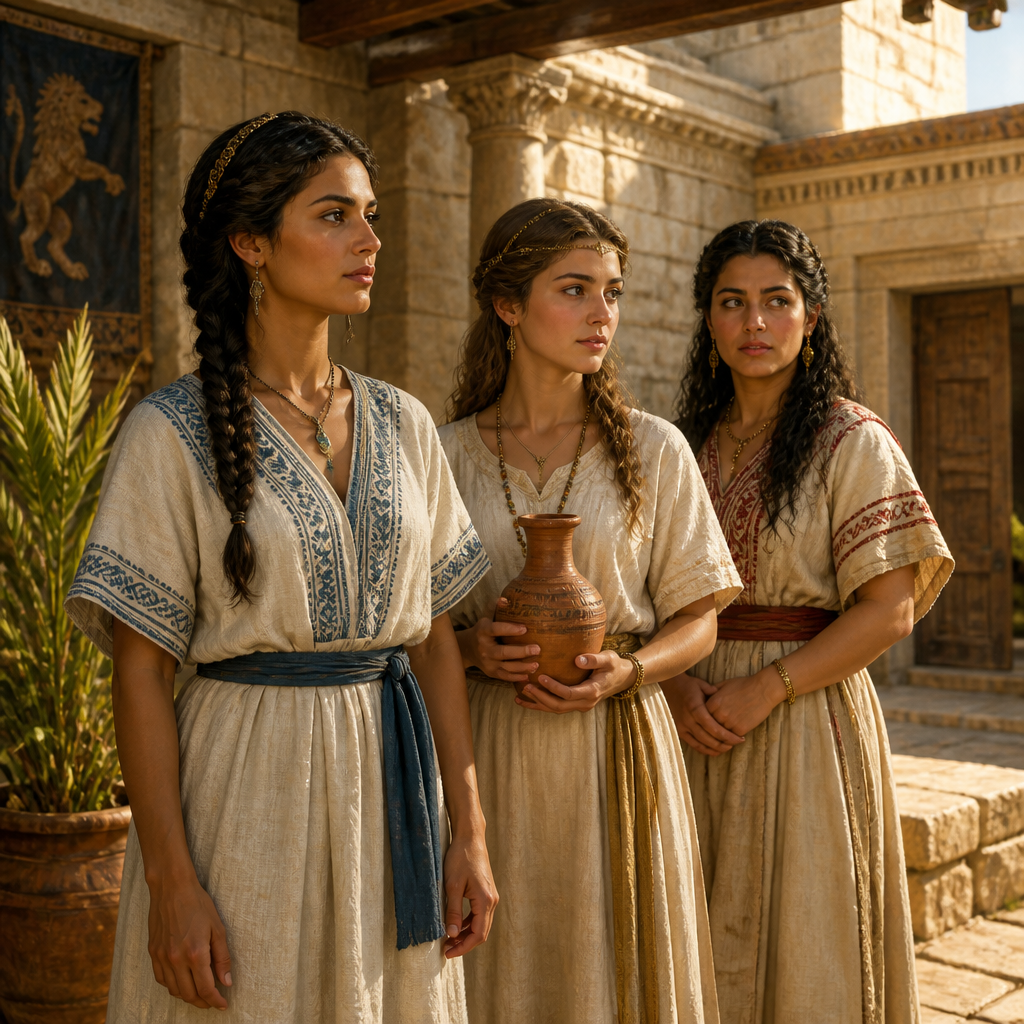
The Jerusalem wives of David represent a collective group of women who entered the royal household during the early years of the United Monarchy. Following David’s transition of the capital from Hebron to Jerusalem, these women were integrated into the Judean dynasty as part of the king's expansion of his household and political influence within the newly established city.
While their individual names are not recorded in the primary narrative of 2 Samuel 5, their presence marks a significant shift in David’s reign. The biblical record focuses on the offspring resulting from these unions rather than the biographies of the women themselves. Their inclusion in the text serves to validate the lineage of several prominent sons of David who would later feature in the genealogical records of Israel.
Background and Family
According to the biblical record in 2 Samuel 5:13, King David expanded his household significantly after establishing his throne in Jerusalem. The text notes that David took "more concubines and wives from Jerusalem" after his arrival from Hebron. These women were primarily from the tribe of Judah and the local Jerusalem population.
The genealogical record associated with these women identifies them as the mothers of several named sons. Among their children were Ibhar, Elishua, Nepheg, Japhia, Elishama, Eliada, Eliphelet, Nogah, and Elpelet. Some historical traditions also link them to Jerimoth, though the record is less definitive regarding his specific maternal lineage. These sons represent a substantial portion of the Davidic line born during the zenith of the United Monarchy.
Major Life Events
The primary event involving these women was their marriage to David following the conquest of the Jebusite stronghold. The marriages likely occurred shortly after David was anointed king over all Israel and relocated his administration from the southern city of Hebron to the more central location of Jerusalem.
Their lives were centered in the royal palace and the burgeoning capital city. Their entry into the household followed David's successes against the Philistines and coincided with the arrival of the Ark of the Covenant in Jerusalem. While their daily lives are not detailed, they were the domestic foundation of the palace during the most prosperous years of David’s rule.
Relationship to Other Biblical Figures
The Jerusalem wives were the successors to David’s Hebron wives, such as Ahinoam and Abigail. They were the mothers of a new generation of princes who grew up in the capital rather than the wilderness or Hebron. Their sons, particularly Ibhar and Japhia, are listed alongside the children of Bathsheba, though they are distinct from the lineage of Solomon. These women lived within the complex social hierarchy of David's harem, which eventually included many women and concubines as mentioned in the later accounts of the Davidic succession.
Spiritual Significance
In the context of the United Monarchy, the Jerusalem wives represent the fulfillment of the divine promise to establish David’s house. The proliferation of children through these wives was seen as a sign of God’s blessing and the stabilization of the Davidic dynasty. However, biblical commentators often note that the increase of wives was a practice that technically stood in tension with the Mosaic warnings for kings against multiplying wives (Deuteronomy 17:17).
The record of these women and their children serves a vital genealogical purpose. By documenting the births of their sons in Jerusalem, the text reinforces the legitimacy of the Judean hold on the city and the biological strength of the line that would eventually lead to the promised Messiah. Their presence reflects the transition of the monarchy from a nomadic military leadership to a settled, institutionalized royal court.
The Jerusalem wives are significant for their role in the expansion of the Davidic line during the establishment of the United Monarchy. Their mention in 2 Samuel 5:13 highlights the growth of David's influence and the divine blessing of many descendants, which was a marker of success in the Ancient Near East. They provide the biological link for nearly a dozen of David's sons, ensuring the continuity of the tribe of Judah's dominance in the capital.
Theologically, their presence illustrates the complexity of David’s life, where political expansion and domestic growth occurred simultaneously. Though they remain unnamed, their contribution to the royal lineage is formally recognized in the sacred history of Israel, documenting the specific transition from the Hebron years to the Jerusalem era.
Frequently Asked Questions
How many wives did David take in Jerusalem?
The Bible does not give a specific number, stating only that he took 'more concubines and wives' after arriving from Hebron.
Who were the sons of these Jerusalem wives?
Their sons included Ibhar, Elishua, Nepheg, Japhia, Elishama, Eliada, Eliphelet, Nogah, and Elpelet.
When did these marriages take place?
These marriages took place during the United Monarchy, specifically after David moved the capital from Hebron to Jerusalem (c. 1000 BC).
Are these women mentioned in other books of the Bible?
Their children are listed in 1 Chronicles 3 and 1 Chronicles 14, but the specific mention of David taking these wives in Jerusalem is found in 2 Samuel 5.
Family & Relationships
 DavidHusband2 Samuel 5:13Stated
 Jerusalem Wives of DavidThis page
Children
 Eliada, Son of DavidSon2 Samuel 5:16
Inferred
No verse names Eliada and Jerusalem Wives together; the mother link is carried from the surrounding genealogy and is not stated in Scripture.Evidence: 2 Samuel 5:16
 Eliphelet, Son of DavidSon2 Samuel 5:16
Inferred
No verse names Eliphelet and Jerusalem Wives together; the mother link is carried from the surrounding genealogy and is not stated in Scripture.Evidence: 2 Samuel 5:16
 Elishama, Son of DavidSon2 Samuel 5:15
Inferred
No verse names Elishama and Jerusalem Wives together; the mother link is carried from the surrounding genealogy and is not stated in Scripture.Evidence: 2 Samuel 5:15
 ElishuaSon2 Samuel 5:15
Inferred
No verse names Jerusalem Wives and Elishua together; the son link is carried from the surrounding genealogy and is not stated in Scripture.Evidence: 2 Samuel 5:15
 IbharSon2 Samuel 5:15
Inferred
No verse names Ibhar and Jerusalem Wives together; the mother link is carried from the surrounding genealogy and is not stated in Scripture.Evidence: 2 Samuel 5:15
 Japhia, Son of DavidSon2 Samuel 5:15
Inferred
No verse names Japhia and Jerusalem Wives together; the mother link is carried from the surrounding genealogy and is not stated in Scripture.Evidence: 2 Samuel 5:15
 Nepheg, Son of DavidSon2 Samuel 5:15
Inferred
No verse names Jerusalem Wives and Nepheg together; the son link is carried from the surrounding genealogy and is not stated in Scripture.Evidence: 2 Samuel 5:15
 ElpeletSon2 Samuel 5:13
Inferred
No verse names Jerusalem Wives and Elpelet together; the son link is carried from the surrounding genealogy and is not stated in Scripture.Evidence: 2 Samuel 5:13; 1 Chronicles 3:6
 NogahSon1 Chronicles 3:7
Inferred
No verse names Nogah and Jerusalem Wives together; the mother link is carried from the surrounding genealogy and is not stated in Scripture.Evidence: 1 Chronicles 3:7
 Jerimoth, Son of DavidSon2 Chronicles 11:18
Inferred
No verse names Jerimoth and Jerusalem Wives together; the mother link is carried from the surrounding genealogy and is not stated in Scripture.Evidence: 2 Chronicles 11:18
Connected Figures
Family
Husband · 2 Samuel 5:13
The second king of the United Monarchy of Israel, a shepherd-warrior and psalmist known as a man after God's own heart.
United MonarchyFirst: Ruth 4:17998 versesKing of Israel, Shepherd, Musician, WarriorJudah
Son · 2 Samuel 5:16
Eliada was a son of King David born in Jerusalem, listed among the children of the United Monarchy period.
United MonarchyFirst: 2 Samuel 5:1616 versesPrince of IsraelJudah
Son · 2 Samuel 5:16
Eliphelet was a son of King David, born in Jerusalem during the United Monarchy, and is listed among the royal children in the books of Samuel and Chronicles.
United MonarchyFirst: 2 Samuel 5:1615 versesPrince of IsraelJudah
Son · 2 Samuel 5:15
A son of King David born in Jerusalem during the United Monarchy and listed among the royal descendants in the books of Samuel and Chronicles.
United MonarchyFirst: 2 Samuel 5:1616 versesPrince of IsraelJudah
Son · 2 Samuel 5:15
A son of King David born in Jerusalem during the early years of the United Monarchy.
United MonarchyFirst: 2 Samuel 5:1514 versesPrince of IsraelJudah
Son · 2 Samuel 5:15
Ibhar was a son of King David, born in Jerusalem during the era of the United Monarchy.
United MonarchyFirst: 2 Samuel 5:1514 versesPrince of IsraelJudah
Son · 2 Samuel 5:15
Japhia was a son of King David born in Jerusalem, listed among the children born to David after he established his throne in the holy city.
United MonarchyFirst: 2 Samuel 5:1515 versesPrince of IsraelJudah
Son · 2 Samuel 5:15
Nepheg was a son of King David born in Jerusalem during the United Monarchy, listed among the children of David's Jerusalem wives.
United MonarchyFirst: 2 Samuel 5:1515 versesPrinceJudah
Son · 2 Samuel 5:13
Elpelet was a son of King David, born in Jerusalem during the United Monarchy, and is listed among the royal children in the Davidic genealogies.
United MonarchyFirst: 1 Chronicles 3:613 versesPrince of IsraelJudah
Son · 1 Chronicles 3:7
A son of King David born in Jerusalem during the United Monarchy, listed among the royal descendants in the chronicles of Judah.
United MonarchyFirst: 1 Chronicles 3:714 versesPrince of IsraelJudah
Son · 2 Chronicles 11:18
A son of King David and a member of the royal house of Judah whose daughter, Mahalath, married King Rehoboam.
United MonarchyFirst: 2 Chronicles 11:1812 versesPrince of IsraelJudah
Categories
Mentions by Book
- 2 Samuel3
- 1 Chronicles2
- 2 Chronicles1
Scripture References
All 6 indexed verses, in canonical order, from the Berean Standard Bible.
2 Samuel · 3
- 2 Samuel 5:13
After he had arrived from Hebron, David took more concubines and wives from Jerusalem, and more sons and daughters were born to him.
- 2 Samuel 5:15Partial
Ibhar, Elishua, Nepheg, Japhia,
Cited as evidence on a family card; added so References, Key Verses and Mentions by Book share one index.
- 2 Samuel 5:16Partial
Elishama, Eliada, and Eliphelet.
Cited as evidence on a family card; added so References, Key Verses and Mentions by Book share one index.
1 Chronicles · 2
- 1 Chronicles 3:6Partial
David’s other sons were Ibhar, Elishua, Eliphelet,
Cited as evidence on a family card; added so References, Key Verses and Mentions by Book share one index.
- 1 Chronicles 3:7Partial
Nogah, Nepheg, Japhia,
Cited as evidence on a family card; added so References, Key Verses and Mentions by Book share one index.
2 Chronicles · 1
- 2 Chronicles 11:18Partial
And Rehoboam married Mahalath, who was the daughter of David’s son Jerimoth and of Abihail, the daughter of Jesse’s son Eliab.
Cited as evidence on a family card; added so References, Key Verses and Mentions by Book share one index.