Ish-bosheth
Who was Ish-bosheth in the Bible?
The youngest son of King Saul who reigned as the second king over Israel for two years during a period of civil war with the house of David.
Ish-bosheth was the fourth son of Saul, the first king of Israel, and a member of the Tribe of Benjamin. Following the catastrophic defeat of the Israelite forces at Mount Gilboa, where Saul and three of his sons—Jonathan, Abinadab, and Malchi-shua—perished, Ish-bosheth became the last remaining heir to the Saulide dynasty. His elevation to the throne was not a result of his own initiative but was orchestrated by Abner son of Ner, the powerful commander of Saul's army.
His reign was characterized by a deep division within the nation of Israel. While the northern tribes and the Transjordan regions acknowledged Ish-bosheth as king, the tribe of Judah independently anointed David as their ruler in Hebron. This established a two-year period of civil strife and political instability known as the war between the house of Saul and the house of David. Ish-bosheth is often portrayed in the biblical narrative as a politically fragile leader whose authority was heavily dependent on the military strength of Abner.
Background and Family
Ish-bosheth was born into the royal house of Saul and Ahinoam. According to the genealogical records in 1 Chronicles 8:33 and 9:39, he was also known as Esh-baal (meaning "Man of Baal" or "Fire of the Lord"). The name Ish-bosheth (meaning "Man of Shame") is widely considered by scholars to be a scribal substitution used in the Book of Samuel to avoid the pronunciation of the Canaanite deity Baal.
He grew up as the sibling of the famed Jonathan, as well as Abinadab, Malchi-shua, Merab, and Michal. He also had half-brothers, Armoni and Mephibosheth, through his father’s concubine Rizpah. While his older brothers were active in Saul’s military campaigns, Ish-bosheth does not appear in the narrative until after the tragedy at Mount Gilboa. At the age of forty, he was taken by Abner to Mahanaim, a city east of the Jordan River, where he was proclaimed king over Gilead, Ashuri, Jezreel, Ephraim, Benjamin, and all Israel (2 Samuel 2:8–10).
Major Life Events
The Reign at Mahanaim
Ish-bosheth’s kingship was established in Mahanaim to provide a safe distance from both the Philistine threat and David’s stronghold in Hebron. His two-year reign was marked by a "long war" (2 Samuel 3:1) against David. The biblical record notes an initial confrontation at the Pool of Gibeon, where the servants of Ish-bosheth met the servants of David. A ritual combat between twelve men from each side escalated into a full-scale battle, resulting in a victory for David’s forces and the retreat of Ish-bosheth’s commander, Abner.
Conflict with Abner
The turning point of Ish-bosheth’s reign occurred when he confronted Abner regarding a breach of royal protocol. Ish-bosheth accused Abner of having sexual relations with Rizpah, Saul’s concubine—an act that, in the ancient Near East, was often interpreted as a claim to the throne. Abner reacted with extreme indignation, reminding the king that he was the only reason the house of Saul remained in power. In his fury, Abner swore to transfer the kingdom to David, and Ish-bosheth, intimidated by the commander, "could not say another word to Abner, because he was afraid of him" (2 Samuel 3:11).
The Return of Michal
During the subsequent negotiations between David and Abner, David demanded the return of his wife Michal (Ish-bosheth’s sister) as a condition for peace. Ish-bosheth complied, forcibly taking Michal from her husband Paltiel and sending her to David. This act further eroded Ish-bosheth’s domestic standing and signaled the impending collapse of his administration.
Assassination and Death
Following the news of Abner’s death at the hands of Joab, Ish-bosheth "lost courage" and the people of Israel were dismayed (2 Samuel 4:1). Taking advantage of this vulnerability, two of Ish-bosheth’s own captains, Rechab and Baanah, entered his house during the heat of the day while he was taking a midday nap. They murdered him in his bed, beheaded him, and carried his head to David in Hebron, expecting a reward for eliminating his rival.
Relationship to Other Biblical Figures
Ish-bosheth’s life was defined by the looming shadows of two men: his father Saul and his rival David. Unlike Jonathan, who formed a deep covenant with David, Ish-bosheth remained the figurehead for those resistant to David’s rule. His relationship with Abner was one of total dependence; without Abner's military support, Ish-bosheth lacked the political capital to maintain the loyalty of the northern tribes. His interaction with David was largely mediated through messengers and military conflict, ending ultimately with David mourning Ish-bosheth's death and ordering the execution of his assassins, as David refused to take the throne through treachery.
Spiritual Significance
The short and troubled reign of Ish-bosheth serves as a narrative bridge between the failed dynasty of Saul and the established kingdom of David. Thematically, his story illustrates the transition of divine favor. While Ish-bosheth held the legal and genealogical claim to his father's throne, the biblical text emphasizes that the "house of Saul grew weaker and weaker, while the house of David grew stronger and stronger" (2 Samuel 3:1). His life reflects the fragility of a kingdom built on human military strategy (Abner) rather than divine election. His burial in Abner’s tomb at Hebron marks the formal end of the Saulide monarchy's attempt to rule the United Kingdom of Israel.
Ish-bosheth represents the final gasp of the Saulide dynasty. His reign illustrates the political vacuum and civil strife that can occur during a transition of power. Theologically, his story contrasts the 'will of man' (represented by Abner’s appointment of Ish-bosheth) against the 'will of God' (represented by David’s anointing).
His death also serves to highlight David’s integrity; David refused to celebrate the murder of his rival, instead honoring Ish-bosheth’s memory by executing the assassins. This established a precedent in the United Monarchy that the 'Lord’s anointed'—even one from a rival house—was to be treated with respect, reinforcing the sanctity of the office of the king.
Frequently Asked Questions
Why does Ish-bosheth have two different names?
In 1 Chronicles, he is called Esh-baal ('Man of Baal'). In 2 Samuel, he is called Ish-bosheth ('Man of Shame'). Many scholars believe 'Esh-baal' was his original name, but later biblical writers substituted 'bosheth' (shame) for 'baal' to avoid honoring a pagan deity.
How long did Ish-bosheth reign?
According to 2 Samuel 2:10, Ish-bosheth reigned over Israel for two years.
How did Ish-bosheth die?
He was assassinated in his sleep by two of his own army captains, Rechab and Baanah, who beheaded him and took his head to David in Hebron.
Was Ish-bosheth the rightful king of Israel?
By dynastic tradition, as Saul's son, he was the heir to the throne. However, the biblical narrative indicates that God had already rejected Saul's line and chosen David to be the king.
Where was Ish-bosheth buried?
His head was buried by David in the tomb of Abner in Hebron.
Family & Relationships
Parents
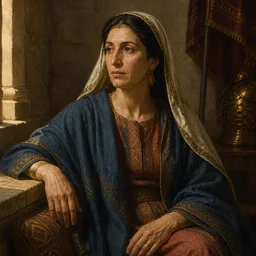 Ahinoam, Wife of SaulMother1 Samuel 14:50
Inferred
Reconstructed through Saul: 1 Samuel 14:50 ties Ahinoam to Saul; 1 Samuel 14:49 ties Saul to Ishvi. No verse states the son link between Ahinoam and Ish-bosheth directly.Evidence: 1 Samuel 14:50; 1 Samuel 14:49; 2 Samuel 2:8; 2 Samuel 2:10; 2 Samuel 2:12
 SaulFather2 Samuel 2:8Stated
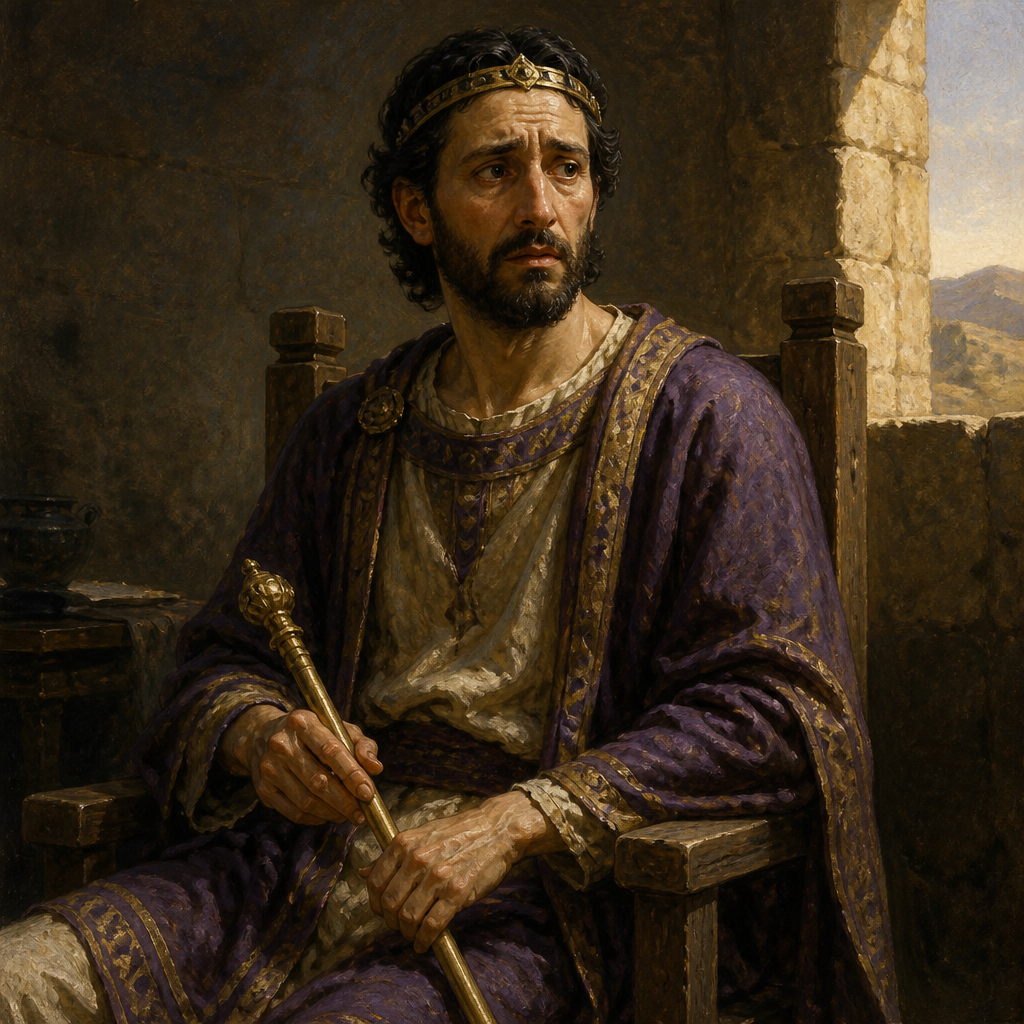 Ish-boshethThis page
 Abinadab, Son of King SaulBrother1 Samuel 14:49
Inferred
Reconstructed through Saul: 1 Samuel 14:49 ties Ishvi to Saul; 1 Chronicles 8:33 ties Saul to Abinadab. No verse states the brother link between Ish-bosheth and Abinadab directly.Evidence: 1 Samuel 14:49; 1 Chronicles 8:33
 Jonathan, Son of King SaulBrother1 Samuel 14:49Stated
 MalchishuaBrother1 Samuel 14:49Stated
 MerabSister1 Samuel 14:49Stated
 MichalSister1 Samuel 14:49Stated
 ArmoniBrother1 Samuel 14:49
Inferred
Reconstructed through Saul: 2 Samuel 21:8 ties Armoni to Saul; 1 Samuel 14:49 ties Saul to Ishvi. No verse states the brother link between Armoni and Ish-bosheth directly.Evidence: 1 Samuel 14:49
 Mephibosheth, Son of Saul and RizpahBrother1 Samuel 14:49
Inferred
Reconstructed through Saul: 2 Samuel 21:8 ties Mephibosheth to Saul; 1 Samuel 14:49 ties Saul to Ishvi. No verse states the brother link between Mephibosheth and Ish-bosheth directly.Evidence: 1 Samuel 14:49; 2 Samuel 9:6
Connected Figures
Family
Mother · 1 Samuel 14:50
Ahinoam was the daughter of Ahimaaz and the queen consort of Saul, the first king of Israel.
United MonarchyFirst: 1 Samuel 14:5010 versesQueen of Israel
Father · 2 Samuel 2:8
Saul was the first king of Israel, anointed by Samuel from the tribe of Benjamin to lead the United Monarchy against the Philistine threat.
United MonarchyFirst: 1 Samuel 9:2339 versesFirst King of IsraelBenjamin
Brother · 1 Samuel 14:49
A prince of the tribe of Benjamin and son of King Saul who died alongside his father and brothers during the Battle of Mount Gilboa.
United MonarchyFirst: 1 Samuel 14:4911 versesPrince of Israel / SoldierBenjamin
Brother · 1 Samuel 14:49
A prince of Israel and renowned warrior of the Tribe of Benjamin, famous for his profound covenantal friendship with David and his loyalty to God over his own royal succession.
United MonarchyFirst: 1 Samuel 13:284 versesPrince and Military CommanderBenjamin
Brother · 1 Samuel 14:49
A prince of the United Monarchy and son of King Saul who died alongside his father and brothers during the Battle of Mount Gilboa.
United MonarchyFirst: 1 Samuel 14:498 versesPrince of IsraelBenjamin
Sister · 1 Samuel 14:49
Merab was the eldest daughter of King Saul, originally promised to David as a wife but ultimately married to Adriel of Meholah.
United MonarchyFirst: 1 Samuel 14:497 versesPrincess of IsraelBenjamin
Sister · 1 Samuel 14:49
The daughter of King Saul and the first wife of King David, Michal is a complex figure who navigated the political and personal tensions of Israel's early monarchy.
United MonarchyFirst: 1 Samuel 14:4921 versesPrincess of Israel, Queen ConsortBenjamin
Brother · 1 Samuel 14:49
Armoni was a son of King Saul and his concubine Rizpah, who was surrendered to the Gibeonites for execution during the United Monarchy.
United MonarchyFirst: 2 Samuel 21:84 versesPrince of IsraelBenjamin
Brother · 1 Samuel 14:49
A son of King Saul and his concubine Rizpah who was executed by the Gibeonites during the reign of King David.
United MonarchyFirst: 2 Samuel 21:87 versesPrince of IsraelBenjamin
Categories
Mentions by Book
- 1 Samuel2
- 2 Samuel13
- 1 Chronicles1
Scripture References
All 16 indexed verses, in canonical order, from the Berean Standard Bible.
1 Samuel · 2
- 1 Samuel 14:49Partial
Now the sons of Saul were Jonathan, Ishvi, and Malchishua. His two daughters were named Merab (his firstborn) and Michal (his younger daughter).
Cited as evidence on a family card; added so References, Key Verses and Mentions by Book share one index.
- 1 Samuel 14:50Partial
His wife’s name was Ahinoam daughter of Ahimaaz. The name of the commander of his army was Abner, the son of Saul’s uncle Ner.
Cited as evidence on a family card; added so References, Key Verses and Mentions by Book share one index.
2 Samuel · 13
- 2 Samuel 2:8
Meanwhile, Abner son of Ner, the commander of Saul’s army, took Saul’s son Ish-bosheth, moved him to Mahanaim,
- 2 Samuel 2:10
Saul’s son Ish-bosheth was forty years old when he began to reign over Israel, and he reigned for two years. The house of Judah, however, followed David.
- 2 Samuel 2:12
One day Abner son of Ner and the servants of Ish-bosheth son of Saul marched out from Mahanaim to Gibeon.
- 2 Samuel 2:15
So they got up and were counted off—twelve for Benjamin and Ish-bosheth son of Saul, and twelve for David.
- 2 Samuel 3:8
Abner was furious over Ish-bosheth’s accusation. “Am I the head of a dog that belongs to Judah?” he asked. “All this time I have been loyal to the house of your father Saul, to his brothers, and to his friends. I have not delivered you into the hand of David, but now you accuse me of wrongdoing with this woman!
- 2 Samuel 3:14
Then David sent messengers to say to Ish-bosheth son of Saul, “Give me back my wife, Michal, whom I betrothed to myself for a hundred Philistine foreskins.”
- 2 Samuel 3:15
So Ish-bosheth sent and took Michal from her husband Paltiel son of Laish.
- 2 Samuel 4:5
Now Rechab and Baanah, the sons of Rimmon the Beerothite, set out and arrived at the house of Ish-bosheth in the heat of the day, while the king was taking his midday nap.
- 2 Samuel 4:7
They had entered the house while Ish-bosheth was lying on his bed, and having stabbed and killed him, they beheaded him, took his head, and traveled all night by way of the Arabah.
Cited as a key verse; added so References, Key Verses and Mentions by Book share one index.
- 2 Samuel 4:8Partial
They brought the head of Ish-bosheth to David at Hebron and said to the king, “Here is the head of Ish-bosheth son of Saul, your enemy who sought your life. Today the LORD has granted vengeance to my lord the king against Saul and his offspring.”
- 2 Samuel 4:12
So David commanded his young men, and they killed Rechab and Baanah. They cut off their hands and feet and hung their bodies by the pool in Hebron, but they took the head of Ish-bosheth and buried it in Abner’s tomb in Hebron.
- 2 Samuel 9:6Partial
And when Mephibosheth son of Jonathan, the son of Saul, came to David, he fell facedown in reverence. Then David said, “Mephibosheth!” “I am your servant,” he replied.
Cited as evidence on a family card; added so References, Key Verses and Mentions by Book share one index.
- 2 Samuel 21:8Partial
But the king took Armoni and Mephibosheth, the two sons whom Rizpah daughter of Aiah had borne to Saul, as well as the five sons whom Merab daughter of Saul had borne to Adriel son of Barzillai the Meholathite.
Cited as evidence on a family card; added so References, Key Verses and Mentions by Book share one index.
1 Chronicles · 1
- 1 Chronicles 8:33Partial
Ner was the father of Kish, Kish was the father of Saul, and Saul was the father of Jonathan, Malchishua, Abinadab, and Esh-baal.
Cited as a key verse; added so References, Key Verses and Mentions by Book share one index.