Ner
Who was Ner in the Bible?
A high-ranking Benjamite of the United Monarchy, father of the commander Abner, and uncle to Israel's first king, Saul.
Ner was a prominent member of the tribe of Benjamin during the late period of the Judges and the transition into the United Monarchy of Israel. While he is not the central protagonist of a specific narrative arc, his genealogical position marks him as a figure of immense political and military significance. As the son of Abiel and Maacah, Ner belonged to a powerful family lineage that established the first royal house of Israel.
His primary legacy in the biblical record is defined by his immediate descendants. He was the father of Abner, who served as the commander of the Israelite army, and he was the brother of Kish, making him the paternal uncle of King Saul. The influence of Ner's household extended into the religious and civic life of the nation, as evidenced by his family's contributions to the sanctuary treasury.
Background and Family
The genealogical records of the tribe of Benjamin provide the primary context for Ner’s life. According to 1 Samuel 14:51, Ner and his brother Kish were the sons of Abiel. The Chronicles record expands this lineage, identifying his mother as Maacah and listing a large number of siblings, including Abdon, Zur, Kish, Baal, Nadab, Gedor, Ahio, Zecher, and Mikloth (1 Chronicles 9:36–39). This large, influential family settled in the territory of Benjamin, specifically associated with the area of Gibeon.
Ner’s placement within the family tree is essential for understanding the power dynamics of the United Monarchy. By being the brother of Kish, Ner was the uncle of Saul, the man selected by God and Samuel to be the first king of Israel. This kinship ensured that Ner’s branch of the family remained at the center of the burgeoning Israelite state.
Major Life Events
While the biblical text does not record specific dialogues or personal exploits of Ner, his presence is felt through the career of his son, Abner. The text frequently identifies Abner as the "son of Ner," a patronymic that serves to reinforce Abner’s royal connection and legitimate standing within Saul’s court.
One of the few direct actions attributed to the house of Ner is found in the administrative records of 1 Chronicles 26. The text notes that Ner, along with Samuel the seer, Saul son of Kish, and Joab son of Zeruiah, dedicated spoils and wealth to the maintenance of the house of the LORD. This indicates that Ner was a man of significant means and religious devotion, participating in the tradition of dedicating the spoils of war or personal wealth to the service of the sanctuary.
"Everything that had been dedicated by Samuel the seer, Saul son of Kish, Abner son of Ner, and Joab son of Zeruiah, along with everything else that was dedicated, was under the care of Shelomith and his brothers." (1 Chronicles 26:28)
Relationship to Other Biblical Figures
Ner’s significance is almost entirely relational. His status as the "uncle" of the king provided the foundational trust necessary for his son, Abner, to rise to the position of commander of the army (1 Samuel 14:50). In the ancient Near East, military leadership was often a family affair, and the bond between Saul (the nephew) and Abner (the cousin, via Ner) was the glue that held the early Israelite military together during the Philistine wars.
Furthermore, the text uses Ner's name as a marker of identity for Abner throughout the tumultuous transition between the house of Saul and the house of David. When David addresses Abner in the wilderness of Ziph or when Joab later assassinates Abner, the biblical writers consistently use the phrase "Abner son of Ner" (1 Samuel 26:5, 2 Samuel 3:28). This serves to distinguish Abner’s noble lineage and emphasizes that he was not merely a soldier, but a scion of one of Benjamin’s most important families.
Spiritual Significance
Though Ner remains in the background of the biblical narrative, his inclusion in the genealogies and the lists of donors to the sanctuary reflects the biblical emphasis on heritage and stewardship. The Bible portrays the rise of the monarchy not as a series of isolated events involving lone individuals, but as the elevation of specific families chosen for service. Ner represents the supportive structure of the Benjamite aristocracy that facilitated the reign of the first king. His dedication of resources to the house of God suggests a recognition that the family’s success and the nation’s security were ultimately dependent on the favor of the LORD. His legacy is one of foundational support for the institutionalization of the kingdom of Israel.
Ner serves as a vital genealogical link in the history of the United Monarchy, establishing the legitimacy and family context of King Saul and the military leader Abner. His presence in the biblical text, though largely genealogical, underscores the importance of tribal and family structures in the early formation of the Israelite state. Through his son Abner, Ner's name became synonymous with the military strength of the house of Saul.
Additionally, Ner's contribution to the dedicated treasures of the tabernacle/temple highlights a tradition of elite sponsorship of Israel's worship. His name is preserved alongside major figures like Samuel and Saul, indicating that in the eyes of the chronicler, Ner was a significant contributor to the spiritual infrastructure of the nation during a pivotal era of transition.
Frequently Asked Questions
Was Ner related to King Saul?
Yes, Ner was King Saul's uncle. Ner and Saul's father, Kish, were brothers, both being sons of Abiel.
Who was Ner's most famous child?
Ner's most famous son was Abner, the commander-in-chief of King Saul's army and a major figure during the transition to King David's reign.
What tribe did Ner belong to?
Ner was from the tribe of Benjamin, specifically from the family line that settled in Gibeon.
Did Ner have a role in the temple?
While not a priest, Ner is recorded in 1 Chronicles 26:28 as having dedicated gifts and spoils to the house of God, which were managed by the Levites.
Who were Ner's parents?
According to the biblical genealogies, Ner was the son of Abiel and Maacah.
Family & Relationships
Parents
 AbielFather1 Samuel 14:51Stated
 Maacah, Wife of JeielMother1 Chronicles 8:29Stated
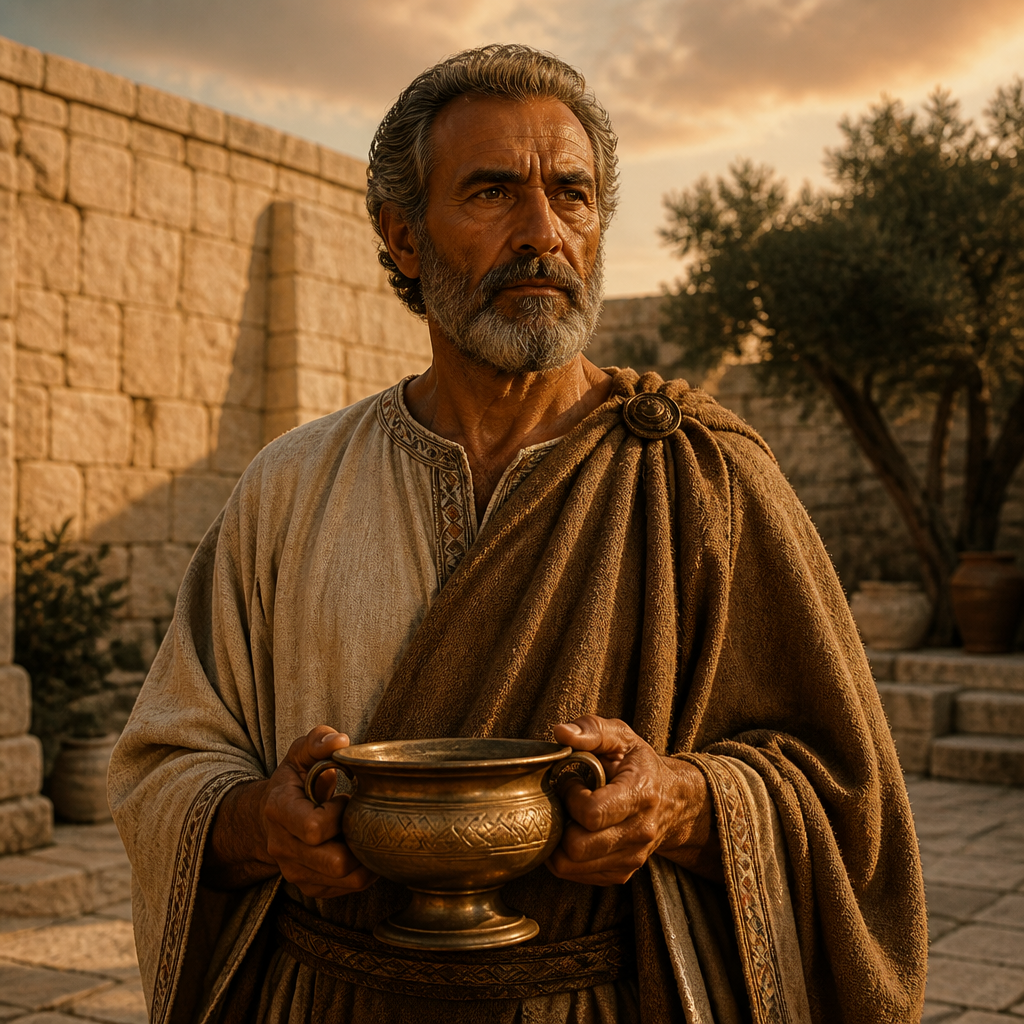 NerThis page
 Kish, Father of King SaulBrother1 Samuel 14:51Stated
 Abdon, Son of AbielBrother1 Chronicles 8:30–33Stated
 Ahio, Son of AbielBrother1 Chronicles 8:31–33Stated
 Baal, Benjaminite of the United MonarchyBrother1 Chronicles 8:33Stated
 GedorBrother1 Chronicles 8:31–33Stated
 Mikloth, Benjaminite of the United MonarchyBrother1 Chronicles 8:32–33Stated
 Nadab, Son of AbielBrother1 Chronicles 8:30–33Stated
 ZecherBrother1 Chronicles 8:31–33Stated
 Zur, Son of Jeiel of GibeonBrother1 Chronicles 8:30–33Stated
Children
 AbnerSon1 Samuel 26:5Stated
Extended family
 SaulNephew1 Samuel 9:3
Inferred
1 Chronicles 8:33 names Ner and Saul in the same verse but does not state a nephew tie between them; the link rests on the surrounding narrative.Evidence: 1 Samuel 9:3; 1 Samuel 10:21; 1 Chronicles 8:33; 1 Chronicles 9:39; 1 Samuel 14:51
Connected Figures
Family
Father · 1 Samuel 14:51
A prominent Benjamite and the paternal grandfather of Saul, Israel's first king, and Abner, the commander of Saul's army.
Mother · 1 Chronicles 8:29
Maacah was a Benjaminite matriarch in the United Monarchy era, the wife of Jeiel and the grandmother of King Saul.
United MonarchyFirst: 1 Chronicles 8:298 versesMatriarchBenjamin
Son · 1 Samuel 26:5
The commander-in-chief of King Saul’s army and a pivotal military leader during the transition of power to the house of David.
United MonarchyFirst: 1 Samuel 14:5057 versesCommander-in-chief of the armyBenjamin
Brother · 1 Samuel 14:51
A wealthy and influential Benjamite landowner best known as the father of Saul, the first king of Israel.
United MonarchyFirst: 1 Samuel 9:116 versesElderBenjamin
Brother · 1 Chronicles 8:30–33
The firstborn son of Abiel and Maacah, and a prominent Benjaminite relative of Israel's first king, Saul.
Brother · 1 Chronicles 8:31–33
A Benjaminite of the United Monarchy period, notable as a brother of Kish and a paternal uncle to Israel's first king, Saul.
United MonarchyFirst: 1 Chronicles 8:3110 versesBenjaminite NoblemanBenjamin
Brother · 1 Chronicles 8:33
A Benjaminite nobleman and son of Jeiel, identified as a paternal uncle of King Saul within the genealogies of the United Monarchy.
United MonarchyFirst: 1 Chronicles 8:3015 versesTribal NoblemanBenjamin
Brother · 1 Chronicles 8:31–33
A Benjaminite aristocrat during the United Monarchy period, notable as a son of Jeiel (Abiel) and a member of King Saul’s immediate paternal lineage.
United MonarchyFirst: 1 Chronicles 8:3110 versesBenjaminite NobleBenjamin
Brother · 1 Chronicles 8:32–33
Mikloth was a prominent Benjaminite leader living in Jerusalem and a relative of King Saul during the era of the United Monarchy.
Brother · 1 Chronicles 8:30–33
A Benjaminite nobleman of Gibeon and the son of Abiel, known as an uncle of King Saul and a member of the ancestral line that established the first royal house of Israel.
United MonarchyFirst: 1 Chronicles 8:3011 versesBenjaminite NoblemanBenjamin
Brother · 1 Chronicles 8:31–33
Zecher was a Benjaminite leader and the son of Abiel and Maacah, belonging to the ancestral line that produced Saul, the first king of Israel.
Brother · 1 Chronicles 8:30–33
A Benjaminite nobleman and son of Jeiel, Zur was a prominent member of the ancestral line that produced Saul, the first king of Israel.
United MonarchyFirst: 1 Chronicles 8:3010 versesBenjaminite NoblemanBenjamin
Categories
Mentions by Book
- 1 Samuel6
- 2 Samuel6
- 1 Kings2
- 1 Chronicles8
Scripture References
All 22 indexed verses, in canonical order, from the Berean Standard Bible.
1 Samuel · 6
- 1 Samuel 9:3Partial
One day the donkeys of Saul’s father Kish wandered off, and Kish said to his son Saul, “Take one of the servants and go look for the donkeys.”
Cited as evidence on a family card; added so References, Key Verses and Mentions by Book share one index.
- 1 Samuel 10:21Partial
Then he had the tribe of Benjamin come forward by its clans, and the clan of Matri was selected. Finally, Saul son of Kish was selected. But when they looked for him, they could not find him.
Cited as evidence on a family card; added so References, Key Verses and Mentions by Book share one index.
- 1 Samuel 14:50
His wife’s name was Ahinoam daughter of Ahimaaz. The name of the commander of his army was Abner, the son of Saul’s uncle Ner.
- 1 Samuel 14:51
Saul’s father Kish and Abner’s father Ner were sons of Abiel.
- 1 Samuel 26:5
Then David set out and went to the place where Saul had camped. He saw the place where Saul and Abner son of Ner, the general of his army, had lain down. Saul was lying inside the inner circle of the camp, with the troops camped around him.
- 1 Samuel 26:14
And David shouted to the troops and to Abner son of Ner, “Will you not answer me, Abner?” “Who are you who calls to the king?” Abner replied.
2 Samuel · 6
- 2 Samuel 2:8
Meanwhile, Abner son of Ner, the commander of Saul’s army, took Saul’s son Ish-bosheth, moved him to Mahanaim,
- 2 Samuel 2:12
One day Abner son of Ner and the servants of Ish-bosheth son of Saul marched out from Mahanaim to Gibeon.
- 2 Samuel 3:23
When Joab and all his troops arrived, he was informed, “Abner son of Ner came to see the king, who sent him on his way in peace.”
- 2 Samuel 3:25
Surely you realize that Abner son of Ner came to deceive you and to track your movements and all that you are doing.”
- 2 Samuel 3:28
Afterward, David heard about this and said, “I and my kingdom are forever guiltless before the LORD concerning the blood of Abner son of Ner.
- 2 Samuel 3:37
So on that day all the troops and all Israel were convinced that the king had no part in the murder of Abner son of Ner.
1 Kings · 2
- 1 Kings 2:5
Moreover, you know what Joab son of Zeruiah did to me—what he did to Abner son of Ner and Amasa son of Jether, the two commanders of the armies of Israel. He killed them in peacetime to avenge the blood of war. He stained with the blood of war the belt around his waist and the sandals on his feet.
- 1 Kings 2:32
The LORD will bring his bloodshed back upon his own head, for without the knowledge of my father David he struck down two men more righteous and better than he when he put to the sword Abner son of Ner, commander of Israel’s army, and Amasa son of Jether, commander of Judah’s army.
1 Chronicles · 8
- 1 Chronicles 8:29Partial
Jeiel the father of Gibeon lived in Gibeon. His wife’s name was Maacah,
Cited as evidence on a family card; added so References, Key Verses and Mentions by Book share one index.
- 1 Chronicles 8:30Partial
and Abdon was his firstborn son, then Zur, Kish, Baal, Nadab,
Cited as evidence on a family card; added so References, Key Verses and Mentions by Book share one index.
- 1 Chronicles 8:31Partial
Gedor, Ahio, Zecher,
Cited as evidence on a family card; added so References, Key Verses and Mentions by Book share one index.
- 1 Chronicles 8:32Partial
and Mikloth, who was the father of Shimeah. They too lived alongside their relatives in Jerusalem.
Cited as evidence on a family card; added so References, Key Verses and Mentions by Book share one index.
- 1 Chronicles 8:33
Ner was the father of Kish, Kish was the father of Saul, and Saul was the father of Jonathan, Malchishua, Abinadab, and Esh-baal.
Cited as evidence on a family card; added so References, Key Verses and Mentions by Book share one index.
- 1 Chronicles 9:36
Abdon was his firstborn son, then Zur, Kish, Baal, Ner, Nadab,
- 1 Chronicles 9:39
Ner was the father of Kish, Kish was the father of Saul, and Saul was the father of Jonathan, Malchishua, Abinadab, and Esh-baal.
Cited as evidence on a family card; added so References, Key Verses and Mentions by Book share one index.
- 1 Chronicles 26:28
Everything that had been dedicated by Samuel the seer, Saul son of Kish, Abner son of Ner, and Joab son of Zeruiah, along with everything else that was dedicated, was under the care of Shelomith and his brothers.