Husband of Zeruiah
Who was Husband of Zeruiah in the Bible?
The unnamed father of David's three most prominent military leaders: Joab, Abishai, and Asahel during the United Monarchy.
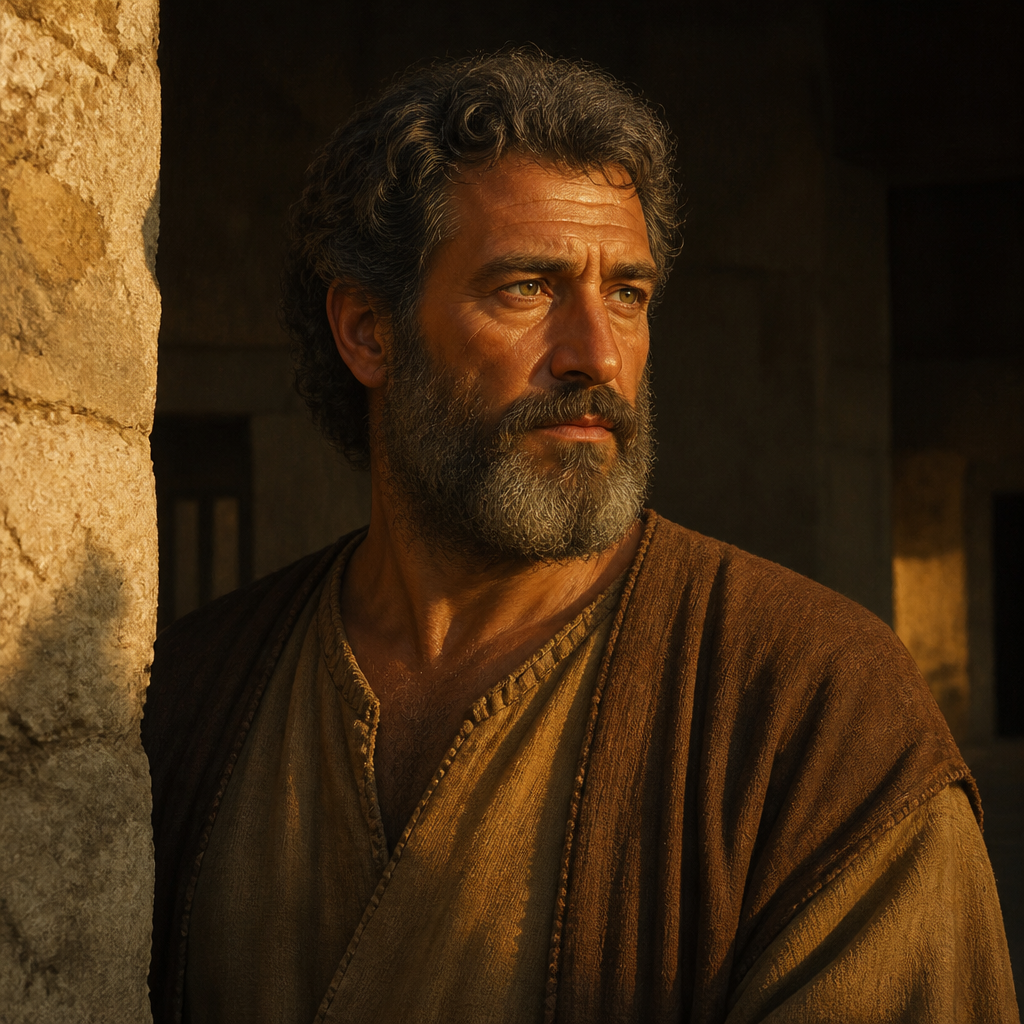
The individual known in the biblical record only as the husband of Zeruiah is a figure defined entirely by his familial connections during the rise of the United Monarchy. While his own name is never recorded in the Masoretic Text or the Septuagint, his identity is tethered to one of the most powerful women in King David’s inner circle. His significance in the narrative of Israel is not found in his own deeds, but in the legacy of his three sons: Joab, the commander-in-chief of the Israelite army; Abishai, a high-ranking officer and hero; and Asahel, a renowned runner and warrior.
Historically, he represents a unique genealogical marker. In a patriarchal society where children are almost exclusively identified by their father's name (e.g., 'David son of Jesse'), his children are consistently identified by their mother, Zeruiah. This inversion of naming conventions suggests that his wife’s social status as David’s sister was the defining feature of the family unit, or that he himself passed away early, leaving the house to be identified by its royal connection.
Background and Family
The husband of Zeruiah lived during the transition from the reign of Saul to the establishment of the United Monarchy under David (c. 1010 BC). While the Bible does not specify his tribe or his birthplace, his marriage to Zeruiah placed him at the heart of the Tribe of Judah. Zeruiah was the daughter of Jesse and a sister to David, making the husband of Zeruiah David’s brother-in-law.
The union produced three sons who became central figures in the Davidic administration. Joab, the eldest, eventually rose to become the most powerful military figure in Israel after David himself. Abishai was known for his fierce loyalty to David, famously accompanying him into Saul's camp (1 Samuel 26:6). Asahel was noted for his speed and was a member of David's elite 'Thirty' warriors.
Major Life Events
There are no recorded major life events for the husband of Zeruiah. He is mentioned implicitly in 1 Samuel 26:6 through the identification of his son Abishai as the 'son of Zeruiah.'
And David asked Ahimelech the Hittite and Abishai son of Zeruiah, Joab’s brother, “Who will go down with me to Saul in the camp?” “I will go with you,” answered Abishai. (1 Samuel 26:6)
Because the text focuses exclusively on the exploits of his sons and their relationship to David, the husband of Zeruiah remains in the shadows of the narrative. It is possible he served in the early military conflicts of the era, but the Bible offers no confirmation of his occupation or his death.
Relationship to Other Biblical Figures
His primary relationship of note is his marriage to Zeruiah. In the ancient Near East, for three brothers to be identified by their mother rather than their father indicates a husband of lesser social standing or one who was deceased by the time his sons achieved prominence. He was also the brother-in-law of Abigail (another sister of David) and David himself.
His sons—Joab, Abishai, and Asahel—are often characterized by a violent streak that David himself occasionally lamented, famously stating that the 'sons of Zeruiah' were too hard for him. This collective identity suggests a strong family unit, though the father's influence remains an enigma.
Spiritual Significance
Theologically, the husband of Zeruiah serves as a reminder of the biblical focus on the messianic line and the immediate servants of the King. While he is the progenitor of the men who secured David's borders, the narrative choice to omit his name emphasizes that in the Kingdom of God, legacy is sometimes defined by association with the chosen line (David) rather than individual renown.
The husband of Zeruiah is significant for what his absence in the text represents. He is the biological source of the most formidable military house in Israel's early history, yet he is eclipsed by his wife's royal lineage. His role demonstrates how the Bible prioritizes the covenantal line of David over standard genealogical reporting.
His existence is necessary for the lineage of Joab and Abishai, yet the scriptural silence regarding his name underscores the theme that the 'sons of Zeruiah' were defined by their kinship to David through their mother, rather than their father’s house.
Frequently Asked Questions
What was the name of Zeruiah's husband?
The Bible does not record his name. He is only identified by his relationship to his wife and his famous sons.
Was the husband of Zeruiah a soldier?
The Bible does not state his occupation. However, given that all three of his sons were high-ranking military leaders, it is plausible he had a military background, though this is speculative.
Why are his sons called 'sons of Zeruiah' instead of his name?
It is likely because Zeruiah was the sister of King David, and identifying them by her name highlighted their royal connection and high social status.
Which of his sons was the commander of David's army?
His son Joab served as the commander of King David's army for most of his reign.
Family & Relationships
 ZeruiahWife1 Samuel 26:6
Inferred
No verse names Zeruiah and Husband of Zeruiah together; the husband link is carried from the surrounding genealogy and is not stated in Scripture.Evidence: 1 Samuel 26:6
 Husband of ZeruiahThis page
Children
 AbishaiSon1 Samuel 26:6
Inferred
No verse names Abishai and Husband of Zeruiah together; the father link is carried from the surrounding genealogy and is not stated in Scripture.Evidence: 1 Samuel 26:6
 Joab, Commander of the ArmySon1 Samuel 26:6
Inferred
No verse names Joab and Husband of Zeruiah together; the father link is carried from the surrounding genealogy and is not stated in Scripture.Evidence: 1 Samuel 26:6
 Asahel, Brother of JoabSon2 Samuel 2:18
Inferred
No verse names Husband of Zeruiah and Asahel together; the son link is carried from the surrounding genealogy and is not stated in Scripture.Evidence: 2 Samuel 2:18
Extended family
 DavidBrother-in-law1 Samuel 26:6
Inferred
No verse names David and Husband of Zeruiah together; the brother-in-law link is carried from the surrounding genealogy and is not stated in Scripture.Evidence: 1 Samuel 26:6
Connected Figures
Family
Wife · 1 Samuel 26:6
The sister of King David and mother of his three most powerful military leaders, Joab, Abishai, and Asahel, during the United Monarchy.
United MonarchyFirst: 1 Samuel 26:638 versesMatriarch of the Davidic Royal FamilyJudah
Son · 1 Samuel 26:6
A high-ranking military commander and nephew of King David, known for his fierce loyalty, battlefield prowess, and leadership during the United Monarchy.
United MonarchyFirst: 1 Samuel 26:624 versesMilitary CommanderJudah
Son · 1 Samuel 26:6
Joab was the nephew of King David and the supreme commander of Israel's military during the United Monarchy, known for his tactical brilliance and ruthless pragmatism.
United MonarchyFirst: 1 Samuel 26:6121 versesCommander of the ArmyJudah
Son · 2 Samuel 2:18
A renowned warrior and nephew of King David known for his incredible speed, who served as a commander in David's army before being killed by Abner.
United MonarchyFirst: 2 Samuel 2:1816 versesMilitary Commander, Elite WarriorJudah
Brother-in-law · 1 Samuel 26:6
The second king of the United Monarchy of Israel, a shepherd-warrior and psalmist known as a man after God's own heart.
United MonarchyFirst: Ruth 4:17998 versesKing of Israel, Shepherd, Musician, WarriorJudah
Categories
Mentions by Book
- 1 Samuel1
- 2 Samuel1
Scripture References
All 2 indexed verses, in canonical order, from the Berean Standard Bible.
1 Samuel · 1
- 1 Samuel 26:6
And David asked Ahimelech the Hittite and Abishai son of Zeruiah, Joab’s brother, “Who will go down with me to Saul in the camp?” “I will go with you,” answered Abishai.
2 Samuel · 1
- 2 Samuel 2:18Partial
The three sons of Zeruiah were there: Joab, Abishai, and Asahel. Now Asahel was fleet of foot like a wild gazelle,
Cited as evidence on a family card; added so References, Key Verses and Mentions by Book share one index.