Eli
Who was Eli in the Bible?
Eli was a high priest of Israel at Shiloh and a judge during the era of the conquest and the judges, known for mentoring the prophet Samuel.
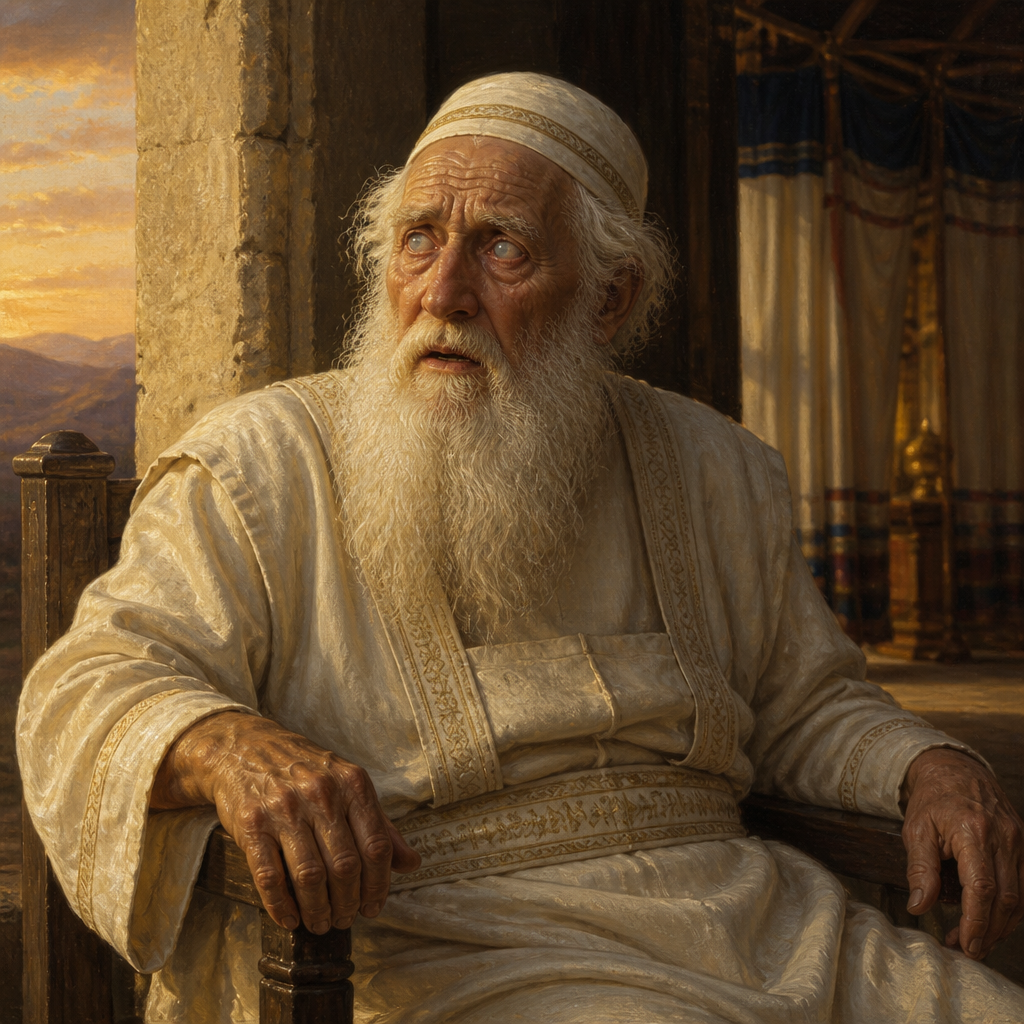
Eli was a significant religious and leadership figure in ancient Israel, serving as the High Priest at the tabernacle in Shiloh during the late period of the Judges and the transition toward the United Monarchy. He is introduced in the biblical record as an elderly priest presiding over the sanctuary where the Ark of the Covenant was kept. His tenure is marked by a unique intersection of personal piety and professional failure, particularly regarding the conduct of his own household.
Historically, Eli serves as a bridge between the era of the Judges and the rise of the prophetic and monarchical institutions. He is most famous for his role as a mentor to the young Samuel, who would eventually succeed him as the spiritual leader of Israel and anoint the nation’s first two kings. Eli’s life concludes with a series of tragic events that signify a shift in Israel's spiritual center and the temporary loss of the Ark to the Philistines.
Background and Family
Eli belonged to the Tribe of Levi and functioned as the priest of the LORD at Shiloh, which was the central site of worship for the Israelites before the construction of the Temple in Jerusalem. The biblical text identifies him as the father of two sons, Hophni and Phinehas, who also served as priests. However, despite their lineage and office, the narrative in 1 Samuel 2:12 explicitly labels them as "wicked men" who had "no regard for the LORD."
Eli’s family was under the weight of a divine decree due to the corruption of his sons. They were accused of stealing the best portions of sacrifices brought by the people and committing acts of immorality at the entrance to the Tent of Meeting. While Eli attempted to rebuke them verbally, the text suggests his discipline was insufficient. A "man of God" visited Eli to deliver a scathing prophecy, reminding him that the LORD had revealed Himself to Eli's ancestors in Egypt, yet Eli had honored his sons more than God by allowing them to fatten themselves on the choice parts of every offering.
Major Life Events
Eli’s public ministry is first highlighted through his interaction with Hannah. As he sat by the doorpost of the temple of the LORD, he observed Hannah praying fervently for a child. Initially, Eli mistook her silent, emotional petition for drunkenness and rebuked her. Upon hearing her explanation, he offered a blessing, petitioning the God of Israel to grant her request. When Hannah later gave birth to Samuel, she returned the boy to Eli to be dedicated to the LORD's service, establishing a surrogate-father relationship between the aging priest and the future prophet.
As Eli aged, his physical sight began to fail, mirroring the spiritual state of the nation where "the word of the LORD was rare." One night, the LORD called to the young Samuel as he slept near the Ark. Samuel, thinking it was Eli, ran to him three times. It was Eli who eventually realized the divine nature of the call and instructed Samuel on how to respond: "Speak, LORD, for Your servant is listening." This moment marked the formal transition of spiritual authority from the house of Eli to Samuel.
Relationship to Other Biblical Figures
Eli’s primary relationships are defined by contrast. His biological sons, Hophni and Phinehas, represent the corruption of the priesthood. In contrast, his protege, Samuel, represents the restoration of prophetic integrity. The text notes that while Eli’s sons were rejected by God, "the boy Samuel grew in stature and in favor with the LORD and with men."
Eli also had a direct interaction with the unnamed "man of God" who prophesied the end of his priestly line. This prophecy was later confirmed by Samuel, who was forced to deliver a message of judgment to his mentor, stating that the iniquity of Eli’s house could never be atoned for by sacrifice or offering. The fulfillment of these prophecies is traced through the subsequent generations, including Eli’s grandson Ichabod and his descendant Abiathar, whom King Solomon eventually removed from the priesthood during the early United Monarchy to fulfill the word spoken against the house of Eli at Shiloh.
Spiritual Significance
Eli’s life serves as a cautionary tale regarding the responsibilities of spiritual and parental leadership. His tenure ended in national and personal disaster. During a battle with the Philistines at Aphek, Hophni and Phinehas were killed, and the Ark of the Covenant was captured. When a messenger arrived at Shiloh to report the news, the ninety-eight-year-old Eli was sitting on his chair by the road, his heart trembling for the Ark. Upon hearing that the Ark had been taken, Eli fell backward off his chair, broke his neck, and died. The text records that he had judged Israel for forty years.
His death, along with the naming of his grandson Ichabod ("The glory has departed"), signaled a low point in Israel's history. Yet, Eli is also remembered for his discernment in identifying God's voice to Samuel. Despite his failures as a father, his willingness to accept God's judgment with the words, "He is the LORD; let Him do what is good in His eyes," reflects a remnant of the faith that once defined his office. His legacy is ultimately one of transition—the closing of one chapter of Israelite history and the opening of another under the leadership of Samuel.
Eli occupies a pivotal role as the last major judge before the establishment of the monarchy and the first high priest whose internal family dynamics are explored in detail. His significance lies in the thematic tension between his individual piety and his failure to maintain the holiness of the sanctuary. The judgment on his house serves as a biblical archetype for the principle that religious office does not grant immunity from divine accountability, especially regarding the desecration of worship.
Furthermore, Eli is essential to the narrative of Samuel. Without Eli’s initial blessing of Hannah and his subsequent guidance of Samuel’s early call, the transition to the prophetic era would lack its foundational structure. The eventual removal of his descendants from the priesthood during Solomon’s reign (1 Kings 2:27) serves as a long-term biblical proof of the certainty of God’s word, linking the era of the Judges directly to the stability of the Davidic kingdom.
Frequently Asked Questions
How did Eli die?
Eli died at the age of 98 after hearing that the Ark of God had been captured by the Philistines and his two sons had been killed. He fell backward off his chair, broke his neck, and died.
Why were Eli's sons considered wicked?
Hophni and Phinehas showed contempt for the LORD’s offerings by forcibly taking choice portions of meat from the people and committed immorality with the women who served at the entrance to the Tent of Meeting.
Who succeeded Eli as the leader of Israel?
Samuel, whom Eli had mentored since childhood, succeeded him as the primary spiritual leader and judge of Israel.
How long did Eli judge Israel?
The Bible states in 1 Samuel 4:18 that Eli had judged Israel for forty years.
What prophecy was given against Eli's house?
A man of God and later the LORD (through Samuel) prophesied that Eli’s family would be cut off from the priesthood, his descendants would die in the prime of life, and his two sons would die on the same day.
Family & Relationships
 EliThis page
Children
 HophniSon1 Samuel 4:4Stated
 Phinehas, Son of EliSon1 Samuel 14:3Stated
Extended family
 Ahitub, Son of PhinehasGrandson1 Samuel 14:3Stated
 IchabodGrandson1 Samuel 14:3Stated
 AbiatharDescendant1 Kings 2:27
Inferred
1 Kings 2:27 names Abiathar and Eli in the same verse but does not state an ancestor tie between them; the link rests on the surrounding narrative.Evidence: 1 Kings 2:27
Connected Figures
Family
Son · 1 Samuel 4:4
A priest of Israel at Shiloh and son of Eli whose corrupt behavior and eventual death in battle signaled the end of his family’s priestly dominance.
Son · 1 Samuel 14:3
Phinehas was a priest at Shiloh during the United Monarchy whose death coincided with the Philistine capture of the Ark of the Covenant.
Grandson · 1 Samuel 14:3
A Levite priest and grandson of Eli who served during the United Monarchy and fathered the High Priest Ahimelech.
Grandson · 1 Samuel 14:3
The son of Phinehas and grandson of Eli, Ichabod is best known for his symbolic name meaning 'the glory has departed,' marking the Philistine capture of the Ark of the Covenant.
Descendant · 1 Kings 2:27
The last high priest from the line of Eli, Abiathar was a loyal companion to David during his exile but was eventually deposed by Solomon for supporting Adonijah.
United MonarchyFirst: 1 Samuel 22:2031 versesHigh PriestLevi
Mentions by Book
- 1 Samuel31
- 1 Kings1
Scripture References
All 32 indexed verses, in canonical order, from the Berean Standard Bible.
- 1 Samuel 1:3
Year after year Elkanah would go up from his city to worship and sacrifice to the LORD of Hosts at Shiloh, where Eli’s two sons, Hophni and Phinehas, were priests to the LORD.
- 1 Samuel 1:9
So after they had finished eating and drinking in Shiloh, Hannah stood up. Now Eli the priest was sitting on a chair by the doorpost of the temple of the LORD.
- 1 Samuel 1:12
As Hannah kept on praying before the LORD, Eli watched her mouth.
- 1 Samuel 1:13
Hannah was praying in her heart, and though her lips were moving, her voice could not be heard. So Eli thought she was drunk
- 1 Samuel 1:14
and said to her, “How long will you be drunk? Put away your wine!”
- 1 Samuel 1:17
“Go in peace,” Eli replied, “and may the God of Israel grant the petition you have asked of Him.”
- 1 Samuel 1:25
And when they had slaughtered the bull, they brought the boy to Eli.
- 1 Samuel 2:11
Then Elkanah went home to Ramah, but the boy began ministering to the LORD before Eli the priest.
- 1 Samuel 2:12
Now the sons of Eli were wicked men; they had no regard for the LORD
- 1 Samuel 2:20
And Eli would bless Elkanah and his wife, saying, “May the LORD give you children by this woman in place of the one she dedicated to the LORD.” Then they would go home.
- 1 Samuel 2:22
Now Eli was very old, and he heard about everything his sons were doing to all Israel and how they were sleeping with the women who served at the entrance to the Tent of Meeting.
- 1 Samuel 2:27
Then a man of God came to Eli and told him, “This is what the LORD says: ‘Did I not clearly reveal Myself to your father’s house when they were in Egypt under Pharaoh’s house?
- 1 Samuel 3:1
And the boy Samuel ministered to the LORD before Eli. Now in those days the word of the LORD was rare, and visions were scarce.
- 1 Samuel 3:2
And at that time Eli, whose eyesight had grown so dim that he could not see, was lying in his room.
- 1 Samuel 3:5
He ran to Eli and said, “Here I am, for you have called me.” “I did not call,” Eli replied. “Go back and lie down.” So he went and lay down.
- 1 Samuel 3:6
Once again the LORD called, “Samuel!” So Samuel got up, went to Eli, and said, “Here I am, for you have called me.” “My son, I did not call,” Eli replied. “Go back and lie down.”
- 1 Samuel 3:8Partial
Once again, for the third time, the LORD called to Samuel. He got up, went to Eli, and said, “Here I am, for you have called me.” Then Eli realized that it was the LORD who was calling the boy.
- 1 Samuel 3:9
“Go and lie down,” he said to Samuel, “and if He calls you, say, ‘Speak, LORD, for Your servant is listening.’” So Samuel went and lay down in his place.
- 1 Samuel 3:12
On that day I will carry out against Eli everything I have spoken about his house, from beginning to end.
- 1 Samuel 3:13Partial
I told him that I would judge his house forever for the iniquity of which he knows, because his sons blasphemed God and he did not restrain them.
Cited as a key verse; added so References, Key Verses and Mentions by Book share one index.
- 1 Samuel 3:14Partial
Therefore I have sworn to the house of Eli, ‘The iniquity of Eli’s house shall never be atoned for by sacrifice or offering.’”
- 1 Samuel 3:15
Samuel lay down until the morning; then he opened the doors of the house of the LORD. He was afraid to tell Eli the vision,
- 1 Samuel 3:16
but Eli called to him and said, “Samuel, my son.” “Here I am,” answered Samuel.
- 1 Samuel 4:4
So the people sent men to Shiloh, and they brought back the ark of the covenant of the LORD of Hosts, who sits enthroned between the cherubim. And the two sons of Eli, Hophni and Phinehas, were there with the ark of the covenant of God.
- 1 Samuel 4:11
The ark of God was captured, and Eli’s two sons, Hophni and Phinehas, died.
- 1 Samuel 4:13
When he arrived, there was Eli, sitting on his chair beside the road and watching, because his heart trembled for the ark of God. When the man entered the city to give a report, the whole city cried out.
- 1 Samuel 4:14Partial
Eli heard the outcry and asked, “Why this commotion?” So the man hurried over and reported to Eli.
- 1 Samuel 4:15
Now Eli was ninety-eight years old, and his gaze was fixed because he could not see.
- 1 Samuel 4:16
“I have just come from the battle,” the man said to Eli. “I fled from there today.” “What happened, my son?” Eli asked.
- 1 Samuel 4:18
As soon as the ark of God was mentioned, Eli fell backward from his chair by the city gate, and being old and heavy, he broke his neck and died. And Eli had judged Israel forty years.
Cited as a key verse; added so References, Key Verses and Mentions by Book share one index.
- 1 Samuel 14:3
including Ahijah, who was wearing an ephod. He was the son of Ichabod’s brother Ahitub son of Phinehas, the son of Eli the priest of the LORD in Shiloh. But the troops did not know that Jonathan had left.
- 1 Kings 2:27
So Solomon banished Abiathar from the priesthood of the LORD and thus fulfilled the word that the LORD had spoken at Shiloh against the house of Eli.