Shallum, Uncle of Jeremiah
Who was Shallum, Uncle of Jeremiah, in the Bible?
Shallum was the paternal uncle of the prophet Jeremiah and the father of Hanamel during the final years of the Divided Monarchy.
This is one of 13 people named Shallum in the Bible. See all 13 →
Shallum was a member of a priestly family residing in the territory of Benjamin during the 7th century BC. He is specifically identified in the Book of Jeremiah as the brother of Hilkiah, who was the father of the prophet Jeremiah. This makes Shallum a paternal uncle to the famous prophet, placing him within an influential levitical lineage centered in the village of Anathoth.
While Shallum is not a central protagonist in the narrative of Judah’s fall, his name appears during a critical legal and prophetic transaction regarding ancestral land. His presence in the text serves to establish the legal framework for the redemption of property, a process that carried immense symbolic weight during the Babylonian siege of Jerusalem.
Background and Family
Shallum lived during the late Divided Monarchy, specifically during the reign of King Zedekiah. He belonged to a priestly line that held property in Anathoth, a city designated for the priests within the borders of the tribe of Benjamin. According to Jeremiah 32:7, Shallum was the son of a man also named Shallum, and he was the father of Hanamel.
The genealogical structure provided in the text identifies Shallum as the brother of Hilkiah. In the context of the Book of Jeremiah, this Hilkiah is the father of the prophet himself. Consequently, Shallum occupied a position of familial responsibility within the clan, overseeing ancestral holdings that were subject to the laws of levitical land redemption.
Major Life Events
The sole recorded event involving Shallum occurs through the actions of his son, Hanamel. In the tenth year of King Zedekiah (c. 588–587 BC), while Jerusalem was under siege by the forces of Nebuchadnezzar II, the word of the Lord came to Jeremiah, informing him that Hanamel, the son of his uncle Shallum, would come to him.
As the head of his immediate household, Shallum’s ownership of the field in Anathoth was the basis for this transaction. Hanamel approached Jeremiah in the court of the guard to offer him the right of redemption. The purchase of this land, originally owned or managed by Shallum’s branch of the family, was a legal requirement to keep the property within the kin-group. Although Shallum does not speak in the text, his role as the biological and legal link between the land and the prophet is the catalyst for one of Jeremiah’s most significant symbolic acts.
Relationship to Other Biblical Figures
Shallum’s primary significance is defined by his relationships. He is the brother of Hilkiah, which ties him directly to the prophetic ministry of Jeremiah. Furthermore, he is the father of Hanamel, the cousin who executes the land sale. These relationships underscore the tight-knit nature of the priestly community in Anathoth and demonstrate how familial obligations were maintained even during national catastrophe.
Spiritual Significance
Shallum represents the continuity of the covenantal law during a time of total upheaval. The mention of his name provides the necessary legal pedigree for the land redemption described in Jeremiah 32. This transaction was not merely a private family matter; it was a prophetic sign. By purchasing the field from Shallum's son, Jeremiah demonstrated faith that, despite the impending exile, "houses and fields and vineyards shall again be bought in this land" (Jeremiah 32:15). Shallum, as the father of the seller and uncle of the buyer, is the foundational figure in this testament of hope. Through his lineage, the physical connection to the Promised Land was legally preserved for a future generation.
Shallum serves as a vital link in the legal and genealogical record of the prophet Jeremiah. His role is grounded in the Mosaic Law concerning the 'kinsman-redeemer,' as his son Hanamel approached Jeremiah to exercise the right of redemption for family land in Anathoth. This act provided the basis for a powerful prophetic message: that God would eventually restore Israel to its land, despite the Babylonian conquest.
Although Shallum is a minor figure, his inclusion in the text validates the authenticity of Jeremiah’s property claim. It grounds the prophetic metaphor in historical and legal reality, showing that the prophet’s family continued to observe the statutes of the Torah regarding ancestral inheritance even as the kingdom of Judah was collapsing.
Frequently Asked Questions
How is Shallum related to the prophet Jeremiah?
Shallum was Jeremiah’s paternal uncle. He was the brother of Jeremiah’s father, Hilkiah.
Who was Shallum’s son?
Shallum’s son was Hanamel, who visited Jeremiah to sell him a field in Anathoth.
Where did Shallum’s family live?
They were from Anathoth, a city of priests located in the territory of Benjamin, north of Jerusalem.
Why is Shallum mentioned in Jeremiah 32?
He is mentioned to establish the legal right of Jeremiah to buy a piece of family land, as Shallum was the father of the current owner, Hanamel.
Family & Relationships
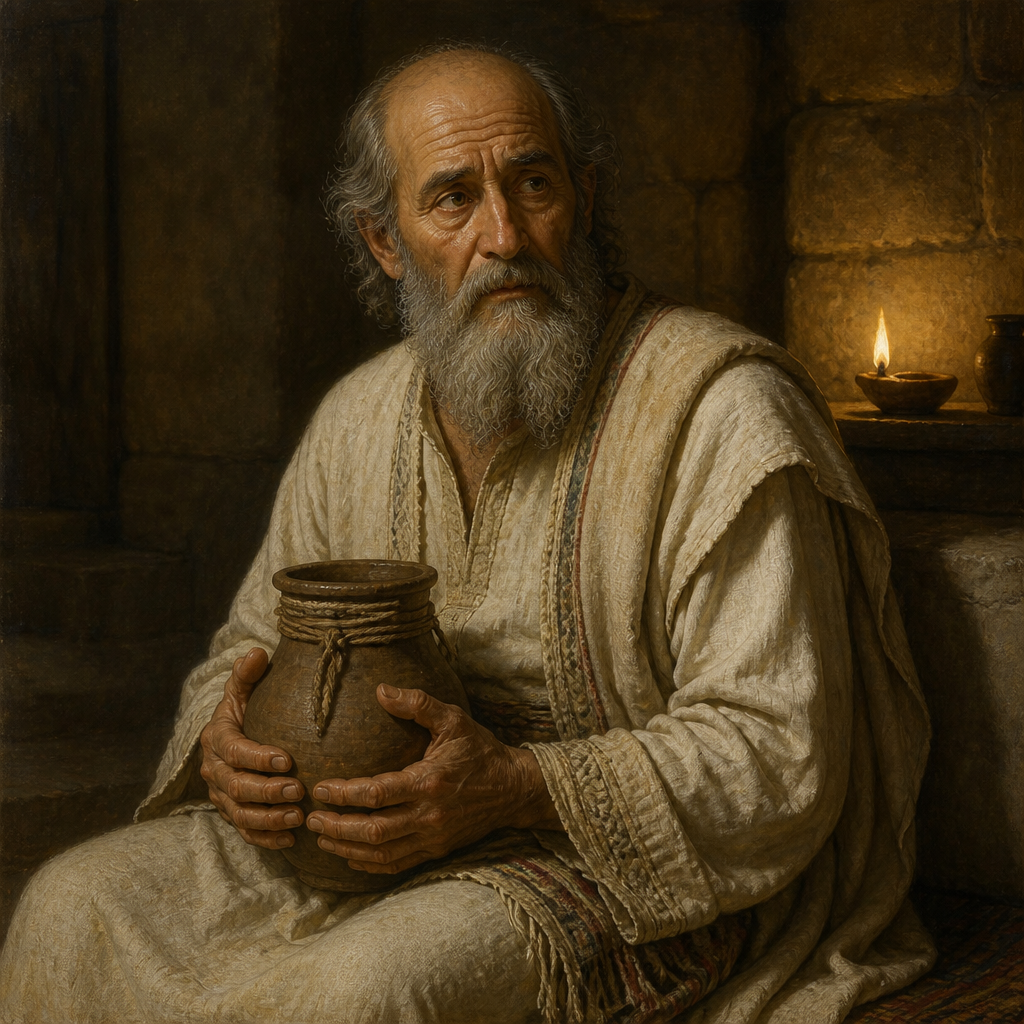 Shallum, Uncle of JeremiahThis page
 Hilkiah, Father of JeremiahBrotherJeremiah 1:1
Inferred
No verse names Shallum and Hilkiah together; the brother link is carried from the surrounding genealogy and is not stated in Scripture.Evidence: Jeremiah 1:1
Children
 HanamelSonJeremiah 32:7
Inferred
Jeremiah 32:7 names Hanamel and Shallum in the same verse but does not state a father tie between them; the link rests on the surrounding narrative.Evidence: Jeremiah 32:7
Extended family
 Jeremiah, Son of HilkiahNephewJeremiah 1:1
Inferred
No verse names Shallum and Jeremiah together; the nephew link is carried from the surrounding genealogy and is not stated in Scripture.Evidence: Jeremiah 1:1
Connected Figures
Family
Son · Jeremiah 32:7
The cousin of the prophet Jeremiah who sold him a field in Anathoth as a symbolic act of faith during the Babylonian siege of Jerusalem.
Brother · Jeremiah 1:1
A priest from the town of Anathoth in the territory of Benjamin and the father of the major prophet Jeremiah.
Divided MonarchyFirst: Jeremiah 1:12 versesPriestBenjamin
Nephew · Jeremiah 1:1
A major prophet of the Divided Monarchy who predicted the fall of Jerusalem and the 70-year Babylonian exile while suffering intense persecution for his message.
Divided MonarchyFirst: 2 Chronicles 35:25132 versesProphet and PriestBenjamin
Categories
Mentions by Book
- Jeremiah3
Scripture References
All 3 indexed verses, in canonical order, from the Berean Standard Bible.
Jeremiah · 3
- Jeremiah 1:1Partial
These are the words of Jeremiah son of Hilkiah, one of the priests in Anathoth in the territory of Benjamin.
Cited as evidence on a family card; added so References, Key Verses and Mentions by Book share one index.
- Jeremiah 32:6Partial
Jeremiah replied, “The word of the LORD came to me, saying:
Cited as evidence on a family card; added so References, Key Verses and Mentions by Book share one index.
- Jeremiah 32:7
Behold! Hanamel, the son of your uncle Shallum, is coming to you to say, ‘Buy for yourself my field in Anathoth, for you have the right of redemption to buy it.’
Others Named Shallum
Compare all 13 bearers →Shallum, Son of Shaul1 Chronicles 4:25
Shallum was a member of the Tribe of Simeon and the son of Shaul, whose lineage is preserved in the genealogical records of 1 Chronicles.
Shallum, Father of Hilkiah1 Chronicles 6:12
A high-ranking priest of the line of Zadok who served during the Divided Monarchy and fathered the High Priest Hilkiah.
Shallum, Levite Gatekeeper of the Return1 Chronicles 9:17
A prominent Levite chief gatekeeper and head of a family whose descendants served at the Temple during the post-exilic return from Babylon.
Shallum of the Sons of BaniEzra 10:42
A returning exile from the family of Bani who was among those addressed by Ezra for taking a foreign wife.
Shallum, Son of HalloheshNehemiah 3:12
A district ruler in Jerusalem who assisted Nehemiah in rebuilding the city walls alongside his daughters during the post-exilic return.
Shallum son of Jabesh2 Kings 15:10
The fifteenth king of Israel, Shallum son of Jabesh ascended the throne through assassination and reigned for only one month in Samaria during the Divided Monarchy.
Shallum, Father of MaaseiahJeremiah 35:4
Shallum was a Levite doorkeeper during the Divided Monarchy whose son Maaseiah held a chamber in the Temple during the time of the prophet Jeremiah.
Shallum, Gatekeeper of the ReturnEzra 10:24
A Levite gatekeeper during the post-exilic return under Ezra who was among those addressed for taking foreign wives.
Shallum, Son of Sismai1 Chronicles 2:40
Shallum was a member of the Tribe of Judah and a descendant of Jerahmeel whose lineage is preserved in the genealogical records of 1 Chronicles.
Shallum, Father of Jehizkiah2 Chronicles 28:12
An Ephraimite leader during the Exile and Return whose son, Jehizkiah, played a critical role in showing mercy to Judean captives during the reign of King Pekah.
Shallum, Keeper of the Wardrobe2 Kings 22:14
A high-ranking royal official in the kingdom of Judah and the husband of Huldah the prophetess during the reign of King Josiah.
Shallum, Son of Col-hozehNehemiah 3:15
Shallum, son of Col-hozeh, was a district ruler of Mizpah who oversaw the reconstruction of the Fountain Gate and its adjacent structures during the return to Jerusalem.