Shallum, Father of Maaseiah
Who was Shallum, Father of Maaseiah, in the Bible?
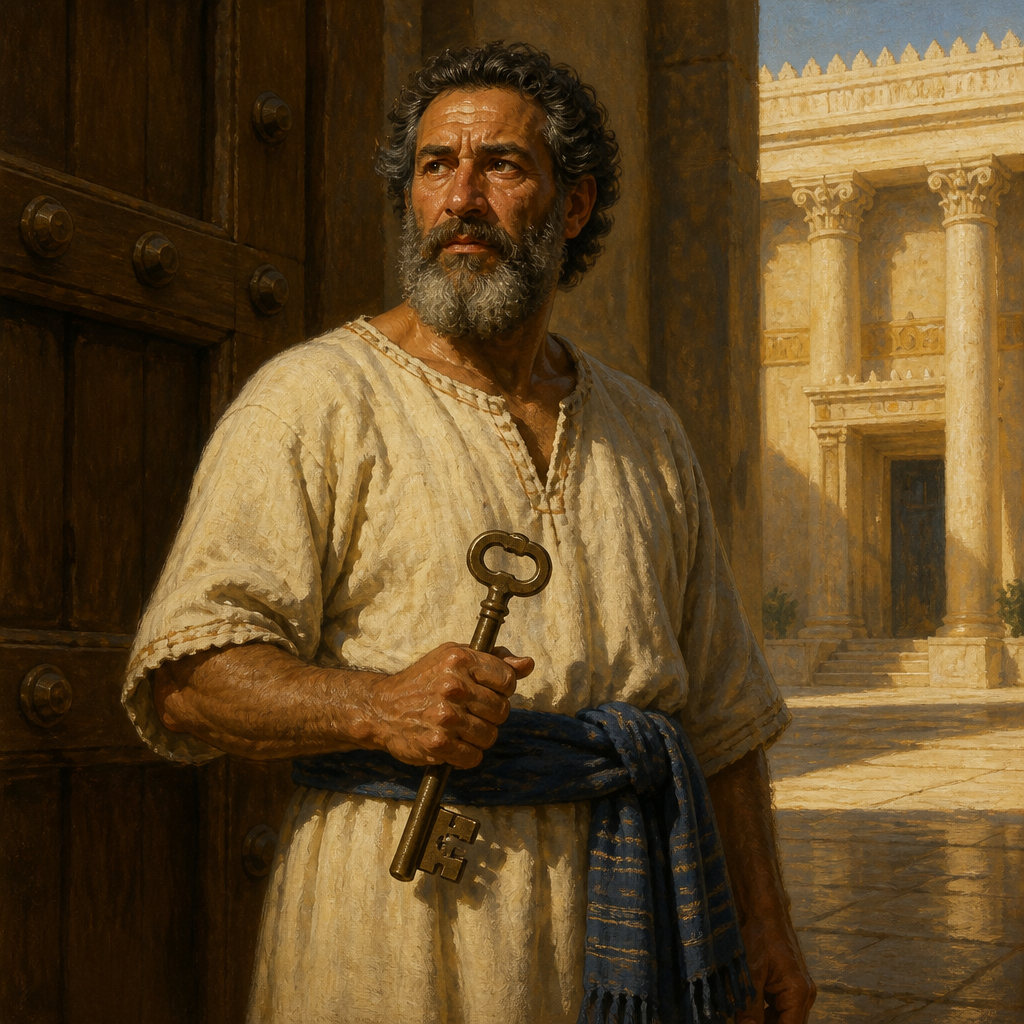
Shallum was a Levite doorkeeper during the Divided Monarchy whose son Maaseiah held a chamber in the Temple during the time of the prophet Jeremiah.
This is one of 13 people named Shallum in the Bible. See all 13 →
Shallum is identified in the book of Jeremiah as the father of Maaseiah, an official who served as a doorkeeper in the Temple of Jerusalem. Living during the turbulent final years of the Divided Monarchy, Shallum belonged to the priestly or Levite class responsible for the security and sanctity of the house of the LORD. His identity is defined primarily through his son's station, which placed the family in close proximity to the high-ranking officials and prophets of Judah.
While Shallum is mentioned only briefly in the context of the prophet Jeremiah’s interactions with the Rechabites, the reference provides a glimpse into the organized structure of the Temple hierarchy during the seventh century BC. As a doorkeeper, Shallum would have held a position of trust, ensuring that only those who were ritually clean and authorized could enter the sacred precincts of the Temple.
Background and Family
Shallum lived during the era of the Divided Monarchy, specifically during the late Judean period when the kingdom faced imminent threat from the Babylonian Empire. While his specific tribal lineage is not explicitly stated in Jeremiah 35, his role as the father of a "doorkeeper" (Maaseiah) strongly indicates a Levite heritage. The office of the doorkeeper was a hereditary position within the tribe of Levi, tasked with guarding the entrances to the Temple of Jerusalem to maintain its sanctity and manage the flow of worshippers and offerings.
His son, Maaseiah, achieved a level of prominence that resulted in the family having a specific "chamber" (a side room or office) within the Temple complex. This suggests that Shallum’s family was well-established within the religious bureaucracy of Jerusalem during the reigns of the final kings of Judah.
Major Life Events
The primary biblical mention of Shallum occurs in Jeremiah 35:4. This passage describes a symbolic demonstration commanded by God to the prophet Jeremiah. Jeremiah was instructed to bring the Rechabite family into the Temple to offer them wine, highlighting their faithfulness to their ancestral vows in contrast to Judah’s unfaithfulness to God.
The text notes that Jeremiah brought them into a room near "the chamber of the officials, which was above the chamber of Maaseiah son of Shallum the doorkeeper." While Shallum himself is not an active participant in the scene, the geographical marker of his son's chamber serves as a testament to the family's presence in the heart of Judah's spiritual life. The reference implies that Shallum was a known figure whose name helped identify specific locations within the vast Temple structure.
Relationship to Other Biblical Figures
Shallum’s primary relationship recorded in scripture is to his son, Maaseiah. The mention of Maaseiah’s chamber being located beneath the chamber of the "officials" (sarim) and near the room used by the sons of Hanan son of Igdaliah suggests that Shallum’s family moved in the same circles as the religious and political elite of Jerusalem. This proximity to the "man of God" Igdaliah and the ruling officials underscores the significance of the doorkeeper’s role in the daily operations of the Temple.
Spiritual Significance
Though Shallum is a minor figure, his inclusion in the record of Jeremiah 35 serves a structural purpose in the narrative of Judean history. The doorkeepers were more than just security; they were the “keepers of the threshold,” a role often associated with spiritual vigilance. By recording the name of Shallum, the biblical text preserves the memory of those who served in the shadow of the great prophets, maintaining the physical house of God even as the nation’s spiritual foundations were crumbling under the weight of idolatry. His legacy, preserved through his son Maaseiah, represents the continuity of service in the Temple until the eventual destruction of Jerusalem in 586 BC.
Shallum represents the steady, multigenerational service of the Levites during the Divided Monarchy. His role as the father of a doorkeeper highlights the structured, hierarchical nature of Temple life in the pre-exilic period and provides historical anchoring for the topography of Solomon's Temple. His name is preserved as part of a detailed account that emphasizes the contrast between those who were faithful to their duties and the broader rebellion of the nation of Judah.
Frequently Asked Questions
What was Shallum's job in the Bible?
Shallum is identified as a 'doorkeeper,' a role typically held by Levites who were responsible for guarding the entrances to the Temple in Jerusalem.
Who was Shallum's son?
Shallum’s son was Maaseiah, who held a specific chamber or office within the Temple complex near the rooms of the officials.
In which book of the Bible is this Shallum mentioned?
This specific Shallum is mentioned in the Book of Jeremiah, specifically in chapter 35, verse 4.
When did Shallum live?
Shallum lived during the Divided Monarchy, during the time of the prophet Jeremiah and the final years of the Kingdom of Judah (7th century BC).
Family & Relationships
 Shallum, Father of MaaseiahThis page
Children
 Maaseiah son of Shallum, DoorkeeperSonJeremiah 35:4Stated
Connected Figures
Family
Son · Jeremiah 35:4
A Levite official and doorkeeper of the Temple in Jerusalem during the final years of the Divided Monarchy.
Divided MonarchyFirst: Jeremiah 35:41 versesTemple DoorkeeperLevi
Categories
Mentions by Book
- Jeremiah1
Scripture References
All 1 indexed verse, in canonical order, from the Berean Standard Bible.
Jeremiah · 1
- Jeremiah 35:4
and I brought them into the house of the LORD, to a chamber occupied by the sons of Hanan son of Igdaliah, a man of God. This room was near the chamber of the officials, which was above the chamber of Maaseiah son of Shallum the doorkeeper.
Others Named Shallum
Compare all 13 bearers →Shallum, Son of Shaul1 Chronicles 4:25
Shallum was a member of the Tribe of Simeon and the son of Shaul, whose lineage is preserved in the genealogical records of 1 Chronicles.
Shallum, Father of Hilkiah1 Chronicles 6:12
A high-ranking priest of the line of Zadok who served during the Divided Monarchy and fathered the High Priest Hilkiah.
Shallum, Levite Gatekeeper of the Return1 Chronicles 9:17
A prominent Levite chief gatekeeper and head of a family whose descendants served at the Temple during the post-exilic return from Babylon.
Shallum of the Sons of BaniEzra 10:42
A returning exile from the family of Bani who was among those addressed by Ezra for taking a foreign wife.
Shallum, Son of HalloheshNehemiah 3:12
A district ruler in Jerusalem who assisted Nehemiah in rebuilding the city walls alongside his daughters during the post-exilic return.
Shallum son of Jabesh2 Kings 15:10
The fifteenth king of Israel, Shallum son of Jabesh ascended the throne through assassination and reigned for only one month in Samaria during the Divided Monarchy.
Shallum, Gatekeeper of the ReturnEzra 10:24
A Levite gatekeeper during the post-exilic return under Ezra who was among those addressed for taking foreign wives.
Shallum, Son of Sismai1 Chronicles 2:40
Shallum was a member of the Tribe of Judah and a descendant of Jerahmeel whose lineage is preserved in the genealogical records of 1 Chronicles.
Shallum, Uncle of JeremiahJeremiah 32:7
Shallum was the paternal uncle of the prophet Jeremiah and the father of Hanamel during the final years of the Divided Monarchy.
Shallum, Father of Jehizkiah2 Chronicles 28:12
An Ephraimite leader during the Exile and Return whose son, Jehizkiah, played a critical role in showing mercy to Judean captives during the reign of King Pekah.
Shallum, Keeper of the Wardrobe2 Kings 22:14
A high-ranking royal official in the kingdom of Judah and the husband of Huldah the prophetess during the reign of King Josiah.
Shallum, Son of Col-hozehNehemiah 3:15
Shallum, son of Col-hozeh, was a district ruler of Mizpah who oversaw the reconstruction of the Fountain Gate and its adjacent structures during the return to Jerusalem.