Igdaliah
Who was Igdaliah in the Bible?
A prominent man of God during the Divided Monarchy whose lineage was honored with a private chamber in the Temple in Jerusalem.
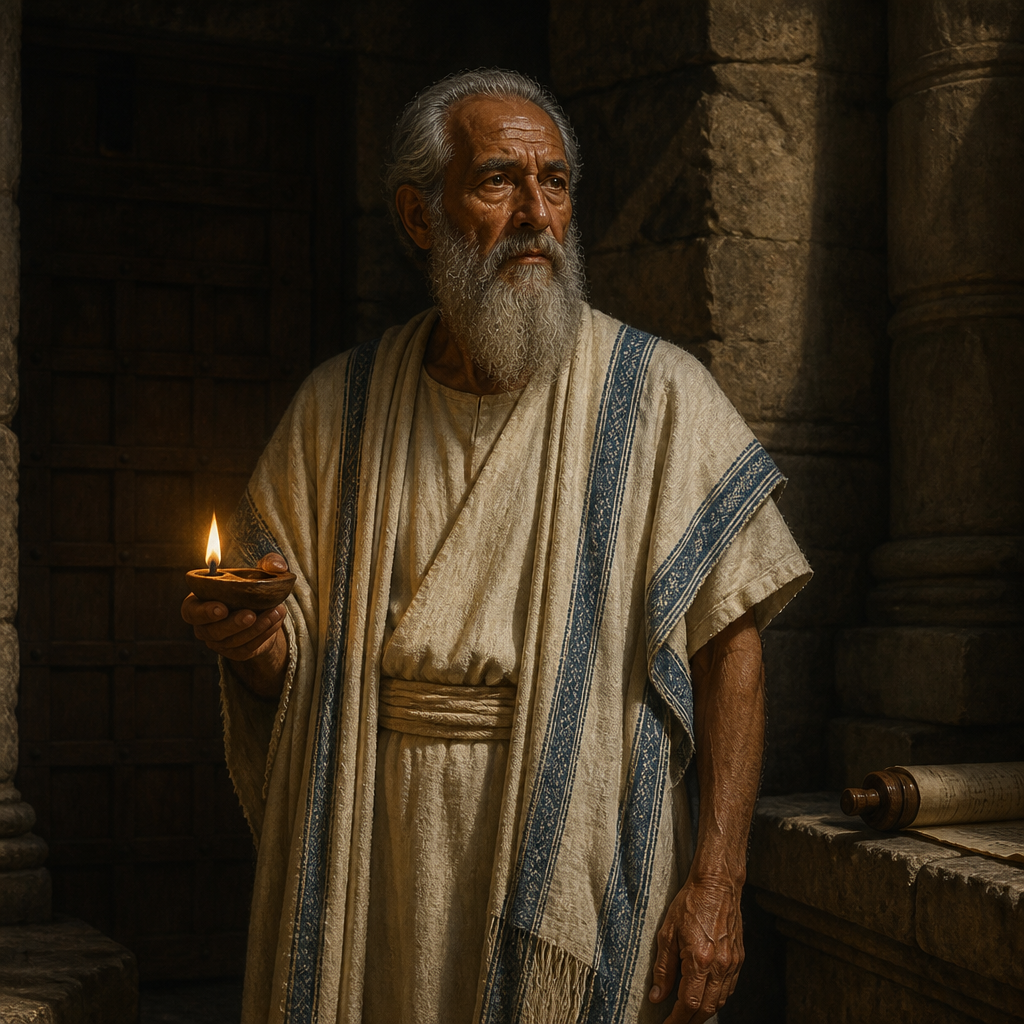
Igdaliah is a figure mentioned in the Old Testament during the late Divided Monarchy, specifically during the reign of King Jehoiakim of Judah. Although his life is not detailed extensively in the biblical narrative, he is identified by the distinctive title 'man of God' (ish ha-Elohim), a designation often reserved for prophets or individuals of exceptional spiritual authority. His historical footprint is preserved through the mention of his descendants, the sons of Hanan, who occupied a significant location within the Temple complex.
His mention occurs within the context of the prophet Jeremiah’s interactions with the Rechabites. As a figure whose name and lineage were associated with the sacred spaces of the Temple, Igdaliah represents the network of faithful families who maintained the religious life of Judah even as the nation faced the impending threat of Babylonian conquest. The presence of a chamber named for his descendants suggests that he was a man of high standing and enduring reputation in the Jerusalemite priesthood or prophetic circles.
Background and Family
Igdaliah lived during the era of the Divided Monarchy, specifically during the final decades of the Kingdom of Judah. His name, Yigdalyahu in Hebrew, translates to 'Great is Yahweh' or 'May Yahweh be magnified,' reflecting the typical theophoric naming conventions of the period that emphasized the supremacy of the God of Israel.
While the biblical text does not specify Igdaliah’s tribe or broader genealogy, it records that he was the father of Hanan. This lineage was clearly of high repute, as Hanan’s own sons—the grandsons of Igdaliah—maintained a private chamber within the House of the LORD. The location of this chamber, situated near the quarters of the high-ranking officials and above the room of Maaseiah son of Shallum the doorkeeper, indicates that Igdaliah’s family held a privileged and respected position within the Temple hierarchy or among the resident spiritual guides of Jerusalem.
Major Life Events
The biblical record for Igdaliah is confined to a single reference in the Book of Jeremiah, which serves as a snapshot of his legacy rather than a biography of his life. In Jeremiah 35, the prophet Jeremiah is commanded by God to bring the Rechabite family into the Temple to test their obedience. Jeremiah brings them specifically into the 'chamber of the sons of Hanan son of Igdaliah.'
Because the text refers to the 'sons of Hanan,' it is probable that Igdaliah himself had already passed away by the time of this event (c. 600–599 BC). However, the inclusion of his name serves to authenticate the sanctity of the location. By describing Igdaliah as a 'man of God,' the text implies that his life was characterized by prophetic ministry or a life of devoted service that left a lasting impact on the religious architecture and social structure of the Temple.
Relationship to Other Biblical Figures
Igdaliah is directly linked to his son, Hanan, and his unnamed grandsons. Beyond his immediate family, he is connected by the biblical narrative to the prophet Jeremiah. Jeremiah chose the room associated with Igdaliah’s lineage for a significant prophetic demonstration, suggesting a level of trust or spiritual alignment between Jeremiah and the house of Igdaliah.
Furthermore, the text notes the proximity of Igdaliah’s family chamber to the chamber of Maaseiah son of Shallum, the 'doorkeeper' (a high-ranking priestly official). This juxtaposition places Igdaliah within the inner circle of the Temple’s administrative and spiritual elite during the turbulent days leading up to the Babylonian Exile.
Spiritual Significance
The primary significance of Igdaliah lies in his title: 'a man of God.' In the Hebrew Bible, this term (ish ha-Elohim) is applied to figures such as Moses, Samuel, Elijah, and Elisha. While the specific deeds of Igdaliah are not recorded, the application of this title to him signifies that he was recognized by his contemporaries and by the biblical author as a legitimate messenger or servant of Yahweh.
In a time of widespread apostasy and political corruption under King Jehoiakim, Igdaliah represents the 'remnant' of faithful individuals who remained devoted to the covenant. The fact that his name was still used to identify a location in the Temple a generation later suggests that his influence was not merely personal, but communal, establishing a legacy of holiness that his descendants continued to uphold.
Igdaliah is significant as one of the few individuals explicitly labeled a 'man of God' during the period of the late monarchy. This title suggests he held a position of spiritual authority, likely as a prophet, which warranted his family having a dedicated chamber within the Temple complex. His presence in the text provides evidence of a faithful prophetic tradition existing alongside the major prophets like Jeremiah.
Furthermore, his mention in the context of the Rechabite account highlights the existence of specific groups within Jerusalem who remained dedicated to the Lord's service. The preservation of his name in the Oracle of Jeremiah serves to validate the holiness of the setting where the Rechabites' faithfulness was demonstrated, contrasting the obedience of these groups with the disobedience of the king and the general population of Judah.
Frequently Asked Questions
What does the name Igdaliah mean?
The name Igdaliah (Yigdalyahu) means 'Great is Yahweh' or 'May Yahweh grow/be magnified' in Hebrew.
What was Igdaliah's role in the Temple?
While his specific duties are not listed, he is called a 'man of God,' and his descendants possessed a chamber in the Temple near the officials, suggesting he was a respected prophet or spiritual leader.
In which book of the Bible is Igdaliah mentioned?
Igdaliah is mentioned only once in the Bible, in the Book of Jeremiah, chapter 35, verse 4.
Who was Igdaliah's son?
Igdaliah's son was named Hanan, whose own children occupied a chamber in the Temple during the time of Jeremiah.
When did Igdaliah live?
He lived during the Divided Monarchy, specifically during the period preceding the Babylonian Exile, as his grandsons were active during the reign of King Jehoiakim (c. 609–598 BC).
Family & Relationships
 IgdaliahThis page
Children
 Hanan, son of IgdaliahSonJeremiah 35:4Stated
Connected Figures
Family
Son · Jeremiah 35:4
Hanan was a man of God in the Divided Monarchy whose sons maintained a private chamber within the Temple in Jerusalem.
Divided MonarchyFirst: Jeremiah 35:41 versesMan of God / Prophet
Categories
Mentions by Book
- Jeremiah1
Scripture References
All 1 indexed verse, in canonical order, from the Berean Standard Bible.
Jeremiah · 1
- Jeremiah 35:4
and I brought them into the house of the LORD, to a chamber occupied by the sons of Hanan son of Igdaliah, a man of God. This room was near the chamber of the officials, which was above the chamber of Maaseiah son of Shallum the doorkeeper.