Baruch, Son of Zabbai
Who was Baruch, Son of Zabbai, in the Bible?
A diligent Jewish worker who participated in the restoration of the walls of Jerusalem under Nehemiah following the return from Babylonian exile.
This is one of 4 people named Baruch in the Bible. See all 4 →
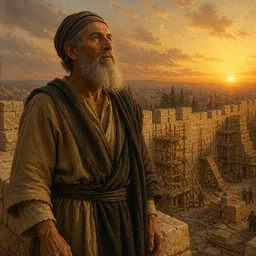
Baruch, the son of Zabbai, was a Jewish man who lived during the Post-Exilic Period. He is exclusively mentioned in the record of the reconstruction of Jerusalem's fortifications, a massive civil project spearheaded by Nehemiah in the 5th century BC. His presence in the biblical text highlights the collaborative effort of various families and individuals who reclaimed their ancestral heritage after decades of captivity in Babylon.
While his role is recorded only briefly, the narrative distinguishes him through his work ethic. Unlike many participants who are simply noted for completing a portion of the wall, Baruch is specifically commended for his diligence. His contribution was strategically significant, as he repaired the section immediately adjacent to the residence of the high priest, a location of high administrative and religious importance.
Background and Family
The biblical record identifies this Baruch solely as the "son of Zabbai" (Nehemiah 3:20). While the text does not explicitly state his tribe or profession, he was part of the remnant that had returned to Judea from the Babylonian exile. The name Baruch, meaning "Blessed," was common in this era, reflecting a spirit of gratitude among the returning exiles. His father, Zabbai, is mentioned elsewhere in the list of those who had taken foreign wives (Ezra 10:28), though it is unclear if this refers to the same individual; regardless, Baruch, son of Zabbai, is defined by his own commitment to the restoration of the holy city.
Major Life Events
The primary and only recorded event in the life of Baruch, son of Zabbai, occurred during the governorship of Nehemiah in approximately 444 BC. Following the decree to rebuild the walls of Jerusalem, the labor was divided among different families and leaders. Baruch was assigned a specific portion of the wall.
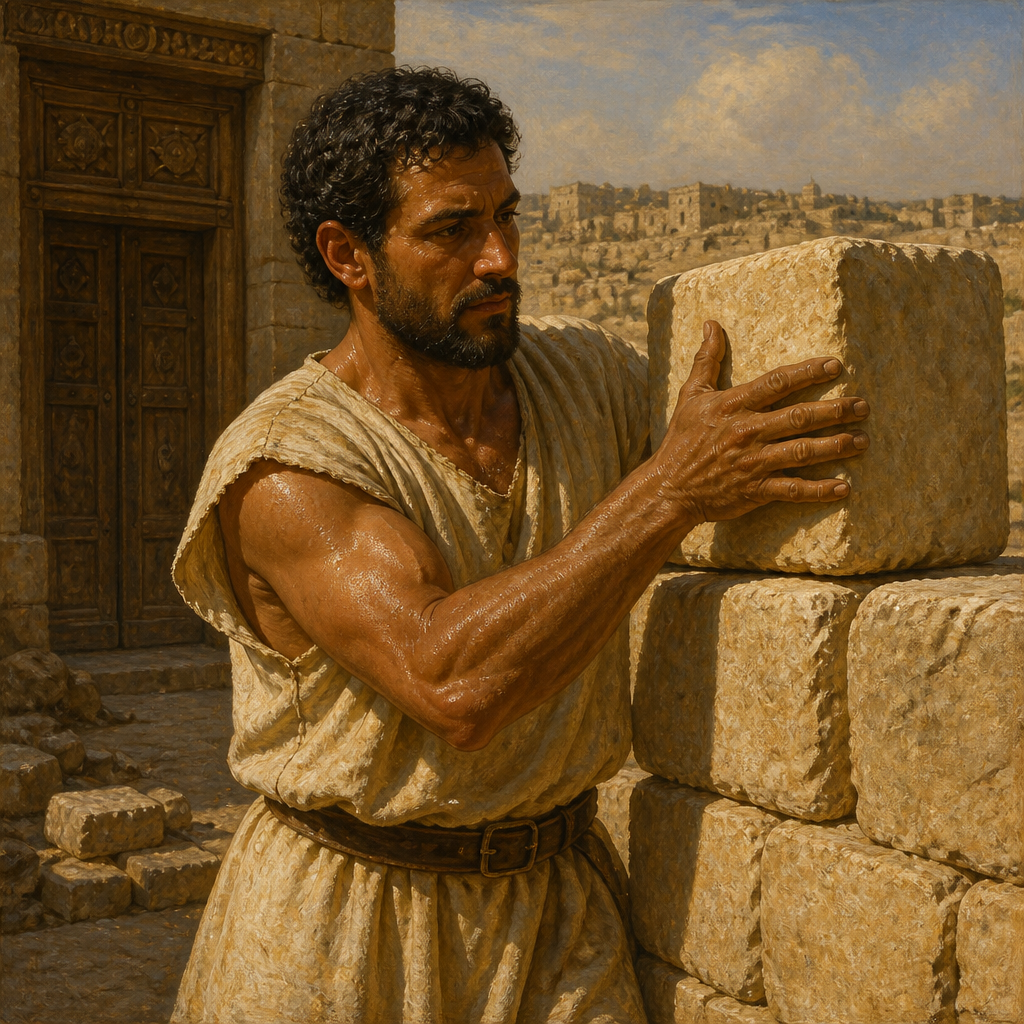
According to Nehemiah 3:20, Baruch repaired the section extending "from the angle to the doorway of the house of Eliashib the high priest." This location was vital for the city's security, as the high priest's house was centrally located near the Temple precinct. The author of Nehemiah notes that Baruch worked "diligently" (Hebrew: charah, meaning to burn or be kindled with zeal). This descriptor sets him apart from others in the list, suggesting he worked with an intensity or speed that surpassed the standard expectation.
Relationship to Other Biblical Figures
Baruch’s most significant interaction, though indirect, was his cooperation with Nehemiah’s leadership. His work was physically adjacent to the house of Eliashib the high priest, the highest-ranking religious official in the post-exilic community. By securing the perimeter of Eliashib’s home, Baruch provided essential protection for the leadership of Israel. He worked alongside other returning exiles, contributing to a unified wall that would once again define Jerusalem as a fortified city of God.
Spiritual Significance
In the theological context of the book of Nehemiah, Baruch represents the "ordinary" faithful whose individual efforts cumulative into national restoration. The specific mention of his diligence serves as a biblical archetype for the servant who performs a task with excellence. Though he only appears in one verse, his zeal is preserved as a permanent record of the devotion required to rebuild what was lost during the judgment of the exile. His work on the wall was not merely a construction project, but a spiritual act of reclaiming the city where God had placed His name.
Baruch, son of Zabbai, is biblically significant for his zeal during a time of national recovery. His specific mention in the text serves as a testimony that God notices the quality of an individual's work, even when the individual is not a major political or religious leader. His diligence ensured the safety of the High Priest's residence, linking the physical labor of wall-building to the preservation of the spiritual leadership of Israel.
Frequently Asked Questions
Where in the Bible is Baruch, son of Zabbai, mentioned?
He is mentioned exclusively in Nehemiah 3:20, in the context of the list of builders of the Jerusalem wall.
What was Baruch's specific job in Jerusalem?
He was responsible for repairing a section of the city wall from 'the angle' to the door of Eliashib the high priest's house.
What does the Bible say about how Baruch worked?
The Bible specifically notes that he worked 'diligently,' using a Hebrew term that implies a burning zeal or intense earnestness.
Who was Baruch's father?
His father was Zabbai, a name mentioned among the returning exiles.
Family & Relationships
Parents
 Zabbai, Father of BaruchFatherNehemiah 3:20Stated
 Baruch, Son of ZabbaiThis page
Connected Figures
Family
Father · Nehemiah 3:20
Zabbai was a Jewish man during the Post-Exilic Period whose son, Baruch, distinguished himself by his zeal while repairing the walls of Jerusalem.
Categories
Mentions by Book
- Nehemiah1
Scripture References
All 1 indexed verse, in canonical order, from the Berean Standard Bible.
Nehemiah · 1
- Nehemiah 3:20
Next to him, Baruch son of Zabbai diligently repaired another section, from the angle to the doorway of the house of Eliashib the high priest.
Others Named Baruch
Compare all 4 bearers →Baruch, Priest under NehemiahNehemiah 10:6
A Jewish priest during the post-exilic period who participated in the solemn covenant renewal under the leadership of Nehemiah and Ezra.
Baruch, Ancestor of MaaseiahNehemiah 11:5
A descendant of Judah through Shelah, whose lineage helped repopulate Jerusalem following the Babylonian exile.
Baruch, Scribe of JeremiahJeremiah 32:12
A faithful scribe and assistant to the prophet Jeremiah during the final decades of the Kingdom of Judah and the Babylonian conquest.