Zabbai, Father of Baruch
Who was Zabbai, Father of Baruch, in the Bible?
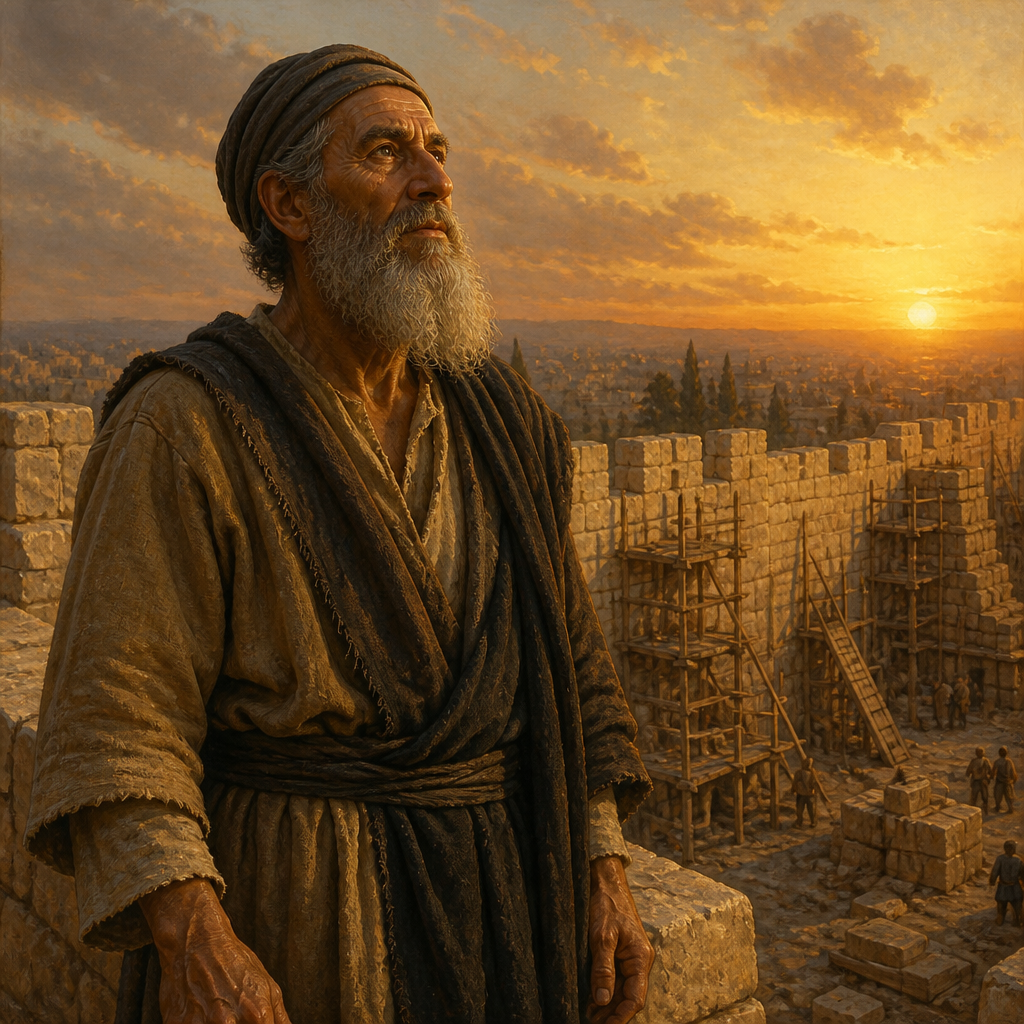
Zabbai was a Jewish man during the Post-Exilic Period whose son, Baruch, distinguished himself by his zeal while repairing the walls of Jerusalem.
This is one of 2 people named Zabbai in the Bible. See all 2 →
Zabbai is a figure mentioned in the Old Testament during the era of the Jewish return from the Babylonian exile. He is primarily identified through the actions of his son, Baruch, who participated in the massive reconstruction project of the walls of Jerusalem under the leadership of Nehemiah in 444 BC.
While the biblical record does not provide specific details regarding Zabbai’s own occupation or personal history, his inclusion in the genealogical record of the wall builders suggests he was a member of the faithful remnant that returned to Judea. He is noted in the context of the repair work near the house of the high priest, Eliashib.
Background and Family
Zabbai lived during the Exile and Return era, a period defined by the Persian Empire’s decree allowing Jews to return to their ancestral homeland. While his specific tribe is not mentioned in the text of Nehemiah 3, he was part of the community that had resettled in or near Jerusalem. Zabbai is explicitly identified as the father of Baruch. In the social structure of the time, the mention of a father’s name served to authenticate an individual's lineage and standing within the post-exilic community.
Major Life Events
The primary significance of Zabbai in the biblical narrative is his presence in the record of the restoration of Jerusalem's defenses. In Nehemiah 3:20, the text records that his son, Baruch, took responsibility for a specific section of the wall. The verse notes:
"Next to him, Baruch son of Zabbai diligently repaired another section, from the angle to the doorway of the house of Eliashib the high priest."
Although the text focuses on Baruch’s labor, it identifies him through his relationship to Zabbai. The location of this work—near the house of the High Priest Eliashib—indicates that Zabbai’s family was entrusted with a geographically and spiritually significant portion of the city's fortification, near the temple precinct.
Relationship to Other Biblical Figures
Zabbai is directly linked to his son, Baruch, who is distinguished among the builders for his "diligent" (or "earnest") work. The Hebrew verb used for Baruch's effort (charah) suggests he worked with a burning zeal or passion. While the text does not state whether Zabbai was alive to witness this or worked alongside his son, he is the only family member cited for this specific builder. Zabbai’s family functioned in close proximity to Eliashib the high priest, as their assigned section of the wall terminated at Eliashib's doorway.
Spiritual Significance
The mention of Zabbai, though brief, contributes to the broader biblical theme of legacy and communal responsibility. In the post-exilic record, every name preserved in the text serves as a testament to the survival of the covenant people. Zabbai represents the generation that raised the men who would eventually physically rebuild the Holy City. The diligence attributed to his son, Baruch, reflects favorably on the household of Zabbai, framing them as a family committed to the restoration of the Jewish state and the protection of the dwelling place of God.
Zabbai's significance lies in his role as a patriarch of a family committed to the restoration of Jerusalem. Though he is mentioned only once, his name is preserved in the sacred record of those who contributed to the physical and spiritual rebuilding of Israel after the Babylonian Captivity. His legacy is defined by the zealous service of his son, Baruch.
Frequently Asked Questions
What did Zabbai do in the Bible?
Zabbai is mentioned as the father of Baruch, a man who zealously repaired a section of the Jerusalem wall under Nehemiah.
When did Zabbai live?
Zabbai lived during the Post-Exilic Period, specifically around the time of Nehemiah's governorship in the mid-5th century BC.
Where did Zabbai's family work on the Jerusalem wall?
Zabbai's son repaired the section of the wall stretching from 'the angle' to the doorway of the house of Eliashib the high priest.
What tribe did Zabbai belong to?
The Bible does not specify the tribe of Zabbai, though he was part of the Jewish remnant that returned from Babylon.
Family & Relationships
 Zabbai, Father of BaruchThis page
Children
 Baruch, Son of ZabbaiSonNehemiah 3:20Stated
Connected Figures
Family
Son · Nehemiah 3:20
A diligent Jewish worker who participated in the restoration of the walls of Jerusalem under Nehemiah following the return from Babylonian exile.
Exile and ReturnFirst: Nehemiah 3:201 versesWall-builder / Laborer
Categories
Mentions by Book
- Nehemiah1
Scripture References
All 1 indexed verse, in canonical order, from the Berean Standard Bible.
Nehemiah · 1
- Nehemiah 3:20
Next to him, Baruch son of Zabbai diligently repaired another section, from the angle to the doorway of the house of Eliashib the high priest.
Others Named Zabbai
Compare all 2 bearers →Zabbai, Descendant of BebaiEzra 10:28
Zabbai was a Judean returnee from the Babylonian exile who is listed among those who married foreign women in violation of the Mosaic Law.