Adna, Priest of the Post-Exilic Period
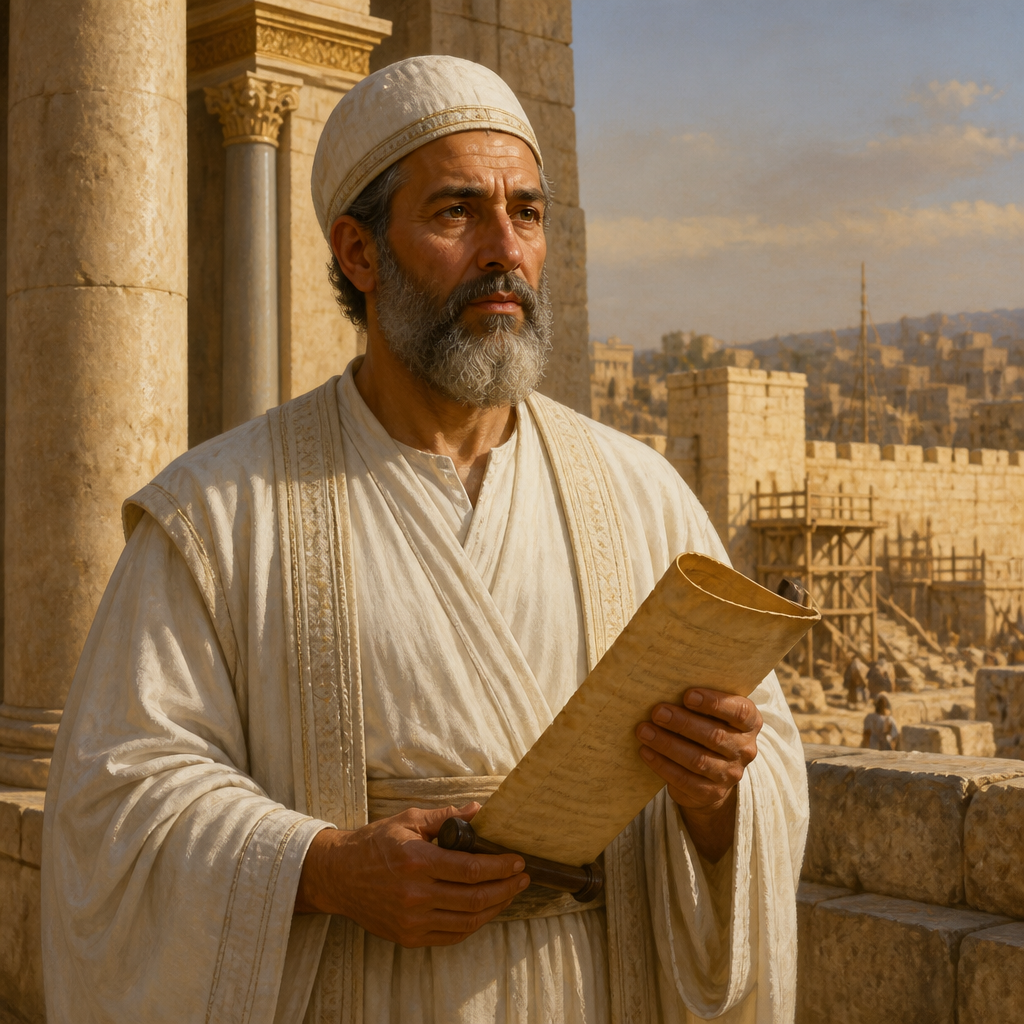
Adna was a priest of the house of Harim who served during the generation of the high priest Joiakim following the return from Babylon.
Adna was a Jewish priest belonging to the family of Harim during the Post-Exilic Period. His name appears within the historical records of the book of Nehemiah, specifically in a list documenting the heads of priestly families. This register captures a crucial transitional era in Jerusalem's history, following the initial return of the exiles from Babylon under Zerubbabel and the subsequent leadership of the high priest Joiakim.
As the representative of the house of Harim, Adna held a position of significant ecclesiastical authority. The preservation of his name in the biblical text serves to validate the continuity of the Aaronic priesthood and the restoration of orderly worship in the Second Temple era. While his personal deeds are not detailed, his inclusion in the genealogical records reflects his status as a leader among the repatriated covenant community.
Background and Family
Adna lived during the era of the Exile and Return, specifically during the tenure of the high priest Joiakim, son of Jeshua (Nehemiah 12:12-15). He was a member of the tribe of Levi and belonged to the priestly line of Harim. The house of Harim was one of the original priestly divisions that returned to Judah from the Babylonian captivity. As the head of his father’s house, Adna was responsible for the administrative and spiritual oversight of his specific kin group within the broader priestly hierarchy.
Major Life Events
The biblical record for Adna is confined to his registration in the list of priests. This list, found in Nehemiah 12, serves as a bridge between the first generation of returnees and the era of Ezra and Nehemiah. Adna’s primary role was as a functional link in the chain of the Jerusalem priesthood. By serving during the time of Joiakim, he witnessed the ongoing efforts to re-establish the religious life of Israel amidst the challenges of rebuilding a provincial society under Persian oversight.
Relationship to Other Biblical Figures
Adna is directly associated with the high priest Joiakim, under whose authority he served. He is also listed alongside other contemporary heads of priestly houses, such as Helkai of the house of Meraioth. His lineage traces back to the ancestral head Harim, establishing his legal right to serve at the altar in Jerusalem. Beyond these professional and genealogical associations, the text provides no information regarding his immediate family or personal interactions.
Spiritual Significance
In the context of Nehemiah’s record, Adna represents the faithfulness of God in preserving the priesthood. His presence in the text emphasizes that the transition from exile back to the Promised Land was not merely a political event but a religious restoration. The meticulous recording of names like Adna’s ensured that the sanctuary service was conducted by those with proven ancestry, adhering to the requirements of the Mosaic Law. Though a minor figure, Adna is a testament to the structured recovery of the Jewish faith during the Second Temple period.
Spiritual Significance
Adna's significance lies in his role as a representative of the continuity of the Levitical priesthood after the Babylonian Exile. His inclusion in the Nehemiah 12 register confirms that the house of Harim remained an active and recognized priestly line during the leadership of Joiakim. This genealogical precision was vital for the community’s identity and for the legitimacy of the sacrificial system in the rebuilt Temple.
Furthermore, Adna symbolizes the 'ordinary' leadership that sustained the Jewish faith between the major movements led by figures like Zerubbabel and Nehemiah. His name stands as a historical marker of the institutional stability required to maintain the worship of Yahweh in a period of reconstruction.
Frequently Asked Questions
Who was Adna in the book of Nehemiah?
Adna was a priest and the head of the family of Harim during the time of the high priest Joiakim, mentioned in Nehemiah 12:15.
Which tribe did Adna belong to?
As a priest of the house of Harim, Adna belonged to the tribe of Levi.
When did Adna live?
He lived during the Post-Exilic Period (Exile and Return), specifically during the generation following the first returnees from Babylon, roughly in the early 5th century BC.
What does the name Adna mean?
The Hebrew name Adna (עַדְנָא) is generally understood to mean 'pleasure' or 'delight'.
Does Adna perform any miracles or give prophecies?
No, the Bible does not record any miracles, prophecies, or specific deeds performed by Adna; he is mentioned only in a genealogical and administrative list of priests.
Connected Figures

Joiakim
High Priest under whom Adna served
Helkai
Contemporary fellow head of a priestly house
Harim
Ancestral head of Adna's priestly family
Categories
Mentions by Book
- Nehemiah1
Others Named Adna
Adna, Son of Pahath-moabEzra 10:30
Adna was a returnee from the Babylonian Exile who is recorded in the Book of Ezra as having married a foreign woman and later agreeing to put her away.