Berechiah, Father of Zechariah the Prophet
Berechiah was the son of Iddo and the father of the prophet Zechariah, serving as a vital link in a priestly and prophetic lineage during the return from the Babylonian Exile.
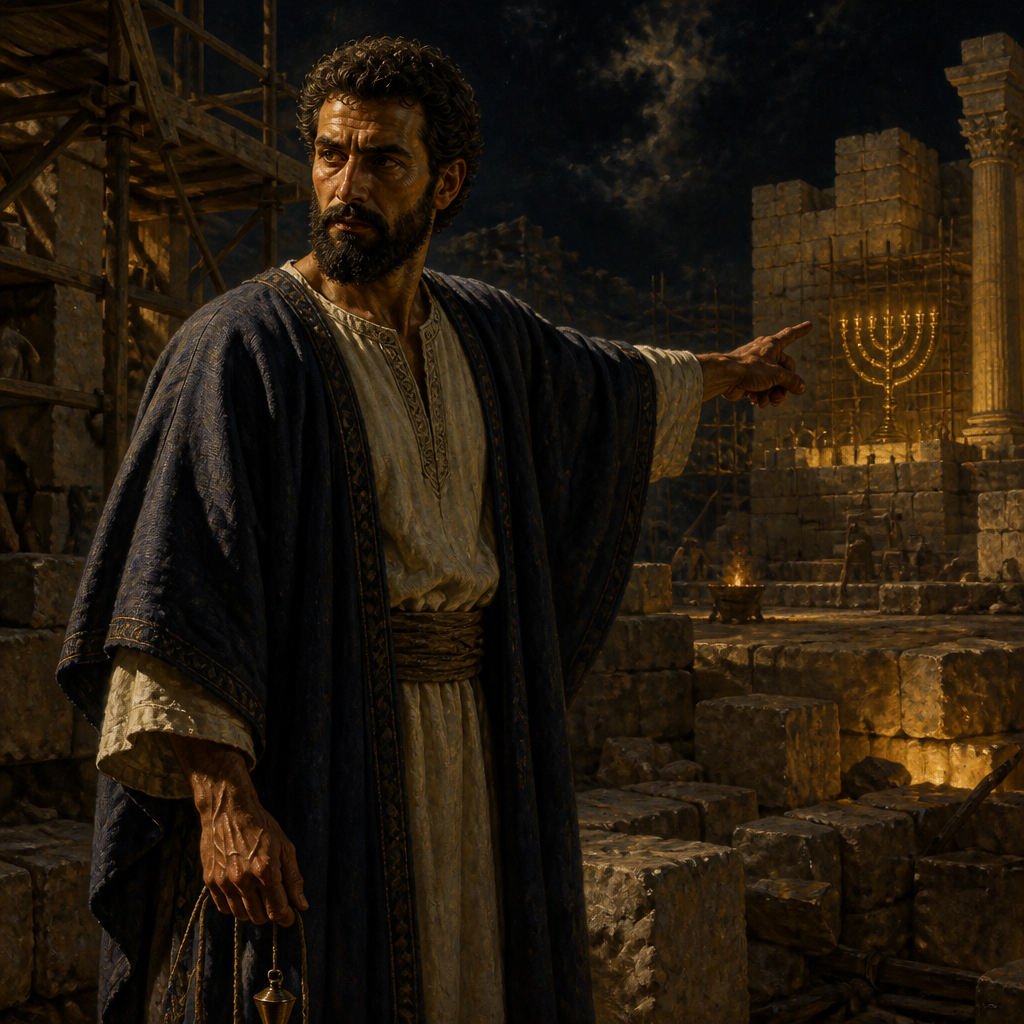
Berechiah is a figure of the Post-Exilic Period, specifically identified as the immediate father of the minor prophet Zechariah. His presence in the biblical record serves to anchor the genealogy of one of Israel’s most significant restoration prophets. Living during the late 6th century BC, Berechiah represents the generation of Israelites who navigated the transition from the Babylonian Captivity back to the promised land under the Persian Empire.
While his personal deeds are not detailed in the biblical text, his lineage is emphasized in the opening of the Book of Zechariah. By identifying Zechariah as the 'son of Berechiah, the son of Iddo,' the text establishes a clear line of descent that likely points to a priestly heritage. This genealogical placement was crucial for establishing the authority and legitimacy of the prophetic word delivered during the rebuilding of the Second Temple.
Background and Family
Berechiah appears in the historical and prophetic context of the early years of the Persian King Darius Hystaspes (Darius I). According to Zechariah 1:1, Berechiah was the son of Iddo. The name Iddo is associated elsewhere in the books of Ezra and Nehemiah with a prominent priestly family that returned from Babylon with Zerubbabel and Joshua the High Priest. Consequently, Berechiah is situated within a high-status ecclesiastical family dedicated to the restoration of Jewish religious life in Jerusalem.
His name, Berechiah, translates from Hebrew as 'Yahweh blesses' or 'Blessed of Yahweh.' This name was common among the returning exiles, reflecting the community's hope and gratitude for their deliverance from captivity. As the father of Zechariah, Berechiah belonged to the generation that would have witnessed the foundations of the Temple being laid, even if they did not live to see its completion in 516 BC.
Major Life Events
The biblical record does not preserve specific actions or speeches attributed to Berechiah. His primary significance in the text is genealogical. He is mentioned twice in the first chapter of Zechariah (verses 1 and 7) to identify the prophet's identity and credentials.
"In the eighth month of the second year of Darius, the word of the LORD came to the prophet Zechariah son of Berechiah, the son of Iddo..." (Zechariah 1:1)
This specific dating—the second year of Darius—places the mention of Berechiah’s family in approximately 520 BC. The inclusion of both his father and his grandfather (Iddo) is a rare stylistic choice in the prophetic books, where usually only the father is mentioned. This double-genealogy suggests that Berechiah may have died young, leading Zechariah to be more closely identified with his grandfather Iddo in other records (such as Ezra 5:1 and 6:14), or it serves to emphasize the continuity of the priestly line through the Exile.
Relationship to Other Biblical Figures
Berechiah’s most significant relationship is his role as the father of Zechariah. Through his son, Berechiah’s legacy is tied to the movement that encouraged the Jewish people to finish the reconstruction of the Temple despite political and economic opposition.
His relationship to Iddo is also of scholarly interest. If Iddo is the same priest mentioned in Nehemiah 12:4 as a contemporary of Zerubbabel, then Berechiah represents the vital middle link between the generation that survived the Exile and the generation that reclaimed the religious infrastructure of Jerusalem.
Spiritual Significance
Although Berechiah remains a silent figure in the scriptures, his inclusion in the prophetic heading carries theological weight. It affirms the importance of heritage and the fulfillment of God’s promises across generations. For the post-exilic community, knowing that their prophets came from established, faithful families provided a sense of stability and divine order. Berechiah stands as a witness to the preservation of the Israelite family unit and the priestly vocation through the trials of the Babylonian displacement.
Spiritual Significance
Berechiah's significance lies in his role as a genealogical bridge between the Babylonian Exile and the restoration of the Second Temple. By being named as the father of Zechariah, he validates the prophet's standing within the community of Israel, ensuring that the messages delivered during the reign of Darius were recognized as coming from a legitimate, priestly source.
Furthermore, his presence in the text highlights the continuity of the covenant. Even during the 'silent' years of the Exile where no recorded miracles occurred, families like Berechiah's maintained their identity and their names, which were later enshrined in the prophetic record to show that God had not abandoned the lineage of His servants.
Frequently Asked Questions
Who was Berechiah's father?
Berechiah was the son of Iddo, who is believed to be a leader of a priestly family that returned from the Babylonian Exile.
When did Berechiah live?
Berechiah lived during the Post-Exilic Period, specifically around the time of the return to Jerusalem in the late 6th century BC.
What does the name Berechiah mean?
The name Berechiah is Hebrew for 'Yahweh blesses' or 'Blessed of Yahweh'.
Why is Berechiah mentioned in the Book of Zechariah?
He is mentioned to establish the genealogy and authority of his son, the prophet Zechariah, identifying him as part of a specific faithful lineage.
Was Berechiah a prophet himself?
The Bible does not record Berechiah acting as a prophet; only his son, Zechariah, is given that specific title in the text.
Connected Figures
Categories
Mentions by Book
- Zechariah2
Family & Relationships
Child
Zechariah, Prophet of the Return
Zechariah 1:1
Parent
Iddo, Grandfather of Zechariah
Ezra 5:1
Others Named Berechiah
Berechiah, Son of Asa1 Chronicles 9:16
A Levite who returned from the Babylonian Exile and settled in the rural villages of the Netophathites near Jerusalem.
Berechiah, Son of Zerubbabel1 Chronicles 3:20
A descendant of the Davidic line and the third of five sons born to Zerubbabel, the governor of Judah.
Berechiah, Father of MeshullamNehemiah 3:4
A prominent Jewish man in Jerusalem during the Post-Exilic Period whose son, Meshullam, assisted Nehemiah in rebuilding the city walls.
Berechiah, Leader of Ephraim2 Chronicles 28:12
An Ephraimite leader who opposed the enslavement of Judean captives during the reign of King Pekah.
Berechiah, Father of Asaph1 Chronicles 6:39
A Levite of the Gershonite line who served as a guardian of the Ark of the Covenant and was the father of the prominent musician Asaph.