Berechiah, Son of Asa
Who was Berechiah, Son of Asa, in the Bible?
A Levite who returned from the Babylonian Exile and settled in the rural villages of the Netophathites near Jerusalem.
This is one of 6 people named Berechiah in the Bible. See all 6 →
Berechiah, the son of Asa, was a member of the tribe of Levi who lived during the period of the Exile and Return. His presence is recorded in the genealogical records of 1 Chronicles 9, which lists the heads of households and individuals who were among the first to resettle in the land of Judah and the city of Jerusalem following the Babylonian captivity.
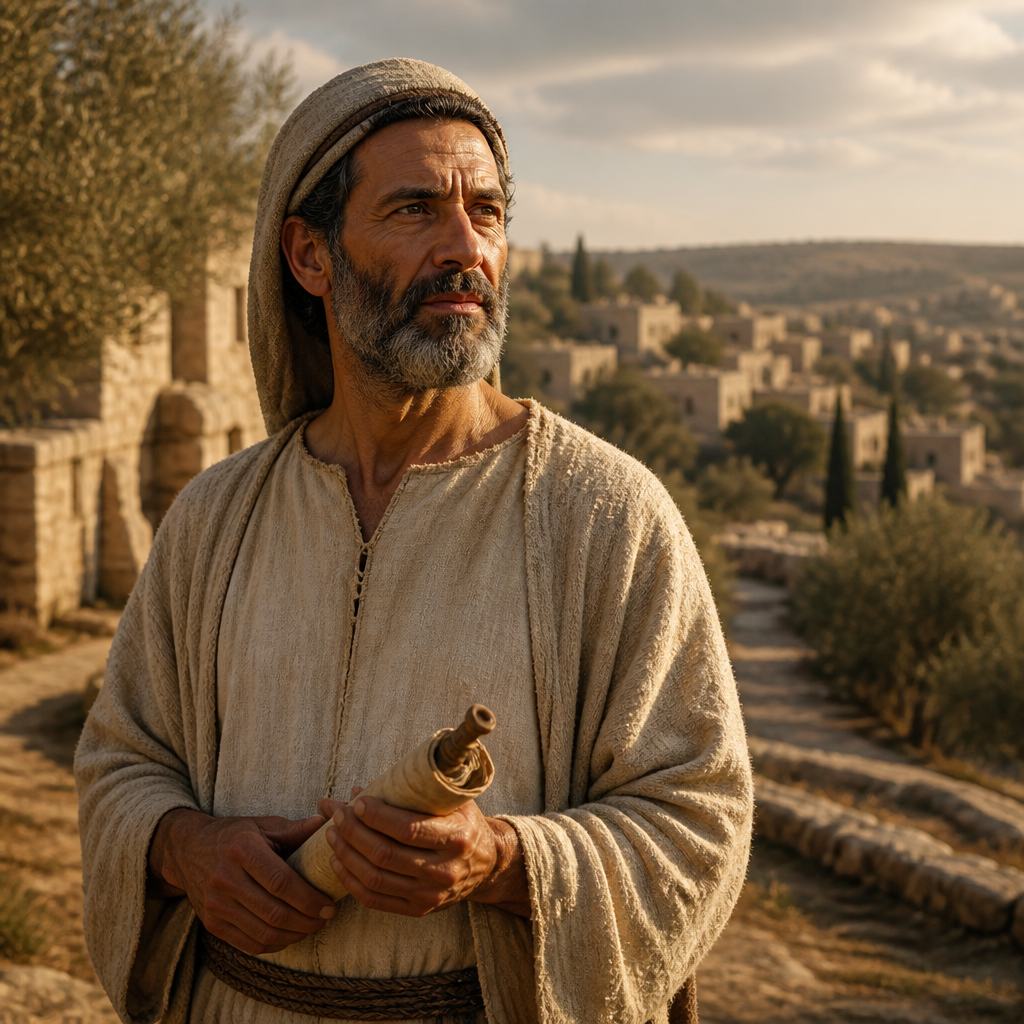
Unlike many of his contemporaries who resided within the city walls of Jerusalem to perform immediate temple duties, Berechiah is specifically noted for living in the outlying villages of the Netophathites. His inclusion in these records underscores the systematic repopulation of the Judean countryside by the Levites during the early Post-Exilic Period.
Background and Family
Berechiah was born into the tribe of Levi, the priestly class of Israel. According to 1 Chronicles 9:16, his immediate lineage is traced through his father, Asa, and his grandfather, Elkanah. This specific genealogical line distinguishes him from other individuals bearing the name Berechiah who appear in different historical contexts or tribal lineages.
His family history is intrinsically linked to the Babylonian Exile (586 BC – 538 BC). As a Levite, Berechiah belonged to a class of people whose primary social and religious identity was centered on the service of the Tabernacle and, later, the Temple in Jerusalem. When the Persian King Cyrus the Great issued a decree allowing the Jews to return to their homeland, Berechiah was among those who made the journey back to Judah.
Major Life Events
The primary biblical record of Berechiah focuses on his residence. While 1 Chronicles 9 lists those who dwelt in Jerusalem, verse 16 explicitly mentions that Berechiah "lived in the villages of the Netophathites." Netophah was a town located south of Jerusalem, near Bethlehem.
Living in these villages suggests that Berechiah was part of the Levitical group responsible for agricultural support or providing security and service in the surrounding areas of the capital. The Netophathite villages were known for being home to singers and other temple servants who would commute to Jerusalem for their assigned shifts of service. Berechiah’s presence in these rural settlements indicates the broad distribution of the Levites across the reclaimed territory of Judah during the restoration.
Relationship to Other Biblical Figures
Berechiah is mentioned alongside other notable Levites of the return, such as Obadiah (son of Shemaiah) and descendants of Jeduthun. This proximity in the text suggests he was part of the organized religious infrastructure overseen by leaders like Zerubbabel and Jeshua the High Priest. He is defined primarily by his relationship to his father, Asa, and his grandfather, Elkanah, ensuring his legal claim to the Levitical tithes and responsibilities was preserved in the national records.
Spiritual Significance
The mention of Berechiah, though brief, serves a vital purpose in the biblical narrative of restoration. It demonstrates the faithfulness of the Levites in maintaining their identity despite decades of displacement in Babylon. By returning to the "villages of the Netophathites," Berechiah contributed to the re-establishment of the religious community required to sustain the Second Temple. His life represents the quiet, foundational work of the many unnamed or briefly mentioned individuals who rebuilt the nation of Israel from the ruins of the exile.
Berechiah’s significance lies in his role as a representative of the returning Levites. His inclusion in the post-exilic genealogies validates the continuity of the Levitical line, which was essential for the legitimate restoration of Jewish worship and the service of the Temple. His choice to live in the rural villages of the Netophathites also illustrates the physical expansion of the returning community beyond the walls of Jerusalem.
Historically, he serves as a witness to the fulfillment of prophetic promises regarding the return of God's people to their ancestral lands. While he performed no recorded miracles, his name—meaning 'the LORD has blessed'—reflects the spiritual climate of a people grateful for their liberation from Babylonian captivity.
Frequently Asked Questions
Which tribe did Berechiah, son of Asa, belong to?
He belonged to the tribe of Levi, the tribe designated for religious service in Israel.
Where did Berechiah live after returning from exile?
He lived in the villages of the Netophathites, which were rural settlements near Bethlehem and Jerusalem.
Who was Berechiah's father?
His father was named Asa, as recorded in 1 Chronicles 9:16.
In what time period did Berechiah live?
He lived during the Post-Exilic Period, specifically during the return of the Jews from Babylon to Judah.
What does the name Berechiah mean?
The name Berechiah (בֶּרֶכְיָה) means 'Yahweh has blessed' or 'Blessed of Yah'.
Family & Relationships
Parents
 Asa, Levite of the Exile and ReturnFather1 Chronicles 9:16Stated
 Berechiah, Son of AsaThis page
Connected Figures
Family
Father · 1 Chronicles 9:16
A Levite of the family of Elkanah whose son, Berechiah, was among the first group of Israelites to resettle in the villages of the Netophathites following the Babylonian exile.
Categories
Mentions by Book
- 1 Chronicles1
Scripture References
All 1 indexed verse, in canonical order, from the Berean Standard Bible.
1 Chronicles · 1
- 1 Chronicles 9:16
Obadiah son of Shemaiah, the son of Galal, the son of Jeduthun; and Berechiah son of Asa, the son of Elkanah, who lived in the villages of the Netophathites.
Others Named Berechiah
Compare all 6 bearers →Berechiah, Son of Zerubbabel1 Chronicles 3:20
A descendant of the Davidic line and the third of five sons born to Zerubbabel, the governor of Judah.
Berechiah, Father of MeshullamNehemiah 3:4
A prominent Jewish man in Jerusalem during the Post-Exilic Period whose son, Meshullam, assisted Nehemiah in rebuilding the city walls.
Berechiah, Leader of Ephraim2 Chronicles 28:12
An Ephraimite leader who opposed the enslavement of Judean captives during the reign of King Pekah.
Berechiah, Father of Asaph1 Chronicles 6:39
A Levite of the Gershonite line who served as a guardian of the Ark of the Covenant and was the father of the prominent musician Asaph.
Berechiah, Father of Zechariah the ProphetZechariah 1:1
Berechiah was the son of Iddo and the father of the prophet Zechariah, serving as a vital link in a priestly and prophetic lineage during the return from the Babylonian Exile.