Berechiah, Son of Zerubbabel
Who was Berechiah, Son of Zerubbabel, in the Bible?
A descendant of the Davidic line and the third of five sons born to Zerubbabel, the governor of Judah.
This is one of 6 people named Berechiah in the Bible. See all 6 →
Berechiah was a member of the royal house of David, living during the era of the Exile and Return and the subsequent transitions of the Judean leadership. As a son of Zerubbabel, he occupied a position of significant ancestral prestige within the tribe of Judah. His name, which translates to 'the LORD has blessed,' reflects the spiritual climate of a family tasked with the restoration of the Jewish people and their religious identity.
While the biblical record regarding Berechiah is brief, his inclusion in the genealogical records of the Chronicler serves to establish the continuity of the Messianic line. He is situated among a large family of siblings, including prominent figures like Meshullam and Hananiah, who were instrumental in the post-exilic community's reorganization.
Background and Family
Berechiah is identified in the genealogical records of 1 Chronicles as a son of Zerubbabel. His father, Zerubbabel, was a central figure in the return of the Jewish exiles from Babylon and served as the governor of Judah under Persian rule. Berechiah belonged to the tribe of Judah and was a direct descendant of King David, placing him within the royal lineage that the biblical authors sought to preserve with meticulous care.
The family structure surrounding Berechiah was extensive. According to 1 Chronicles 3:19–20, he was one of several children. His brothers included Meshullam and Hananiah, and he had a sister named Shelomith. He is specifically listed in verse 20 as one of five additional sons: Hashubah, Ohel, Berechiah, Hasadiah, and Jushab-hesed. The preservation of these names highlights the importance of the Davidic descent during the late monarchal and early restoration periods.
Major Life Events
The biblical text does not record specific deeds, speeches, or political actions attributed to Berechiah. His primary significance in the scriptural narrative is genealogical. He represents the survival of the house of David during a time of significant political upheaval. As a son of the governor, Berechiah would have been part of the elite social stratum in Jerusalem, witnessing the foundational efforts to rebuild the temple and stabilize the Judean community.
Relationship to Other Biblical Figures
Berechiah’s most significant relationship is his patrilineal connection to Zerubbabel. Because Zerubbabel is a key figure in the genealogies of Jesus Christ (found in Matthew 1 and Luke 3), Berechiah’s presence in the 1 Chronicles record underscores the branching paths of the Davidic line. He is also closely associated with his siblings Meshullam and Hananiah, who are often cited in discussions regarding the leadership of the Jewish people following the Babylonian captivity.
Spiritual Significance
The spiritual significance of Berechiah lies in his name and his lineage. Meaning "the LORD has blessed," his name serves as a testament to the hope of the Judean people that God had not abandoned the covenant made with David. In the context of 1 Chronicles, his inclusion ensures that every branch of the royal family is accounted for, demonstrating God's providence in maintaining the Davidic line through which the promised Messiah would eventually come. Even though his life is not detailed, his existence is a link in the chain of redemptive history.
Berechiah serves as a vital link in the Davidic genealogy preserved in the book of Chronicles. His inclusion confirms the continued fruitfulness of Zerubbabel's line, ensuring that the legal and royal claims of the House of David remained intact for future generations. Theologically, he represents the 'blessing' of continuation for a nation that had narrowly escaped total erasure during the exile.
Frequently Asked Questions
Who was Berechiah's father?
Berechiah was the son of Zerubbabel, the governor of Judah and a leader of the return from exile.
What tribe did Berechiah belong to?
He belonged to the tribe of Judah, specifically the royal line of David.
How many siblings did Berechiah have?
The Bible identifies at least seven brothers (Meshullam, Hananiah, Hashubah, Ohel, Hasadiah, Jushab-hesed, and Abiud) and one sister (Shelomith).
What does the name Berechiah mean?
The name Berechiah is Hebrew for 'Yahweh has blessed' or 'Blessed of Yahweh.'
Family & Relationships
Parents
 Zerubbabel, Governor of JudahFather1 Chronicles 3:19–20Stated
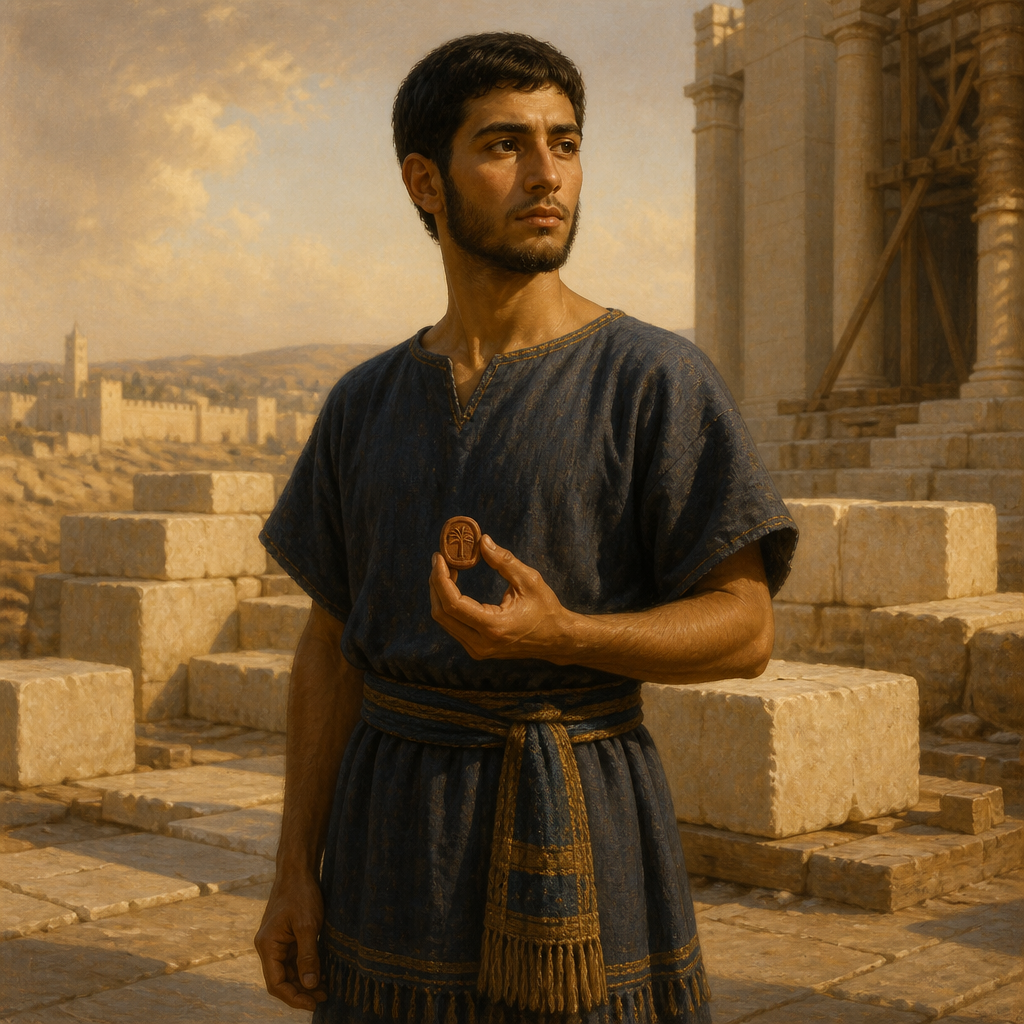 Berechiah, Son of ZerubbabelThis page
 Hananiah, Son of ZerubbabelBrother1 Chronicles 3:19–20Stated
 HasadiahBrother1 Chronicles 3:20Stated
 HashubahBrother1 Chronicles 3:20Stated
 Jushab-hesedBrother1 Chronicles 3:20Stated
 Meshullam, Son of ZerubbabelBrother1 Chronicles 3:19–20Stated
 OhelBrother1 Chronicles 3:20Stated
 Shelomith, Daughter of ZerubbabelSister1 Chronicles 3:19–20Stated
 AbiudBrother1 Chronicles 3:19
Inferred
No verse names Abiud and Berechiah together; the brother link is carried from the surrounding genealogy and is not stated in Scripture.Evidence: 1 Chronicles 3:19; Matthew 1:13
Connected Figures
Family
Father · 1 Chronicles 3:19–20
A Davidic prince and governor who led the first wave of Jewish exiles from Babylon to Jerusalem and laid the foundation for the Second Temple.
Exile and ReturnFirst: 1 Chronicles 3:1929 versesGovernor of JudahJudah
Brother · 1 Chronicles 3:19–20
Hananiah was a descendant of the royal line of David and a son of Zerubbabel, the governor of Judah during the restoration of the Jewish people after the exile.
Brother · 1 Chronicles 3:20
Hasadiah was a son of Zerubbabel and a member of the royal Davidic line in the tribe of Judah during the late Exile and Return and early restoration era.
Brother · 1 Chronicles 3:20
A descendant of the Davidic royal line and a son of Zerubbabel, the governor of Judah during the transition from the Exile and Return to the Post-Exilic period.
Exile and ReturnFirst: 1 Chronicles 3:203 versesPrince of the Davidic lineJudah
Brother · 1 Chronicles 3:20
Jushab-hesed was a son of Zerubbabel and a descendant of King David within the royal line of Judah during the late Exile and Return and early restoration era.
Brother · 1 Chronicles 3:19–20
A member of the Davidic line and the eldest son of Zerubbabel, the governor of Judah during the restoration period.
Exile and ReturnFirst: 1 Chronicles 3:193 versesPrince of the House of DavidJudah
Brother · 1 Chronicles 3:20
Ohel was a member of the royal house of Judah and a son of Zerubbabel, the governor who led the return from the Babylonian exile.
Sister · 1 Chronicles 3:19–20
Shelomith was the daughter of the Judean governor Zerubbabel and a prominent figure in the Davidic genealogy during the Exile and Return and the early restoration.
Brother · 1 Chronicles 3:19
Abiud was a descendant of King David and a member of the post-exilic royal line of Judah, appearing in the genealogy of Jesus Christ.
Categories
Mentions by Book
- 1 Chronicles2
- Matthew1
Scripture References
All 3 indexed verses, in canonical order, from the Berean Standard Bible.
1 Chronicles · 2
- 1 Chronicles 3:19Partial
The sons of Pedaiah: Zerubbabel and Shimei. The children of Zerubbabel: Meshullam and Hananiah, their sister Shelomith,
Cited as evidence on a family card; added so References, Key Verses and Mentions by Book share one index.
- 1 Chronicles 3:20
and five others: Hashubah, Ohel, Berechiah, Hasadiah, and Jushab-hesed.
Matthew · 1
- Matthew 1:13Partial
Zerubbabel the father of Abiud, Abiud the father of Eliakim, and Eliakim the father of Azor.
Cited as evidence on a family card; added so References, Key Verses and Mentions by Book share one index.
Others Named Berechiah
Compare all 6 bearers →Berechiah, Son of Asa1 Chronicles 9:16
A Levite who returned from the Babylonian Exile and settled in the rural villages of the Netophathites near Jerusalem.
Berechiah, Father of MeshullamNehemiah 3:4
A prominent Jewish man in Jerusalem during the Post-Exilic Period whose son, Meshullam, assisted Nehemiah in rebuilding the city walls.
Berechiah, Leader of Ephraim2 Chronicles 28:12
An Ephraimite leader who opposed the enslavement of Judean captives during the reign of King Pekah.
Berechiah, Father of Asaph1 Chronicles 6:39
A Levite of the Gershonite line who served as a guardian of the Ark of the Covenant and was the father of the prominent musician Asaph.
Berechiah, Father of Zechariah the ProphetZechariah 1:1
Berechiah was the son of Iddo and the father of the prophet Zechariah, serving as a vital link in a priestly and prophetic lineage during the return from the Babylonian Exile.