Hananiah, Son of Zerubbabel
Who was Hananiah, Son of Zerubbabel, in the Bible?
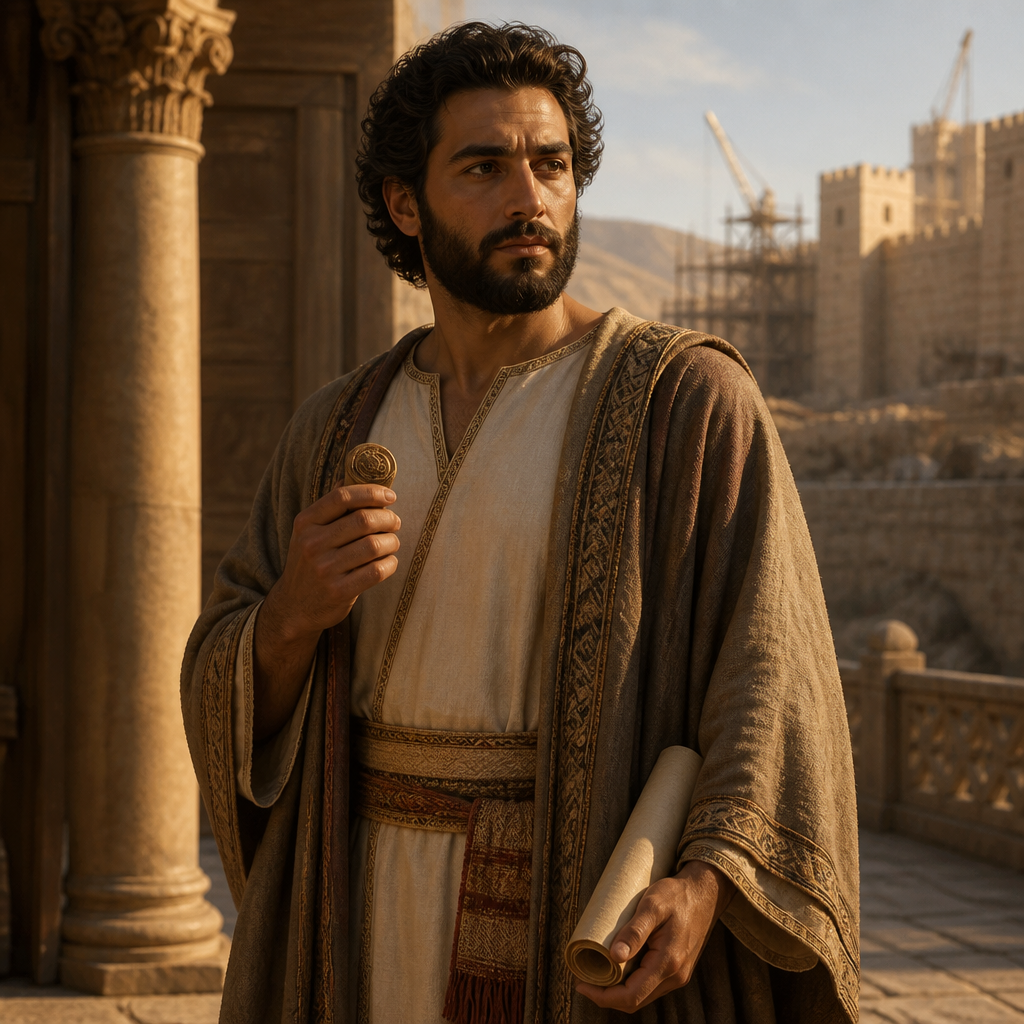
Hananiah was a descendant of the royal line of David and a son of Zerubbabel, the governor of Judah during the restoration of the Jewish people after the exile.
This is one of 15 people named Hananiah in the Bible. See all 15 →
Hananiah, a significant figure in the post-exilic Davidic genealogy, was a son of Zerubbabel and a grandson of Pedaiah. Born into the royal line of Judah, his lineage connects the pre-exilic Davidic kings to the generations that lived through the transition from the Exile and Return to the Persian period. As a member of the tribe of Judah, his identity is defined by his placement within the chronicler’s record of the descendants of King David.
While the biblical record of Hananiah is primarily genealogical, his position is critical for understanding the preservation of the royal house of Israel during a time of immense political change. He represents the continued presence of the Davidic line in the land of Judah following the return from Babylon under the leadership of his father, Zerubbabel.
Background and Family
Hananiah appears in the genealogical records of the house of David during the era of the Exile and Return and the subsequent transition into the Persian period. According to 1 Chronicles 3:19, he was the son of Zerubbabel, the prominent governor who led the first group of captives back from Babylon to Jerusalem. Hananiah was part of a large family; his siblings included Meshullam and a sister named Shelomith, as well as Hashubah, Ohel, Berechiah, Hasadiah, and Jushab-hesed.
The lineage of Hananiah is particularly notable because it establishes the continuity of the Tribe of Judah. The Chronicler takes great care to list the descendants of David, ensuring that the legal and biological lines of the kings were documented despite the lack of a reigning monarch on the throne in Jerusalem. Hananiah’s father, Zerubbabel, was the central figure in the rebuilding of the Second Temple, and Hananiah’s birth served as a sign of the enduring nature of the Davidic promise.
Major Life Events
The specific actions and personal history of Hananiah are not detailed in the narrative portions of the Hebrew Bible. His life is preserved exclusively within the framework of the tribal and royal registers. However, his life was undoubtedly shaped by the return to Judah and the efforts to re-establish the community in Jerusalem.
Living in the shadow of the Exile and Return’s collapse and the rise of the restoration period, Hananiah’s primary "event" recorded in scripture is the fathering of the next generation of the Davidic line. He is credited with several sons: Pelatiah, Jeshaiah, and the progenitors of the families of Rephaiah, Arnan, Obadiah, and Shecaniah (1 Chronicles 3:21).
Relationship to Other Biblical Figures
Hananiah is most closely linked to his father, Zerubbabel, who is a towering figure in the books of Ezra, Nehemiah, Haggai, and Zechariah. As the son of a governor who held both Persian authority and Davidic legitimacy, Hananiah would have held a position of high social and religious standing within the Judean community.
His relationships are defined by his siblings and his many children. The detailed list of his offspring in 1 Chronicles 3:21 suggests that his branch of the family was prolific and influential in the post-exilic community. His children, such as Pelatiah and Jeshaiah, carried forward the legacy of the tribe of Judah into the generations that would eventually bridge the gap between the Old Testament and the Intertestamental period.
Spiritual Significance
The spiritual significance of Hananiah lies in the fulfillment of God’s covenant with David. In 2 Samuel 7, God promised David that his throne and his offspring would endure forever. During the years of exile and the fragile return to the land, it might have appeared that the royal line had been extinguished. By recording Hananiah and his children, the biblical author demonstrates that God was faithful to preserve the "lamp" of David.
Hananiah serves as a link in the chain of the messianic line. For the original readers of Chronicles, the mention of Hananiah provided hope that the Davidic line was not only alive but flourishing with many descendants. Even without a crown, Hananiah represented the ongoing hope for a future King who would arise from the root of Jesse.
Hananiah’s significance is rooted in the preservation of the Davidic genealogy. By appearing in the list of Zerubbabel’s children, he confirms the survival of the royal line of Judah through the Babylonian exile and into the restoration of Jerusalem. His presence in the record ensures that the lineage remained intact for future generations, maintaining the legal requirements for the messianic promises. In a broader theological sense, Hananiah represents the 'remnant'—the people of God who continued the traditions and lineage of their ancestors under foreign rule, providing the bridge between the glory of the Davidic kingdom and the hope of the future restoration.
Frequently Asked Questions
Who was Hananiah's father?
Hananiah was the son of Zerubbabel, the governor of Judah and a leader of the return from the Babylonian exile.
Which tribe did Hananiah belong to?
He belonged to the Tribe of Judah, specifically within the royal line of King David.
How many children did Hananiah have?
The Bible mentions several descendants and sons, including Pelatiah, Jeshaiah, and the heads of the families of Rephaiah, Arnan, Obadiah, and Shecaniah.
Where is Hananiah mentioned in the Bible?
He is mentioned in the genealogical records of 1 Chronicles 3:19-21.
What is Hananiah's role in the Davidic line?
He is a central link in the post-exilic Davidic genealogy, representing the continuation of the royal family after the monarchy had ceased to rule.
Family & Relationships
Parents
 Zerubbabel, Governor of JudahFather1 Chronicles 3:19–20Stated
 Hananiah, Son of ZerubbabelThis page
 Berechiah, Son of ZerubbabelBrother1 Chronicles 3:19–20Stated
 HasadiahBrother1 Chronicles 3:19–20Stated
 HashubahBrother1 Chronicles 3:19–20Stated
 Jushab-hesedBrother1 Chronicles 3:19–20Stated
 Meshullam, Son of ZerubbabelBrother1 Chronicles 3:19Stated
 OhelBrother1 Chronicles 3:19–20Stated
 Shelomith, Daughter of ZerubbabelSister1 Chronicles 3:19Stated
 AbiudBrother1 Chronicles 3:19
Inferred
Reconstructed through Zerubbabel: 1 Chronicles 3:19 ties Hananiah to Zerubbabel; Matthew 1:13 ties Zerubbabel to Abiud. No verse states the brother link between Hananiah and Abiud directly.Evidence: 1 Chronicles 3:19; Matthew 1:13
Children
 ArnanSon1 Chronicles 3:21
Inferred
1 Chronicles 3:21 lists Hananiah and Arnan among the descendants of hananiah, but does not say how the two of them are related.Evidence: 1 Chronicles 3:21
 Jeshaiah, Grandson of ZerubbabelSon1 Chronicles 3:21
Inferred
1 Chronicles 3:21 lists Jeshaiah and Hananiah among the descendants of hananiah, but does not say how the two of them are related.Evidence: 1 Chronicles 3:21
 Obadiah, Descendant of DavidSon1 Chronicles 3:21
Inferred
1 Chronicles 3:21 lists Hananiah and Obadiah among the descendants of hananiah, but does not say how the two of them are related.Evidence: 1 Chronicles 3:21
 Pelatiah, Grandson of ZerubbabelSon1 Chronicles 3:21
Inferred
1 Chronicles 3:21 lists Hananiah and Pelatiah among the descendants of hananiah, but does not say how the two of them are related.Evidence: 1 Chronicles 3:21
 Rephaiah, Descendant of DavidSon1 Chronicles 3:21
Inferred
1 Chronicles 3:21 lists Hananiah and Rephaiah among the descendants of hananiah, but does not say how the two of them are related.Evidence: 1 Chronicles 3:21
 Shecaniah, Descendant of DavidSon1 Chronicles 3:21
Inferred
1 Chronicles 3:21 lists Hananiah and Shecaniah among the descendants of hananiah, but does not say how the two of them are related.Evidence: 1 Chronicles 3:21
Connected Figures
Family
Father · 1 Chronicles 3:19–20
A Davidic prince and governor who led the first wave of Jewish exiles from Babylon to Jerusalem and laid the foundation for the Second Temple.
Exile and ReturnFirst: 1 Chronicles 3:1929 versesGovernor of JudahJudah
Son · 1 Chronicles 3:21
A descendant of King David through the line of Zerubbabel, mentioned in the genealogical records of the Tribe of Judah.
Son · 1 Chronicles 3:21
A member of the Davidic line and descendant of Zerubbabel who lived during the Exile and Return and the restoration era in Judah.
Exile and ReturnFirst: 1 Chronicles 3:211 versesPrince of the House of DavidJudah
Son · 1 Chronicles 3:21
Obadiah was a member of the royal house of Judah and a descendant of King David through the line of Zerubbabel.
Son · 1 Chronicles 3:21
A descendant of King David and the grandson of Zerubbabel, noted in the post-exilic genealogies of the royal line of Judah.
Son · 1 Chronicles 3:21
Rephaiah was a noble of the tribe of Judah and a grandson of Zerubbabel, serving as a vital link in the Davidic royal lineage during the Exile and Return era.
Exile and ReturnFirst: 1 Chronicles 3:211 versesRoyal descendantJudah
Son · 1 Chronicles 3:21
A descendant of King David through the line of Zerubbabel, serving as a vital genealogical link in the post-exilic Davidic lineage during the Exile and Return era.
Brother · 1 Chronicles 3:19–20
A descendant of the Davidic line and the third of five sons born to Zerubbabel, the governor of Judah.
Exile and ReturnFirst: 1 Chronicles 3:203 versesPrince of the House of DavidJudah
Brother · 1 Chronicles 3:19–20
Hasadiah was a son of Zerubbabel and a member of the royal Davidic line in the tribe of Judah during the late Exile and Return and early restoration era.
Brother · 1 Chronicles 3:19–20
A descendant of the Davidic royal line and a son of Zerubbabel, the governor of Judah during the transition from the Exile and Return to the Post-Exilic period.
Exile and ReturnFirst: 1 Chronicles 3:203 versesPrince of the Davidic lineJudah
Brother · 1 Chronicles 3:19–20
Jushab-hesed was a son of Zerubbabel and a descendant of King David within the royal line of Judah during the late Exile and Return and early restoration era.
Brother · 1 Chronicles 3:19
A member of the Davidic line and the eldest son of Zerubbabel, the governor of Judah during the restoration period.
Exile and ReturnFirst: 1 Chronicles 3:193 versesPrince of the House of DavidJudah
Categories
Mentions by Book
- 1 Chronicles3
- Matthew1
Scripture References
All 4 indexed verses, in canonical order, from the Berean Standard Bible.
1 Chronicles · 3
- 1 Chronicles 3:19
The sons of Pedaiah: Zerubbabel and Shimei. The children of Zerubbabel: Meshullam and Hananiah, their sister Shelomith,
- 1 Chronicles 3:20Partial
and five others: Hashubah, Ohel, Berechiah, Hasadiah, and Jushab-hesed.
Cited as evidence on a family card; added so References, Key Verses and Mentions by Book share one index.
- 1 Chronicles 3:21
The descendants of Hananiah: Pelatiah, Jeshaiah, and the sons of Rephaiah, of Arnan, of Obadiah, and of Shecaniah.
Matthew · 1
- Matthew 1:13Partial
Zerubbabel the father of Abiud, Abiud the father of Eliakim, and Eliakim the father of Azor.
Cited as evidence on a family card; added so References, Key Verses and Mentions by Book share one index.
Others Named Hananiah
Compare all 15 bearers →Hananiah, Son of Shashak1 Chronicles 8:24
A Benjamite leader and son of Shashak listed among the heads of households dwelling in Jerusalem during the Divided Monarchy.
Hananiah, Priest and TrumpeterNehemiah 12:41
A Jewish priest and musician who participated in the joyous dedication of the rebuilt walls of Jerusalem under Nehemiah.
Hananiah, a Leader of the PeopleNehemiah 10:23
A leader of the Jewish people during the post-exilic period who participated in the formal sealing of the covenant under Nehemiah.
Hananiah, Commander of the FortressNehemiah 7:2
A faithful official appointed by Nehemiah to govern Jerusalem during the post-exilic restoration due to his exceptional devotion and fear of God.
Hananiah, Father of ZedekiahJeremiah 36:12
Hananiah was a Judean official during the Divided Monarchy, best known as the father of Zedekiah, an official in the court of King Jehoiakim.
Hananiah, Priest under JoiakimNehemiah 12:12
A priestly head of the family of Jeremiah who served during the tenure of the High Priest Joiakim in post-exilic Jerusalem.
Hananiah, Son of the PerfumerNehemiah 3:8
A skilled laborer and son of a perfumer who assisted in the reconstruction and fortification of the Jerusalem wall as far as the Broad Wall during the post-exilic return.
Hananiah, Grandfather of IrijahJeremiah 37:13
A Judean man of the Divided Monarchy known as the grandfather of Irijah, the guard who arrested the prophet Jeremiah.
Hananiah, Friend of DanielDaniel 1:6
One of four Judean youths taken into Babylonian exile, known by the Babylonian name Shadrach, who survived the blazing fiery furnace.
Hananiah, Descendant of BebaiEzra 10:28
A Judean man of the post-exilic period who was among those instructed to dissolve foreign marriages according to the reforms of Ezra.
Hananiah, Royal Officer of Uzziah2 Chronicles 26:11
A high-ranking military official and royal officer who oversaw the mobilization of King Uzziah's divisions in the Kingdom of Judah.
Hananiah, Levite Musician of the United Monarchy1 Chronicles 25:4
Hananiah was a Levite musician and son of Heman who served as the leader of the sixteenth division of temple musicians during the reign of King David.
Hananiah, Prophet of GibeonJeremiah 28:1
A false prophet who opposed Jeremiah during the reign of Zedekiah by predicting a swift end to the Babylonian exile.
Hananiah, Son of ShelemiahNehemiah 3:30
A Judean laborer who assisted in the reconstruction of the walls of Jerusalem under the leadership of Nehemiah during the post-exilic return.