Hananiah, Father of Zedekiah
Who was Hananiah, Father of Zedekiah, in the Bible?
Hananiah was a Judean official during the Divided Monarchy, best known as the father of Zedekiah, an official in the court of King Jehoiakim.
This is one of 15 people named Hananiah in the Bible. See all 15 →
Hananiah was a man of the Divided Monarchy period in the Kingdom of Judah, specifically active during the late 7th century BC. While his personal biography is not detailed in the biblical text, his status is affirmed through the professional position of his son, Zedekiah. He is mentioned within the historical context of the reign of King Jehoiakim, a time of significant political and spiritual tension in Jerusalem as the Babylonian threat loomed.
His presence in the biblical record is found exclusively in the Book of Jeremiah. He is identified as a member of the social class that produced the royal officials and scribes who managed the administrative affairs of the kingdom. Because his son, Zedekiah, is listed among the high-ranking officials gathered at the palace, it is understood that Hananiah belonged to a family of influence within the Judean bureaucracy.
Background and Family
Hananiah lived during one of the most volatile eras of the Divided Monarchy. The Kingdom of Judah was caught in a geopolitical struggle between the waning power of Egypt and the ascending might of the Neo-Babylonian Empire. The biblical text provides no specific information regarding Hananiah’s tribe or ancestry beyond his own name and his relationship to his son, Zedekiah.
The name Hananiah (Hebrew: Chananyah) translates to "Yahweh has been gracious," a common name among the Judean population which reflects the monotheistic traditions of the era. Given that his son was an official (sar) in the court of King Jehoiakim, it is highly probable that Hananiah was either a man of noble birth or an established member of the civil service in Jerusalem. The family's proximity to the "scribe’s chamber" in the royal palace suggests they were part of the educated elite responsible for the documentation and execution of royal decrees.
Major Life Events
Hananiah is not depicted participating in any specific actions directly; rather, he is the foundational reference for his son, Zedekiah. The primary event surrounding his family occurs in the fifth year of King Jehoiakim (c. 604 BC). During this time, the prophet Jeremiah had been barred from the Temple and commanded Baruch the scribe to read a scroll of prophecies containing warnings of judgment against Judah.
When Micaiah son of Gemariah heard these words, he went to the king’s palace to report to the assembled officials. Hananiah’s son, Zedekiah, was among this elite group sitting in the scribe’s chamber.
"...he went down to the scribe’s chamber in the king’s palace, where all the officials were sitting: Elishama the scribe, Delaiah son of Shemaiah, Elnathan son of Achbor, Gemariah son of Shaphan, Zedekiah son of Hananiah, and all the other officials." (Jeremiah 36:12)
This gathering was a formal assembly of the king's counselors. The mention of Hananiah serves to formally identify Zedekiah and establish his lineage within the court records.
Relationship to Other Biblical Figures
The most significant relationship recorded for Hananiah is his paternity of Zedekiah. This Zedekiah (not to be confused with King Zedekiah) was a contemporary of several notable historical figures, including Jeremiah the prophet and Baruch the scribe. Through his son’s association, Hananiah is linked to the circle of officials that included Gemariah son of Shaphan and Elishama the scribe. These men were the primary recipients of Jeremiah's written warnings before the scroll was ultimately taken to and burned by King Jehoiakim. While we do not know Hananiah’s personal stance on Jeremiah’s prophecies, his family was at the epicenter of the theological and political debate regarding Judah’s submission to Babylon.
Spiritual Significance
The spiritual significance of Hananiah lies in his role as a representative of the Judean establishment during the final years of the Davidic monarchy. The inclusion of his name in the genealogical record of Jeremiah 36 serves a dual purpose: it validates the historical accuracy of the narrative by naming specific contemporary witnesses, and it illustrates the pervasive nature of the crisis facing Judah. Every level of society, including families like Hananiah’s, was forced to confront the word of God delivered through the prophets. His legacy is preserved through his son's role in the administrative history of Jerusalem just prior to the Babylonian Exile.
Theological and historical significance for Hananiah is found in the preservation of his name within the court records of the late Judean Monarchy. His mention ensures the legal and historical grounding of the events described in Jeremiah 36, establishing a clear lineage for the officials who interacted with the prophetic word. It demonstrates that the events of the Bible did not happen in a vacuum but involved specific, identifiable families within the Jerusalem hierarchy.
Furthermore, Hananiah represents the generational continuity of the Judean people. Even as the kingdom faced imminent destruction, the meticulous recording of names like Hananiah reflects the biblical emphasis on individual identity and family heritage within the larger covenant community of Israel.
Frequently Asked Questions
Was this Hananiah a king?
No, he was not a king. He was a member of the Judean society whose son served as an official in the court of King Jehoiakim.
What does the name Hananiah mean?
The name Hananiah means 'Yahweh has been gracious' or 'God is gracious' in Hebrew.
In which book of the Bible is this Hananiah mentioned?
This specific Hananiah is mentioned only in the Book of Jeremiah, specifically in chapter 36, verse 12.
Who was Hananiah's most famous relative?
His son, Zedekiah, was a notable official in the royal palace who was present when the prophecies of Jeremiah were reported to the king's court.
Is this the same Hananiah who was a false prophet?
No. This Hananiah is identified only as the father of Zedekiah the official. He is a distinct individual from the Hananiah of Gibeon who opposed Jeremiah.
Family & Relationships
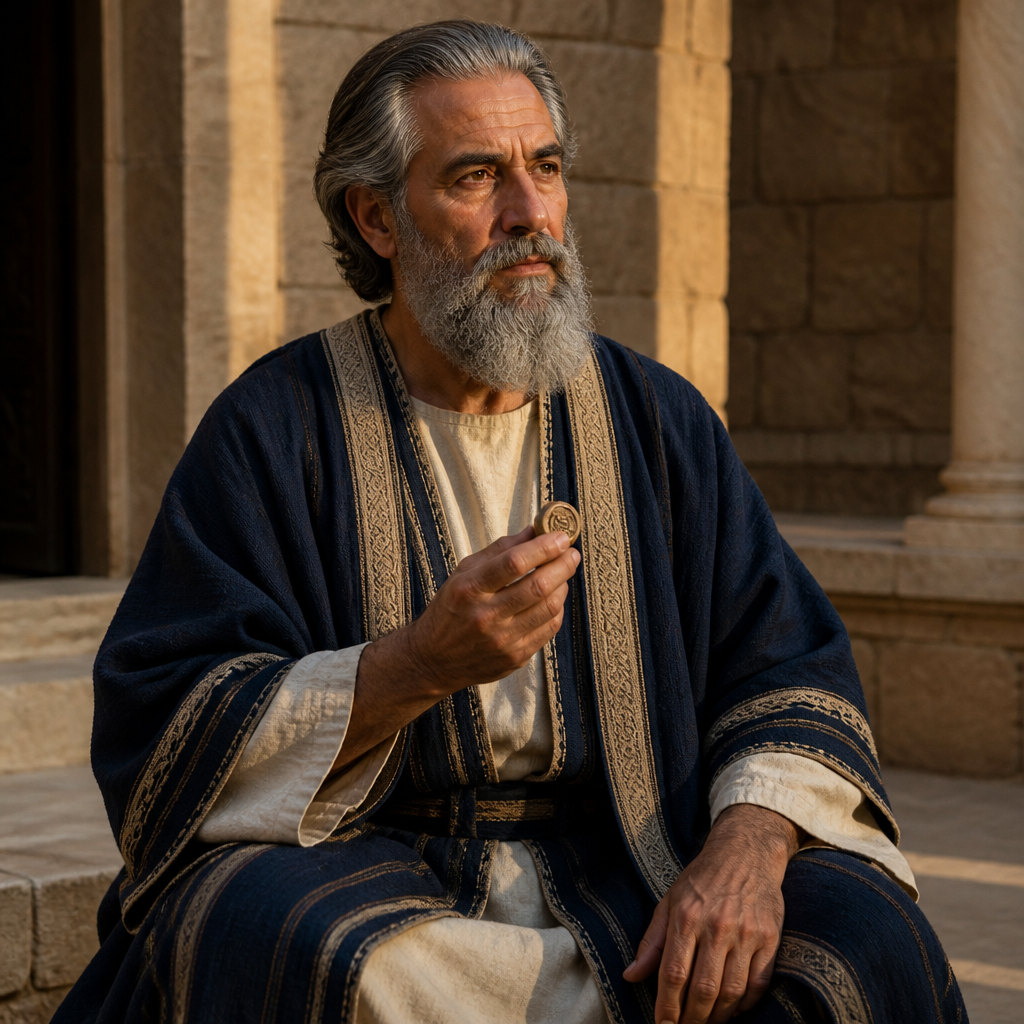 Hananiah, Father of ZedekiahThis page
Children
 Zedekiah son of HananiahSonJeremiah 36:12Stated
Connected Figures
Family
Son · Jeremiah 36:12
A Judean official during the reign of King Jehoiakim who was present during the reading of Jeremiah’s scroll.
Divided MonarchyFirst: Jeremiah 36:121 versesRoyal Official / Counselor
Categories
Mentions by Book
- Jeremiah1
Scripture References
All 1 indexed verse, in canonical order, from the Berean Standard Bible.
Jeremiah · 1
- Jeremiah 36:12
he went down to the scribe’s chamber in the king’s palace, where all the officials were sitting: Elishama the scribe, Delaiah son of Shemaiah, Elnathan son of Achbor, Gemariah son of Shaphan, Zedekiah son of Hananiah, and all the other officials.
Others Named Hananiah
Compare all 15 bearers →Hananiah, Son of Shashak1 Chronicles 8:24
A Benjamite leader and son of Shashak listed among the heads of households dwelling in Jerusalem during the Divided Monarchy.
Hananiah, Son of Zerubbabel1 Chronicles 3:19
Hananiah was a descendant of the royal line of David and a son of Zerubbabel, the governor of Judah during the restoration of the Jewish people after the exile.
Hananiah, Priest and TrumpeterNehemiah 12:41
A Jewish priest and musician who participated in the joyous dedication of the rebuilt walls of Jerusalem under Nehemiah.
Hananiah, a Leader of the PeopleNehemiah 10:23
A leader of the Jewish people during the post-exilic period who participated in the formal sealing of the covenant under Nehemiah.
Hananiah, Commander of the FortressNehemiah 7:2
A faithful official appointed by Nehemiah to govern Jerusalem during the post-exilic restoration due to his exceptional devotion and fear of God.
Hananiah, Priest under JoiakimNehemiah 12:12
A priestly head of the family of Jeremiah who served during the tenure of the High Priest Joiakim in post-exilic Jerusalem.
Hananiah, Son of the PerfumerNehemiah 3:8
A skilled laborer and son of a perfumer who assisted in the reconstruction and fortification of the Jerusalem wall as far as the Broad Wall during the post-exilic return.
Hananiah, Grandfather of IrijahJeremiah 37:13
A Judean man of the Divided Monarchy known as the grandfather of Irijah, the guard who arrested the prophet Jeremiah.
Hananiah, Friend of DanielDaniel 1:6
One of four Judean youths taken into Babylonian exile, known by the Babylonian name Shadrach, who survived the blazing fiery furnace.
Hananiah, Descendant of BebaiEzra 10:28
A Judean man of the post-exilic period who was among those instructed to dissolve foreign marriages according to the reforms of Ezra.
Hananiah, Royal Officer of Uzziah2 Chronicles 26:11
A high-ranking military official and royal officer who oversaw the mobilization of King Uzziah's divisions in the Kingdom of Judah.
Hananiah, Levite Musician of the United Monarchy1 Chronicles 25:4
Hananiah was a Levite musician and son of Heman who served as the leader of the sixteenth division of temple musicians during the reign of King David.
Hananiah, Prophet of GibeonJeremiah 28:1
A false prophet who opposed Jeremiah during the reign of Zedekiah by predicting a swift end to the Babylonian exile.
Hananiah, Son of ShelemiahNehemiah 3:30
A Judean laborer who assisted in the reconstruction of the walls of Jerusalem under the leadership of Nehemiah during the post-exilic return.