Hananiah, Son of Shelemiah
Who was Hananiah, Son of Shelemiah, in the Bible?
A Judean laborer who assisted in the reconstruction of the walls of Jerusalem under the leadership of Nehemiah during the post-exilic return.
This is one of 15 people named Hananiah in the Bible. See all 15 →
Hananiah, the son of Shelemiah, was a Jewish man living in Jerusalem during the mid-5th century BC. He is specifically identified in the biblical record as one of the dedicated volunteers who participated in the monumental task of rebuilding the city's defenses. His efforts took place during the restoration period following the Babylonian captivity, a time when the Jewish remnant sought to re-establish their religious and national identity in their ancestral homeland.
Working alongside other residents such as Hanun and Meshullam, Hananiah's contribution was vital to the security of the holy city. Though the scriptural record concerning his life is brief, his inclusion in the formal register of builders signifies his status as a man of action and a faithful participant in the community’s shared vision for the recovery of Jerusalem.
Background and Family
Hananiah lived during the era of the Exile and Return, a pivotal chapter in Israelite history beginning with the edict of Cyrus the Great in 538 BC and extending through the reforms of Ezra and Nehemiah. While his specific tribe is not explicitly mentioned in the text, he is identified by his lineage as the "son of Shelemiah." The name Hananiah, meaning "Yahweh has been gracious," was common during this period, reflecting the community's gratitude for their release from Babylonian bondage. His father, Shelemiah, appears to have been a man of sufficient standing to be noted in the genealogical records of the builders, providing Hananiah with a clear social and familial identity within the returning remnant.
Major Life Events
The defining moment of Hananiah’s life recorded in Scripture is his participation in the reconstruction of Jerusalem’s wall in approximately 444 BC. According to Nehemiah 3:30, Hananiah worked on a specific segment of the wall alongside Hanun, the sixth son of Zalaph. This work was categorized as repairing "another section," suggesting that Hananiah may have been part of a group that completed more than one portion of the fortifications, or he was working on a secondary area following the completion of a previous task.
This labor was not merely construction; it was a high-stakes military and spiritual endeavor. The wall had lain in ruins since the Babylonian destruction in 586 BC, leaving the inhabitants vulnerable to their hostile neighbors, such as Sanballat and Tobiah. By committing his physical strength to the wall, Hananiah was directly contributing to the physical safety of the Temple and the preservation of the Jewish people.
Relationship to Other Biblical Figures
Hananiah is mentioned in direct association with Hanun and Meshullam son of Berechiah. The text notes that Hananiah and Hanun worked in a location adjacent to Meshullam, who was repairing the section "opposite his own quarters." This indicates that the workforce was organized by proximity and social ties, with Hananiah likely living or possessing interests in the eastern or northern sections of the city where these particular repairs were concentrated. His cooperation with Hanun demonstrates the collaborative nature of Nehemiah's leadership, where men from various families worked side-by-side toward a common goal.
Spiritual Significance
In the context of the book of Nehemiah, Hananiah represents the faithful "common man" whose name is immortalized not for prophecy or kingship, but for service. The meticulous listing of names in Nehemiah 3 serves a theological purpose: it demonstrates that the restoration of God’s kingdom involves the specific, practical contributions of individuals. Hananiah’s willingness to labor on the wall reflects a commitment to the covenant and the restoration of Jerusalem as the center of worship. His work was an act of faith, signifying his belief that God was indeed favoring the return of His people to their land.
Hananiah serves as a model of communal responsibility and practical service during the post-exilic restoration. His inclusion in the list of wall-builders underscores the biblical theme that every individual’s labor, no matter how briefly recorded, is essential to the fulfillment of God’s purposes for His people. He represents the restoration of the 'holy seed' through physical labor and civic devotion.
Frequently Asked Questions
What section of the Jerusalem wall did Hananiah repair?
The text does not name the specific gate or tower, but notes he repaired 'another section' alongside Hanun, positioned near the quarters of Meshullam son of Berechiah.
Who was Hananiah’s father?
Hananiah was the son of Shelemiah.
When did Hananiah live?
He lived during the Post-Exilic Period, specifically during the governorship of Nehemiah in the 5th century BC.
What does the name Hananiah mean?
The name Hananiah is Hebrew for 'Yahweh has been gracious' or 'Gift of God'.
Family & Relationships
Parents
 Shelemiah, Father of HananiahFatherNehemiah 3:30Stated
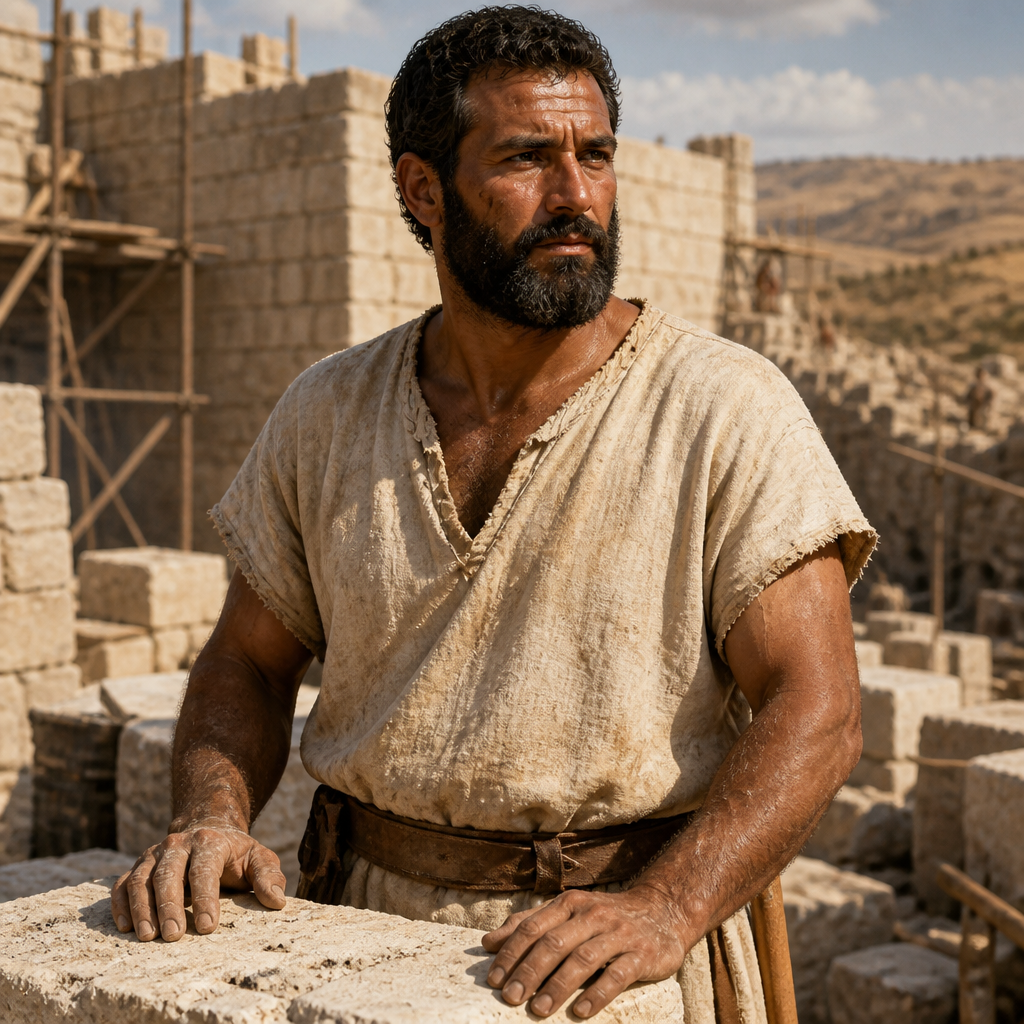 Hananiah, Son of ShelemiahThis page
Connected Figures
Family
Father · Nehemiah 3:30
Shelemiah was an Israelite during the Post-Exilic Period whose son, Hananiah, helped rebuild the walls of Jerusalem under Nehemiah's leadership.
Categories
Mentions by Book
- Nehemiah1
Scripture References
All 1 indexed verse, in canonical order, from the Berean Standard Bible.
Nehemiah · 1
- Nehemiah 3:30
Next to him, Hananiah son of Shelemiah, as well as Hanun the sixth son of Zalaph, repaired another section. Next to them, Meshullam son of Berechiah made repairs opposite his own quarters.
Others Named Hananiah
Compare all 15 bearers →Hananiah, Son of Shashak1 Chronicles 8:24
A Benjamite leader and son of Shashak listed among the heads of households dwelling in Jerusalem during the Divided Monarchy.
Hananiah, Son of Zerubbabel1 Chronicles 3:19
Hananiah was a descendant of the royal line of David and a son of Zerubbabel, the governor of Judah during the restoration of the Jewish people after the exile.
Hananiah, Priest and TrumpeterNehemiah 12:41
A Jewish priest and musician who participated in the joyous dedication of the rebuilt walls of Jerusalem under Nehemiah.
Hananiah, a Leader of the PeopleNehemiah 10:23
A leader of the Jewish people during the post-exilic period who participated in the formal sealing of the covenant under Nehemiah.
Hananiah, Commander of the FortressNehemiah 7:2
A faithful official appointed by Nehemiah to govern Jerusalem during the post-exilic restoration due to his exceptional devotion and fear of God.
Hananiah, Father of ZedekiahJeremiah 36:12
Hananiah was a Judean official during the Divided Monarchy, best known as the father of Zedekiah, an official in the court of King Jehoiakim.
Hananiah, Priest under JoiakimNehemiah 12:12
A priestly head of the family of Jeremiah who served during the tenure of the High Priest Joiakim in post-exilic Jerusalem.
Hananiah, Son of the PerfumerNehemiah 3:8
A skilled laborer and son of a perfumer who assisted in the reconstruction and fortification of the Jerusalem wall as far as the Broad Wall during the post-exilic return.
Hananiah, Grandfather of IrijahJeremiah 37:13
A Judean man of the Divided Monarchy known as the grandfather of Irijah, the guard who arrested the prophet Jeremiah.
Hananiah, Friend of DanielDaniel 1:6
One of four Judean youths taken into Babylonian exile, known by the Babylonian name Shadrach, who survived the blazing fiery furnace.
Hananiah, Descendant of BebaiEzra 10:28
A Judean man of the post-exilic period who was among those instructed to dissolve foreign marriages according to the reforms of Ezra.
Hananiah, Royal Officer of Uzziah2 Chronicles 26:11
A high-ranking military official and royal officer who oversaw the mobilization of King Uzziah's divisions in the Kingdom of Judah.
Hananiah, Levite Musician of the United Monarchy1 Chronicles 25:4
Hananiah was a Levite musician and son of Heman who served as the leader of the sixteenth division of temple musicians during the reign of King David.
Hananiah, Prophet of GibeonJeremiah 28:1
A false prophet who opposed Jeremiah during the reign of Zedekiah by predicting a swift end to the Babylonian exile.