Zalaph
Who was Zalaph in the Bible?
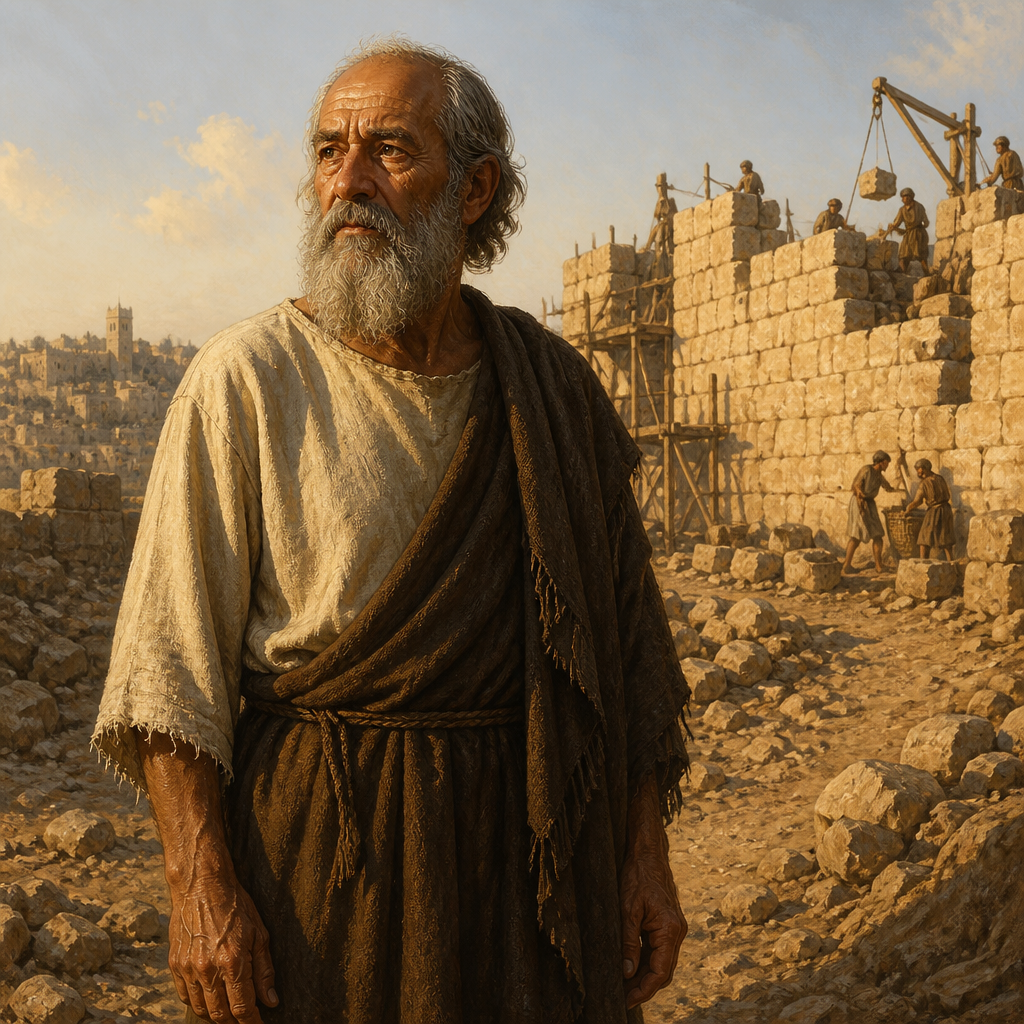
Zalaph was a post-exilic Israelite identified as the father of Hanun, one of the men who repaired the walls of Jerusalem under Nehemiah.
Zalaph is a minor figure within the Hebrew Bible, mentioned exclusively in the book of Nehemiah during the period of the Jewish return from the Babylonian Exile. His inclusion in the biblical record is tied to the physical reconstruction of Jerusalem's defenses, a pivotal moment in the restoration of the Jewish community and its religious identity.
While Zalaph himself is not recorded as performing the labor, his name serves as a vital genealogical marker for his son, Hanun. The biblical text highlights a specific detail regarding Zalaph's family structure—noting that Hanun was his 'sixth son'—which provides a rare glimpse into the household sizes of those participating in the rebuilding efforts around 444 BC.
Background and Family
Zalaph lived during the Post-Exilic Period, a time when the Jewish people were returning to Judah under the decrees of Persian monarchs. His tribal affiliation is not explicitly stated in the text of Nehemiah, though his presence in the record suggests he was part of the remnant that maintained their ancestral heritage through the captivity. The name Zalaph is derived from the Hebrew word tsalaph, which some scholars suggest may refer to a plant, specifically the caper-plant, though this remains a point of etymological discussion rather than historical certainty.
The most distinctive fact recorded about Zalaph is his paternity. He is identified as the father of Hanun. Uniquely, the text specifies that Hanun was the 'sixth son' of Zalaph. This ordinal designation is relatively uncommon in the lists of Nehemiah 3 and serves to distinguish this Hanun from other individuals with the same name, such as the Hanun mentioned earlier in the same chapter (Nehemiah 3:13) who repaired the Valley Gate.
Major Life Events
The historical footprint of Zalaph is found within the 'Wall Builders' list' of Nehemiah 3. This chapter provides a meticulous account of the various families, professionals, and residents who took responsibility for specific sections of the Jerusalem wall.
According to Nehemiah 3:30, Zalaph’s son, Hanun, worked alongside Hananiah son of Shelemiah. Together, they repaired a specific 'section' of the wall. While the text focuses on the labor of the son, the mention of Zalaph indicates his status as a head of a household. In the social structure of the time, the identification by one's father was essential for establishing legal standing and inheritance within the community of the returnees.
Relationship to Other Biblical Figures
Zalaph’s primary biblical connection is to his son, Hanun. The text does not name his other five sons, nor does it provide the name of his wife or his own father. He is situated in the narrative context alongside other prominent builders like Hananiah and Meshullam son of Berechiah. This placement suggests that Zalaph’s family was integrated into the civic and religious life of the restored Jerusalem, contributing their resources and manpower to the common defense of the city.
Spiritual Significance
In the context of the book of Nehemiah, Zalaph represents the many families whose names were preserved as a testament to their commitment to the covenant community. Though he is not credited with a specific speech or miracle, his presence in the genealogies of the restoration signifies that the promises made to the fathers were being fulfilled in their descendants. The specific mention of his 'sixth son' participating in the work underscores the idea that entire households—down to the younger siblings—were mobilized for the sacred task of rebuilding the Holy City. For theologians, Zalaph serves as an example of how individual families, even those mentioned only in passing, are essential threads in the larger tapestry of redemptive history.
The mention of Zalaph in Nehemiah 3:30 underscores the meticulous record-keeping of the post-exilic community. His significance lies in his contribution to the reconstruction of Jerusalem's walls through his son, Hanun. By identifying Hanun as the 'sixth son' of Zalaph, the text emphasizes the breadth of family participation in the work of God, showing that even those not in primary leadership roles were recognized for their household's dedication to the restoration of Israel.
Frequently Asked Questions
What does the name Zalaph mean?
The name Zalaph (צָלָף) is generally understood to mean 'caper-plant' or 'fracture' in Hebrew, though its exact etymological origin is debated.
Which book of the Bible mentions Zalaph?
Zalaph is mentioned only once in the Bible, in the book of Nehemiah, chapter 3, verse 30.
What did Zalaph do for the Jerusalem wall?
The Bible does not record Zalaph working on the wall himself; instead, it records that his son, Hanun, repaired a section of the wall.
How many sons did Zalaph have?
The Bible identifies Hanun as the 'sixth son' of Zalaph, implying that Zalaph had at least six sons.
What era did Zalaph live in?
Zalaph lived during the Post-Exilic Period (the Return from Exile), specifically during the time of Nehemiah's governorship in the 5th century BC.
Family & Relationships
 ZalaphThis page
Children
 Hanun, Sixth Son of ZalaphSonNehemiah 3:30Stated
Connected Figures
Family
Son · Nehemiah 3:30
A participant in the reconstruction of Jerusalem's walls under Nehemiah, specifically identified as the sixth son of Zalaph.
Exile and ReturnFirst: Nehemiah 3:301 versesRestoration laborer
Categories
Mentions by Book
- Nehemiah1
Scripture References
All 1 indexed verse, in canonical order, from the Berean Standard Bible.
Nehemiah · 1
- Nehemiah 3:30
Next to him, Hananiah son of Shelemiah, as well as Hanun the sixth son of Zalaph, repaired another section. Next to them, Meshullam son of Berechiah made repairs opposite his own quarters.