Zechariah, Prophet of the Return
A prominent post-exilic prophet who, alongside Haggai, urged the Jewish people to rebuild the Temple in Jerusalem during the reign of Darius I.
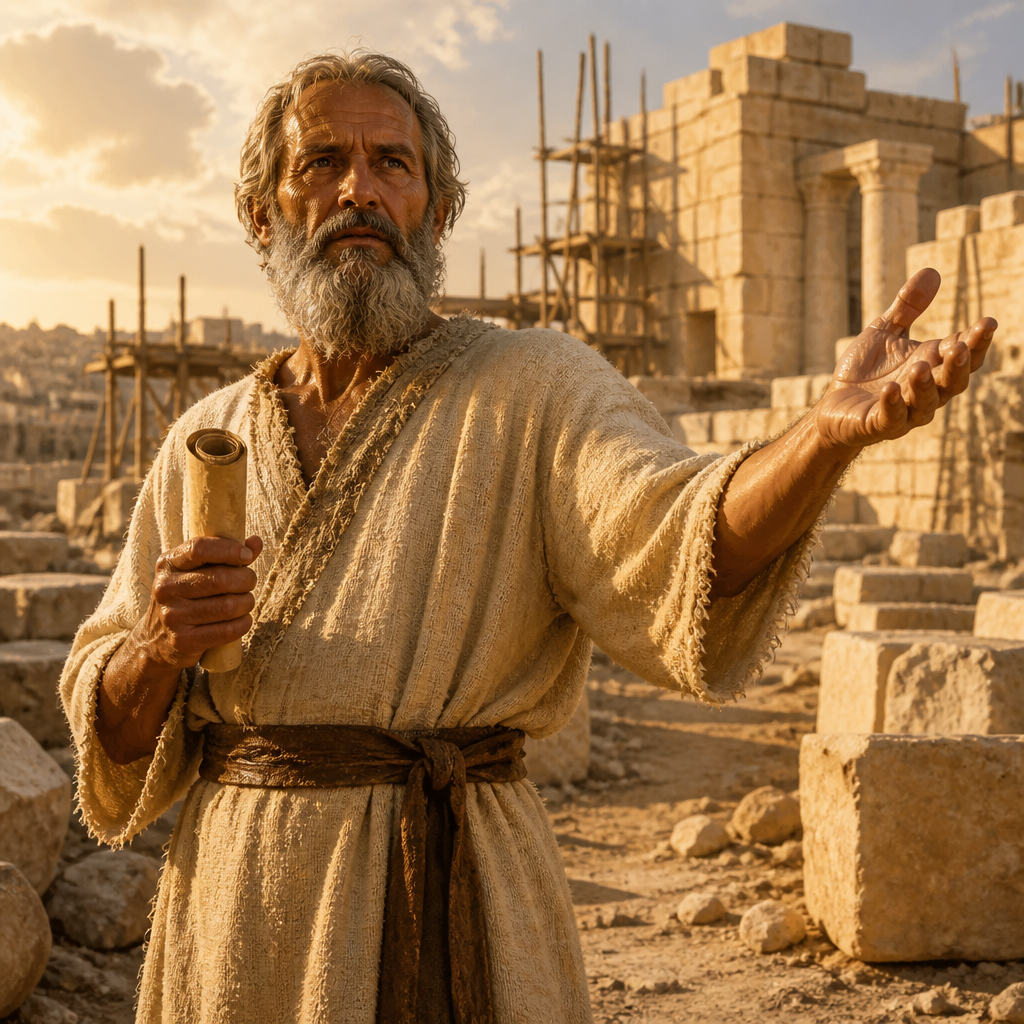
Zechariah, the son of Berechiah and grandson of Iddo, was a pivotal prophetic figure in the late 6th century BC. Operating during the Post-Exilic Period, he was instrumental in the spiritual and physical restoration of Jerusalem following the Babylonian Captivity. His ministry is primarily defined by his role in motivating the returning exiles to complete the construction of the Second Temple, a project that had stalled for years due to opposition and internal lethargy.
Historically, Zechariah's work is dated with precision in the biblical text to the second and fourth years of the Persian King Darius I (roughly 520–518 BC). He is frequently associated with his contemporary, the prophet Haggai, as the two functioned as a prophetic duo to provide the necessary divine encouragement to the Jewish leadership, specifically Zerubbabel and Joshua the high priest. While Haggai’s messages were often direct and practical, Zechariah’s recorded words are characterized by visionary complexity and a focus on the cosmic and future implications of Israel’s restoration.
Background and Family
The prophet Zechariah emerges in the historical record during a time of significant transition for the people of Judah. According to the opening of his eponymous book, he was the "son of Berechiah, the son of Iddo" (Zechariah 1:1). This lineage provides a specific genealogical marker, although the book of Ezra, in its historical summary, refers to him more broadly as the "son of Iddo" (Ezra 5:1, 6:14). In Hebrew genealogical conventions, the term "son" often denotes a descendant, and Iddo appears to have been the head of a prominent priestly family that returned from Babylon with Zerubbabel.
Zechariah’s activity is firmly anchored in the geopolitical context of the Persian Empire. He began his ministry in the eighth month of the second year of Darius (520 BC). This was a period when the initial enthusiasm of the returnees had waned. Having returned to the ruins of Jerusalem, the people had prioritized their own paneled houses while the house of God remained a ruin. Zechariah’s family background suggests he was likely of priestly descent, which would explain his intense concern for the Temple, the purity of the priesthood, and the liturgical life of the restored community.
Major Life Events
The life of Zechariah, as recorded in the scriptures, is defined by three specific chronological markers during the reign of Darius I. His first recorded prophecy occurred in the eighth month of Darius's second year (Zechariah 1:1), followed by a series of significant visions in the eleventh month of that same year (Zechariah 1:7). His final dated oracle is recorded in the fourth year of Darius (Zechariah 7:1).
The primary event of Zechariah's career was his collaboration with Haggai to restart the Temple construction. The book of Ezra notes that the work on the house of God had ceased until the second year of Darius. When Zechariah began to prophesy, the impact was immediate. Ezra 5:1-2 records that the Jewish elders, encouraged by the prophets, rose up and began to build. Zechariah’s role was to provide the spiritual impetus that converted political permission from the Persian crown into active religious devotion.
In the fourth year of Darius, Zechariah was consulted by a delegation from Bethel regarding the continuation of fasts that had been observed to mourn the destruction of the first Temple. Zechariah used this event to pivot the people's focus from ritualistic mourning to ethical living and the promise of future joy, declaring that the fasts would become "seasons of joy and gladness" (Zechariah 8:19) if the people walked in truth and peace.
Relationship to Other Biblical Figures
Zechariah is most closely linked to Haggai. The two are mentioned together in Ezra 5:1 and 6:14 as a unified prophetic voice. While their rhetorical styles differed, their mission was singular: the completion of the Temple. Together, they supported the civil leadership of Zerubbabel (the governor) and the spiritual leadership of Joshua (the high priest).
According to Ezra 6:14, the "elders of the Jews" were the direct recipients of Zechariah's ministry. His relationship with these leaders was successful; the text notes that they "built and prospered through the prophesying of Haggai the prophet and Zechariah son of Iddo." This successful synergy between the prophetic word and the political leadership resulted in the Temple's completion and dedication under the decrees of Cyrus, Darius, and Artaxerxes.
Spiritual Significance
Zechariah’s significance lies in his role as a bridge between the immediate needs of the post-exilic community and the long-term hope of Israel. He provided the theological framework for the rebuilding process, emphasizing that the restoration of the building was a prerequisite for the return of God’s glory to Jerusalem.
His ministry demonstrated that the word of the Lord was still active after the trauma of the exile. By calling the people to "Return to me... and I will return to you" (Zechariah 1:3), he established the principle that physical reconstruction must be accompanied by spiritual repentance. His influence ensured that the second Temple period began with a clear prophetic mandate, establishing the foundation for Jewish life until the first century AD. The successful completion of the Temple, as credited to his and Haggai's influence in Ezra 6:14, stands as the enduring monument of his life’s work.
Spiritual Significance
Zechariah's theological impact is centered on his role in the physical and spiritual restoration of the Jewish community after the Babylonian Exile. He is a primary figure in the transition to the Second Temple period, providing the prophetic authority needed to complete the Temple structure. His presence in the book of Ezra confirms his historical importance as a leader whose words directly resulted in the fulfillment of God's promises regarding the return to Zion.
Thematically, Zechariah emphasizes the sovereignty of God over human history and the necessity of ethical integrity over mere ritualism. By partnering with Haggai, he bridged the gap between the pre-exilic prophetic tradition and the post-exilic reality, ensuring that the community remained focused on its identity as the people of God under the Persian administration.
Frequently Asked Questions
When did Zechariah live?
Zechariah lived during the late 6th century BC, specifically during the reign of the Persian King Darius I. His recorded ministry began in 520 BC and continued through at least 518 BC.
Who was Zechariah's father?
The Bible identifies his father as Berechiah and his grandfather as Iddo. Ezra refers to him more simply as the 'son of Iddo,' likely identifying him by his more prominent ancestral house.
What was Zechariah's main mission?
His main mission was to encourage the Jewish exiles who had returned to Jerusalem to finish rebuilding the Temple of the LORD, which had been left unfinished for many years.
Which other prophet worked with Zechariah?
The prophet Haggai worked alongside Zechariah. Both are credited in the book of Ezra for inspiring the leaders and the people to complete the construction of the Second Temple.
In which books of the Bible is this Zechariah mentioned?
This Zechariah is the primary subject of the Book of Zechariah and is also mentioned as a historical figure in the Book of Ezra (chapters 5 and 6).
Connected Figures
Haggai
Contemporary prophet and partner in ministry
Berechiah
Father
Iddo
Grandfather and head of a priestly house
Zerubbabel
Governor of Judah whom Zechariah encouraged
Joshua the High Priest
Religious leader whom Zechariah supported
Categories
Mentions by Book
- Zechariah4
- Ezra2
Family & Relationships
Parent
Berechiah, Father of Zechariah the Prophet
Zechariah 1:1
Others Named Zechariah
Zechariah, Son of Isshiah1 Chronicles 24:25
A Levite of the Uzzielite clan who served during the Divided Monarchy as a descendant of Kohath.
Zechariah, Father of John the BaptistLuke 1:5
A righteous priest of the division of Abijah who was momentarily struck mute for his disbelief before fathering John the Baptist in his old age.
Zechariah, Son of Jehoshaphat2 Chronicles 21:2
A prince of Judah and son of King Jehoshaphat, Zechariah was one of several brothers who were tragically murdered by their sibling Jehoram upon his accession to the throne.
Zechariah, Levite of the Divided Monarchy2 Chronicles 34:12
A Kohathite Levite who served as a faithful overseer during the restoration of the Temple in Jerusalem under King Josiah.
Zechariah of the Tribe of Reuben1 Chronicles 5:7
A Reubenite tribal leader recorded in the genealogical records of 1 Chronicles during the era of the Divided Monarchy.
Zechariah, Descendant of ParoshEzra 8:3
A prominent family representative who led 150 men back to Jerusalem from the Babylonian exile under the leadership of Ezra.
Zechariah, Priest of the ReturnNehemiah 12:16
A priest and descendant of Iddo who served in the post-exilic community during the resettlement of Jerusalem under the leadership of Nehemiah.
Zechariah, Son of JeberechiahIsaiah 8:2
A reliable citizen and witness of Judah during the reign of King Ahaz, chosen by God to attest to Isaiah's prophetic sign.
Zechariah, Descendant of ElamEzra 10:26
A returning Jewish exile from the family of Elam who was involved in the post-exilic reforms led by Ezra in Jerusalem.
Zechariah, Son of Jeroboam2 Kings 14:29
Zechariah, the son of Jeroboam II, was the final king of the Jehu dynasty in Israel, reigning for only six months before his assassination.
Zechariah, Father of Jahaziel2 Chronicles 20:14
A Levite descendant of Asaph during the Divided Monarchy whose lineage was chosen for a significant prophetic announcement during the reign of King Jehoshaphat.
Zechariah, Son of Jehoiada2 Chronicles 24:20
A righteous priest and martyr during the Divided Monarchy who was executed by King Joash for rebuking the idolatry of Judah.
Zechariah, Official of Jehoshaphat2 Chronicles 17:7
One of five high-ranking officials commissioned by King Jehoshaphat to educate the people of Judah in the Law of the LORD.
Zechariah, Leader of the ReturnEzra 8:16
A Jewish leader summoned by Ezra during the post-exilic journey from Babylon to Jerusalem to assist in the restoration of the community.
Zechariah, descendant of Asaph2 Chronicles 29:13
A Levite of the Asaphite clan who participated in the sanctification and restoration of the Temple under the direction of King Hezekiah during the Divided Monarchy.
Zechariah, Descendant of JudahNehemiah 11:4
A descendant of Judah and the house of Perez who served as a vital genealogical link for the community resettling Jerusalem after the Babylonian exile.
Zechariah, Father of Iddo1 Chronicles 27:21
The father of Iddo, a high-ranking tribal official over the half-tribe of Manasseh in Gilead during the reign of King David.
Zechariah, Father of Abi2 Kings 18:2
The father of Queen Abi and grandfather of King Hezekiah, whose lineage was instrumental in the religious reforms of Judah.
Zechariah, Son of PashhurNehemiah 11:12
A Levite of the post-exilic period who served as a temple worker and genealogical link during the repopulation of Jerusalem.
Zechariah, Descendant of ShelahNehemiah 11:5
A member of the tribe of Judah and the house of Shelah whose lineage was essential to the post-exilic resettlement of Jerusalem.
Zechariah, Administrator of the House of God2 Chronicles 35:8
A high-ranking official and administrator of the Temple who provided substantial sacrifices during King Josiah's historic Passover celebration.
Zechariah, Son of Meshelemiah1 Chronicles 9:21
A Levite gatekeeper of the Korahite clan known as a wise counselor who served at the entrance to the Tent of Meeting.
Zechariah, Son of Hosah1 Chronicles 26:11
A Merarite Levite during the Divided Monarchy who served as a gatekeeper in the Tabernacle and Temple administration.
Zechariah, Instructor to Uzziah2 Chronicles 26:5
A godly mentor and spiritual advisor who instructed King Uzziah of Judah in the fear of the LORD during the Divided Monarchy.
Zechariah, Priest of the DedicationNehemiah 12:41
A priest and trumpeter who participated in the formal dedication of the rebuilt walls of Jerusalem during the time of Nehemiah.
Zechariah, Musician of the Post-Exilic PeriodNehemiah 12:35
A priest and trumpet player who participated in the joyous dedication of the rebuilt walls of Jerusalem under Nehemiah.
Zechariah, Attendee of the Law ReadingNehemiah 8:4
A prominent leader or dignitary who stood at the left hand of Ezra during the historic public reading and explanation of the Law of Moses in Jerusalem.
Zechariah, Son of BebaiEzra 8:11
A member of the clan of Bebai who joined Ezra’s caravan during the second wave of Jewish exiles returning from Babylon to Jerusalem.