Zechariah, Father of John the Baptist
A righteous priest of the division of Abijah who was momentarily struck mute for his disbelief before fathering John the Baptist in his old age.
Zechariah was a Jewish priest who lived during the reign of Herod the Great in Judea. He is primarily known for his role in the narrative leading up to the birth of Jesus Christ, as recorded in the Gospel of Luke. A member of the priestly division of Abijah, Zechariah and his wife Elizabeth were described as righteous before God, though they remained childless into their old age, a condition that carried significant social and personal weight in their culture.
His life is defined by a singular divine encounter in the Temple of Jerusalem, where he was chosen by lot to burn incense in the Holy Place. During this service, the angel Gabriel appeared to him to announce that his prayers had been heard and that his wife would bear a son who would prepare the way for the Lord. Zechariah’s initial skepticism toward this miracle led to a period of supernatural muteness that lasted until the naming of his son, John.
Background and Family
Zechariah served as a priest during the era of Herod the Great (c. 37–4 BC). The biblical record in Luke 1:5 specifies that he belonged to the priestly division of Abijah, one of the twenty-four courses of priests established to serve in the Temple. His wife, Elizabeth, was also of priestly descent, being a "daughter of Aaron." This pedigree underscores their high standing within the religious community, yet the text notes they were "well along in years" and had no children, as Elizabeth was barren.
Despite their personal sorrow, the couple is characterized by their unwavering devotion to the Mosaic Law. They are described as living blamelessly, observing all the Lord’s commands and decrees. This setting establishes the tension between their private disappointment and their public faithfulness, providing the backdrop for the miraculous intervention that follows.
Major Life Events
The Vision in the Temple
The pivotal moment in Zechariah’s life occurred during his assigned week of service at the Temple in Jerusalem. While the assembly of worshippers prayed outside, Zechariah entered the Holy Place to burn incense—a duty often viewed as a once-in-a-lifetime privilege for a priest. According to Luke 1:11-12, an angel of the Lord appeared to the right of the altar of incense. Zechariah was immediately "startled and gripped with fear."
The angel, identified as Gabriel, delivered a message that Elizabeth would bear a son named John. This child was prophesied to be a Nazarite-like figure, filled with the Holy Spirit from birth, who would turn many of the people of Israel to the Lord.
The Judgment of Silence
Upon hearing the promise, Zechariah questioned the angel, citing his advanced age and his wife's infertility: "How can I be sure of this?" (Luke 1:18). Because he requested a sign out of doubt rather than simple clarification, Gabriel declared that Zechariah would remain silent and unable to speak until the day the prophecy was fulfilled. When Zechariah eventually emerged from the Temple, the waiting crowd realized he had seen a vision because he could only communicate through signs.
The Birth and the Benedictus
After Elizabeth gave birth, their neighbors and relatives expected the child to be named Zechariah after his father. However, Elizabeth insisted on the name John. When the people appealed to Zechariah, he asked for a writing tablet and wrote, "His name is John" (Luke 1:63). Immediately, his speech was restored. Filled with the Holy Spirit, Zechariah broke his months of silence with a song of praise known traditionally as the Benedictus (Luke 1:67-79). In this prophecy, he blessed God for visiting His people and spoke directly to his infant son, foretelling John's role as the prophet of the Most High.
Relationship to Other Biblical Figures
Zechariah’s primary relationships are familial. He was the husband of Elizabeth and the father of John the Baptist. Through Elizabeth’s kinship with Mary, the mother of Jesus, Zechariah was also linked to the Holy Family. Luke 1:40 records that Mary visited the home of Zechariah in the hill country of Judea shortly after the Annunciation, staying there for three months.
In the broader biblical narrative, Zechariah serves as the bridge between the old covenant priesthood and the new era of the gospel. His son, John, would eventually become the voice crying in the wilderness, the last of the prophets under the old order and the one who identified Jesus as the Lamb of God.
Spiritual Significance
Zechariah represents the transition from the silence of the intertestamental period to the fulfillment of messianic hope. His initial doubt and subsequent restoration serve as a narrative lesson on the certainty of God's word. Theologically, his song of praise—the Benedictus—is one of the most significant liturgical texts in the New Testament, framing the coming of Christ as the fulfillment of the Davidic and Abrahamic covenants.
The final mention of Zechariah in the biblical text appears in Luke 3:2, which dates the beginning of John’s ministry: "the word of God came to John son of Zechariah in the wilderness." This confirms that Zechariah’s legacy was carried forward by his son's mission to prepare the way for Jesus Christ.
Spiritual Significance
Zechariah serves as a critical link between the Old and New Testaments. As a righteous priest, he embodies the highest ideals of the Jewish faith, yet his story begins with the limitation of that faith when faced with a miraculous promise. His period of silence is often interpreted by scholars as a symbolic representation of the end of the prophetic silence in Israel; when he speaks again, it is to announce the dawn of the messianic age.
Furthermore, Zechariah’s prophecy (the Benedictus) provides a theological framework for the mission of Jesus. He emphasizes that the coming salvation is not merely a political liberation but a fulfillment of God's holy covenant and an act of divine mercy. By naming his son 'John' (meaning 'The Lord is Gracious') in obedience to the angelic command, Zechariah signals the shift from the strictures of the law to the arrival of grace.
Frequently Asked Questions
Why was Zechariah made mute?
Zechariah was made mute because he doubted the angel Gabriel's message that his wife Elizabeth would have a son. Gabriel stated that Zechariah would remain silent because he did not believe the words that would be fulfilled in their proper time (Luke 1:20).
Which priestly division did Zechariah belong to?
He belonged to the priestly division of Abijah, which was one of the 24 courses of priests serving in the Temple of Jerusalem.
What did Zechariah say when his speech was restored?
Upon the restoration of his speech, Zechariah was filled with the Holy Spirit and offered a prophecy known as the Benedictus, praising God for redeeming His people and foretelling the ministry of his son, John the Baptist.
How long was Zechariah silent?
Zechariah was silent from the time of his encounter with Gabriel in the Temple until the eighth day after his son's birth, when the child was circumcised and named—a period of approximately nine to ten months.
Where did Zechariah live?
The Bible states that Zechariah lived in a town in the hill country of Judea (Luke 1:39-40), though the specific name of the town is not mentioned in the text.
Connected Figures
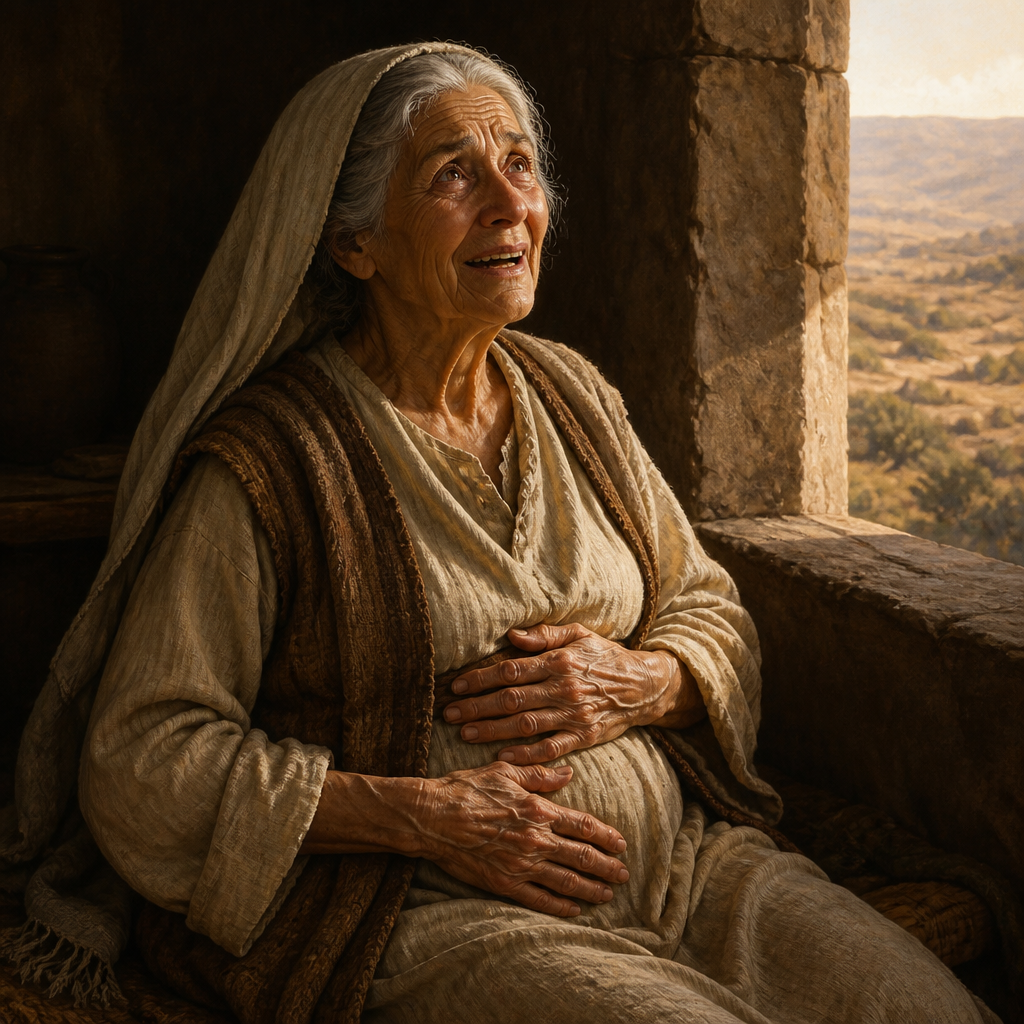
Elizabeth
Wife
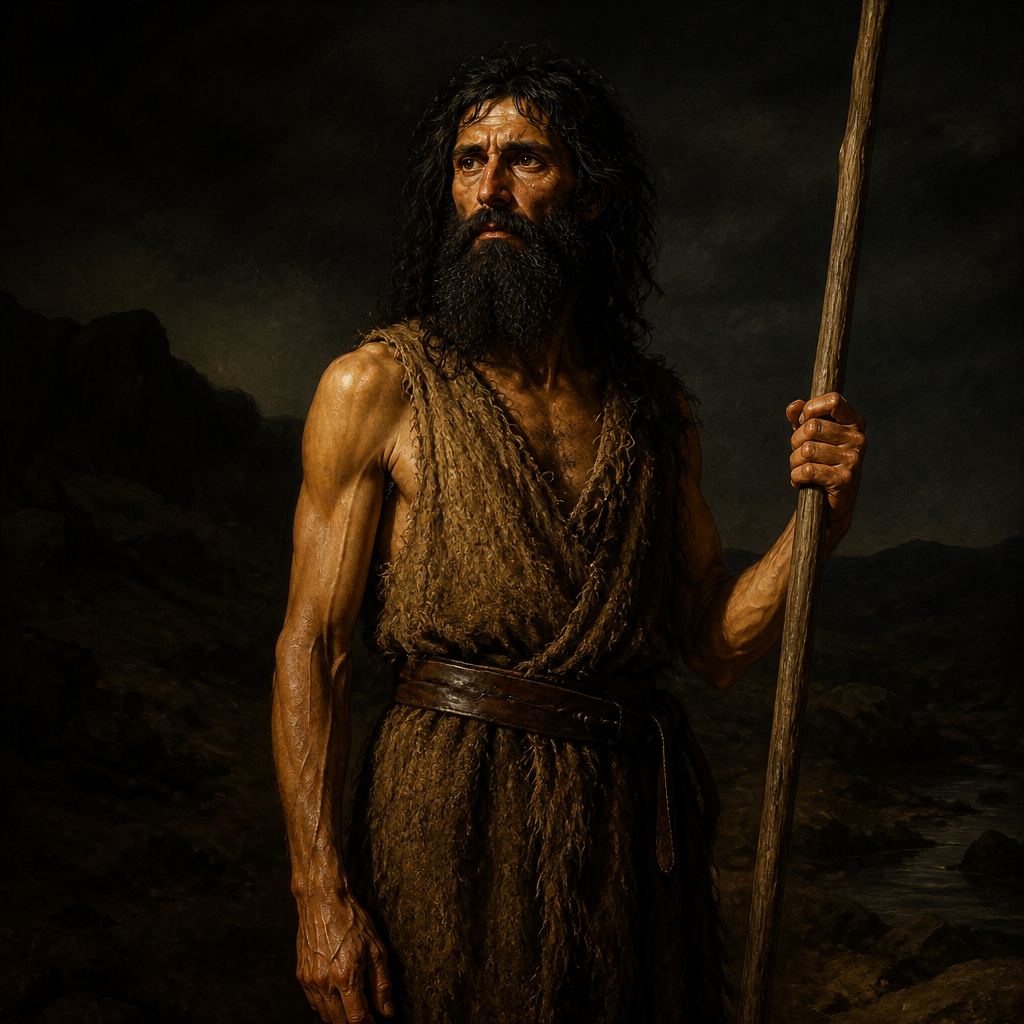
John the Baptist
Son
Mary, mother of Jesus
Relative of his wife
Gabriel
Divine messenger
Categories
Mentions by Book
- Luke9
Family & Relationships
Spouse / partner
Luke 1:5
Child
John the Baptist, Son of Zechariah
Luke 1:5
Spouse / partner
Luke 1:5
Others Named Zechariah
Zechariah, Son of Isshiah1 Chronicles 24:25
A Levite of the Uzzielite clan who served during the Divided Monarchy as a descendant of Kohath.
Zechariah, Son of Jehoshaphat2 Chronicles 21:2
A prince of Judah and son of King Jehoshaphat, Zechariah was one of several brothers who were tragically murdered by their sibling Jehoram upon his accession to the throne.
Zechariah, Levite of the Divided Monarchy2 Chronicles 34:12
A Kohathite Levite who served as a faithful overseer during the restoration of the Temple in Jerusalem under King Josiah.
Zechariah of the Tribe of Reuben1 Chronicles 5:7
A Reubenite tribal leader recorded in the genealogical records of 1 Chronicles during the era of the Divided Monarchy.
Zechariah, Prophet of the ReturnZechariah 1:1
A prominent post-exilic prophet who, alongside Haggai, urged the Jewish people to rebuild the Temple in Jerusalem during the reign of Darius I.
Zechariah, Descendant of ParoshEzra 8:3
A prominent family representative who led 150 men back to Jerusalem from the Babylonian exile under the leadership of Ezra.
Zechariah, Priest of the ReturnNehemiah 12:16
A priest and descendant of Iddo who served in the post-exilic community during the resettlement of Jerusalem under the leadership of Nehemiah.
Zechariah, Son of JeberechiahIsaiah 8:2
A reliable citizen and witness of Judah during the reign of King Ahaz, chosen by God to attest to Isaiah's prophetic sign.
Zechariah, Descendant of ElamEzra 10:26
A returning Jewish exile from the family of Elam who was involved in the post-exilic reforms led by Ezra in Jerusalem.
Zechariah, Son of Jeroboam2 Kings 14:29
Zechariah, the son of Jeroboam II, was the final king of the Jehu dynasty in Israel, reigning for only six months before his assassination.
Zechariah, Father of Jahaziel2 Chronicles 20:14
A Levite descendant of Asaph during the Divided Monarchy whose lineage was chosen for a significant prophetic announcement during the reign of King Jehoshaphat.
Zechariah, Son of Jehoiada2 Chronicles 24:20
A righteous priest and martyr during the Divided Monarchy who was executed by King Joash for rebuking the idolatry of Judah.
Zechariah, Official of Jehoshaphat2 Chronicles 17:7
One of five high-ranking officials commissioned by King Jehoshaphat to educate the people of Judah in the Law of the LORD.
Zechariah, Leader of the ReturnEzra 8:16
A Jewish leader summoned by Ezra during the post-exilic journey from Babylon to Jerusalem to assist in the restoration of the community.
Zechariah, descendant of Asaph2 Chronicles 29:13
A Levite of the Asaphite clan who participated in the sanctification and restoration of the Temple under the direction of King Hezekiah during the Divided Monarchy.
Zechariah, Descendant of JudahNehemiah 11:4
A descendant of Judah and the house of Perez who served as a vital genealogical link for the community resettling Jerusalem after the Babylonian exile.
Zechariah, Father of Iddo1 Chronicles 27:21
The father of Iddo, a high-ranking tribal official over the half-tribe of Manasseh in Gilead during the reign of King David.
Zechariah, Father of Abi2 Kings 18:2
The father of Queen Abi and grandfather of King Hezekiah, whose lineage was instrumental in the religious reforms of Judah.
Zechariah, Son of PashhurNehemiah 11:12
A Levite of the post-exilic period who served as a temple worker and genealogical link during the repopulation of Jerusalem.
Zechariah, Descendant of ShelahNehemiah 11:5
A member of the tribe of Judah and the house of Shelah whose lineage was essential to the post-exilic resettlement of Jerusalem.
Zechariah, Administrator of the House of God2 Chronicles 35:8
A high-ranking official and administrator of the Temple who provided substantial sacrifices during King Josiah's historic Passover celebration.
Zechariah, Son of Meshelemiah1 Chronicles 9:21
A Levite gatekeeper of the Korahite clan known as a wise counselor who served at the entrance to the Tent of Meeting.
Zechariah, Son of Hosah1 Chronicles 26:11
A Merarite Levite during the Divided Monarchy who served as a gatekeeper in the Tabernacle and Temple administration.
Zechariah, Instructor to Uzziah2 Chronicles 26:5
A godly mentor and spiritual advisor who instructed King Uzziah of Judah in the fear of the LORD during the Divided Monarchy.
Zechariah, Priest of the DedicationNehemiah 12:41
A priest and trumpeter who participated in the formal dedication of the rebuilt walls of Jerusalem during the time of Nehemiah.
Zechariah, Musician of the Post-Exilic PeriodNehemiah 12:35
A priest and trumpet player who participated in the joyous dedication of the rebuilt walls of Jerusalem under Nehemiah.
Zechariah, Attendee of the Law ReadingNehemiah 8:4
A prominent leader or dignitary who stood at the left hand of Ezra during the historic public reading and explanation of the Law of Moses in Jerusalem.
Zechariah, Son of BebaiEzra 8:11
A member of the clan of Bebai who joined Ezra’s caravan during the second wave of Jewish exiles returning from Babylon to Jerusalem.