Zechariah, Son of Jeberechiah
Who was Zechariah, Son of Jeberechiah, in the Bible?
A reliable citizen and witness of Judah during the reign of King Ahaz, chosen by God to attest to Isaiah's prophetic sign.
This is one of 29 people named Zechariah in the Bible. See all 29 →
Zechariah, son of Jeberechiah, was a figure residing in the Kingdom of Judah during the 8th century BC. He lived during the Divided Monarchy, specifically during the turbulent reign of King Ahaz and the ministry of the prophet Isaiah. Unlike many of his contemporaries who bore the same name, this Zechariah is distinguished by his parentage and his specific role as a civil or religious witness to divine prophecy.
His primary mention in the biblical canon occurs in the book of Isaiah, where he is summoned by God to serve as a 'trustworthy witness.' Alongside Uriah the priest, Zechariah was tasked with verifying a prophetic act intended to signal the impending judgment and deliverance of Judah. His presence in the narrative highlights the necessity of human confirmation for divine messages within the legal and social frameworks of ancient Jerusalem.
Background and Family
Zechariah is identified specifically as the son of Jeberechiah. While the biblical record does not provide an exhaustive genealogy for his family, the name Jeberechiah (meaning 'Yahweh blesses') suggests a lineage rooted in the worship of the God of Israel. He lived during the era of the Divided Monarchy, a time when the southern kingdom of Judah was under significant political pressure from the northern kingdom of Israel and the rising superpower of Assyria.
Because he is paired with Uriah the priest in the biblical text, some scholars suggest that Zechariah may have held a position of high social standing or official capacity in Jerusalem. To serve as a 'trustworthy witness' (Isaiah 8:2) for a public prophetic sign, an individual typically needed to be a person of recognized integrity and legal standing within the community. Whether he was a member of the levitical order or a prominent lay leader remains unspecified, but his reputation for reliability was sufficient for God to designate him by name.
Major Life Events
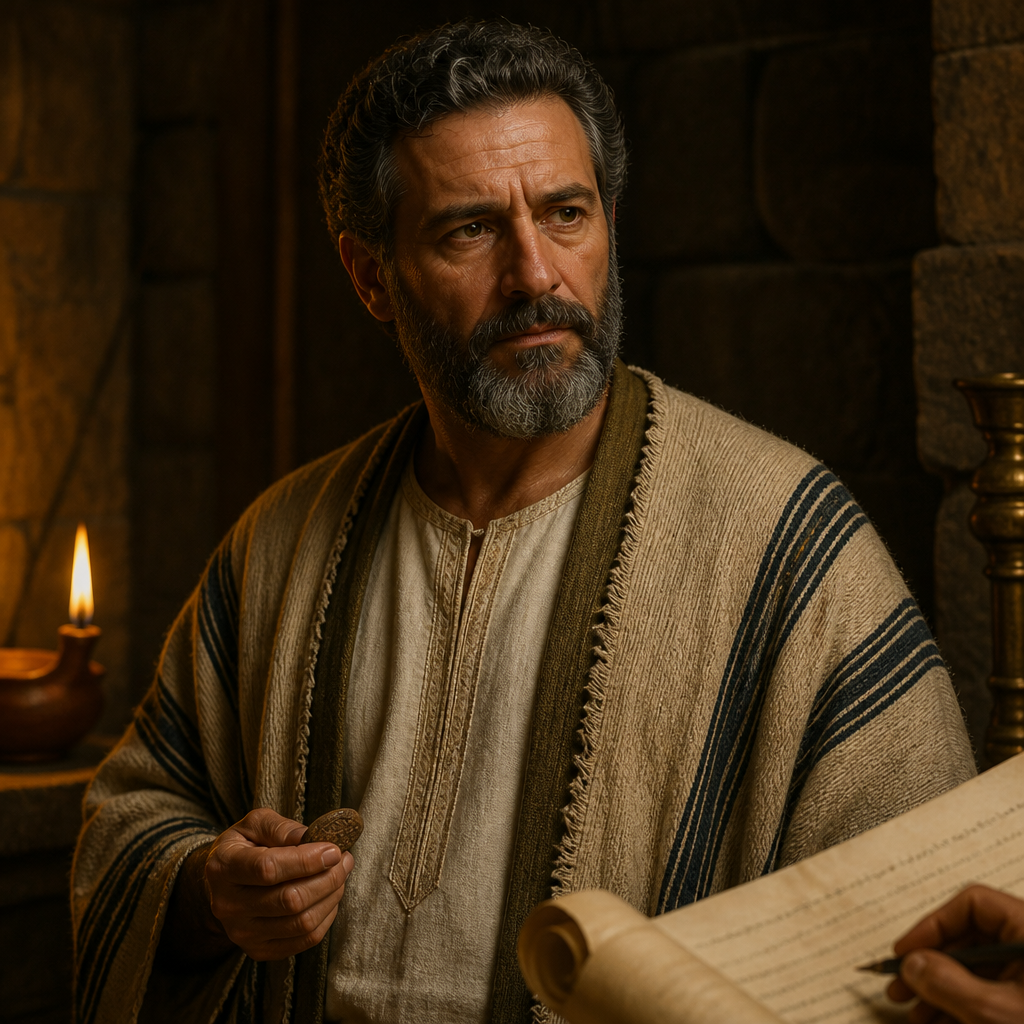
The sole recorded event in the life of Zechariah, son of Jeberechiah, is his appointment as a witness to the prophecy of Maher-Shalal-Hash-Baz. During the Syro-Ephraimite War (c. 735–732 BC), King Ahaz of Judah was terrified by the alliance of Rezin of Syria and Pekah of Israel. Isaiah was commanded by God to take a large scroll and write on it the name 'Maher-Shalal-Hash-Baz' (meaning 'quick to the plunder, swift to the spoil').
To ensure that the timing and authenticity of this prophecy were beyond dispute, God instructed Isaiah:
"And I will appoint for Myself trustworthy witnesses—Uriah the priest and Zechariah son of Jeberechiah." (Isaiah 8:2, BSB)
Zechariah’s role was to observe the writing of the name and the subsequent birth of Isaiah’s son, who was given the same name. This served as a legal and spiritual testimony that the prophecy preceded the event. The prophecy foretold that before the child was old enough to speak, the wealth of Damascus and the spoil of Samaria would be carried off by the King of Assyria, thereby vindicating Isaiah's message of judgment against Judah's enemies.
Relationship to Other Biblical Figures
Zechariah is inextricably linked to the prophet Isaiah. He serves as a formal observer of Isaiah's domestic life and prophetic ministry. He is also linked to Uriah the priest. Uriah is widely identified as the high priest who later complied with King Ahaz’s request to build an Assyrian-style altar in the Temple (2 Kings 16:10-16). Zechariah’s association with such a high-ranking official suggests he moved in the upper echelons of Jerusalem’s religious or political society. However, unlike the later compromises associated with Uriah, the text in Isaiah identifies Zechariah as 'trustworthy' at the moment of his appointment.
Spiritual Significance
The spiritual significance of Zechariah, son of Jeberechiah, lies in the principle of biblical witness. The Mosaic Law required two or three witnesses to establish a matter (Deuteronomy 19:15). By calling Zechariah, God demonstrated that His prophetic words were not hidden or subjective but were grounded in historical reality and verifiable by reliable members of the community. Zechariah stands as a representative of the 'trustworthy' remnant—those who, despite the surrounding national apostasy, were available to be used by God to confirm His truth. His life illustrates that even a brief mention in the biblical record can denote a crucial role in the unfolding of God’s redemptive history.
Zechariah, son of Jeberechiah, represents the legal validation of divine prophecy. His role as a 'trustworthy witness' provided the necessary social and legal proof that Isaiah’s prophecy regarding the fall of Samaria and Damascus was delivered before the events occurred. This prevented skeptics from claiming the prophecy was written after the fact (vaticinium ex eventu).
Theologically, Zechariah emphasizes the intersection of the divine word and human history. By selecting a specific, named individual known for his reliability, the biblical narrative asserts that God’s interaction with Israel was public and accountable. He serves as a model of the 'faithful witness' who lends his reputation to the service of God’s message.
Frequently Asked Questions
Who was Zechariah, son of Jeberechiah?
He was a man living in Judah during the 8th century BC who was chosen by God to serve as a witness to a prophecy given to the prophet Isaiah.
What prophecy did Zechariah witness?
He witnessed the writing of the name 'Maher-Shalal-Hash-Baz' on a large scroll and likely the naming of Isaiah's son, signifying the coming Assyrian victory over Syria and Israel.
Was this Zechariah a prophet?
The Bible does not call him a prophet; it describes him as a 'trustworthy witness,' suggesting his role was primarily observational and legal.
Why was Zechariah chosen as a witness?
The text describes him as 'trustworthy,' implying he was a man of integrity and high social or religious standing whose testimony would be respected by the people of Jerusalem.
Family & Relationships
Parents
 JeberekiahFatherIsaiah 8:2Stated
 Zechariah, Son of JeberechiahThis page
Connected Figures
Family
Father · Isaiah 8:2
Jeberechiah was the father of Zechariah, chosen by the prophet Isaiah as a reliable witness to the naming of Maher-Shalal-Hash-Baz during the Divided Monarchy.
Divided MonarchyFirst: Isaiah 8:21 verseslikely a man of social standing
Categories
Mentions by Book
- Isaiah1
Scripture References
All 1 indexed verse, in canonical order, from the Berean Standard Bible.
Isaiah · 1
- Isaiah 8:2
And I will appoint for Myself trustworthy witnesses—Uriah the priest and Zechariah son of Jeberekiah.”
Others Named Zechariah
Compare all 29 bearers →Zechariah, Son of Isshiah1 Chronicles 24:25
A Levite of the Uzzielite clan who served during the United Monarchy as a descendant of Kohath.
Zechariah, Father of John the BaptistLuke 1:5
A righteous priest of the division of Abijah who could not speak from the day he doubted Gabriel's message until his son, John the Baptist, was born and named.
Zechariah, Son of Jehoshaphat2 Chronicles 21:2
A prince of Judah and son of King Jehoshaphat, Zechariah was one of several brothers who were tragically murdered by their sibling Jehoram upon his accession to the throne.
Zechariah, Levite of the Divided Monarchy2 Chronicles 34:12
A Kohathite Levite who served as a faithful overseer during the restoration of the Temple in Jerusalem under King Josiah.
Zechariah of the Tribe of Reuben1 Chronicles 5:7
A Reubenite tribal leader recorded in the genealogical records of 1 Chronicles during the era of the Divided Monarchy.
Zechariah, Prophet of the ReturnEzra 5:1
A prominent post-exilic prophet who, alongside Haggai, urged the Jewish people to rebuild the Temple in Jerusalem during the reign of Darius I.
Zechariah, Descendant of ParoshEzra 8:3
A prominent family representative who led 150 men back to Jerusalem from the Babylonian exile under the leadership of Ezra.
Zechariah, Priest of the ReturnNehemiah 12:16
A priest and descendant of Iddo who served in the post-exilic community during the resettlement of Jerusalem under the leadership of Nehemiah.
Zechariah, Descendant of ElamEzra 10:26
A returning Jewish exile from the family of Elam who was involved in the post-exilic reforms led by Ezra in Jerusalem.
Zechariah, Son of Jeroboam2 Kings 14:29
Zechariah, the son of Jeroboam II, was the final king of the Jehu dynasty in Israel, reigning for only six months before his assassination.
Zechariah, Father of Jahaziel2 Chronicles 20:14
A Levite descendant of Asaph during the Divided Monarchy whose lineage was chosen for a significant prophetic announcement during the reign of King Jehoshaphat.
Zechariah, Son of Jehoiada2 Chronicles 24:20
A righteous priest and martyr during the Divided Monarchy who was executed by King Joash for rebuking the idolatry of Judah.
Zechariah, Official of Jehoshaphat2 Chronicles 17:7
One of five high-ranking officials commissioned by King Jehoshaphat to educate the people of Judah in the Law of the LORD.
Zechariah, Leader of the ReturnEzra 8:16
A Jewish leader summoned by Ezra during the post-exilic journey from Babylon to Jerusalem to assist in the restoration of the community.
Zechariah, descendant of Asaph2 Chronicles 29:13
A Levite of the Asaphite clan who participated in the sanctification and restoration of the Temple under the direction of King Hezekiah during the Divided Monarchy.
Zechariah, Descendant of JudahNehemiah 11:4
A descendant of Judah and the house of Perez who served as a vital genealogical link for the community resettling Jerusalem after the Babylonian exile.
Zechariah, Father of Iddo1 Chronicles 27:21
The father of Iddo, a high-ranking tribal official over the half-tribe of Manasseh in Gilead during the reign of King David.
Zechariah, Father of Abi2 Kings 18:2
The father of Queen Abi and grandfather of King Hezekiah, whose lineage was instrumental in the religious reforms of Judah.
Zechariah, Son of PashhurNehemiah 11:12
A Levite of the post-exilic period who served as a temple worker and genealogical link during the repopulation of Jerusalem.
Zechariah, Descendant of ShelahNehemiah 11:5
A member of the tribe of Judah and the house of Shelah whose lineage was essential to the post-exilic resettlement of Jerusalem.
Zechariah, Administrator of the House of God2 Chronicles 35:8
A high-ranking official and administrator of the Temple who provided substantial sacrifices during King Josiah's historic Passover celebration.
Zechariah, Son of Meshelemiah1 Chronicles 9:21
A Levite gatekeeper of the Korahite clan known as a wise counselor who served at the entrance to the Tent of Meeting.
Zechariah, Son of Hosah1 Chronicles 26:11
A Merarite Levite during the United Monarchy who served as a gatekeeper in the Tabernacle and Temple administration.
Zechariah, Instructor to Uzziah2 Chronicles 26:5
A godly mentor and spiritual advisor who instructed King Uzziah of Judah in the fear of the LORD during the Divided Monarchy.
Zechariah, Priest of the DedicationNehemiah 12:41
A priest and trumpeter who participated in the formal dedication of the rebuilt walls of Jerusalem during the time of Nehemiah.
Zechariah, Musician of the Post-Exilic PeriodNehemiah 12:35
A priest and trumpet player who participated in the joyous dedication of the rebuilt walls of Jerusalem under Nehemiah.
Zechariah, Attendee of the Law ReadingNehemiah 8:4
A prominent leader or dignitary who stood at the left hand of Ezra during the historic public reading and explanation of the Law of Moses in Jerusalem.
Zechariah, Son of BebaiEzra 8:11
A member of the clan of Bebai who joined Ezra’s caravan during the second wave of Jewish exiles returning from Babylon to Jerusalem.