Jehoshaphat, King of Judah
Who was Jehoshaphat, King of Judah, in the Bible?
The fourth king of the Southern Kingdom of Judah who initiated religious reforms, established a national judicial system, and successfully repelled a massive foreign coalition.
This is one of 4 people named Jehoshaphat in the Bible. See all 4 →
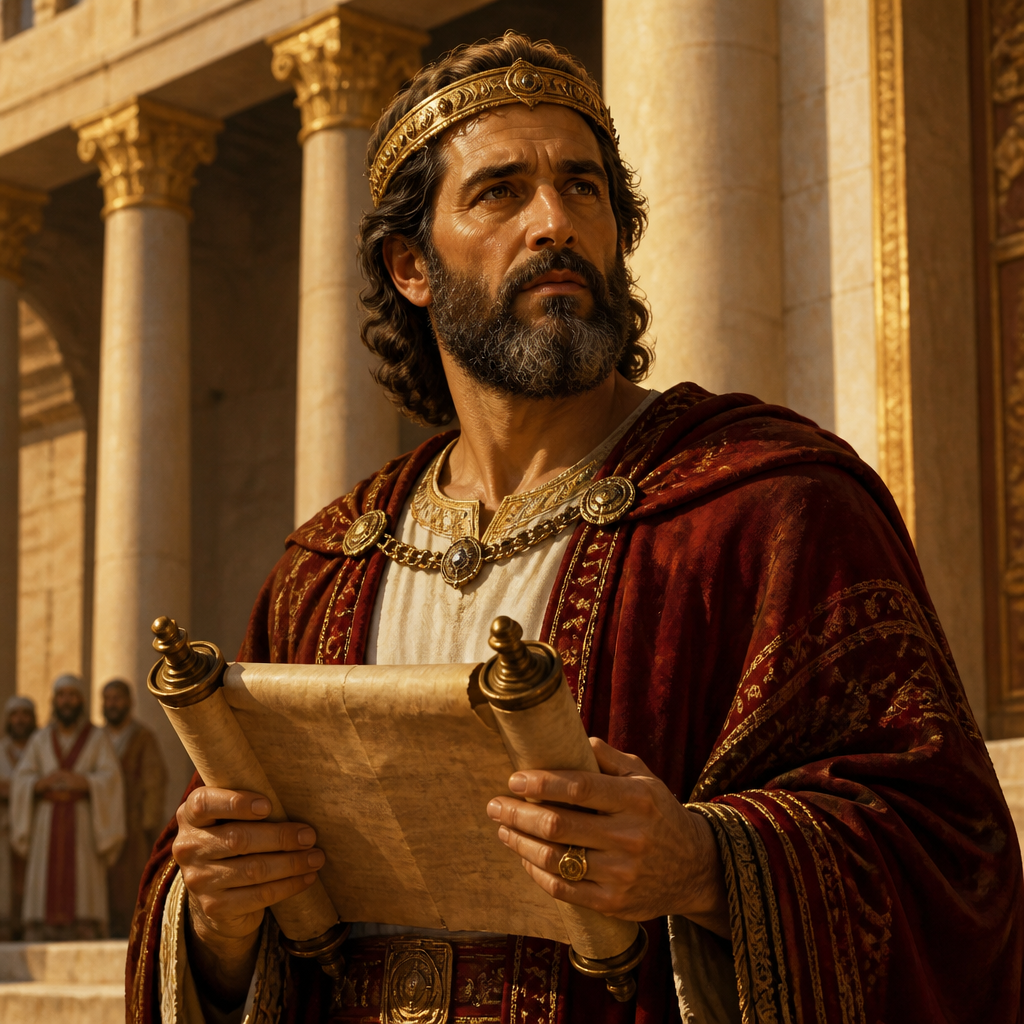
Jehoshaphat was the son of Asa and the fourth ruler of the Kingdom of Judah during the Divided Monarchy. Ascending the throne at age thirty-five around 873 BC, he reigned for twenty-five years in Jerusalem. He is characterized in the biblical record as a generally righteous king who sought the God of his father David, walked in the commandments, and did not seek the Baals. His reign was marked by significant domestic prosperity, military strengthening, and an unprecedented series of educational and judicial reforms aimed at returning the population to the worship of the LORD.
While his internal administration was highly successful, Jehoshaphat’s foreign policy was more complex. He ended the long-standing hostilities between the northern kingdom of Israel and the southern kingdom of Judah, but he did so through a series of controversial alliances with the house of Ahab. These political entanglements brought him into conflict with several prophets, who warned that his cooperation with wicked rulers would bring divine displeasure upon his endeavors. Despite these lapses in judgment, he is remembered as a king who sought the LORD with all his heart, particularly during times of national crisis.
Background and Family
Jehoshaphat was born into the Davidic line during a period of relative instability for the fledgling Kingdom of Judah. He was the son of King Asa and Azubah, the daughter of Shilhi. When he succeeded his father, he inherited a kingdom that had already begun the process of purging idolatry, though the biblical record in 1 Kings and 2 Chronicles indicates that the high places remained in use by the people.
Jehoshaphat was the father of at least seven sons: his successor Jehoram, and his younger sons Azariah, Jehiel, Zechariah, Azariahu, Michael, and Shephatiah. To prevent internal strife, he gave these younger sons significant gifts of silver, gold, and precious things, along with fortified cities in Judah, while reserving the throne for his firstborn, Jehoram. However, his decision to marry his son Jehoram to Athaliah, the daughter of Ahab and Jezebel, would eventually lead to near-ruin for the Davidic dynasty in later generations.
Major Life Events
Religious and Judicial Reforms
Early in his reign, Jehoshaphat took active steps to strengthen Judah against Israel and other neighbors. More importantly, he initiated a unique educational program in his third year, sending out officials, Levites, and priests to travel throughout all the cities of Judah with the "Book of the Law of the LORD" to teach the people. This emphasis on Torah literacy is cited as a reason for the "dread of the LORD" that fell on surrounding nations, leading the Philistines and Arabs to bring him tribute rather than war.
Later, he revolutionized the legal system by appointing judges in every fortified city. He established a central court of appeals in Jerusalem composed of Levites, priests, and heads of families. His charge to these judges emphasized the theological basis of justice: "Consider what you do, for you judge not for man but for the LORD... there is no injustice with the LORD our God, or partiality or taking bribes" (2 Chronicles 19:6-7).
The Alliance with Ahab and the Battle of Ramoth-gilead
Jehoshaphat’s reign is significantly defined by his relationship with Ahab, king of Israel. Desiring peace, he entered into a marriage alliance and eventually agreed to join Ahab in a campaign to retake Ramoth-gilead from the Arameans. Despite his alliance, Jehoshaphat insisted on inquiring of the LORD. When the prophet Micaiah predicted disaster, Ahab ignored the warning and entered battle in disguise, persuading Jehoshaphat to wear his royal robes. The Aramean commanders targeted Jehoshaphat, mistaking him for Ahab. In a moment of mortal danger, Jehoshaphat cried out to the LORD, and the biblical text records that God helped him by drawing the attackers away. Ahab was killed, but Jehoshaphat returned safely to Jerusalem, where he was rebuked by the seer Jehu for helping the wicked.
The Victory in the Wilderness of Tekoa
A defining moment of faith occurred when a massive coalition of Moabites, Ammonites, and Meunites invaded Judah. Alarmed, Jehoshaphat proclaimed a fast and stood before the assembly in Jerusalem to pray. In response, the Spirit of the LORD came upon Jahaziel the Levite, who told the king, "the battle does not belong to you, but to God" (2 Chronicles 20:15). In a display of radical trust, Jehoshaphat appointed singers to lead the army, praising the beauty of holiness. As they began to sing, the LORD set ambushes among the invaders, causing them to destroy one another. The men of Judah spent three days gathering the immense spoil and renamed the site the Valley of Beracah (Blessing).
Relationship to Other Biblical Figures
Jehoshaphat’s life was intertwined with the major prophetic figures of the 9th century BC. He had a deep regard for the prophetic word, specifically seeking out Micaiah in Samaria and Elisha during a later campaign against Moab with Joram. Elisha famously stated that he only helped the coalition because of his "regard for the presence of Jehoshaphat king of Judah" (2 Kings 3:14). His alliances, however, brought him into conflict with Jehu son of Hanani and Eliezer son of Dodavahu, both of whom prophesied against his political choices. Most notably, his commercial alliance with the wicked King Ahaziah of Israel to build ships of Tarshish resulted in a shipwreck at Ezion-geber, which Eliezer declared was divine judgment for the partnership.
Spiritual Significance
Jehoshaphat is presented as a model of the "seeking" king. The chronicler repeatedly notes that he "set his face to seek the LORD." His prayer in the face of the Moabite invasion is considered a masterpiece of biblical intercession, acknowledging human weakness while relying on divine sovereignty: "We do not know what to do, but our eyes are on You" (2 Chronicles 20:12).
His legacy is mixed: he was a reformer who brought unprecedented peace and biblical literacy to Judah, yet his failure to completely remove the high places and his repeated attempts to bridge the gap between Judah and the apostate northern kingdom through compromise created long-term spiritual hazards for his descendants. Nevertheless, the New Testament includes him in the genealogy of Jesus Christ (Matthew 1:8), cementing his place as a vital link in the Messianic line.
Theologically, Jehoshaphat represents the potential and the peril of a righteous ruler during the Divided Monarchy. He demonstrates that national security and prosperity are direct results of adherence to the Law of God and the establishment of justice. His judicial reforms are particularly significant, as they rooted the legal authority of the state in the character of God rather than the whim of the monarch.
His life also serves as a cautionary tale regarding 'unequal yoking.' Despite his personal piety, his political pragmatism led him into alliances that compromised the spiritual integrity of his house. The contrast between his total dependence on God during the Tekoa invasion and his reliance on military alliances with Ahab and Ahaziah illustrates the ongoing struggle between faith and political expediency that defined the Davidic kingship.
Frequently Asked Questions
Why did Jehoshaphat ally with the wicked King Ahab?
Jehoshaphat sought to end the civil wars between Judah and Israel that had persisted since the kingdom divided. He solidified this peace through a marriage alliance, but this was criticized by prophets because it partnered a God-fearing king with an idol-worshipping house.
What were the 'ships of Tarshish' mentioned in his reign?
Jehoshaphat attempted to revive the maritime trade that had flourished under Solomon by building large merchant ships to fetch gold from Ophir. However, the ships were wrecked at Ezion-geber, which the prophet Eliezer attributed to God's judgment on Jehoshaphat's alliance with King Ahaziah.
How did Jehoshaphat change the legal system in Judah?
He appointed judges in every fortified city and a high court in Jerusalem consisting of priests and family heads. He strictly charged them to judge without partiality or bribes, reminding them that they were acting on behalf of the LORD.
What happened in the Valley of Beracah?
It was the site where Jehoshaphat and the people of Judah gathered the plunder of the Moabite and Ammonite armies after God caused the invaders to destroy one another. 'Beracah' means 'Blessing,' named so because the people stopped there to bless the LORD for the victory.
Who was Jehoshaphat’s mother?
His mother was Azubah, the daughter of Shilhi.
Family & Relationships
Parents
 Asa, King of JudahFather1 Kings 15:24Stated
 Azubah, Mother of JehoshaphatMother1 Kings 22:42Stated
 Jehoshaphat, King of JudahThis page
Children
 Jehoram, King of JudahSon2 Kings 1:17Stated
 Azariah, Second Named in 2 Chronicles 21:2Son2 Chronicles 21:2Stated
 Azariah, Son of JehoshaphatSon2 Chronicles 21:2Stated
 Jehiel, Son of JehoshaphatSon2 Chronicles 21:2Stated
 Michael, Son of JehoshaphatSon2 Chronicles 21:2Stated
 Shephatiah, Son of JehoshaphatSon2 Chronicles 21:2Stated
 Zechariah, Son of JehoshaphatSon2 Chronicles 21:2Stated
Connected Figures
Family
Father · 1 Kings 15:24
The third king of the Kingdom of Judah who initiated significant religious reforms and reigned for forty-one years during the Divided Monarchy.
Divided MonarchyFirst: 1 Kings 15:854 versesKing of JudahJudah
Mother · 1 Kings 22:42
The Queen Mother of Judah during the 9th century BC, wife of King Asa and mother of the reformer King Jehoshaphat.
Divided MonarchyFirst: 1 Kings 22:423 versesQueen Mother of JudahJudah
Son · 2 Kings 1:17
The ninth king of the southern Kingdom of Judah, known for his violent rise to power, his marriage to Athaliah of Israel, and a disastrous reign marked by revolt and divine judgment.
Divided MonarchyFirst: 1 Kings 22:5023 versesKing of JudahJudah
Son · 2 Chronicles 21:2
A prince of Judah and son of King Jehoshaphat who was tragically executed by his brother, King Jehoram, during the Divided Monarchy.
Divided MonarchyFirst: 2 Chronicles 21:21 versesPrince of JudahJudah
Son · 2 Chronicles 21:2
A prince of Judah and son of King Jehoshaphat, Azariah was one of several brothers murdered by Jehoram during a bloody consolidation of the Judean throne.
Son · 2 Chronicles 21:2
A prince of Judah and son of King Jehoshaphat who lived during the Divided Monarchy.
Divided MonarchyFirst: 2 Chronicles 21:21 versesPrince of JudahJudah
Son · 2 Chronicles 21:2
A prince of Judah and son of King Jehoshaphat who was tragically murdered by his brother Jehoram during a royal purge.
Divided MonarchyFirst: 2 Chronicles 21:22 versesPrince of JudahJudah
Son · 2 Chronicles 21:2
A prince of Judah and son of King Jehoshaphat, Shephatiah was one of several brothers murdered by Jehoram during his consolidation of power.
Divided MonarchyFirst: 2 Chronicles 21:22 versesPrince of JudahJudah
Son · 2 Chronicles 21:2
A prince of Judah and son of King Jehoshaphat, Zechariah was one of several brothers who were tragically murdered by their sibling Jehoram upon his accession to the throne.
Divided MonarchyFirst: 2 Chronicles 21:22 versesPrince of JudahJudah
Categories
Mentions by Book
- 1 Kings20
- 2 Kings8
- 1 Chronicles1
- 2 Chronicles42
- Matthew1
Scripture References
All 72 indexed verses, in canonical order, from the Berean Standard Bible.
- 1 Kings 15:24
And Asa rested with his fathers and was buried with them in the city of his father David, and his son Jehoshaphat reigned in his place.
- 1 Kings 22:2
However, in the third year, Jehoshaphat king of Judah went down to visit the king of Israel,
- 1 Kings 22:4Partial
So he asked Jehoshaphat, “Will you go with me to fight against Ramoth-gilead?” Jehoshaphat answered the king of Israel, “I am as you are, my people are your people, and my horses are your horses.”
- 1 Kings 22:5
But Jehoshaphat also said to the king of Israel, “Please inquire first for the word of the LORD.”
- 1 Kings 22:7
But Jehoshaphat asked, “Is there not still a prophet of the LORD here of whom we can inquire?”
- 1 Kings 22:8Partial
The king of Israel answered, “There is still one man through whom we can inquire of the LORD, but I hate him because he never prophesies anything good for me, but only bad. He is Micaiah son of Imlah.” “The king should not say that!” Jehoshaphat replied.
- 1 Kings 22:10
Dressed in royal attire, the king of Israel and Jehoshaphat king of Judah were sitting on their thrones at the threshing floor by the entrance of the gate of Samaria, with all the prophets prophesying before them.
- 1 Kings 22:18
Then the king of Israel said to Jehoshaphat, “Did I not tell you that he never prophesies good for me, but only bad?”
- 1 Kings 22:29
So the king of Israel and Jehoshaphat king of Judah went up to Ramoth-gilead.
- 1 Kings 22:30
And the king of Israel said to Jehoshaphat, “I will disguise myself and go into battle, but you wear your royal robes.” So the king of Israel disguised himself and went into battle.
- 1 Kings 22:32Partial
When the chariot commanders saw Jehoshaphat, they said, “Surely this is the king of Israel!” So they turned to fight against him, but Jehoshaphat cried out.
- 1 Kings 22:41
In the fourth year of Ahab’s reign over Israel, Jehoshaphat son of Asa became king of Judah.
- 1 Kings 22:42
Jehoshaphat was thirty-five years old when he became king, and he reigned in Jerusalem twenty-five years. His mother’s name was Azubah daughter of Shilhi.
- 1 Kings 22:43
And Jehoshaphat walked in all the ways of his father Asa; he did not turn away from them, but did what was right in the eyes of the LORD. The high places, however, were not removed; the people still sacrificed and burned incense on the high places.
Cited as evidence on a family card; added so References, Key Verses and Mentions by Book share one index.
- 1 Kings 22:44
Jehoshaphat also made peace with the king of Israel.
- 1 Kings 22:45
As for the rest of the acts of Jehoshaphat, along with the might he exercised and how he waged war, are they not written in the Book of the Chronicles of the Kings of Judah?
- 1 Kings 22:48
Jehoshaphat built ships of Tarshish to go to Ophir for gold, but they never set sail, because they were wrecked at Ezion-geber.
- 1 Kings 22:49Partial
At that time Ahaziah son of Ahab said to Jehoshaphat, “Let my servants sail with your servants,” but Jehoshaphat refused.
- 1 Kings 22:50
And Jehoshaphat rested with his fathers and was buried with them in the city of his father David. And his son Jehoram reigned in his place.
- 1 Kings 22:51
In the seventeenth year of Jehoshaphat’s reign over Judah, Ahaziah son of Ahab became king of Israel, and he reigned in Samaria two years.
- 2 Kings 1:17
So Ahaziah died according to the word of the LORD that Elijah had spoken. And since he had no son, Jehoram succeeded him in the second year of the reign of Jehoram son of Jehoshaphat over Judah.
- 2 Kings 3:1
In the eighteenth year of Jehoshaphat’s reign over Judah, Jehoram son of Ahab became king of Israel, and he reigned in Samaria twelve years.
- 2 Kings 3:7
And he sent a message to Jehoshaphat king of Judah: “The king of Moab has rebelled against me. Will you go with me to fight against Moab?” “I will go,” replied Jehoshaphat. “I am as you are, my people are your people, and my horses are your horses.”
- 2 Kings 3:11
But Jehoshaphat asked, “Is there no prophet of the LORD here? Let us inquire of the LORD through him.” And one of the servants of the king of Israel answered, “Elisha son of Shaphat is here. He used to pour water on the hands of Elijah.”
- 2 Kings 3:12Partial
Jehoshaphat affirmed, “The word of the LORD is with him.” So the king of Israel and Jehoshaphat and the king of Edom went down to him.
- 2 Kings 3:14
Then Elisha said, “As surely as the LORD of Hosts lives, before whom I stand, were it not for my regard for the presence of Jehoshaphat king of Judah, I would not look at you or acknowledge you.
- 2 Kings 8:16Partial
In the fifth year of the reign of Joram son of Ahab over Israel, Jehoram son of Jehoshaphat succeeded his father as king of Judah.
- 2 Kings 12:18
So King Joash of Judah took all the sacred objects dedicated by his fathers—Jehoshaphat, Jehoram, and Ahaziah, the kings of Judah—along with his own consecrated items and all the gold found in the treasuries of the house of the LORD and the royal palace, and he sent them to Hazael king of Aram. So Hazael withdrew from Jerusalem.
- 1 Chronicles 3:10
Solomon’s son was Rehoboam: Abijah was his son, Asa his son, Jehoshaphat his son,
- 2 Chronicles 17:1
Asa’s son Jehoshaphat reigned in his place, and he strengthened himself against Israel.
- 2 Chronicles 17:3
Now the LORD was with Jehoshaphat because he walked in the earlier ways of his father David. He did not seek the Baals,
- 2 Chronicles 17:4Partial
but he sought the God of his father and walked by His commandments rather than the practices of Israel.
Cited as a key verse; added so References, Key Verses and Mentions by Book share one index.
- 2 Chronicles 17:5
So the LORD established the kingdom in his hand, and all Judah brought him tribute, so that he had an abundance of riches and honor.
- 2 Chronicles 17:10
And the dread of the LORD fell upon all the kingdoms of the lands that surrounded Judah, so that they did not make war against Jehoshaphat.
- 2 Chronicles 17:11
Some Philistines also brought gifts and silver as tribute to Jehoshaphat, and the Arabs brought him 7,700 rams and 7,700 goats from their flocks.
- 2 Chronicles 17:12
Jehoshaphat grew stronger and stronger, and he built fortresses and store cities in Judah
- 2 Chronicles 18:1
Now Jehoshaphat had an abundance of riches and honor, and he allied himself with Ahab by marriage.
- 2 Chronicles 18:3
Ahab king of Israel asked Jehoshaphat king of Judah, “Will you go with me against Ramoth-gilead?” And Jehoshaphat replied, “I am as you are, and my people are your people; we will join you in the war.”
- 2 Chronicles 18:4
But Jehoshaphat also said to the king of Israel, “Please inquire first for the word of the LORD.”
- 2 Chronicles 18:6
But Jehoshaphat asked, “Is there not still a prophet of the LORD here of whom we can inquire?”
- 2 Chronicles 18:7Partial
The king of Israel answered, “There is still one man through whom we can inquire of the LORD, but I hate him because he never prophesies anything good for me, but only bad. He is Micaiah son of Imlah.” “The king should not say that!” Jehoshaphat replied.
- 2 Chronicles 18:9
Dressed in royal attire, the king of Israel and Jehoshaphat king of Judah were sitting on their thrones at the threshing floor by the entrance of the gate of Samaria, with all the prophets prophesying before them.
- 2 Chronicles 18:17
Then the king of Israel said to Jehoshaphat, “Did I not tell you that he never prophesies good for me, but only bad?”
- 2 Chronicles 18:28
So the king of Israel and Jehoshaphat king of Judah went up to Ramoth-gilead.
- 2 Chronicles 18:29
And the king of Israel said to Jehoshaphat, “I will disguise myself and go into battle, but you wear your royal robes.” So the king of Israel disguised himself and went into battle.
- 2 Chronicles 18:31Partial
When the chariot commanders saw Jehoshaphat, they said, “This is the king of Israel!” So they turned to fight against him, but Jehoshaphat cried out, and the LORD helped him. God drew them away from him.
- 2 Chronicles 19:1
When Jehoshaphat king of Judah had returned safely to his home in Jerusalem,
- 2 Chronicles 19:2
Jehu son of Hanani the seer went out to confront him and said to King Jehoshaphat, “Should you help the wicked and love those who hate the LORD? Because of this, the wrath of the LORD is upon you.
- 2 Chronicles 19:4
Jehoshaphat lived in Jerusalem, and once again he went out among the people from Beersheba to the hill country of Ephraim and turned them back to the LORD, the God of their fathers.
- 2 Chronicles 19:6Partial
Then he said to the judges, “Consider carefully what you do, for you are not judging for man, but for the LORD, who is with you when you render judgment.
Cited as a key verse; added so References, Key Verses and Mentions by Book share one index.
- 2 Chronicles 19:7Partial
And now, may the fear of the LORD be upon you. Be careful what you do, for with the LORD our God there is no injustice or partiality or bribery.”
Cited as a key verse; added so References, Key Verses and Mentions by Book share one index.
- 2 Chronicles 19:8
Moreover, Jehoshaphat appointed in Jerusalem some of the Levites, priests, and heads of the Israelite families to judge on behalf of the LORD and to settle disputes. And they lived in Jerusalem.
- 2 Chronicles 20:1
After this, the Moabites and Ammonites, together with some of the Meunites, came to make war against Jehoshaphat.
- 2 Chronicles 20:2
Then some men came and told Jehoshaphat, “A vast army is coming against you from Edom, from beyond the Sea; they are already in Hazazon-tamar” (that is, En-gedi).
- 2 Chronicles 20:3
Jehoshaphat was alarmed and set his face to seek the LORD. And he proclaimed a fast throughout Judah.
- 2 Chronicles 20:5
Then Jehoshaphat stood in the assembly of Judah and Jerusalem in the house of the LORD in front of the new courtyard
- 2 Chronicles 20:12Partial
Our God, will You not judge them? For we are powerless before this vast army that comes against us. We do not know what to do, but our eyes are upon You.”
Cited as a key verse; added so References, Key Verses and Mentions by Book share one index.
- 2 Chronicles 20:15
And he said, “Listen, all you people of Judah and Jerusalem! Listen, King Jehoshaphat! This is what the LORD says: ‘Do not be afraid or discouraged because of this vast army, for the battle does not belong to you, but to God.
- 2 Chronicles 20:18
Then Jehoshaphat bowed facedown, and all the people of Judah and Jerusalem fell down before the LORD to worship Him.
- 2 Chronicles 20:20
Early in the morning they got up and left for the Wilderness of Tekoa. As they set out, Jehoshaphat stood up and said, “Hear me, O people of Judah and Jerusalem. Believe in the LORD your God, and you will be upheld; believe in His prophets, and you will succeed.”
- 2 Chronicles 20:25
Then Jehoshaphat and his people went to carry off the plunder, and they found on the bodies an abundance of goods and valuables—more than they could carry away. They were gathering the plunder for three days because there was so much.
- 2 Chronicles 20:27
Then all the men of Judah and Jerusalem, with Jehoshaphat at their head, returned joyfully to Jerusalem, for the LORD had made them rejoice over their enemies.
- 2 Chronicles 20:30
Then Jehoshaphat’s kingdom was at peace, for his God had given him rest on every side.
- 2 Chronicles 20:31
So Jehoshaphat reigned over Judah. He was thirty-five years old when he became king, and he reigned in Jerusalem twenty-five years. His mother’s name was Azubah daughter of Shilhi.
- 2 Chronicles 20:34
As for the rest of the acts of Jehoshaphat, from beginning to end, they are indeed written in the Chronicles of Jehu son of Hanani, which are recorded in the Book of the Kings of Israel.
- 2 Chronicles 20:35
Later, Jehoshaphat king of Judah made an alliance with Ahaziah king of Israel, who acted wickedly.
- 2 Chronicles 20:37
Then Eliezer son of Dodavahu of Mareshah prophesied against Jehoshaphat, saying, “Because you have allied yourself with Ahaziah, the LORD has destroyed your works.” So the ships were wrecked and were unable to sail to Tarshish.
- 2 Chronicles 21:1
And Jehoshaphat rested with his fathers and was buried with them in the City of David. And his son Jehoram reigned in his place.
- 2 Chronicles 21:2Partial
Jehoram’s brothers, the sons of Jehoshaphat, were Azariah, Jehiel, Zechariah, Azariah, Michael, and Shephatiah; these were all sons of Jehoshaphat king of Israel.
- 2 Chronicles 21:12
Then a letter came to Jehoram from Elijah the prophet, which stated: “This is what the LORD, the God of your father David, says: ‘You have not walked in the ways of your father Jehoshaphat or of Asa king of Judah,
- 2 Chronicles 22:9
Then Jehu looked for Ahaziah, and Jehu’s soldiers captured him while he was hiding in Samaria. So Ahaziah was brought to Jehu and put to death. They buried him, for they said, “He is the grandson of Jehoshaphat, who sought the LORD with all his heart.” So no one was left from the house of Ahaziah with the strength to rule the kingdom.
- Matthew 1:8Partial
Asa was the father of Jehoshaphat, Jehoshaphat the father of Joram, and Joram the father of Uzziah.
Others Named Jehoshaphat
Compare all 4 bearers →Jehoshaphat, Father of King Jehu2 Kings 9:2
A man of the tribe of Israel during the Divided Monarchy, known primarily as the son of Nimshi and the father of King Jehu.
Jehoshaphat, Recorder to David and Solomon2 Samuel 8:16
A high-ranking royal official who served as the 'recorder' for both King David and King Solomon during the United Monarchy of Israel.
Jehoshaphat, District Governor of Issachar1 Kings 4:17
A district governor under King Solomon who oversaw the administration and taxation of the territory belonging to the tribe of Issachar.